Let’s be direct. We’ve heard this before.
“That’s what the other agencies said.”
“We’ve been burned before.”
“I don’t believe you.”
These are the first things contractors tell us. They’ve been screwed by marketing agencies, tried running ads that didn’t work, and are tired of guessing.
The frustration is real. But the problem isn’t your work ethic. It’s not the quality of your jobs.
Your problem is simpler: you’re invisible.
Your Real Problem Isn’t Leads—It’s Invisibility
Most contractors do have a lead problem.
They are too busy, but not with big enough jobs. They always need more and better leads. If they had better leads, they could turn down the small stuff.
But the problem isn’t a lack of effort. It’s invisibility.
You are probably well-known in your hometown. But just 10 miles away, you don’t show up when someone looks for your services. This is the visibility gap.
The Visibility Gap in Action
Here’s how this costs you money every day.
A homeowner 10 miles away needs a new roof—a high-ticket job. They pull out their phone and search Google for “roofer near me.”
Google translates “near me” into their current city. The search becomes something like “roofer in Zanesville.”
You do great work in Zanesville. But you’ve never told Google that. Your address is in your hometown and not Zanesville. Your website mentions your hometown but not Zanesville. So Google assumes you only work there. And NOT Zanesville.
Why would Google show your business for a search in a city you’ve never mentioned?
It seems obvious after you hear it. But this one issue costs contractors countless jobs.
Why “Searching for Your Name” Fails
It’s not that people can’t find you. If they know your company name, they will eventually find you.
The problem is the customers who don’t know your name but need your service. They search for what you do, not who you are.
They search for “excavator in Lancaster,” not “Smith Excavation.”
If you don’t show up when they look, you have zero chance of getting that job. Ever. This is why you end up competing with 3-5 other contractors for the same low-margin lead. It creates stress and unpredictability. To break this cycle, you need to understand the best marketing strategies for contractors that drive real growth.
Big Companies Buy Visibility. Small Contractors Rely on Hope.
Large construction firms don’t leave this to chance. They buy visibility. They run ads that put them at the top of Google in every city they want to work in.
Smaller contractors often run on hope. Hope that word-of-mouth is enough. Hope that their website will magically attract customers.
But websites do not create traffic. They sit and wait for it. We’ve talked about this before—it’s a critical concept to understand why websites don’t generate leads on their own.
The solution is to stop being invisible. A system that creates visibility and turns it into phone calls is the only way to get control.
Websites Don’t Create Traffic
A lot of contractors get sold a lie: a “pretty website” is all you need.
That’s dead wrong.
Your website doesn’t create traffic. It’s a destination. It waits for people to arrive. A website without traffic is like a billboard in the desert. It does nothing.
This simple fact is why so many contractors get burned. A web designer cashes your check, delivers a beautiful site, and then disappears. You are left with a site that does nothing for your business.
Stop Hoping and Start Buying Visibility
Big companies understand this. They don’t just launch a website and cross their fingers. They actively buy visibility with ads.
Ads put them in front of buyers searching right now. Ads send traffic to their website.
Meanwhile, too many smaller contractors run on hope.
- Hope that word-of-mouth is enough.
- Hope that people will find their site.
- Hope that the phone will just ring.
Hope is not a strategy. It’s why so many contractors feel stuck with small jobs, never landing the bigger projects that actually grow the business.
Websites Are Built to Turn Traffic into Calls
Your website has one job: to turn visitors into callers.
It must take the traffic it gets and turn those people into a phone call or a form submission. That’s it. It’s a conversion tool.
A website designed for leads has:
- Clear Calls to Action: Big buttons that say “Call Now” or “Get a Quote.”
- Fast Load Speed: If your site is slow, people leave.
- Simple Forms: Don’t make people fill out a long questionnaire.
A site designed this way respects the visitor’s time and focuses on the only goal that matters: getting you a lead. You can see more about what goes into a high-converting lead generation website design for home services contractors.
A website only becomes a powerful asset when it’s part of a real system. It needs fuel. Without a plan to drive people to the site, it just sits there.
The Two-Part System For Predictable Leads
If you’re tired of guessing, the solution is a simple, two-part system.
This system has just two parts: a Lead Machine and paid ads.
They work together.
Websites without traffic don’t work. Ads without a good website waste money.
When you have both, you get a predictable flow of calls from customers ready to hire you.
Part 1: The Lead Machine
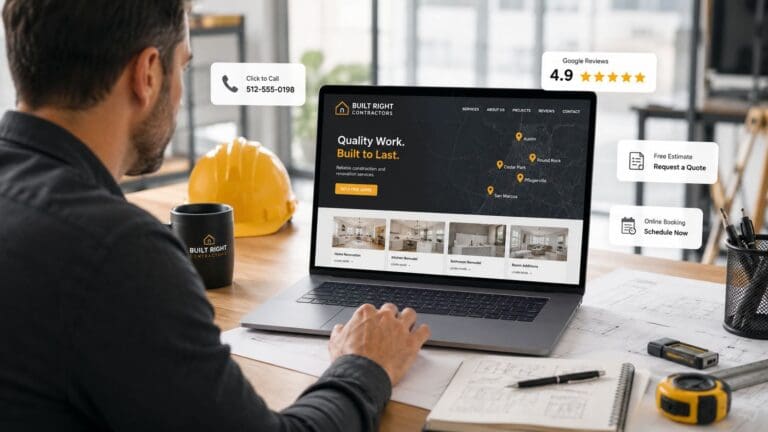
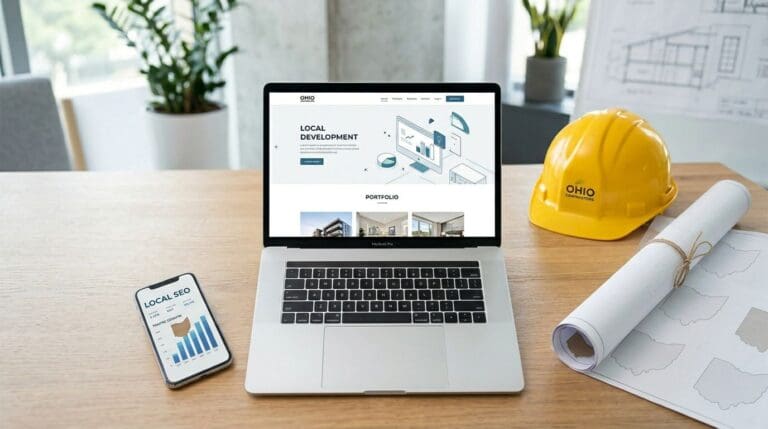
A Lead Machine is a website built for one job: to turn visitors into phone calls. This is not a “pretty website.” It is a high-performance asset engineered to get you work.
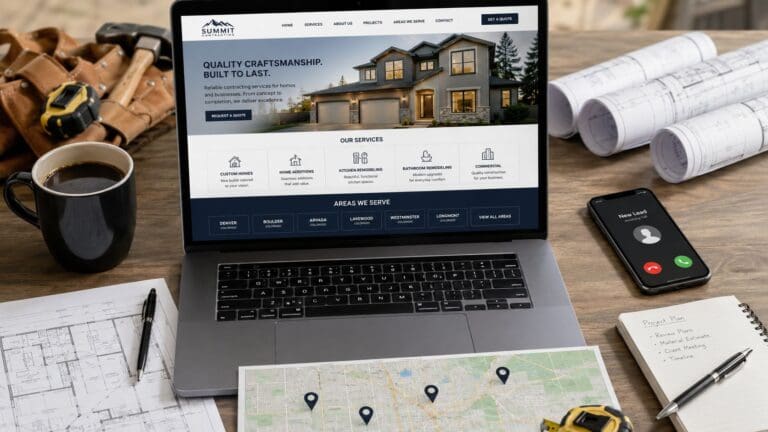
A Lead Machine is a two-step system. First, we build it. It is a high-converting, search-optimized website structured by service and by city. It has clear calls to action, fast load speed, and is designed for mobile phones. It has tracking, call routing, and quote forms. It is built to rank, convert, and capture demand in multiple nearby cities—not just your home town.
It fixes the visibility problem.
Instead of one generic “services” page, it has a page for every service you offer. Instead of just mentioning your hometown, it has a page for every city you work in.
This sends a clear signal to Google. It says you are the expert for septic installation in Zanesville and the specialist for land clearing in Lancaster. This is how you show up in searches outside your home city. You can learn more about what a Lead Machine is in our detailed guide.
A Lead Machine is not pay-per-call or pay-per-lead. We are flat rate and transparent. It is a website built to turn traffic into calls. It is designed for one goal: leads.
Part 2: The Fuel (Ads)
A Lead Machine is the engine. Ads are the fuel.
The second step of the system is to fuel the machine with paid traffic. We run and optimize Google Ads to drive high-intent local buyers to the site. This generates calls and form submissions. The website is the asset you own. The ads are the fuel. Together, they produce a consistent lead flow.
Ads create immediate visibility.
They are the fastest way to put your business in front of local customers the moment they search for you. You aren’t hoping they find you. You are paying to be right there when they look. This is what big companies do.
Data from contractor benchmarks shows the average cost per lead can be around $153. But the customer lifetime value can exceed $15,340. The system is what turns that initial cost into a profitable job. To dive into more industry benchmarks, explore the full contractor growth report from Baadigi.com.
A System, Not a Gamble
These two parts must work together. They are not optional.
- A website without traffic is invisible.
- Ads without a conversion website waste money.
A Lead Machine plus ads creates a reliable system. It takes the guesswork out and gives you control. You stop hoping for the phone to ring and start making it ring. To delve deeper into establishing a reliable system for acquiring new clients, explore how companies like gethukt’s system for predictable lead flow approach creating a consistent lead flow. This systematic approach is the key to creating a stable and scalable business.
Building a Lead Machine for Multiple Cities
Your standard website is probably fine for your hometown. But two towns over? You’re a ghost. You can’t win jobs where you’re invisible.
A Lead Machine solves this. It isn’t another pretty website. It’s a purpose-built asset designed to win jobs in every city you’re willing to drive to.
Speaking Google’s Language
Think like Google. When a homeowner searches for “excavation services in Lancaster,” the algorithm looks for the most specific, relevant answer.
A generic website that lists “excavation” is a weak signal.
A dedicated page titled “Expert Excavation Services in Lancaster” is a direct match. It’s a signal Google can’t ignore.
This is the core of the strategy. We build individual pages for each service in each city you want to work in.
- Septic Installation in Zanesville
- Land Clearing in Granville
- Foundation Repair in Heath
This isn’t a trick. It’s giving Google exactly what it wants. This puts you in front of customers when they’re ready to hire.
Built For Action
A Lead Machine is engineered to get you the call. Fast.
Your site must have fast load speeds. If a customer waits more than a few seconds, they’re gone. A mobile-first design is non-negotiable, since most searches happen on a phone.
Every page must have unmissable, click-to-call buttons and simple quote request forms. Make it easy for them to contact you.
Traditional Website vs. Lead Machine
| Feature | Traditional Website | Lead Machine |
|---|---|---|
| Primary Goal | Look professional | Generate qualified phone calls |
| Structure | General “Services” page | Specific service pages for each target city |
| Visibility | Strong in home city, weak everywhere else | Strong across the entire service area |
| User Experience | Often slow, not mobile-first | Fast, mobile-first, easy to use |
| Call to Action | Buried contact info | Prominent “Click-to-Call” buttons |
| Outcome | Gets occasional traffic, maybe a few calls | Creates a predictable stream of jobs |
The takeaway is simple: one is a passive online business card. The other is an active tool for winning work. You are not trying to win a design award. You are trying to win jobs.
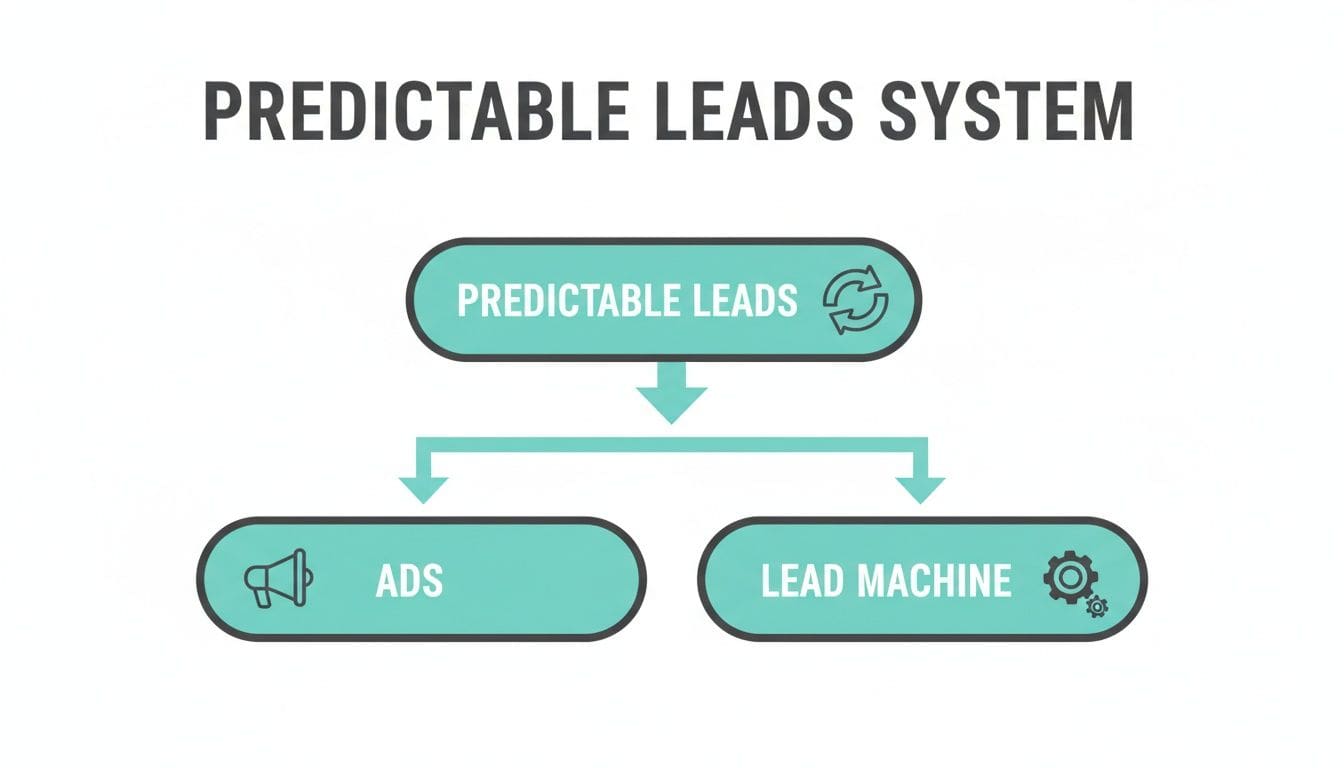
The ads create immediate visibility. The Lead Machine turns that attention into phone calls.
This isn’t about gaming the system. It’s about building a logical online asset that accurately reflects your service area, connecting you with more customers and bigger jobs. You can discover more insights on how these trends are impacting contractors in the 2026 contractor marketing report on FoundationalMarketingHub.com.
Predictable Leads Give You Control
The real goal of marketing is control.
When you have a predictable system bringing you phone calls, you get the power back. You can afford to turn down small, low-margin jobs. You know another, better call is coming.
That’s how you focus on the big-ticket projects you want. The guessing game stops.
From Hope to a System
A business running on hope is fragile. It’s always reacting to a slow week or a lost job. You’re never in the driver’s seat.
A business with a system for creating its own work is strong. It’s scalable. It’s built to last.
This isn’t about working harder. It’s about putting a machine in place that brings the right jobs to you. A business without control over its lead flow is just hoping for the best. A business with a system is built to win.
The Power to Say “No”
Picture this: your phone rings. It’s a small repair, barely worth the fuel. In the past, you would have taken it. You didn’t know when the next call would come.
Now, imagine that same call. But this time you know your Lead Machine and ads are working. You know they are finding homeowners who need a $20,000 septic replacement.
With that confidence, you can politely pass on the small job. That’s real control.
- You stop getting into bidding wars over cheap leads.
- You start quoting jobs with healthy profit margins.
- You can hire better people because you can afford them.
- You grow the business on your terms.
This doesn’t happen by accident. It happens when you stop being invisible.
Invisibility is the Problem
You think that customers can find you.
But if customers don’t find you, nothing else matters.
Your great work, your years of experience, your crew—none of it matters if your phone never rings.
Lead Machines are built to fix that.
You’ve Got Questions. We’ve Got Straight Answers.
We get it. You’ve heard promises before. Most contractors we talk to have been burned by an agency or wasted cash on ads that did nothing.
Let’s cut the BS. Here are real answers.
Isn’t This Just SEO Mumbo-Jumbo?
No. This isn’t about “SEO tricks.”
A Lead Machine is built on a simple foundation: telling Google what you do and where you do it.
If you pour concrete in Zanesville, you need a page on your website that says, “Concrete in Zanesville.” It’s not a trick. It’s just being clear. This is how you solve the problem of being invisible outside your hometown.
We Tried Ads and Got Nothing. Why Is This Different?
Ads fail for two reasons. The ads were bad, or they sent traffic to a website that couldn’t turn a visitor into a call. It’s almost always the second one.
Sending good traffic to a generic, slow website is like pouring water into a leaky bucket.
Our system works because the ads and the Lead Machine are built to work together. The ads drive traffic. The Lead Machine makes the phone ring. It’s a complete system.
Running ads without a website that converts is flushing money down the toilet. A great website without traffic is a billboard in the desert. You need both.
How Is a Lead Machine Different From My Current Website?
Your typical website is a digital brochure. It looks professional, but it was not built to generate leads from multiple cities.
A Lead Machine is a different animal. It’s a purpose-built tool for lead generation.
- It’s structured for territory: It has a dedicated page for every service and every city you serve.
- It’s built for one action: It’s fast, works on a phone, and has “click-to-call” buttons everywhere.
- It has one goal: Make your phone ring.
This isn’t a “pretty website.” It’s a business asset designed to solve your visibility problem.
Why Not Just Use Pay-Per-Lead Services?
Services like HomeAdvisor or Angi create a race to the bottom. You are paying for the same lead that was just sold to five of your direct competitors.
This forces you to compete on price, not quality. The margins are garbage.
A Lead Machine is your asset. The leads that come from your website belong to you and only you. You aren’t fighting five other guys for the same call. You own the system and control the process.
This Sounds Expensive. What’s the Real Cost?
The question isn’t about cost. It’s about investment versus expense. Wasting money on ads that don’t work is an expense.
Building a system that delivers predictable, high-value jobs is an investment in growth. We run on a flat-rate, transparent model. No surprise fees. You’re investing in a real outcome.
The real cost is staying invisible. You might think customers can find you, but if customers don’t find you, nothing else matters. A Lead Machine is built to fix that.
At The Cherubini Company, we don’t sell complicated marketing. We build Lead Machines and fuel them with ads to give you predictable control over your lead flow. If you’re ready to stop guessing and start growing, learn more at https://cherubinicompany.com.