You've probably said some version of this already.
“We do good work. We've been around a long time. People know us.”
That may be true in your town. It does not mean people in the next town over can find you when they need your service right now. That's the part most contractors miss. They think they have a lead problem, but their true problem is visibility.
A website alone won't fix that. It won't create traffic. It won't make strangers search your name. It won't force Google to show you in towns you never clearly mention. If you want steady calls, your website design for home service pros has to be built like a Lead Machine. Then it needs traffic sent to it on purpose.
Why Your Phone Is Not Ringing in the Next Town Over
You might be the guy everybody knows in your hometown.
Your trucks are seen around town. Past customers talk about you. Friends send referrals. That works until you need more jobs, better jobs, or work in the towns around you.
Then you find out something ugly. Online, you're invisible.
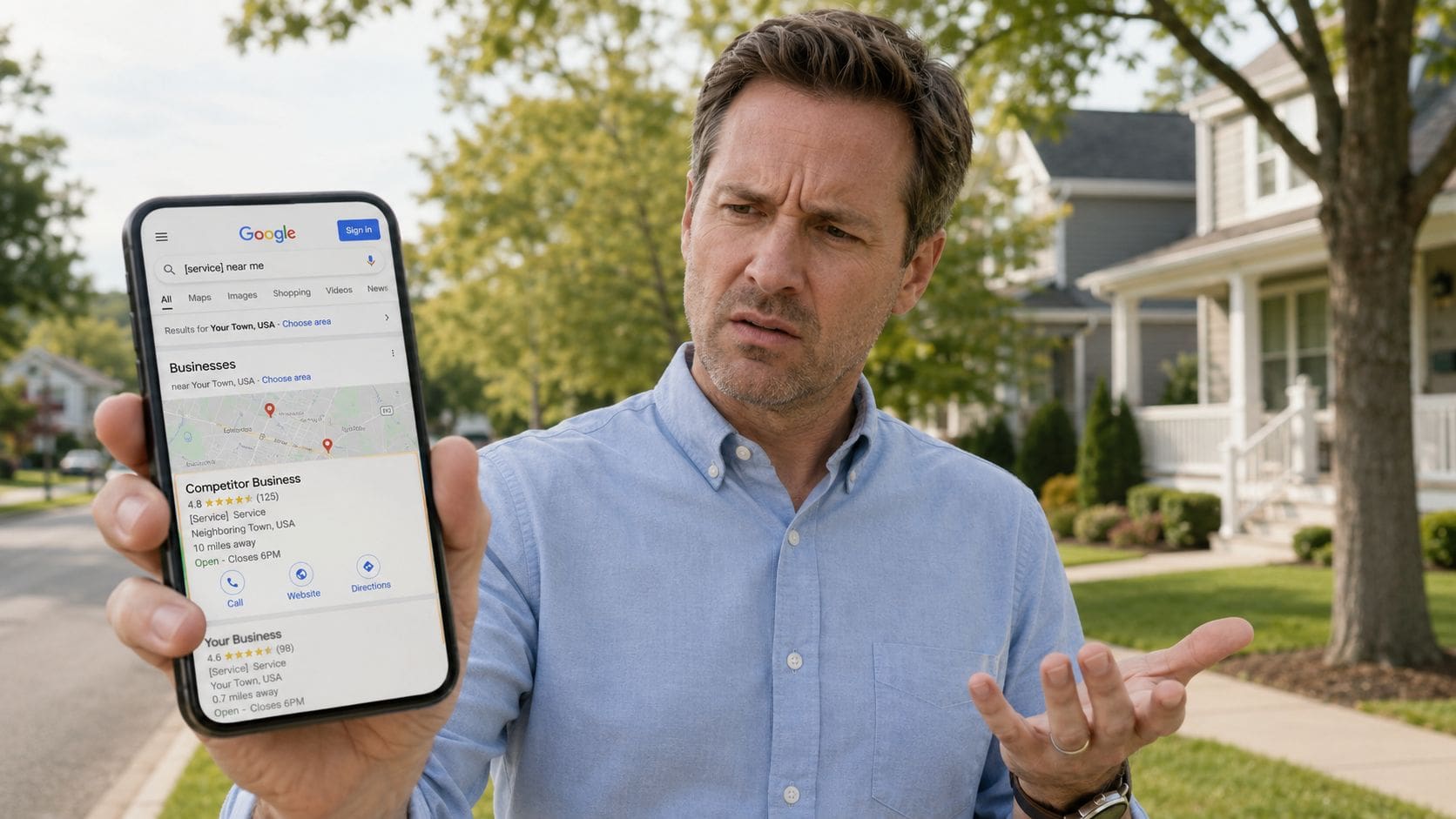
Your reputation does not travel by itself
A homeowner ten miles away doesn't know your name. They aren't searching for your business name. They search for what they need in their town.
That means if they type “plumber near me” or “concrete contractor near me,” Google reads that as service plus location. If your business has only told Google about your home city, then Google has no strong reason to show you in nearby places.
That's why good contractors miss jobs they never even knew existed.
You don't lose those jobs because your work is bad. You lose them because you never showed up.
Word of mouth is useful. It is not a system. It gives you no control. Some months the phone rings. Some months it doesn't. That feast or famine cycle wears people out.
The visibility gap is the real problem
Most owners think, “People can find me if they want to.”
That's the wrong standard. A better question is whether people do find you when they search. If they don't, your company might as well not exist in that town.
Here's the hard truth in plain English:
- Your hometown isn't enough. If you work in several towns but only show up in one, you're leaving work on the table.
- Referrals won't scale. They help, but they won't cover every crew, every month, in every area.
- Being good at the trade isn't the same as being visible online. Those are two different problems.
If this sounds familiar, read this breakdown on how contractors get more calls in nearby towns. It gets right to the point.
Your Website Is Not a Brochure It Is a Silent Machine
A lot of contractors got sold the wrong idea.
They were told a new website would “start generating leads.” So they paid for a pretty design, some stock photos, a few service blurbs, and a contact page. Then they waited. And waited.
Nothing happened.
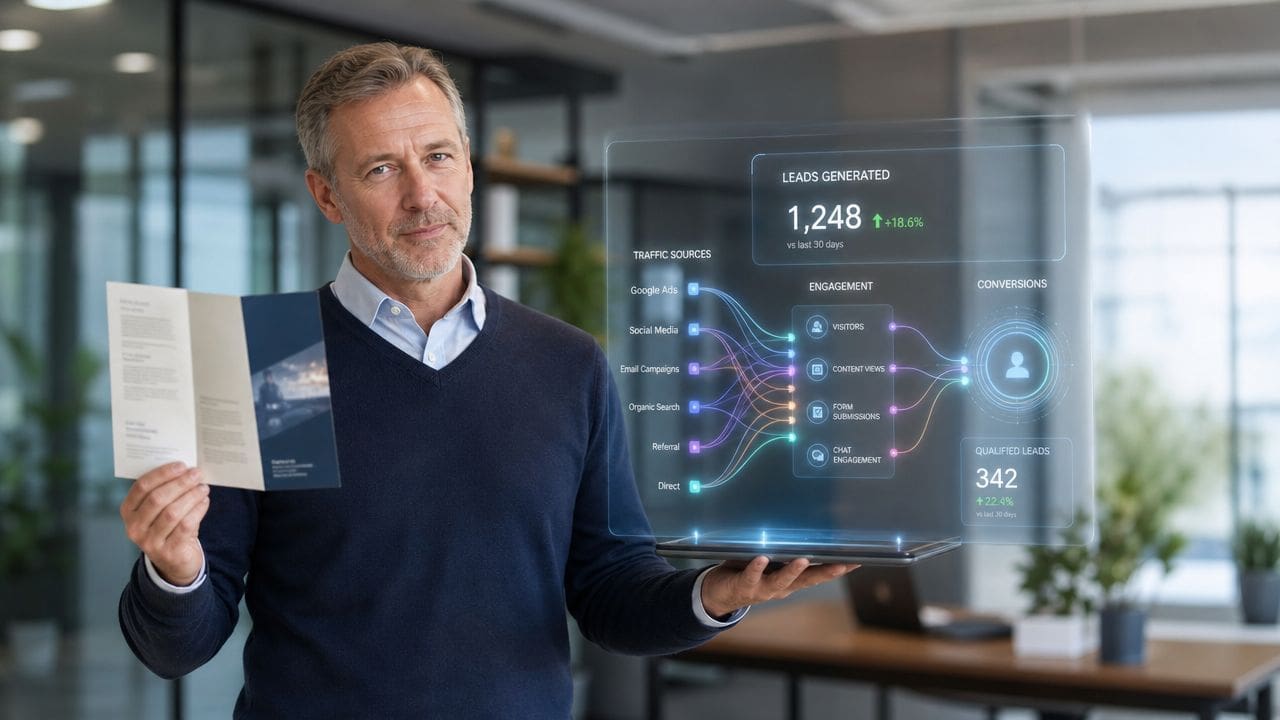
A website does not create traffic
Here, contractors get burned.
A website sits there until somebody lands on it. That's all. By itself, it is not a lead source. It is a conversion tool. Its job is simple. When traffic shows up, the site should turn that visit into a call or quote request.
Consider the engine in your work truck. If the engine is strong but there's no fuel, you're not going anywhere. A website without visibility is the same thing.
Practical rule: Stop judging a website by how “nice” it looks. Judge it by whether it turns visitors into calls.
If you want a plain-language outside resource, LeadBlaze's guide on lead generation makes the same point in a different way. The page isn't there to win design awards. It's there to get action.
Pretty sites fail when they have no job to do
Most brochure sites fail for the same reasons:
| Problem | What it causes |
|---|---|
| Generic copy | Visitors don't see their problem clearly addressed |
| Weak calls to action | People hesitate and leave |
| No city structure | You stay invisible outside your home base |
| Cluttered layout | Confused people do nothing |
That's why a normal website is the wrong goal. What you need is a site built for one job only.
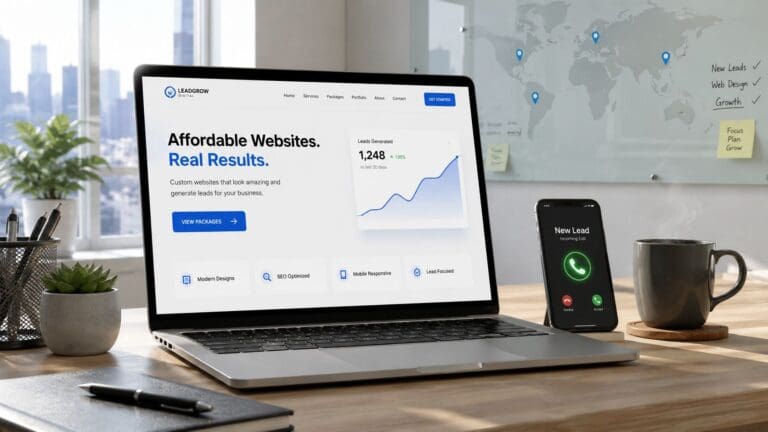
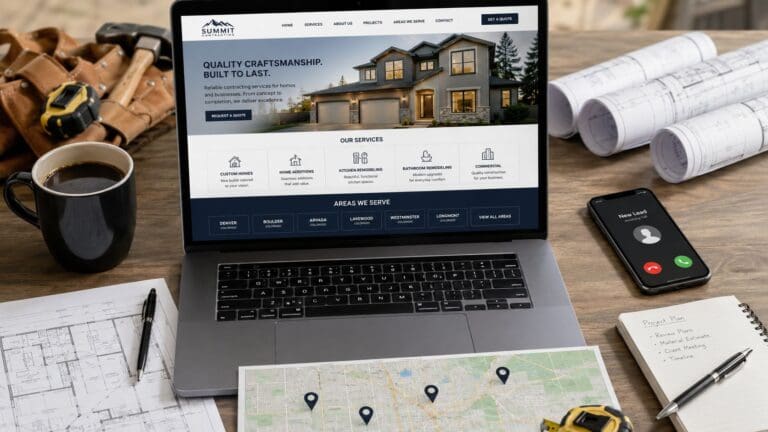
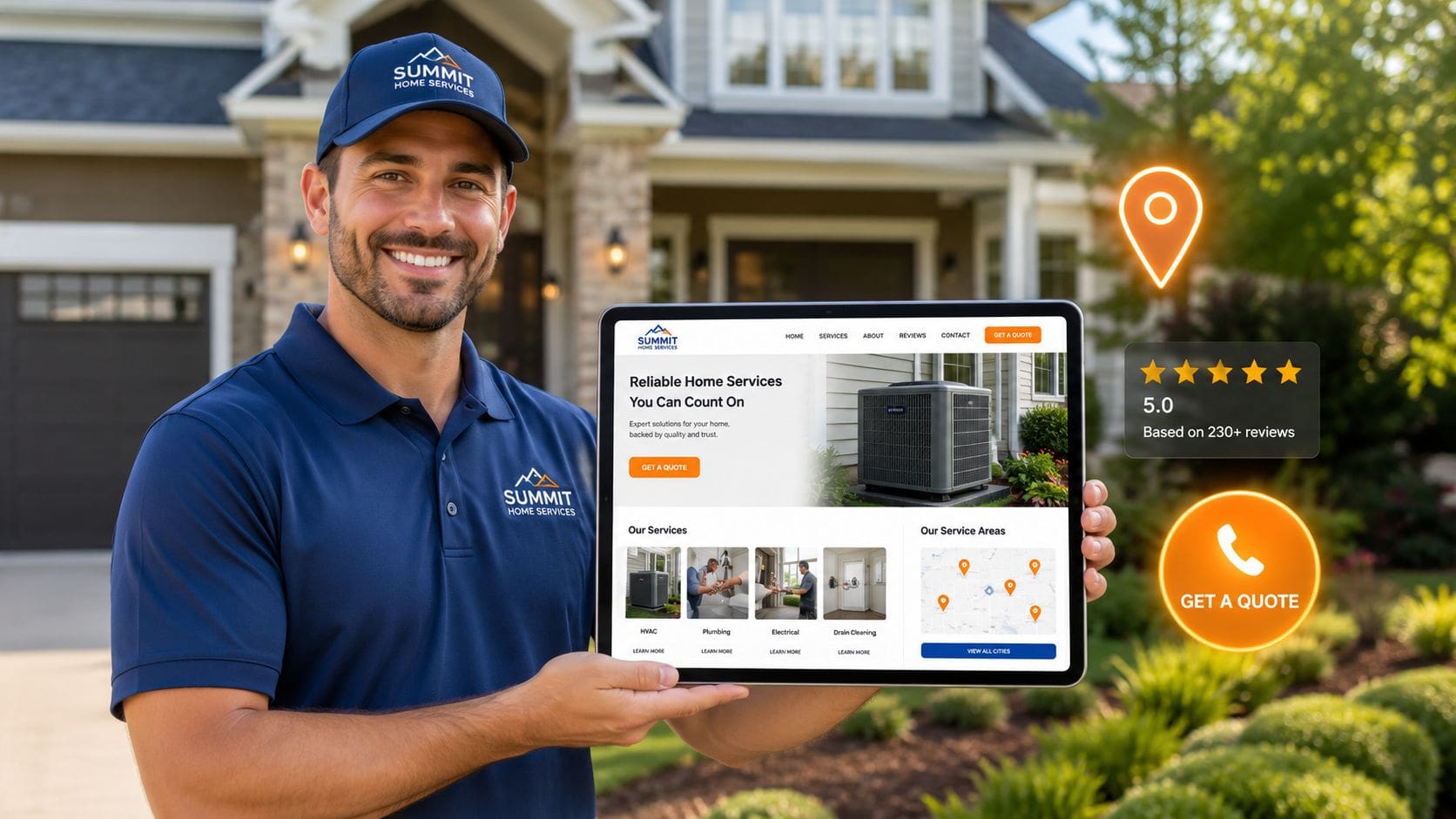
A Lead Machine is a website designed to turn traffic into calls. That means service pages, city pages, strong calls to action, proof of work, and a structure built around getting the visitor to take the next step. If you want the straight version, this page on what a Lead Machine is explains it without the usual agency nonsense.
Building a Website That Converts Traffic into Jobs
A homeowner in the next town clicks your ad on their phone at 8:12 p.m. They need help now. If your site loads slowly, hides the phone number, or dumps them on a generic page, you lose the job before you ever knew it existed.
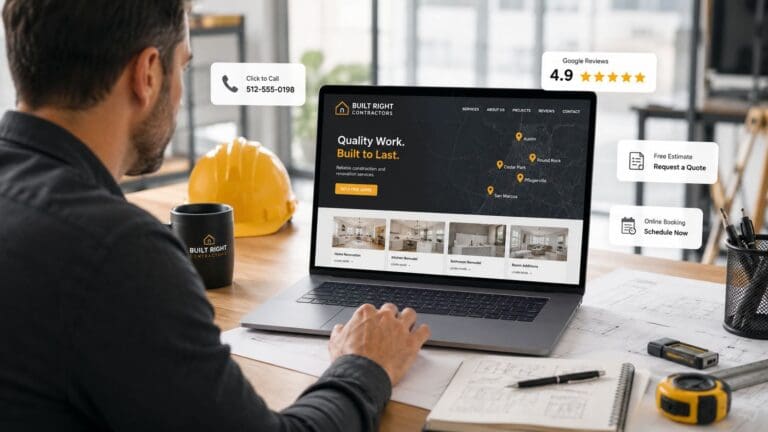
That is what website design means for a home service business. It is not a creative exercise. It is the buildout of a Lead Machine that takes paid traffic and turns it into calls, quote requests, and booked work.
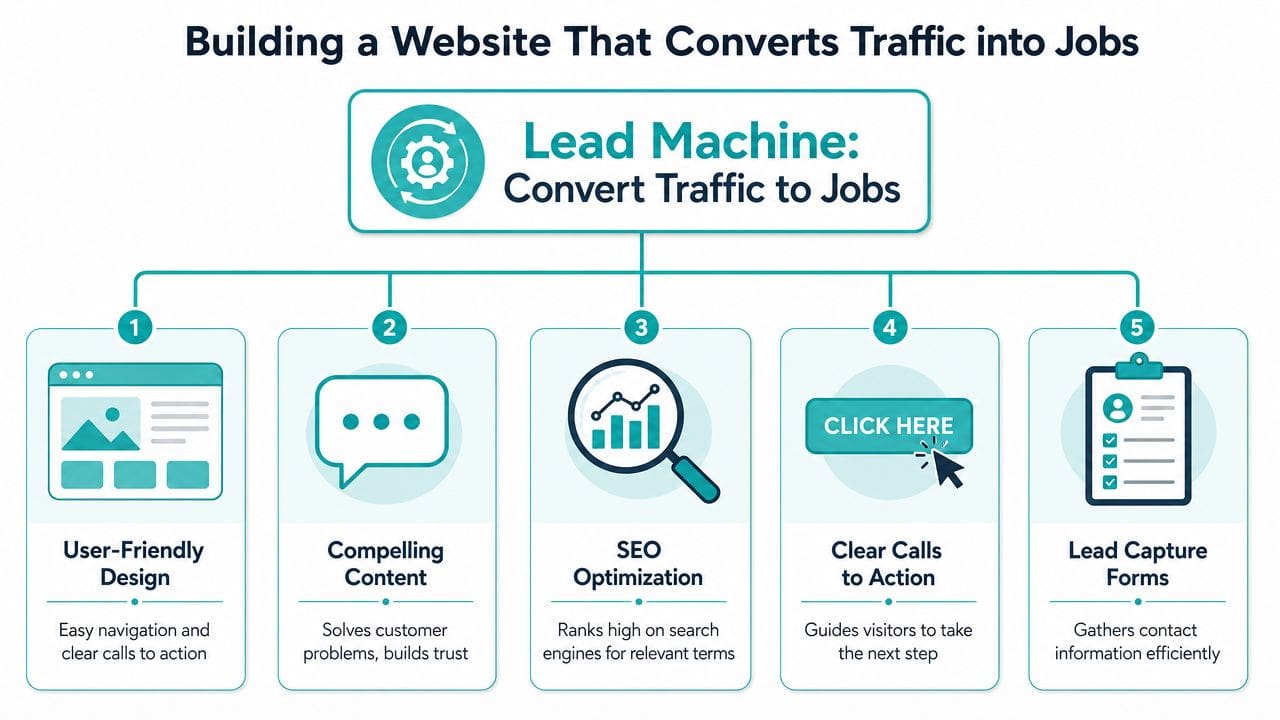
What the site must include
Start with the job the site has to do. Get the visitor to contact you fast, on a phone, with as little friction as possible.
A contractor site that converts usually includes:
- One page per service. Water heater repair, panel upgrades, AC replacement, drain cleaning. Give each service its own page so the visitor lands on the exact thing they need.
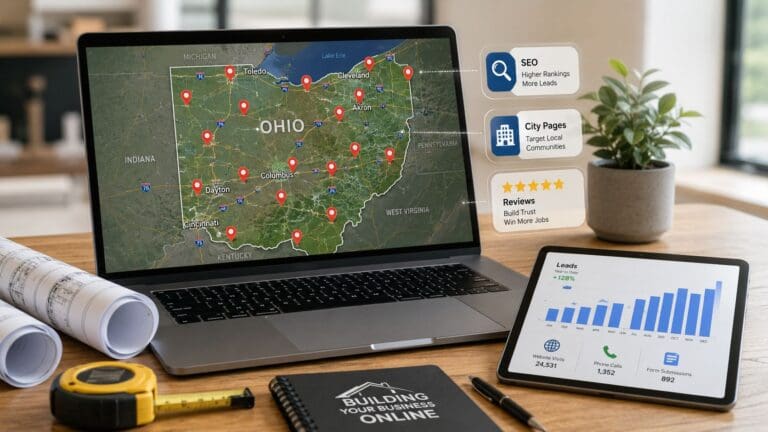
- One page per target city. If you want work in the next town over, build pages that clearly serve that town.
- A phone-first layout. Large tap targets, click-to-call buttons, short forms, and no tiny text.
- Proof near the decision point. Reviews, job photos, warranties, financing info, and trust badges should sit close to the form or phone button.
- Fast load speed. Solvis Media notes in its home services website design guide that slow sites lose visitors fast. In this business, that means they call the next contractor.
This is basic, but contractors miss it all the time. They pay for a nice homepage, then bury the actual money pages.
Friction kills leads
Homeowners do not study your website. They scan it and make a quick decision. WebFX explains in its home services website design handbook that online booking convenience and photo proof of past work both strongly affect whether people take the next step.
So build for that behavior.
Keep forms short. Show the phone number in the header. Put a quote button above the fold. Add project photos that prove your crew can do the work. If your site makes people work to contact you, they leave.
For owners who want the technical reason long forms fail, this developer's guide to form abandonment is worth your time.
Build the machine in the right order
Do not start with colors, fonts, or a clever slogan. Start with the path from click to lead.
- Set the conversion goal. Calls, quote requests, or both.
- Build service pages and city pages first. Those pages do the heavy lifting.
- Add trust where decisions happen. Reviews, photos, guarantees, and licensing details belong on the pages that ask for the lead.
- Strip out friction. Fewer fields. Clear buttons. Strong mobile layout.
- Test every action. Call buttons, forms, page speed, and mobile usability all need to work every time.
If you want a stronger blueprint, review these must-have features for a high-converting contractor website.
A good website does not sit there looking polished. It works like a piece of equipment. Feed it the right traffic, and it should produce jobs.
How to Fuel Your Lead Machine with Paid Ads
You launch a campaign for the next town over. Clicks come in. Budget disappears. The phone stays quiet.
That does not mean paid ads failed. It means you paid to send people into a dead end.

Ads buy attention from ready buyers
Paid ads put you in front of people searching right now. That is the job.
If you want work in a nearby town, ads let you show up there fast instead of waiting months for referrals, rankings, or luck to do the heavy lifting. Bigger companies already understand that. They buy attention in the zip codes they want. Smaller contractors hesitate, then wonder why the same competitors keep getting the calls.
Visibility decides who gets considered.
The site and the ads have separate jobs
Keep this simple.
| Part | Job |
|---|---|
| Lead Machine website | Turns visits into calls and quote requests |
| Paid ads | Send qualified local traffic to the right page |
Confusion starts when contractors expect one piece to do both jobs. A website does not create demand by itself. Ads do not rescue a weak page. The system works when each part handles its own role and hands off cleanly to the next.
That is why a polished homepage is not enough. You need ads pointed at pages built for one service, one area, and one action. If someone clicks an ad for emergency plumbing in the next town over, send them to that exact service page with a clear phone number, fast proof, and a short path to contact.
Anything else wastes money.
If ads failed before, the problem was often the destination, the offer, or the targeting. Not the channel itself.
If you want a plain-English breakdown of campaign setup, targeting, and what a contractor should expect from the channel, review this guide to Google Ads for home services.
One more point. Do not let paid traffic be your only follow-up plan. Some visitors will not call on the first visit, even when they need the work done. Good remarketing and follow-up close that gap. The Email Strategy Guide is useful if you want a better handle on staying in front of leads who were interested but not ready.
Taking Control of Your Lead Flow and Revenue
The old way is fragile.
You wait on referrals. You take whatever comes in. Slow times hit and crews sit. Then panic starts. You throw money at random marketing or do nothing at all.
That is not control. That is reacting.
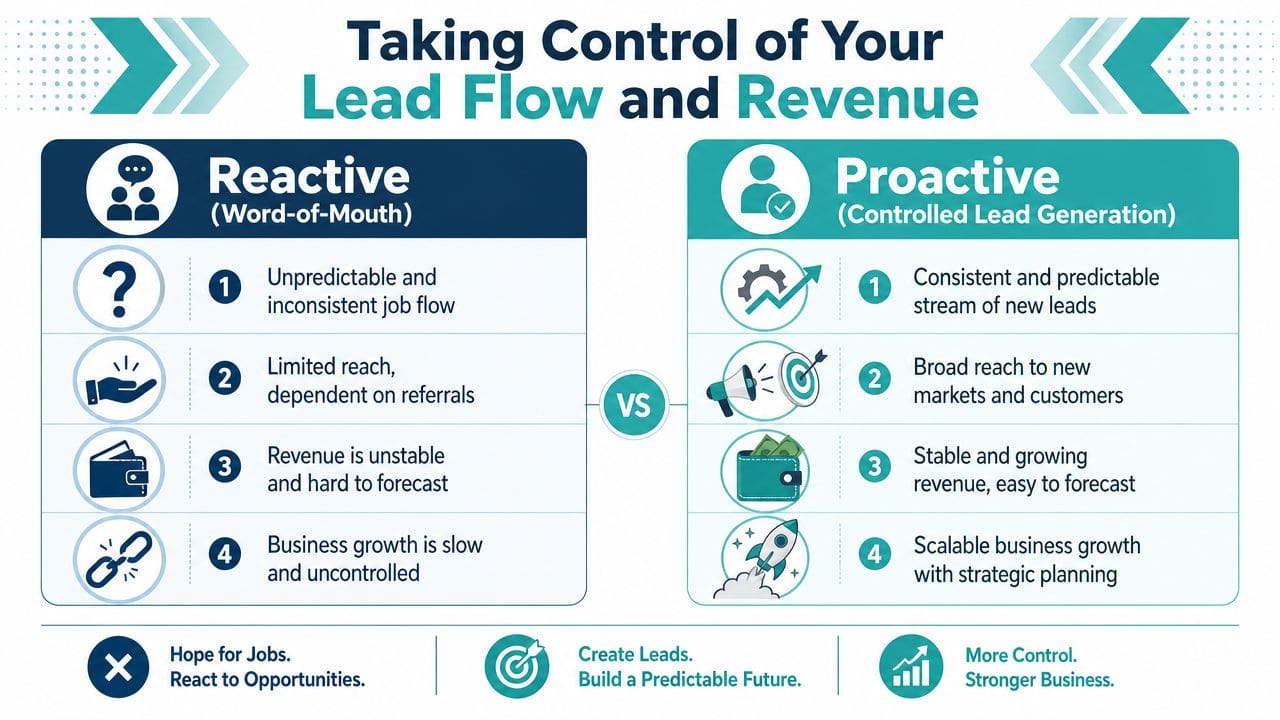
Reactive businesses stay at the mercy of chance
A contractor who relies only on word of mouth is stuck with whatever the market hands him. Some leads are good. Some are junk. Some months are full of small jobs that keep everyone busy but don't move the business forward.
That creates a bad cycle. You're busy, but not with the work you want more of.
Here's what that usually looks like:
- Too many small jobs. Your crew stays moving, but the bigger work goes elsewhere.
- No clear lead source. You don't know what's working, so every decision is a guess.
- Slow seasons hit harder. Instead of filling gaps on purpose, you just wait.
Controlled visibility changes the business
When you control visibility, you get options.
You can push harder in the towns where you want bigger jobs. You can keep lead flow moving in slower periods. You can stop acting desperate when the phone gets quiet.
The shift matters because the business starts working from a plan instead of from panic.
Better lead flow lets you be pickier. That means fewer tire kickers and more chances at the kind of work that actually grows the company.
A controlled system also helps you support the leads you already earn. For example, if you want a simple outside resource on follow-up planning, this Email Strategy Guide is useful for thinking about how businesses stay in touch after that first contact. The point is not to chase every shiny tactic. The point is to stop wasting opportunities once you finally have visibility.
What control actually gives you
This isn't about marketing buzzwords. It's about running a stronger business.
- More steady work. Not random spikes.
- Better job selection. You don't have to grab every small project that comes along.
- Less guessing. You stop making decisions off gut feeling alone.
- More stability. Revenue gets less fragile when visibility is not left to chance.
A business with no control over visibility has no real control over revenue. It can look busy and still be weak underneath.
Stop Hoping Customers Find You and Make Sure They Do
A homeowner in the next town has a leak, a dead unit, a broken panel, or a sewer backup. They search, they click, they call. If your company does not show up in that moment, you are invisible. Your work quality does not enter the conversation because you never made the shortlist.
That is the hard truth contractors hate hearing.
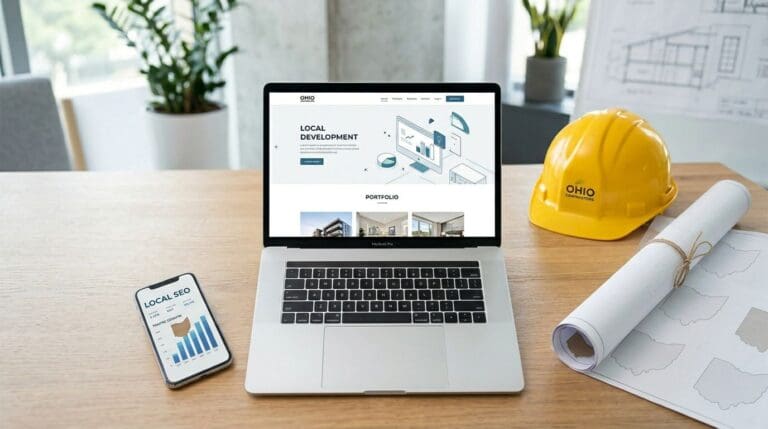
A website alone will not fix this. A pretty homepage will not fix it either. You need a lead machine. That means a site built to turn clicks into calls, paired with paid ads that put you in front of people right when they need the job done. If you want the organic side of visibility to support that system, read more about local SEO for home services.
Hope is not a strategy. Waiting for referrals to fill the calendar is not a strategy. Relying on "people finding you eventually" is how good companies stay stuck in one town while weaker competitors spread into three.
If customers do not find you, nothing else matters.
A Lead Machine fixes that by creating visibility on purpose and turning that visibility into booked work.
If you want a straight answer about what is broken and what to do next, talk to The Cherubini Company. They build lead systems for contractors who want more calls, stronger coverage in nearby cities, and less guesswork in their revenue.