You're probably busy right now. Phones ring some weeks, then go quiet. Referrals come in, then dry up. You know your cleaning business does solid work, but that doesn't mean people can find you when they need you.
That's the main problem.
Most owners think they have a lead problem. What they have is a visibility problem. They're known in their home area, but a few miles away they disappear. That's where jobs get lost before you even know they existed.
A cleaning service website design job should fix that. Not decorate it. Not impress your cousin. Not win compliments. It should help your business get seen and turn that visibility into calls.
The Invisibility Problem Plaguing Cleaning Businesses
You clean homes, offices, rentals, and move-out messes. You solve real problems. But your business can still be invisible online.
That sounds harsh, but it's true.
A lot of cleaning companies live on word of mouth. That works until it doesn't. One month is packed. The next month has holes in the schedule. Then you start lowering prices, taking weak jobs, or driving farther than you want just to keep crews moving.

Busy is not the same as visible
A lot of owners confuse being known with being findable.
Your past customers know you. Your friends know you. People in your town may know your name. But the person searching for a cleaner in the next city over doesn't know you exist. Google isn't going to guess that you work there. If your business never clearly shows that city, service, and intent, you won't show up when they search.
That's why your pipeline feels random.
You're not losing jobs because you don't work hard enough. You're losing jobs because buyers in nearby cities never see you.
The pain shows up in simple ways
It usually looks like this:
- You rely on referrals: Great when they come in. Brutal when they don't.
- You stay stuck in one area: You may serve a wider region, but your online presence doesn't.
- You think the website should do all the work: It won't. It just waits for traffic.
- You get bad leads: People price shopping, wasting time, or asking for work outside your target jobs.
If that sounds familiar, read why contractors don't get enough leads. The same visibility gap hits cleaning businesses hard.
The big truth is simple. If people don't find you when they search, nothing else matters. Not your reviews. Not your quality. Not how long you've been in business.
Why Your Current Website Is a Leaky Bucket
Most cleaning company websites look fine. That's the problem. They're built to look fine.
They aren't built to pull their weight.
A website does not create demand. It does not magically generate traffic. It sits there until someone lands on it. So if the site isn't built for the cities you serve, the services you sell, and the actions you want people to take, it leaks opportunity every day.
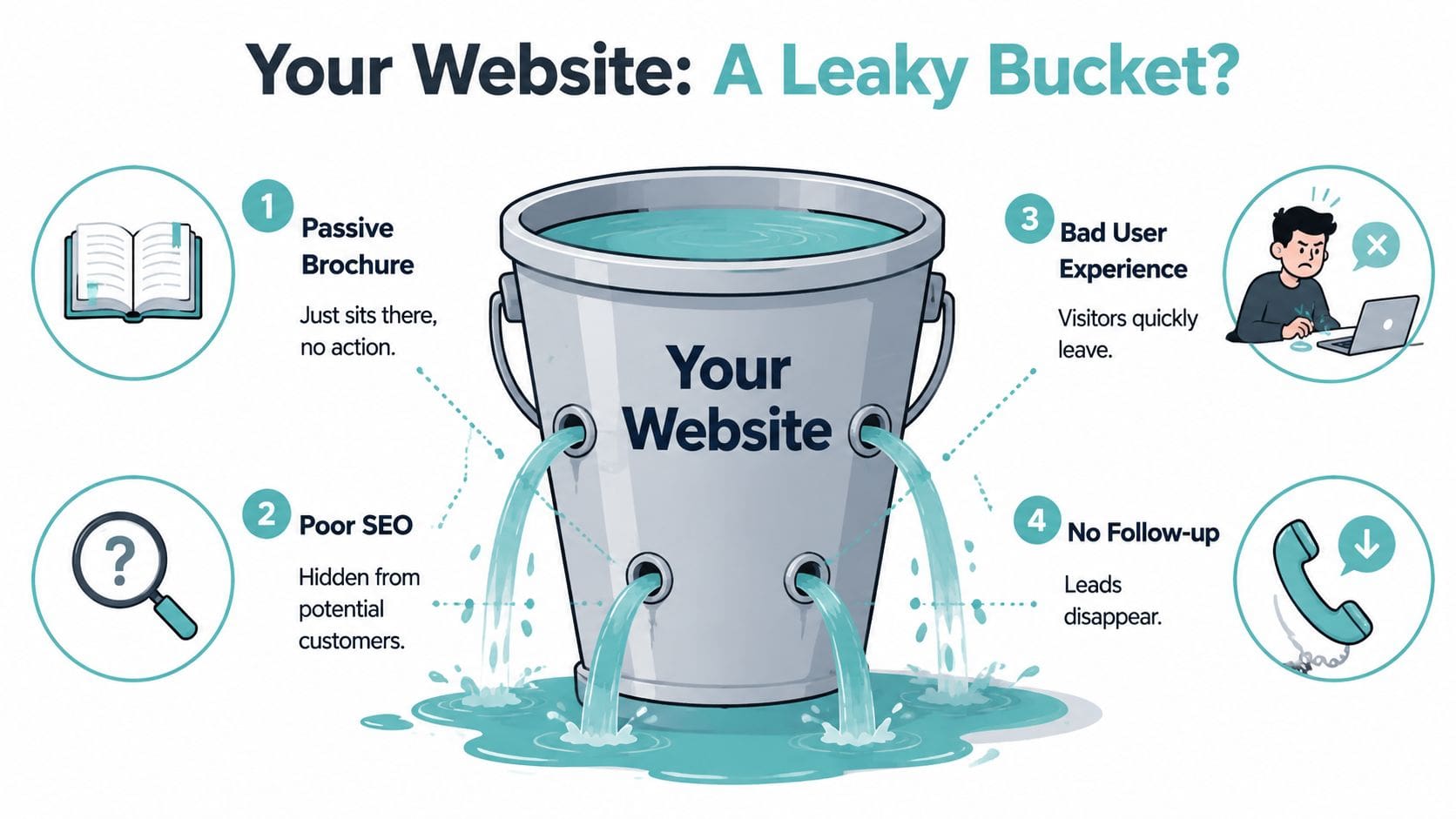
What the leak actually looks like
A person in a nearby town searches for house cleaning, office cleaning, deep cleaning, or move-out cleaning. They see other companies. Not yours.
Why? Because your site likely talks about your business in general, not your business in the exact places buyers are searching from. That's the invisibility gap.
Hibu's cleaning service website guidance points out a problem most businesses never fix. Most cleaning service website strategies fail to explain how to win leads across multiple cities without triggering content problems. Guidance often stops at “add location keywords,” but rarely addresses the site architecture needed for a cleaning company to expand into adjacent markets, a critical gap as search becomes more mobile and local.
That means a lot of cleaning companies are doing surface-level work and calling it strategy.
Signs your site is costing you jobs
Here's how to tell your current site is a leaky bucket:
| Problem | What it causes |
|---|---|
| One generic services page | Buyers don't quickly see the exact service they need |
| No real city coverage | You stay hidden outside your home area |
| Weak calls to action | Visitors hesitate, then leave |
| Slow or clunky pages | People bounce before they contact you |
Practical rule: If a visitor can't confirm what you do, where you work, and how to contact you in seconds, your site is failing.
A better service business website design starts with business logic, not pretty layouts. If your website can't support expansion into nearby cities, it's not an asset. It's a brochure with your logo on it.
Building a Lead Machine Not Just a Website
A cleaner in a nearby city searches for your service category. Your company does the work. You want the job. Your site still does not show up, or it shows up and gives them no clear next step. That is what a brochure website does. It sits there and hopes.
A Lead Machine does a job. It pulls in the right visitor, answers the right questions fast, and pushes that person to call, request a quote, or book.
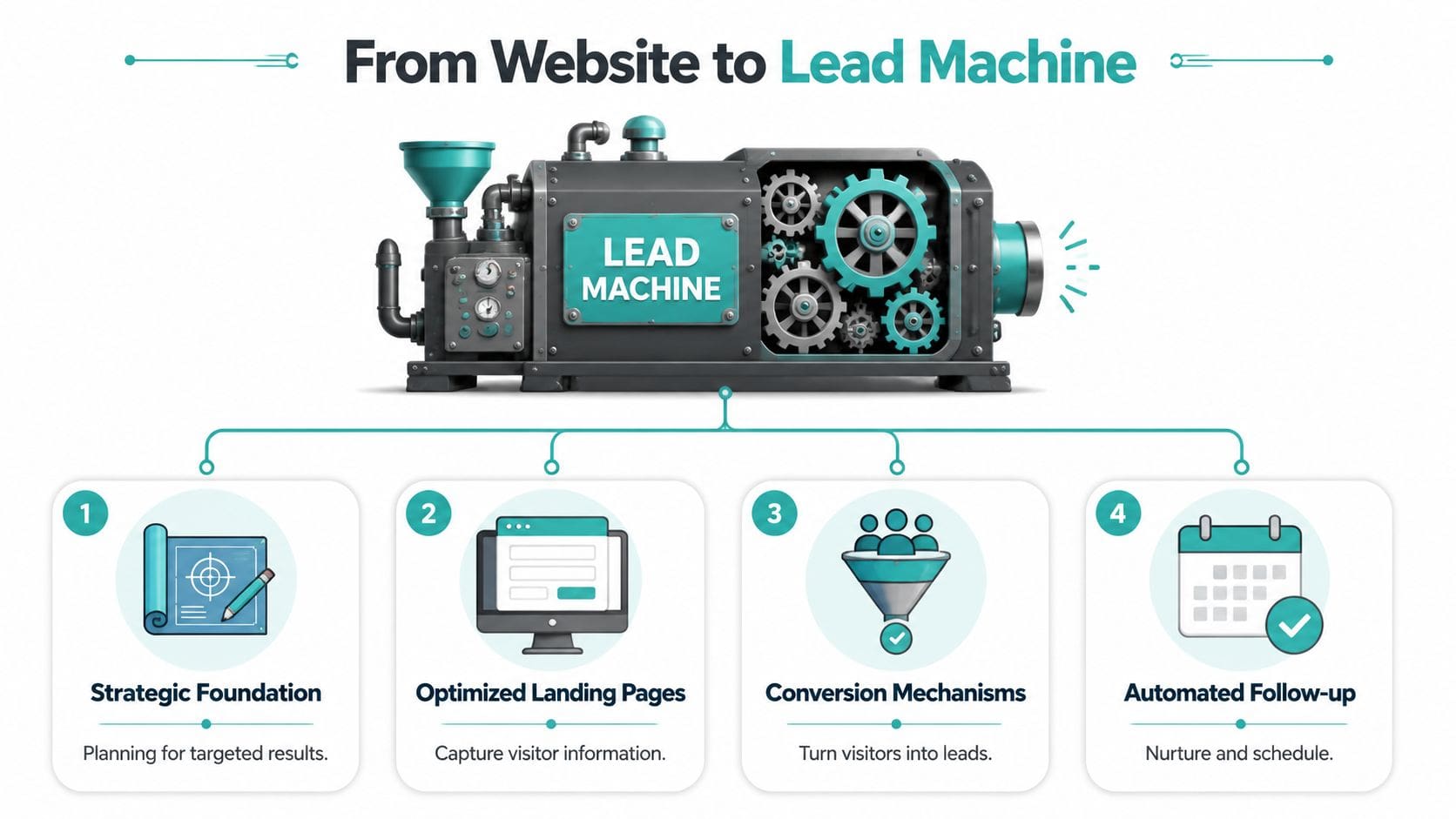
What a real Lead Machine includes
The structure matters more than the styling. If you want the clearest example, study how lead generation websites for home services are built. The goal is simple. Rank for the work you want, in the cities you want, and make it easy for ready-to-buy people to contact you.
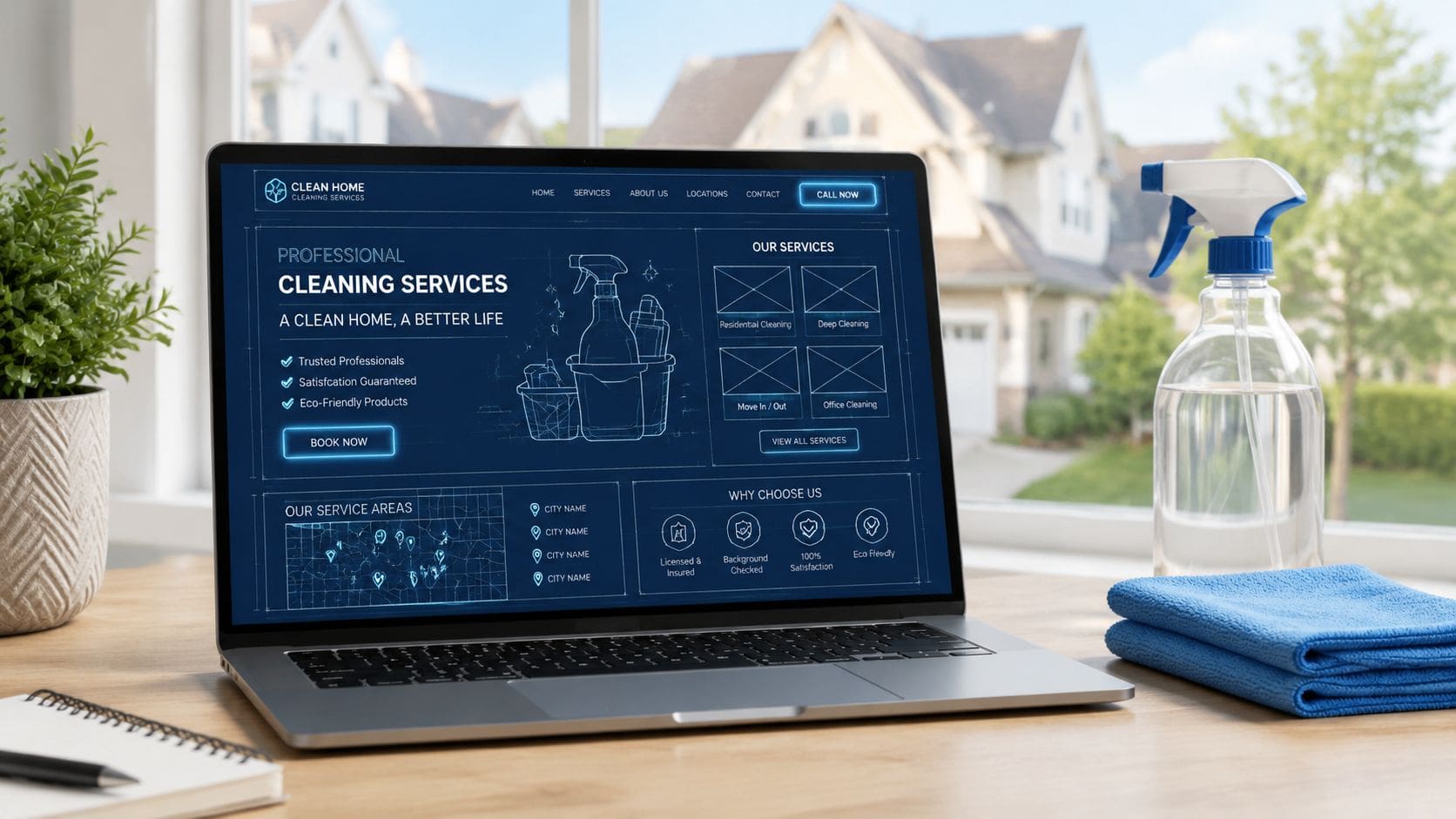
A cleaning service website design that produces leads usually includes:
- Separate service pages: House cleaning, office cleaning, deep cleaning, move-out cleaning, and recurring cleaning should not be buried on one generic page.
- Separate city pages: If you want work in surrounding towns, each market needs its own page with a clear local fit.
- Proof people trust: Reviews, testimonials, before-and-after examples, and clear business details reduce hesitation.
- Fast contact options: Click-to-call, short quote forms, and obvious booking steps need to be visible right away.
- Mobile-first pages: A lot of your traffic comes from phones. If the page is cramped, slow, or annoying to use, you lose the lead.
WebFX's guide for cleaning service web design says it plainly. For cleaning service websites, success is measured by conversion. Design must reduce bounce rate by improving site speed and usability, while strong calls to action, testimonials, and clear service pages move visitors toward booking. Visitors who can't immediately confirm your service area and credibility are likely to leave.
That is how buyers behave.
What owners get wrong
Cleaning business owners keep asking for the wrong things. They ask for animation, trendy layouts, oversized banners, and custom flourishes that do nothing to help a buyer decide.
Ask better questions.
- Can a visitor tell exactly what you clean?
- Can they tell whether you serve their city?
- Can they contact you in seconds?
If any answer is no, your website is not an asset. It is overhead.
A website that looks good and fails to produce calls is still failing.
Teams that study conversion obsess over the path from first click to action. If you want to see that thinking outside home services, this comprehensive guide for SaaS product managers explains how strong websites remove friction and guide people step by step.
The same principle applies here. Cut confusion. Match pages to real searches. Put proof in the right spots. Make the next step obvious.
That is the model used by lead-focused agencies like The Cherubini Company. Their approach centers on service pages, city pages, click-to-call actions, review tools, and alignment between the website and your business profile. That fits the Lead Machine model because it treats the site like an operating asset, not a design project.
Fueling the Machine with Targeted Ads
A Lead Machine without traffic just waits.
That's why so many business owners say, “We have a website, but it doesn't do much.” Of course it doesn't. A website is the machine. It still needs fuel.
Ads are the fuel.
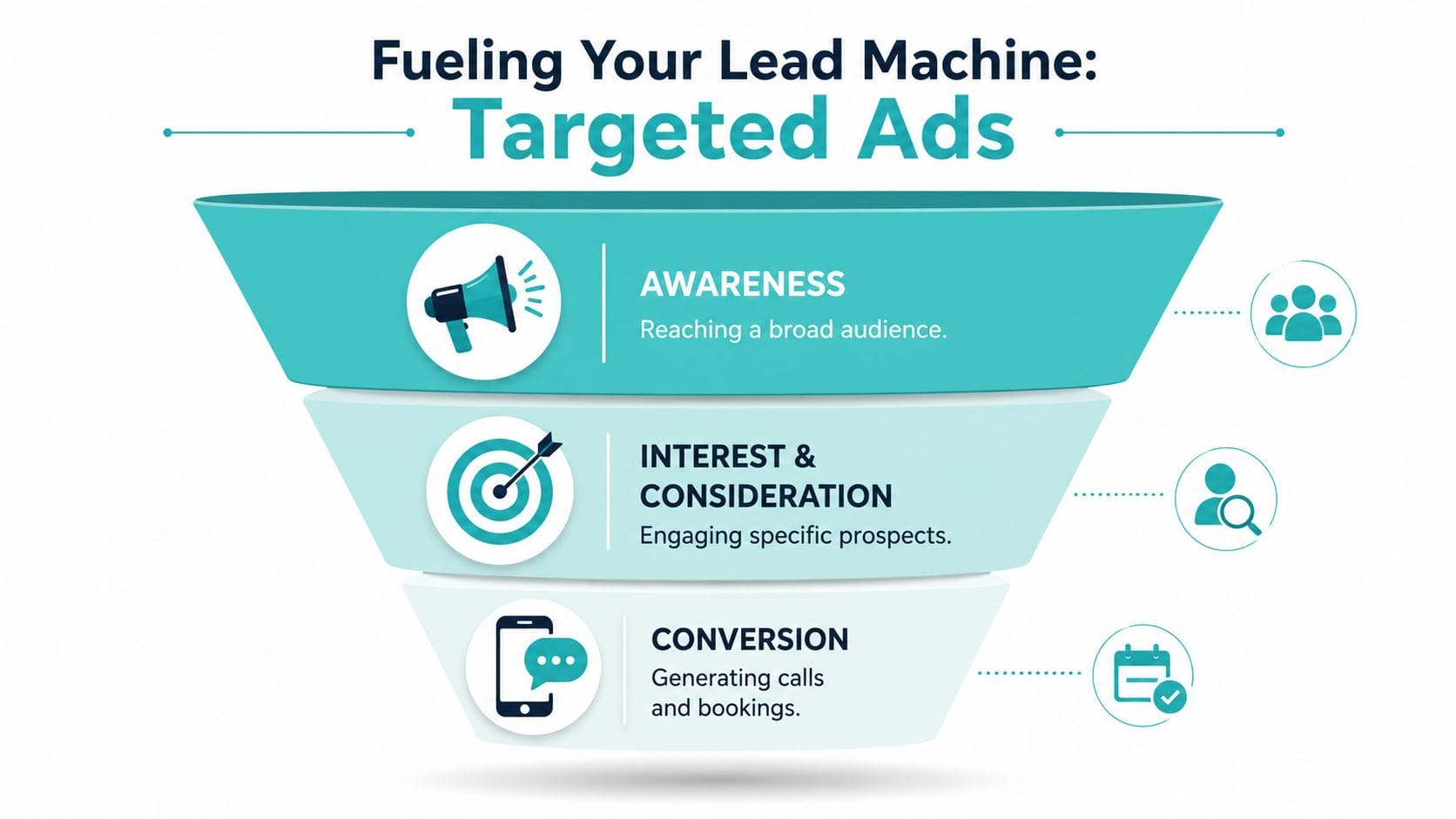
What ads actually do
Ads create visibility in the places where buyers are already searching.
That matters because people looking for a cleaner usually need one now. They are not browsing for fun. They want help, pricing, answers, and a fast next step. If your ad gets them there and your Lead Machine is built right, you've got a shot at the job.
If your site is weak, ad money gets wasted.
If you send paid traffic to a slow, confusing, generic site, you're paying to lose.
Why the pair matters
A professional cleaning service website is already treated like a real business asset. Cleaning Business Growth notes that projects often take 4 to 6 weeks and can start at $2,200, because they're built to be mobile-friendly, rank on Google, and convert traffic into leads and quote requests.
That tells you something important. Serious website work is not a vanity project. It's built for revenue.
Here's the simple breakdown:
- Website only: Looks fine. Sits still.
- Ads only: Brings traffic. Wastes money if the page doesn't convert.
- Lead Machine plus ads: Creates visibility and gives that traffic a clean path to call or book.
That's the system.
If you're trying to get more calls from nearby cities, Google Ads for home services is the kind of approach that makes sense only when the website is ready to catch and convert that traffic.
The End Result Predictable Calls and Controlled Growth
The goal isn't “more marketing.”
The goal is control.
Right now, you may be taking whatever comes in. Small jobs. Bad-fit jobs. Price shoppers. Last-minute work that throws off your week. That happens when you don't control visibility. You take scraps because you're not consistently showing up where better buyers are looking.
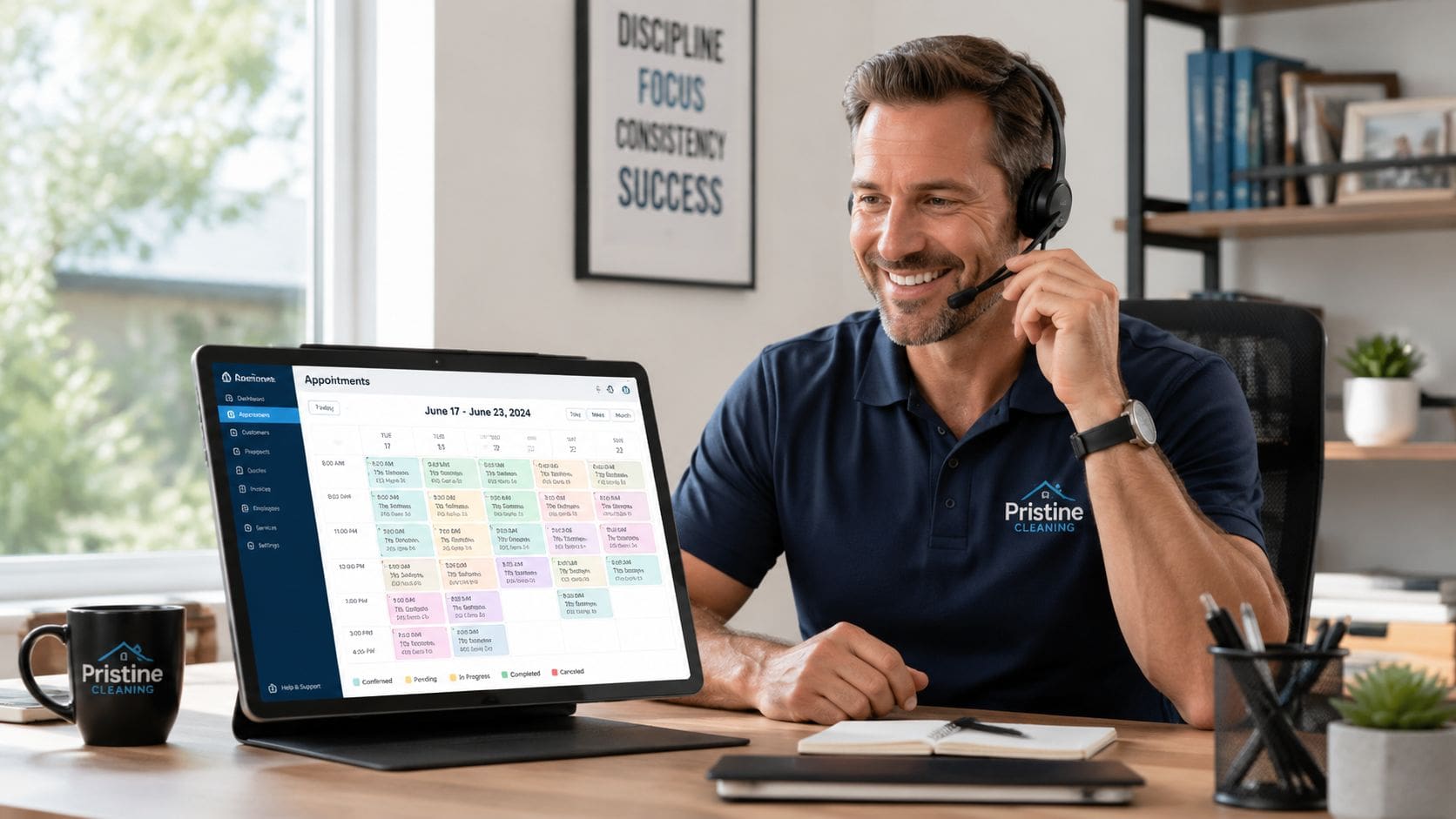
What control looks like
A controlled business looks different.
You know which cities you want. Your website is built around those cities and services. Your ads push visibility into those areas. The calls that come in make more sense because the message is clearer from the start.
That changes daily operations.
- Fewer random leads: People understand what you offer before they call.
- Better territory coverage: You're not trapped in one town online.
- More stable scheduling: You're not waiting on luck to fill openings.
- Stronger decision-making: You can be more selective about the jobs you take.
The before and after is stark
Before, the phone rings and you hope it's worth your time.
After, the business starts behaving like a system. Calls come from the areas you targeted. The site answers basic trust questions before the prospect ever speaks to you. The lead is warmer because they already saw the service, the location, and the next step.
You stop chasing work and start directing where it comes from.
That's what a website turned into a lead machine is supposed to do. Not guarantee magic. Not remove all effort. Just give your business a working system instead of a pile of guesses.
That's the difference between fragile growth and controlled growth.
Stop Guessing and Start Controlling Your Lead Flow
It happens like this. You pay for a website, maybe run a few ads, and still get calls from the wrong towns, price shoppers, or nobody at all. That is not a marketing problem. It is a bad system.
A cleaning business does not need a prettier online brochure. It needs a Lead Machine built to do one job. Show up in the cities you want, pre-qualify the visitor, and turn that visit into a call fast.
Use a simple test. Can someone in your target area land on your site, see that you serve their city, trust what they see, and contact you without hunting for the next step? If not, the setup is broken. Stop feeding it time and money.
The same rule applies to your marketing workflow. If your team needs a basic way to plan pages, offers, and promotions without turning the process into chaos, this strategic content planning template is a useful example.
Do less guessing. Build the right system.
If customers do not find you, nothing else matters. Lead Machines fix that by giving your website a clear job and making every part of the setup support it.
If you want help building a Lead Machine for your cleaning business, The Cherubini Company builds lead-focused websites and visibility systems for local service businesses that need more calls from the right areas.