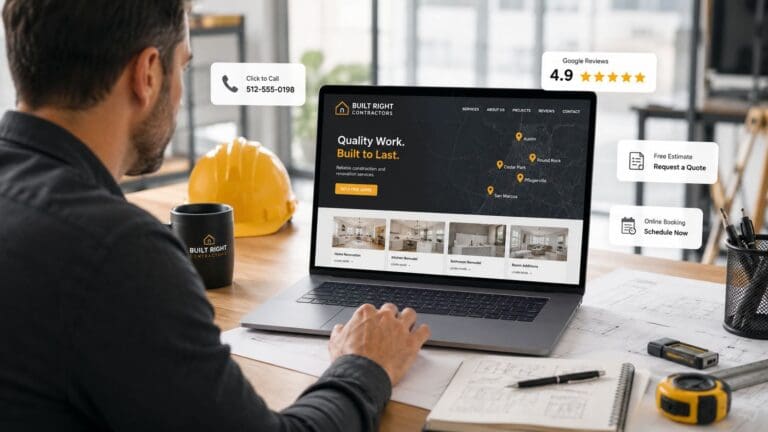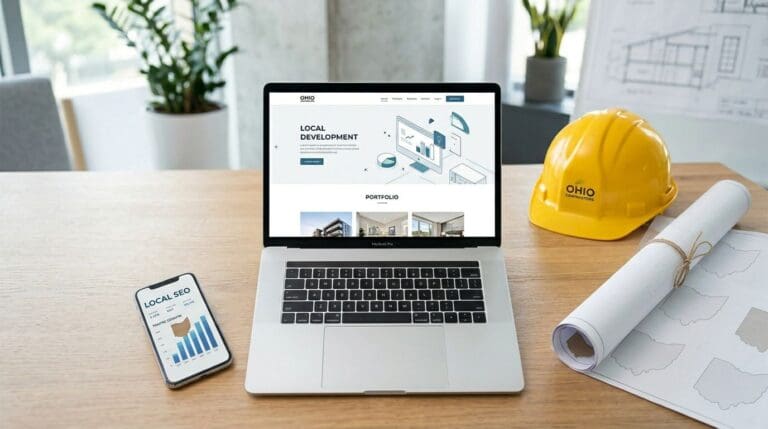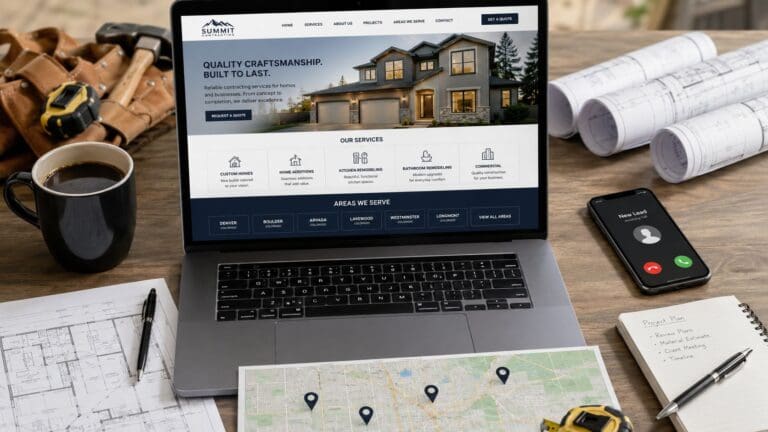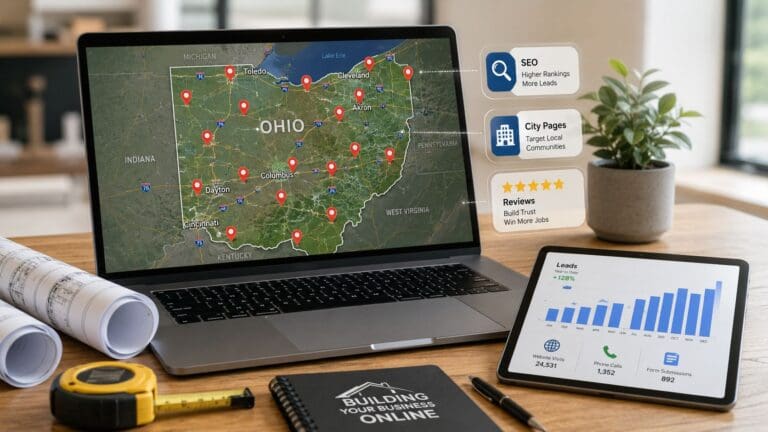
You paid for a website. It looks clean enough. Your logo is on it. Your phone number is on it.
And still, it sits there doing nothing.
No steady calls. No clear stream of quote requests. No sense that the thing is helping you win work. Just another expense you were told you “needed.”
That's why so many contractors hate this whole topic. You've heard the pitch before. Nice words. Fancy screenshots. Big promises. Then nothing changed.
The problem usually isn't that you don't work hard enough. It isn't that your service stinks. It isn't that people don't need what you sell.
The problem is that customers don't see you when they search. And if they don't see you, your website might as well be a flyer locked in your glove box.
Your Website Is a Ghost Town Isn't It
You know the setup.
A contractor gets a site built because somebody says he needs an online presence. He pays for the photos, the write-up, the pages, the launch. Maybe it was sold as one of those affordable website design packages. Maybe it was sold as a custom site. Doesn't matter much if the end result is the same.
The site goes live. Then it just sits there.

You still get most of your work the old way. Referrals. Repeat customers. Somebody's cousin. Somebody from church. Somebody who already knew your name. That's fine until it isn't. One slow stretch hits and now the crew is looking at you, the schedule is thin, and that website you paid for isn't helping.
You didn't buy a website because you wanted a decoration. You bought it because you thought it would help bring in jobs.
That's where a lot of guys get stuck. They think the website is broken because it isn't “generating” leads. But websites don't create demand. They wait for demand to show up. If nobody lands on it, nothing happens.
That's why so many lead gen websites suck in leads only when they're built for one job and supported by a real visibility plan. A pretty site with no visibility is still a ghost town.
What this feels like in real life
- You've been burned before and now every marketing pitch sounds the same.
- You're tired of guessing where leads come from.
- You thought the website would help but the phone still rings mostly from word of mouth.
- You know you do good work yet smaller competitors keep showing up online before you do.
That's not a website problem by itself.
It's a visibility problem.
Why Affordable Website Packages Are a Dead End
“Affordable” sounds smart. It sounds responsible. It sounds like you're avoiding waste.
But in this market, affordable website design packages can mean almost anything.
The price range is all over the place. DIY builders can start under $20 per month, subscription services often run about $39 to $399 per month, freelance custom sites are often $500 to $5,000, and agency packages commonly start around $2,000 and can go to $10,000+ according to this website pricing breakdown from TL Design Studios.
Cheap compared to what
If one option is under $20 a month and another is over $10,000, then “affordable” isn't a real standard. It's just a label.
That's the trap.
A contractor searches for affordable website design packages and thinks he's shopping for value. Most of the time, he's really shopping for the lowest pain at checkout. That usually gets him a site that checks a box and does nothing else.
Here's the blunt truth. A cheap website is usually cheap because the scope is small, the structure is thin, and the strategy is missing. It gives you a homepage, an about page, a contact page, and maybe a service page or two. That is not a lead system. That is an online business card.
Price alone tells you nothing
The web design market is huge. VWO cites a USD 58.5 billion global market size in 2022 and estimated $43.5 billion in U.S. web design revenue in 2024. The same source says freelancers commonly charge $1,500 to $5,000 per year and agencies often charge $1,000 to $6,000 for web designing, sometimes with added services bundled in, as shown in these web design market statistics from VWO.
That matters for one reason. Providers package websites in repeatable tiers because they're selling scope, not magic.
Hard rule: Don't ask, “What's the cheapest website I can get?” Ask, “What does this site need to do so it brings in jobs?”
If the package doesn't help you get seen in the places you want to work, it's not affordable. It's just cheaper to buy.
A lot of contractors learn that the hard way. They save money upfront, then spend again to replace the first site because it never had a shot. If you want the short version, cheap small business web design usually costs more once you count the jobs you never even had a chance to bid.
The Real Problem You're Invisible 10 Miles Away
Most contractors are not invisible everywhere.
They're invisible in the places that matter next.
You may show up in your hometown because that's where your shop is, that's the city on your profile, and that's the town named on your website. But go a few towns over and try the same search from there. Different story.
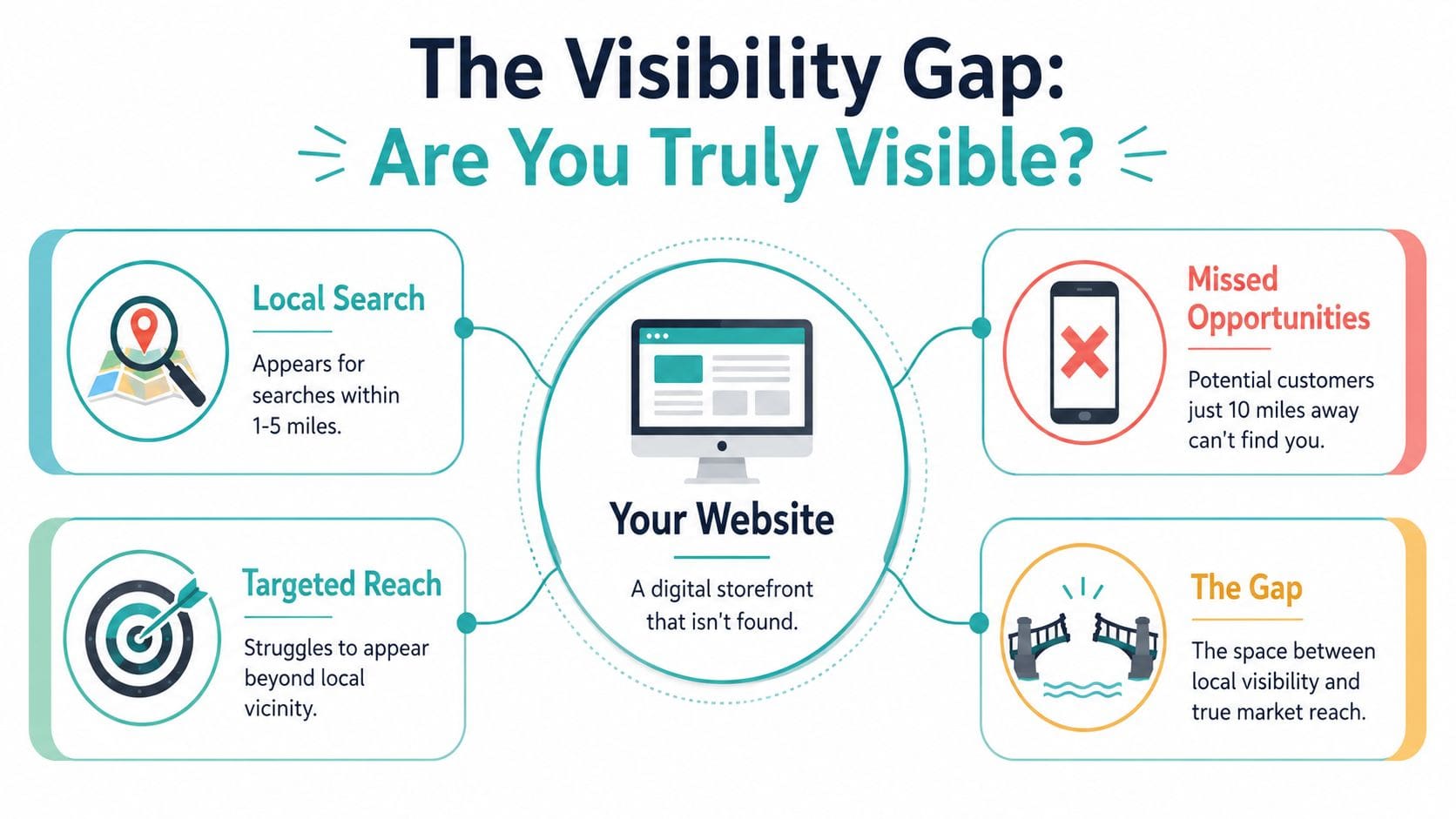
A homeowner in the next city doesn't search your company name if they've never heard of you. They search for the job they need. Roofing contractor near me. Excavation contractor near me. Concrete contractor near me.
Google reads “near me” as that person's current location. So the search becomes your service in their city.
Why your hometown doesn't carry you
Google is not going to assume you work in a place you never mention.
If your website talks about Newark over and over, but never clearly says you also work in Heath, Granville, Pataskala, or the next county over, then you've trained Google to connect you to one place. That's why you feel well known at home and dead online outside it.
This is the visibility gap.
If a customer knows your name, they can probably find you. If they don't know your name, they can only find whoever shows up for the service and city they searched.
That's where jobs disappear. Not after the estimate. Not after the follow-up. Before you were ever in the running.
What invisibility costs you
It shows up in ways contractors miss at first:
- You stay busy with small jobs because bigger jobs in nearby cities never hit your phone.
- You think demand is down when the underlying issue is that your competitors are getting seen first.
- You rely harder on referrals because search isn't feeding the pipeline.
- You feel random swings in revenue because you don't control visibility.
That's also why many contractors say, “People can find us.” Sure, they can. If they already know you exist.
That's not the game.
Financial gain comes from being found by the people who need your work right now and have never heard your name before. If your business doesn't show up where those searches happen, you're handing work away. If you're wondering why that happens, start with this look at why a business doesn't show up on Google.
The problem is not effort
You can outwork your competitors in the field and still lose online.
Big companies buy visibility. Small contractors often rely on hope. Hope is not a system. Hope doesn't expand your service area. Hope doesn't tell Google where you do work.
Your issue usually isn't leads first.
It's visibility first.
What a Real Lead Machine Website Includes
A real website for a contractor should do one job. Turn attention into calls.
That's what a Lead Machine is. Not a pretty brochure. Not a vanity project. A site built to catch demand and turn it into action.
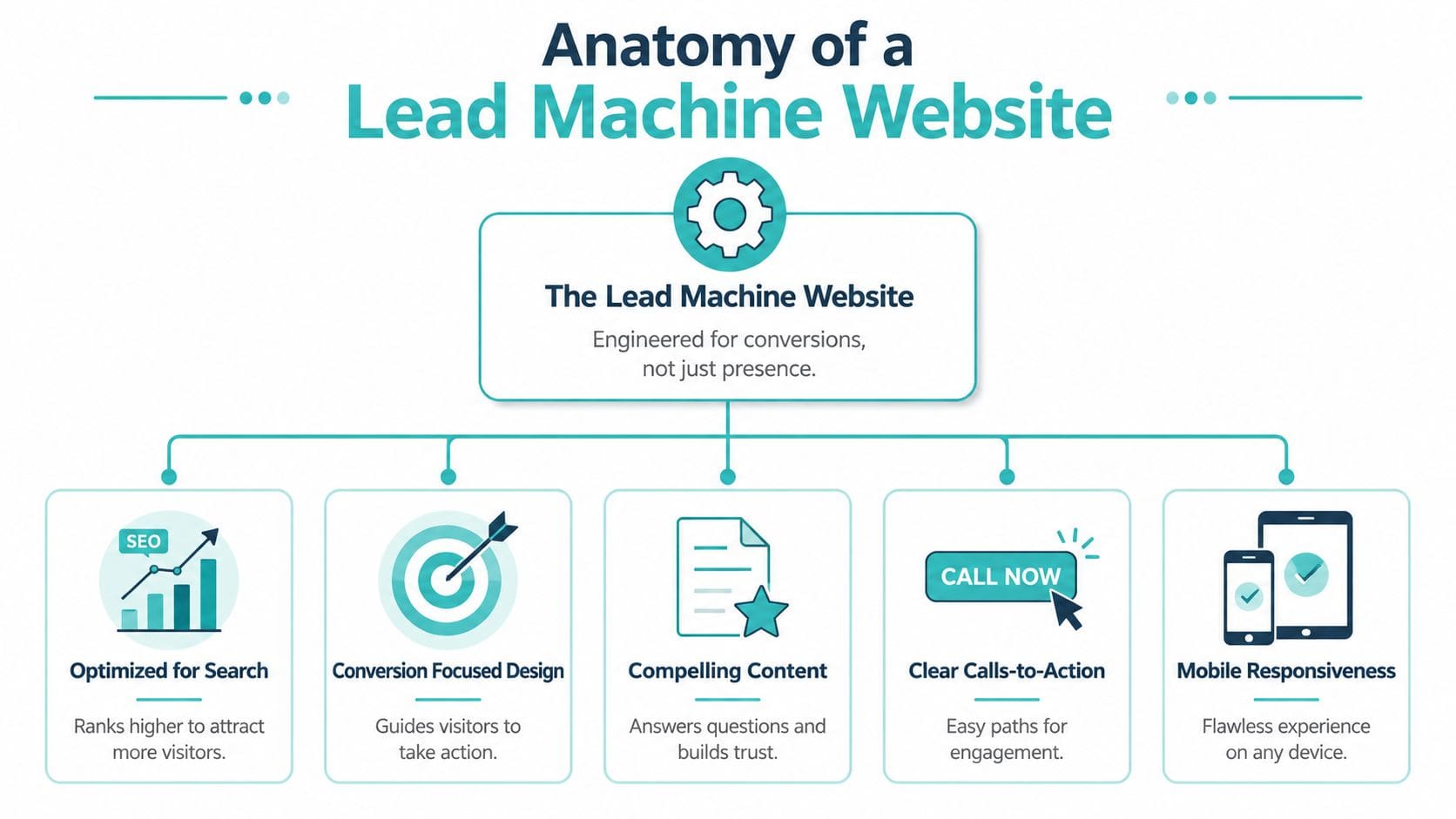
A basic package usually won't get you there. TL Design Studios notes that a basic $500 to $1,500 package typically includes only 3 to 5 pages and a generic design, while a semi-custom small-business package in the $2,000 to $5,000 range often supports 5 to 10+ pages, which is enough room to build service and city pages that expand visibility across a service area, as explained in this breakdown of package tiers and scope.
The pages that actually matter
If you do multiple services, each service needs its own page.
If you want work in multiple towns, each city needs its own page.
That isn't fluff. That's structure. One generic page that says “we do excavation, grading, septic, drainage, and site work in central Ohio” is weak. Separate pages give buyers and search engines clear signals about what you do and where you do it.
Here's the plain version:
| Need | What the page does |
|---|---|
| Service page | Matches the exact job the customer is searching for |
| City page | Matches the exact location the customer is searching from |
| Contact page | Gives a clear path to call or request a quote |
| Review proof | Builds trust fast |
| Strong homepage | Points visitors to the right service and location |
The parts you should treat as non-negotiable
- Clear service pages so people land on the exact work they need.
- City pages so you're not stuck being visible only in your home base.
- Click-to-call buttons because mobile visitors need one simple next step.
- Quote forms for people who don't want to call first.
- Review proof so trust is built before you ever pick up the phone.
- Fast mobile layout because contractors lose work when phone users get a clunky page.
If you want a simple example of why tap-to-call matters on a contractor site, this breakdown on driving instant conversions is worth a look. People don't want to hunt for a number when they're ready to talk.
The best contractor website is the one that removes friction. It doesn't make people think. It makes it easy to call.
What separates a brochure from a machine
A brochure site says who you are.
A Lead Machine says who you help, what job you do, where you do it, why you can be trusted, and what the visitor should do next.
That's the difference.
One option in this space is The Cherubini Company's guide to website must-haves that generate leads, which focuses on service pages, city pages, calls to action, reviews, and lead capture. That's the right direction because it treats the website like a sales tool, not a digital flyer.
How Ads Fuel Your Lead Machine for Predictable Calls
A good website without traffic is parked equipment.
It has value, but it isn't moving.
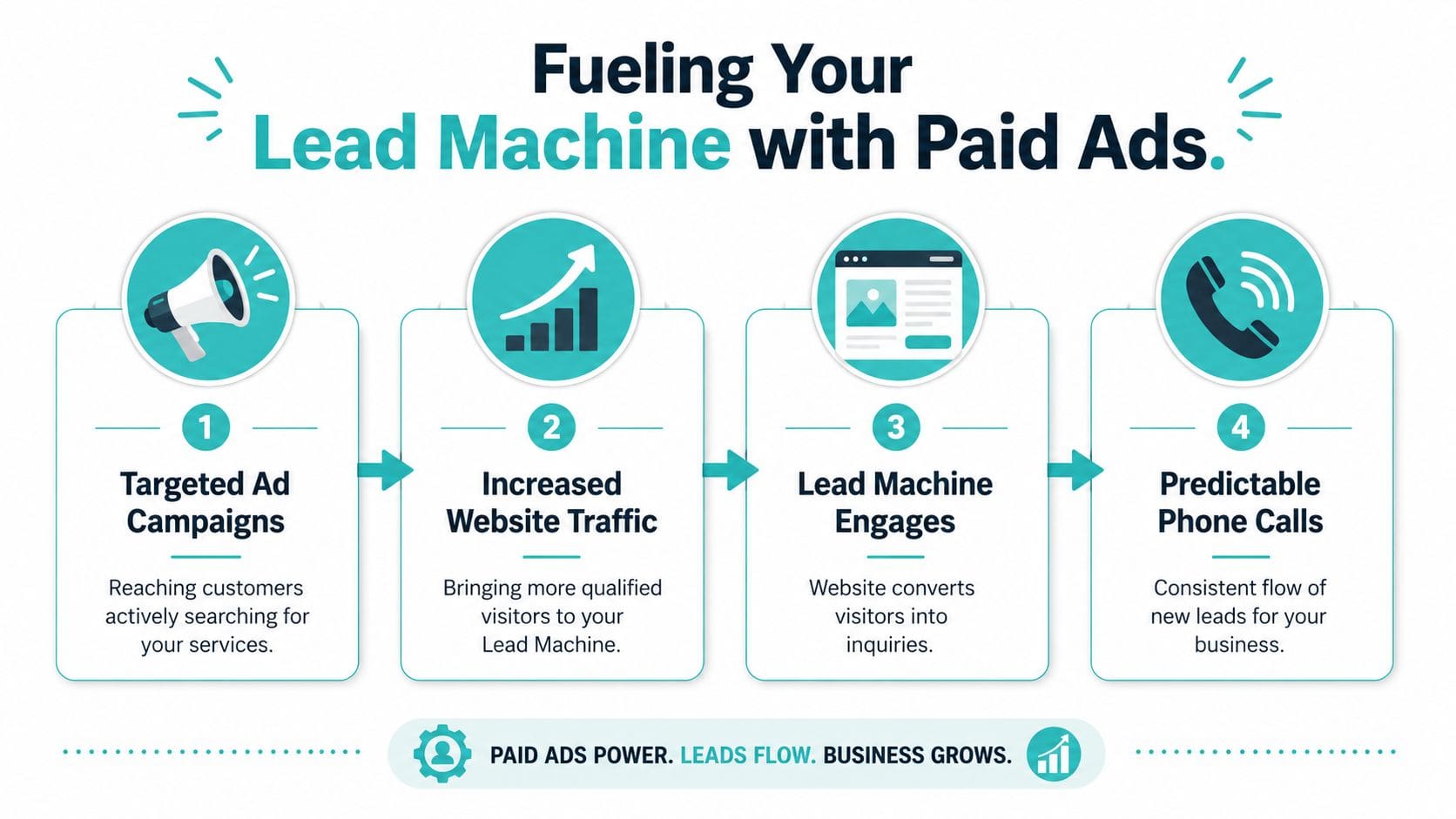
That's where ads come in. Ads buy visibility. They put your business in front of people searching for your service right now. Not next month. Not after they stumble across a social post. Right now.
A lot of contractors avoid ads because they've been burned. Fair enough. Usually the problem wasn't that ads are bad. The problem was the system was broken.
Why ads fail for some contractors
Ads fail when they send people to junk.
If the landing page is weak, the offer is muddy, the city isn't clear, or the site feels slow and confusing, then paid traffic turns into wasted money. That's not an ad problem. That's a conversion problem.
Ads also fail when the contractor expects the ad itself to do all the work. It won't. The ad gets the click. The website gets the call.
Why the combo works
A Lead Machine and ads work together because each one handles a different job.
- Ads create visibility in the places you want work from.
- The website handles conversion once the visitor lands.
- Tracking shows what's happening so you're not guessing.
- A repeatable system beats word of mouth alone because you can turn visibility up when you need more demand.
Ads without a strong website waste money. A strong website without visibility waits in silence.
That's the system contractors need to understand. You do not need more random marketing activity. You need controlled visibility feeding a site built to turn searches into calls.
If you want the direct version of how that works, this page on Google Ads to fuel your Lead Machine lays out the simple idea. The website is the asset. The ads are the fuel.
Predictable beats hopeful
Relying only on referrals feels safe because it's familiar. But it leaves you exposed.
The phone rings when other people decide to mention your name. That's not control. That's dependency.
When you buy visibility and send it to a site built for leads, you stop sitting around hoping people remember you. You give buyers a direct path to find you, trust you, and contact you.
That's how calls become more predictable.
Stop Guessing and Start Controlling Your Lead Flow
If you run a contracting business on word of mouth alone, you're building on shaky ground.
It can work for a while. It can even work for years. But it leaves too much to chance. One slow spell, one market shift, one competitor getting more aggressive online, and now you're chasing work instead of choosing it.
The answer is not chasing the cheapest of all affordable website design packages.
The answer is building a system that fixes the problem.
What control actually looks like
Control means your business shows up where you want work.
Control means your site matches the services you sell and the cities you serve. Control means people can call fast, request a quote fast, and trust what they see. Control means you can add fuel when you want more demand instead of waiting around for a referral to save the month.
That's how you stop taking every small job that comes through the door just to keep the schedule full.
The shift that matters
You don't need a prettier website.
You need a site that supports visibility.
You don't need more random marketing.
You need a repeatable way to be found by buyers who are already searching.
Bottom line: If you don't control visibility, you don't control revenue.
That's the whole thing.
A dusty website won't save you. Cheap packages won't save you. Hope won't save you. A Lead Machine paired with ads gives you a way to stop guessing and start running your lead flow like part of the business.
You think customers can find you. But if customers don't find you, nothing else matters.
Lead Machines are built to fix that.
If you want a clear read on where your visibility breaks down, talk to The Cherubini Company. They help contractors map where they show up, where they don't, and what it takes to turn a basic site into a Lead Machine that supports real lead flow.