You're probably doing this right now.
A plan hits your desk. You spend hours on it. You measure, check prices, think through labor, and try to protect your margin without pricing yourself out. Then you send the bid and wait.
Sometimes you win. A lot of times you don't. Sometimes the customer goes silent. Sometimes you lose to somebody cheaper. Sometimes you find out later the job went to a contractor you've never even heard of.
That's why a lot of owners start looking at estimating software. It makes sense. If the bids were faster, tighter, and cleaner, maybe more jobs would close.
That sounds logical. It just isn't the main problem for most contractors.
The Search for the Perfect Estimate
You want better numbers because bad numbers hurt. Underbid the job and you eat it. Overbid it and you never get a call back. So you chase the perfect estimate like it's the fix for the whole business.
That's not crazy. It's what most contractors do.
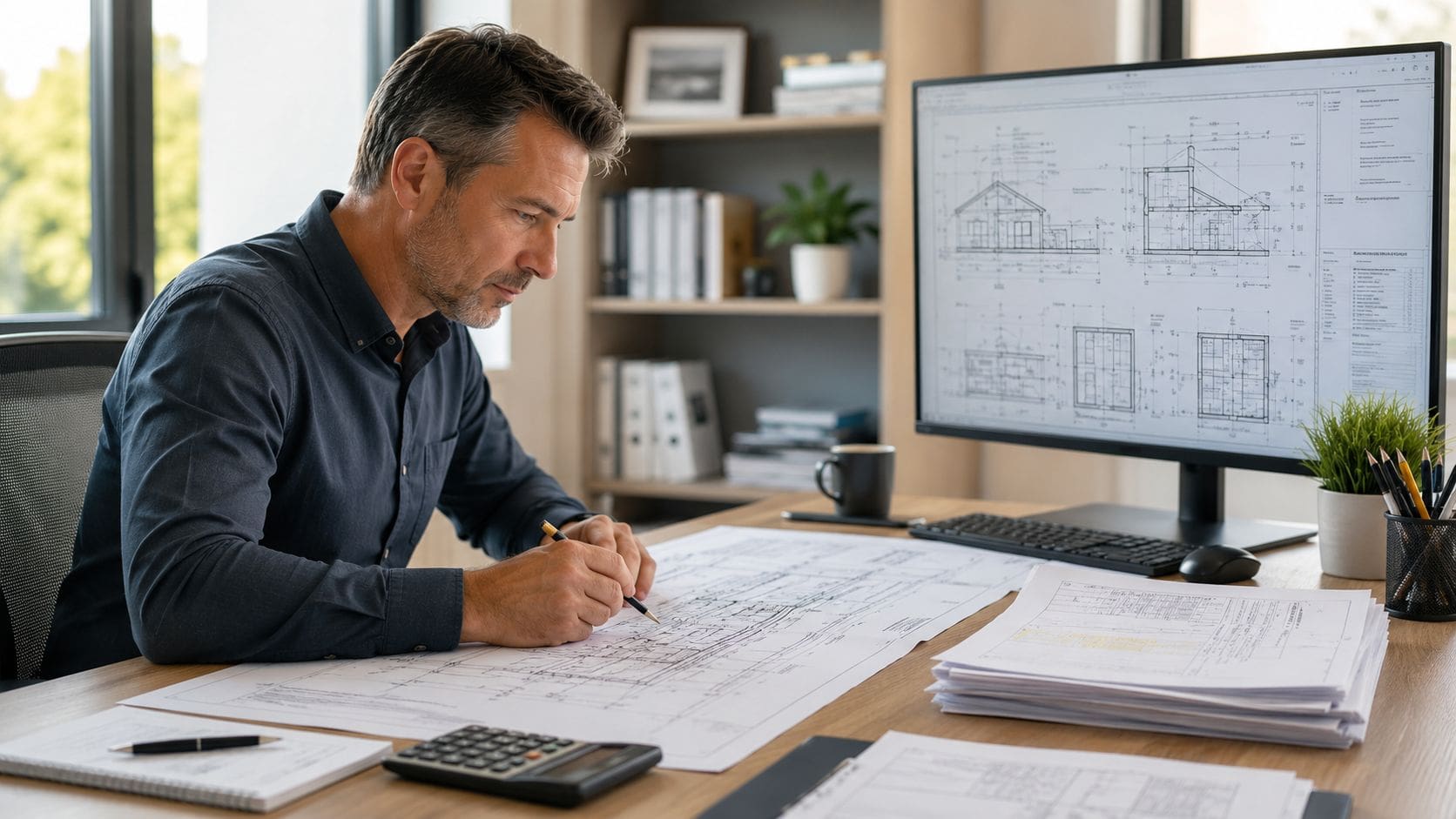
Why contractors keep looking for a better tool
A bid is work. Real work. It takes focus, time, and judgment.
You're not just punching in numbers. You're trying to protect your company from risk, keep your crew busy, and still give the customer a price they'll accept. So when jobs keep slipping away, the next thought is obvious. Maybe the process needs a better tool.
And yes, estimating software can help organize the work.
But the market has already moved there. Construction software use is common now. In construction software adoption data from Market.us Scoop, 85.40% of construction respondents use software for accounting and 60.40% use software for estimating. That tells you something important. Having estimating software is no longer rare. It's normal.
The hard truth behind the search
If most of your competitors already use some form of software, then software alone isn't your edge.
Practical rule: If everybody has the tool, the tool isn't the advantage.
The pain isn't just building the estimate. It's spending your time building estimates that don't turn into the kind of work you want.
A perfect bid on the wrong job still gives you the wrong job.
A perfect bid you never win is dead time.
That's where a lot of contractors get stuck. They think the answer is inside the estimate. Most of the time, the answer is before the estimate ever starts.
Better Bids Do Not Equal a Better Business
A tighter estimate can help you price work more clearly. It cannot fix a weak pipeline.
That distinction matters more than most owners admit.
What estimating software does and doesn't do
Estimating software can help with takeoffs, pricing, and consistency. Good. You should want that.
But it only improves one slice of the business. It does not create demand. It does not make the phone ring. It does not put you in front of the people who never knew your company existed.
Here's the trap. You get faster at quoting jobs that are too small, too price-sensitive, too messy, or too far outside your sweet spot. Now you're more efficient at chasing scraps.
Better estimating helps operations. It doesn't solve a demand problem.
Why the return can feel disappointing
The market for this stuff is getting bigger. According to Grand View Research's construction estimating software market report, the global construction estimating software market was estimated at USD 1.5 billion in 2024 and is projected to reach USD 2.62 billion by 2030. That shows demand.
It does not prove fast return for every contractor.
The same source points to the practical gap small operators feel. Setup takes time. Templates have to be built. Old data has to be cleaned up. That means you can spend money and energy on software, then look up a few months later and realize your bigger problem still hasn't changed.
You still don't have enough good jobs to bid.
The business question that matters
Ask yourself this:
| Question | Why it matters |
|---|---|
| Am I bidding better jobs? | Better jobs improve margin and schedule control. |
| Am I just bidding faster? | Speed alone doesn't fix weak demand. |
| Do I have enough chances to say no? | If you can't say no, you're still operating from scarcity. |
If the work coming in is random, low quality, or inconsistent, then better bids won't give you a better business. They'll just make the same broken cycle move faster.
Your Problem Is Not Estimating It Is Invisibility
Most contractors don't have a bid problem first. They have a visibility problem first.
That's the part people miss.
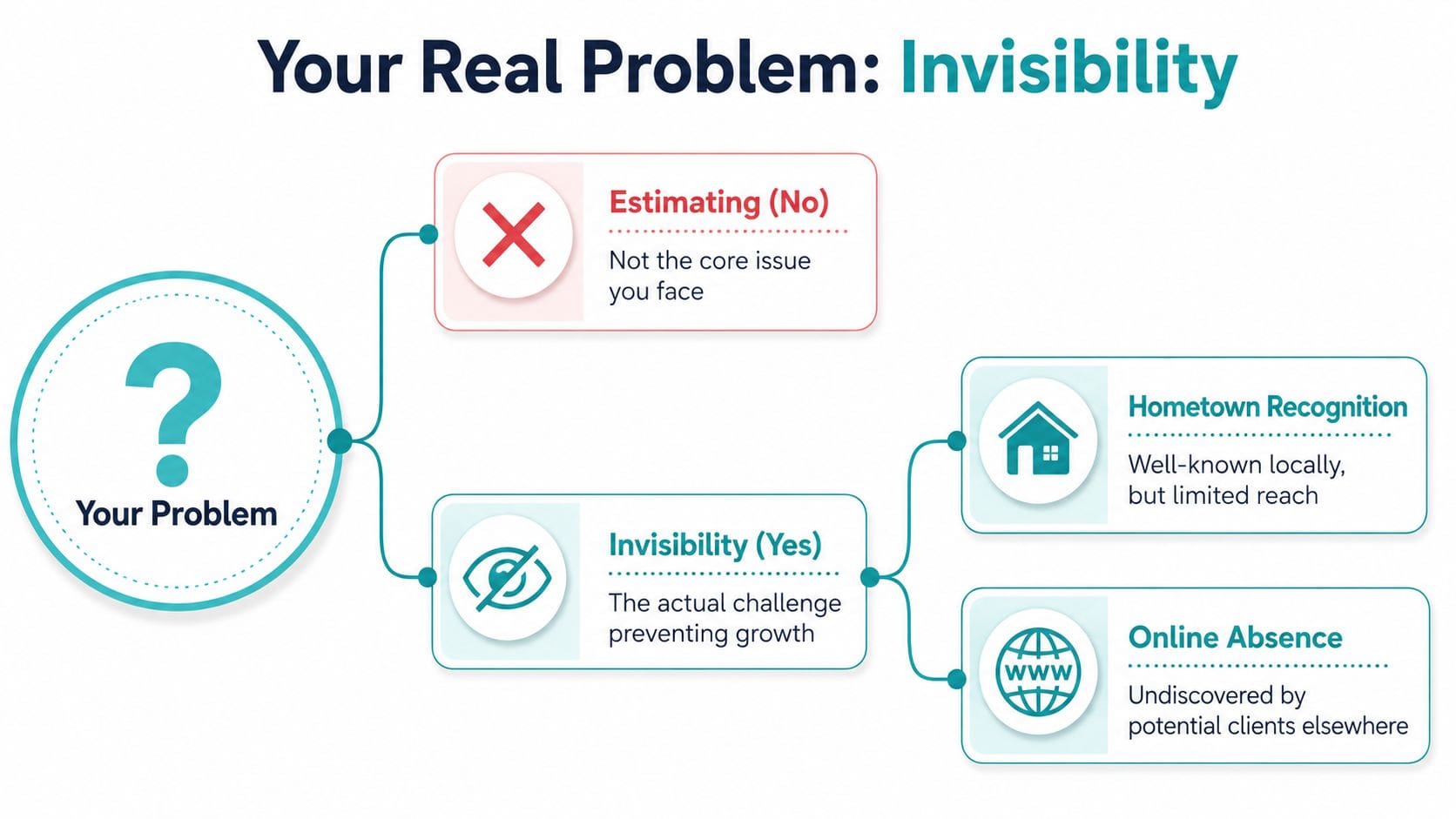
The hometown trap
You're probably known in your home area. People see your trucks. Past customers remember your name. Referrals still happen.
Then you go ten miles away and it's like your business disappears.
When somebody searches for your service “near me,” Google ties that search to the city that person is standing in. If your business only signals your home city, then in nearby towns you're weak or absent. You may do work there all the time, but if you never clearly show that online, Google has no reason to connect you to that market.
That's the core leak in the bucket. This breakdown of why contractors don't get enough leads gets straight to that issue.
What invisibility costs you
The worst jobs to lose are the ones you never even knew existed.
You can't bid them. You can't follow up. You can't build a relationship. You don't get a shot.
That's why so many contractors feel stuck with junk leads and price shoppers. They're fishing in a small pond because that's the only place they're visible. Then they think they have a lead problem.
They do. But the lead problem is caused by invisibility.
Your Website Does Not Create Work
A website is not a lead source by itself.
It's a tool. A destination. A place people land after they already found you.
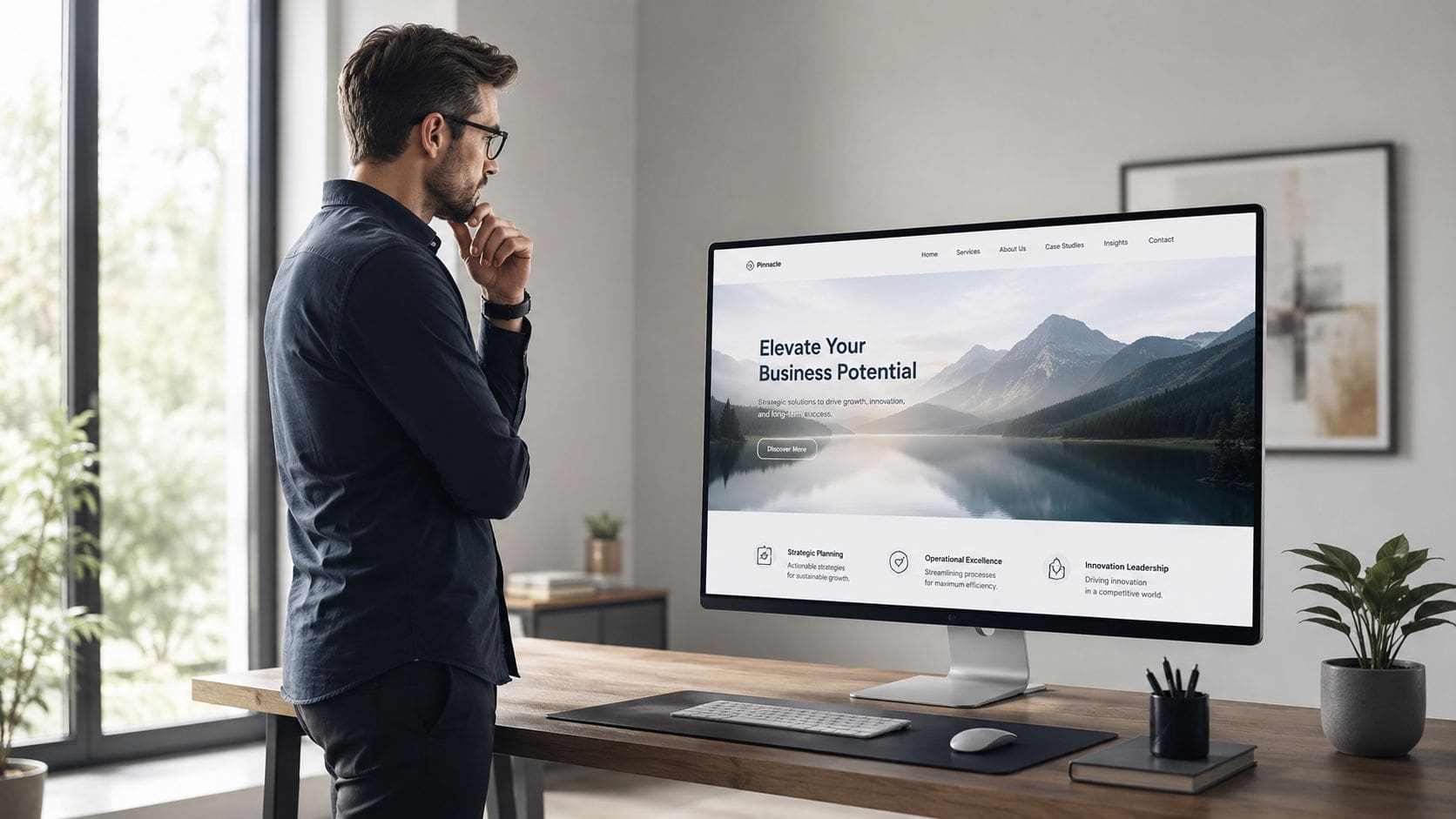
A website without traffic is a brochure
A lot of contractors got sold the same bad story. Build a nice site and leads will come.
No they won't.
Websites don't create traffic. They wait for traffic. That's why so many contractor sites just sit there like a printed brochure on a shelf. It may look fine. It may say the right things. None of that matters if nobody lands on it.
This article on why websites don't generate leads says it plainly, and it's right.
Think of it like this
Say you build the cleanest supply house in the state.
- Great building: Sharp layout, easy to use, everything organized.
- Good inventory: Products are there. Staff is ready.
- No road in: Nobody can get to it.
That's your website without visibility.
Big companies understand this. They don't sit around hoping people stumble across them. They buy visibility. They put themselves in front of buyers on purpose.
Small contractors usually do the opposite.
They hope referrals hold up.
They hope the phone keeps ringing.
They hope last month repeats itself.
Hope is not a system.
If your website isn't being fed real visibility, it's just sitting there.
The System That Turns Visibility Into Jobs
The fix isn't another random marketing trick. It's a system.
Not hustle. Not guessing. Not “post more and see what happens.”
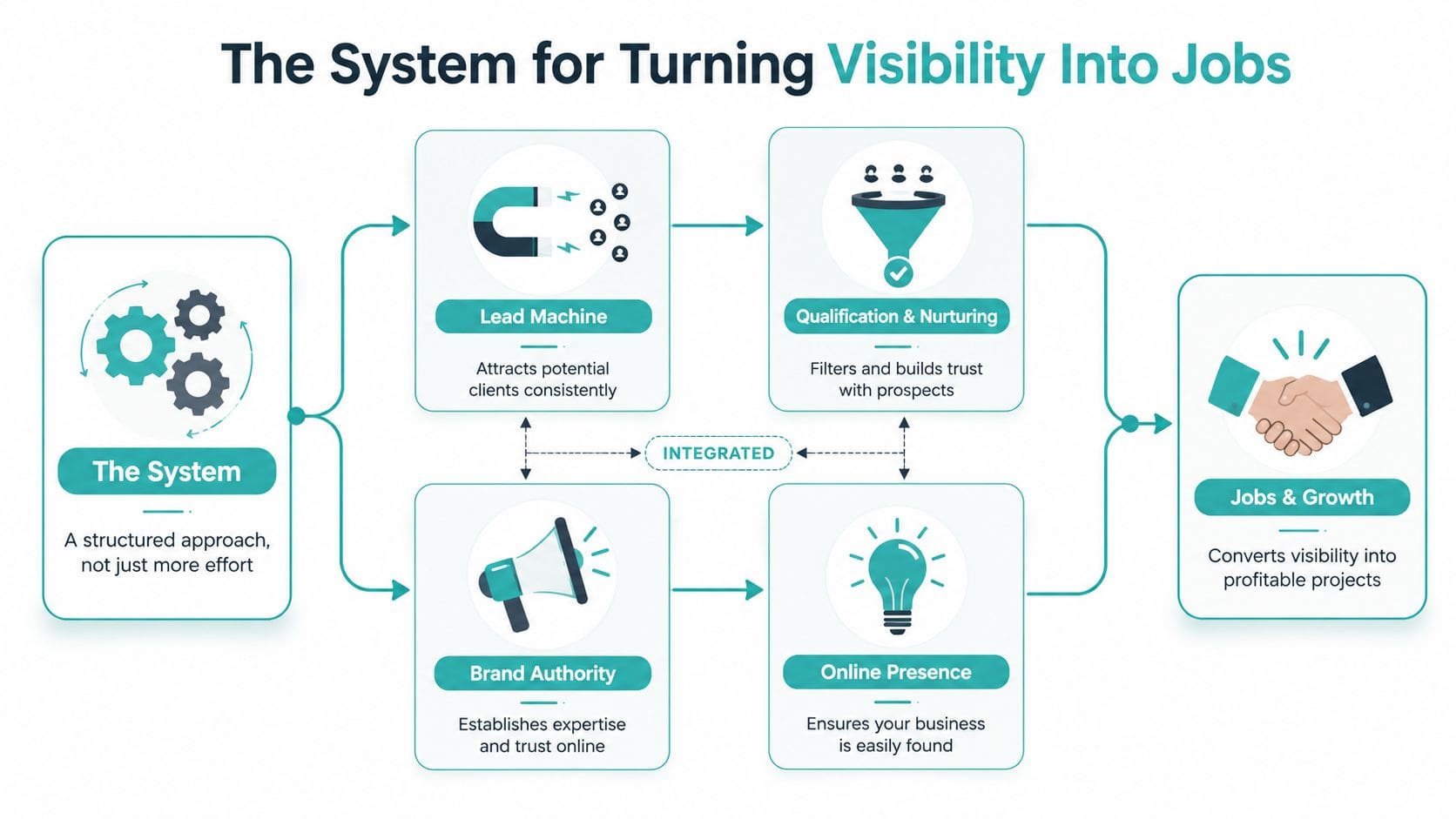
Two parts that have to work together
The first part is a Lead Machine.
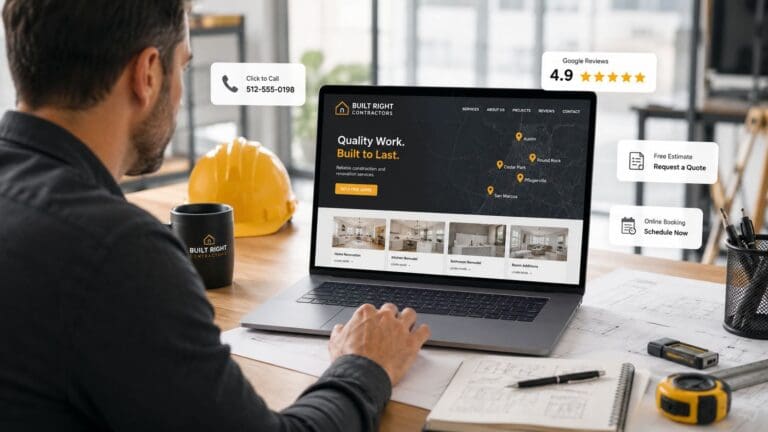
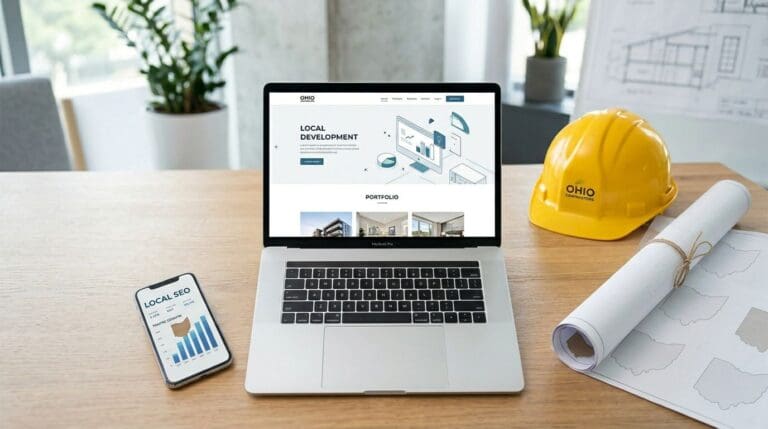
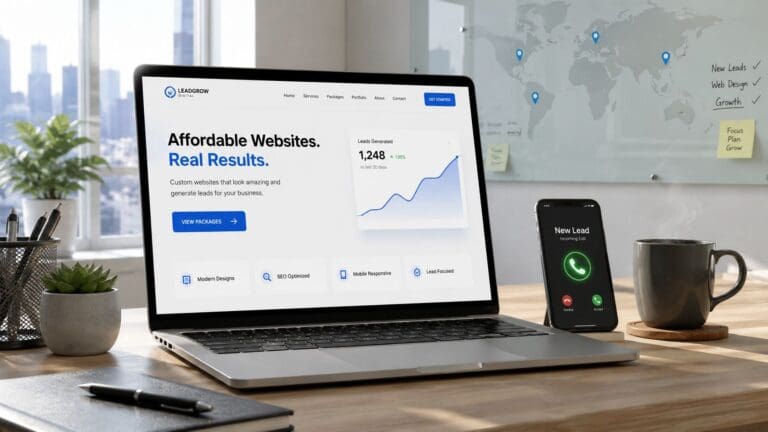
That means a website built to turn visitors into calls and quote requests. Not a vanity site. Not a design project. Not a digital business card. It has one job. Convert demand into real contact.
The second part is ads.
Ads create visibility. They put you in front of people who are already looking for the service you offer in the places you want to work. They don't replace the website. They feed it.
If you want the simple version of that model, this explanation of what a Lead Machine is lays it out clearly.
Why this works better than a pile of tools
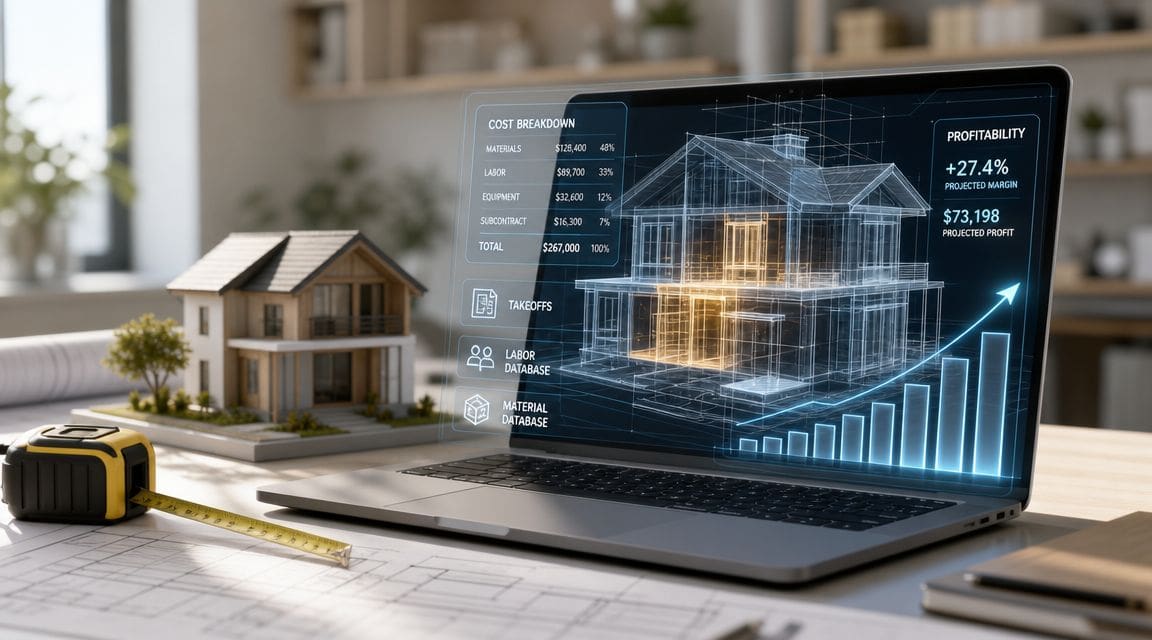
Modern estimating software tries to become a decision-support system by combining takeoffs, cost databases, and workflow in one place, as described in Harris Constructors' overview of construction estimating software. A lead system should work the same way for sales. Visibility from ads plus conversion from a Lead Machine creates a predictable flow of opportunities to bid.
That's the part most contractors are missing.
Here's the contrast:
| Setup | Result |
|---|---|
| Website only | You wait and hope people find you. |
| Ads only | You pay for clicks that don't turn into calls. |
| Lead Machine plus ads | You create visibility and capture it. |
For owners who want a broader view of how businesses think about software growth and buyer intent, Market With Boost's software marketing insights are worth a look. Different field, same truth. The tool matters less than the system that gets the buyer to it.
The website is the asset. The ads are the fuel. Together they create a pipeline.
Stop Guessing and Start Controlling Your Business
If your lead flow depends on referrals, luck, and random calls, you don't control your business. You're reacting to it.
That's why so many owners stay stressed even when they're busy.
Busy doesn't always mean healthy
A packed week can hide a weak pipeline.
You can be slammed with small work, low-margin work, or jobs you took because you didn't have enough better options. That's not stability. That's survival wearing a work shirt.
And when things slow down, the truth shows up fast.
- No visibility: Fewer good calls come in.
- No system: You start saying yes to work you should pass on.
- No control: Margin gets squeezed because you need something, anything, to keep moving.
That's why owners spend freely on trucks, tools, and machines but drag their feet on demand generation. Equipment helps you do the work. Visibility helps you get the work.
Better leads change how you run the company
When you have a steady stream of real opportunities, your whole posture changes.
You stop chasing every job.
You stop pricing from fear.
You stop pretending the next referral will save the month.
Instead, you choose.
You can bid the bigger work. You can pass on bad-fit jobs. You can protect your crew from chaos. You can stop competing on price with every lowball outfit in the county.
If you're comparing options on the estimating side, Exayard construction estimating software is one more example of how the market keeps expanding around better bid tools. Just don't confuse a better estimating tool with a better lead system. They solve different problems.
A contractor with control can be selective. A contractor without control takes what shows up.
You think that customers "can" find you but, If customers "don't" find you, nothing else matters. Lead Machines are built to fix that.
If you're tired of guessing and you want a system that helps your company get found in the cities where you want work, talk to The Cherubini Company. They build Lead Machines for contractors who need more visibility, more calls, and more control over where the next job comes from.