You're slammed. Then you're staring at the phone wondering where the next good job is coming from.
That's the cycle a lot of contractors live in. One month you're buried in work. The next month you're chasing small jobs, bad leads, and price shoppers. You're busy, but busy doesn't always mean growing.
A lot of owners think the problem is effort. It isn't. You already work hard. The actual problem is that you don't control where and when people see you online.
You're Busy But Are You Growing
The biggest pains contractors keep running into are simple.
“We've tried running ads and they didn't work.”
“That's what the other agencies said.”
“We've been burned before.”
You're not crazy for being skeptical. A lot of local contractors have spent money on websites, ads, or marketing companies and got nothing but excuses back.

Busy doesn't equal stable
If your business runs mostly on word of mouth, referrals, and repeat customers, you already know the problem. It works until it doesn't. You have no switch to turn on when things slow down.
That creates feast or famine. No control. No predictability.
A lot of owners also tell themselves they're too busy to deal with marketing. That sounds fine when crews are moving and invoices are going out. Then a few jobs wrap up, the pipeline thins out, and the stress shows up fast.
Your phone rings, but not always for the work you want
You might be getting calls already. But are they the right calls?
Too many contractors stay packed with small jobs while the bigger work goes to the companies that show up first online. That's the part that stings. You're working hard, but not always on the jobs that move the business forward.
A 2023 survey found that over 60% of homeowners start their search for a contractor online, and 76% immediately contact a business on the first page of local search results according to Blue Corona's summary of the ServiceTitan industry benchmarking survey. If you're not visible there, you're invisible to most new customers.
Here's the hard truth. Big companies buy visibility. Small contractors usually rely on hope.
That's why so many owners keep guessing. They don't have a system. They have a patchwork of referrals, an old site, maybe some random ad spend, and no real control. If you want a steadier job pipeline, this breakdown of how to build a steady pipeline of jobs year round is the right place to start.
What this looks like in the real world
- You stay busy with filler work: The calendar looks full, but the profit isn't where it should be.
- You chase jobs you don't even want: Small jobs eat time, wear out crews, and block better work.
- You guess instead of knowing: You don't know which calls came from referrals, search, or ads.
- You feel growth slipping: You're working in the business every day, but the business itself isn't getting stronger.
The Invisibility Problem Costing You Jobs
Most contractors don't have a work quality problem. They have a visibility problem.
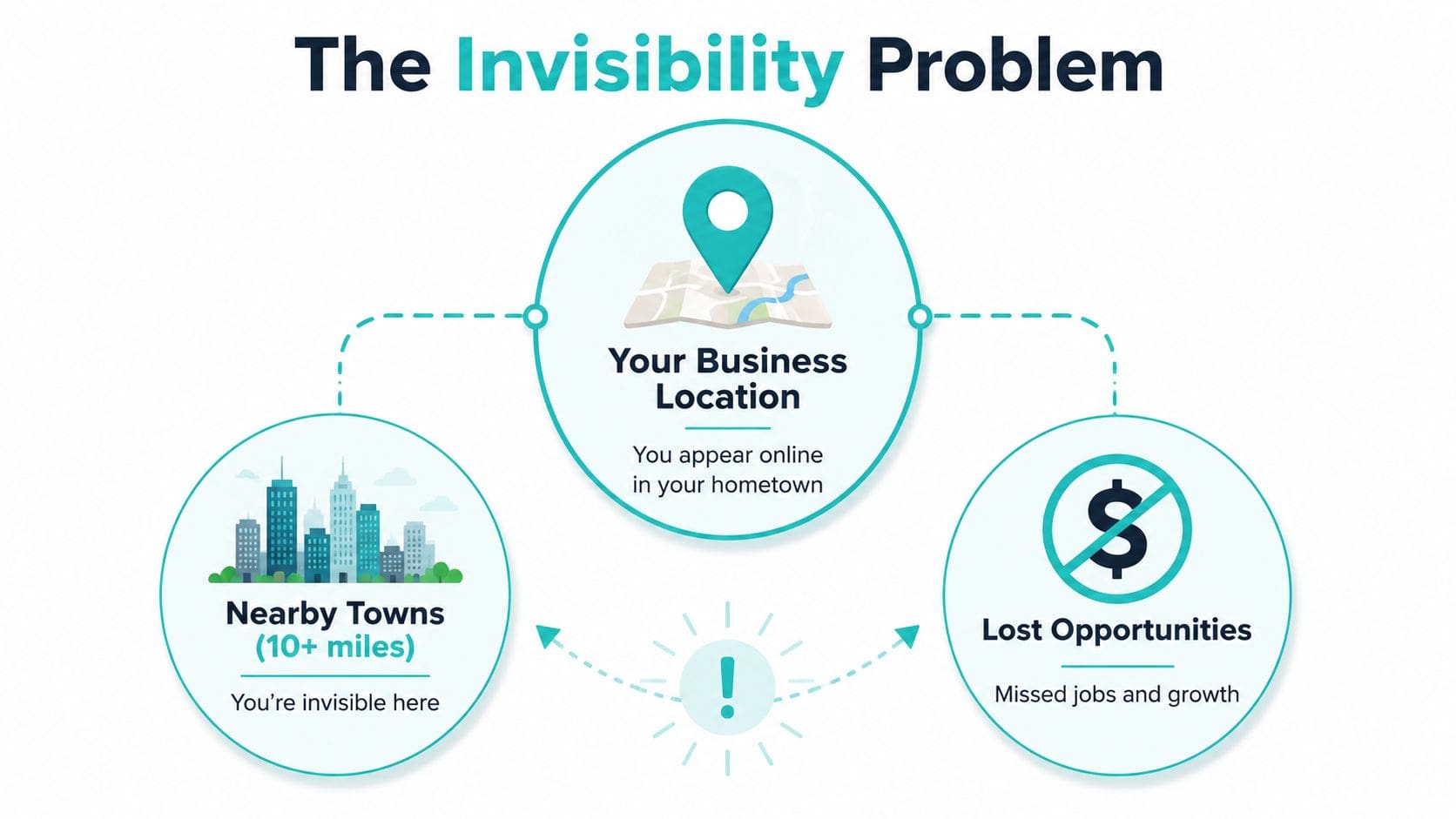
You're probably known in your hometown. Your address is there. Your trucks are there. Your jobs are there. Your website probably mentions that city again and again.
Then someone ten miles away searches for your service. You don't show up.
Near me does not mean near your shop
When a person types “excavation contractor near me” or “septic contractor near me,” Google reads that as the city where that person is standing.
So if they're in the next town over, Google is really reading “excavation contractor in that town.”
If your business never clearly says you work there, Google has no reason to assume you do. That's the visibility gap. It seems obvious once you hear it.
Practical rule: If you don't show up in the city where the buyer is searching, you don't get a shot at that job.
This is why so many contractors think they “should” be getting more leads. They assume people can find them because the business exists, the trucks are lettered, and the website is live. But buyers who don't know your company name aren't searching for you. They're searching for what you do and where they need it.
Most marketing advice misses this
That gap is even worse for excavation, land clearing, septic, grading, concrete, and other heavy-equipment contractors. Research shows a major gap in marketing advice for heavy-equipment contractors. Most guides miss how contractors who serve multiple counties can rank by region, not just a single city according to Constant Contact's coverage of contractor website gaps.
That's why so many websites for contractors are useless. They act like a simple home page, service list, and contact page are enough. They're not.
If you want a plain-English view of how search engines are shifting toward direct answers, this AEO guide for marketers gives useful context. The main takeaway is simple. Search keeps rewarding clear local relevance. If your site is vague about where you work, you lose.
What invisibility costs you
| Problem | What happens |
|---|---|
| You only mention your home city | Google mainly connects you to that area |
| You serve nearby towns but don't say it clearly | Buyers in those towns never see you |
| People search by service plus location | Your name means nothing if they've never heard of you |
| Competitors show up first | They get the call and the bid |
If this sounds familiar, read why contractors don't get enough leads. It usually comes back to one thing. Not enough visibility in the places you want work from.
Your Website Is a Brochure Not a Salesman
A website does not create traffic.
It sits there and waits.
That's the part many contractors get wrong. They pay for a site, put a few job photos on it, add a contact form, and expect leads to show up. That's like printing a pile of flyers and leaving them in a locked garage.
Pretty doesn't win jobs
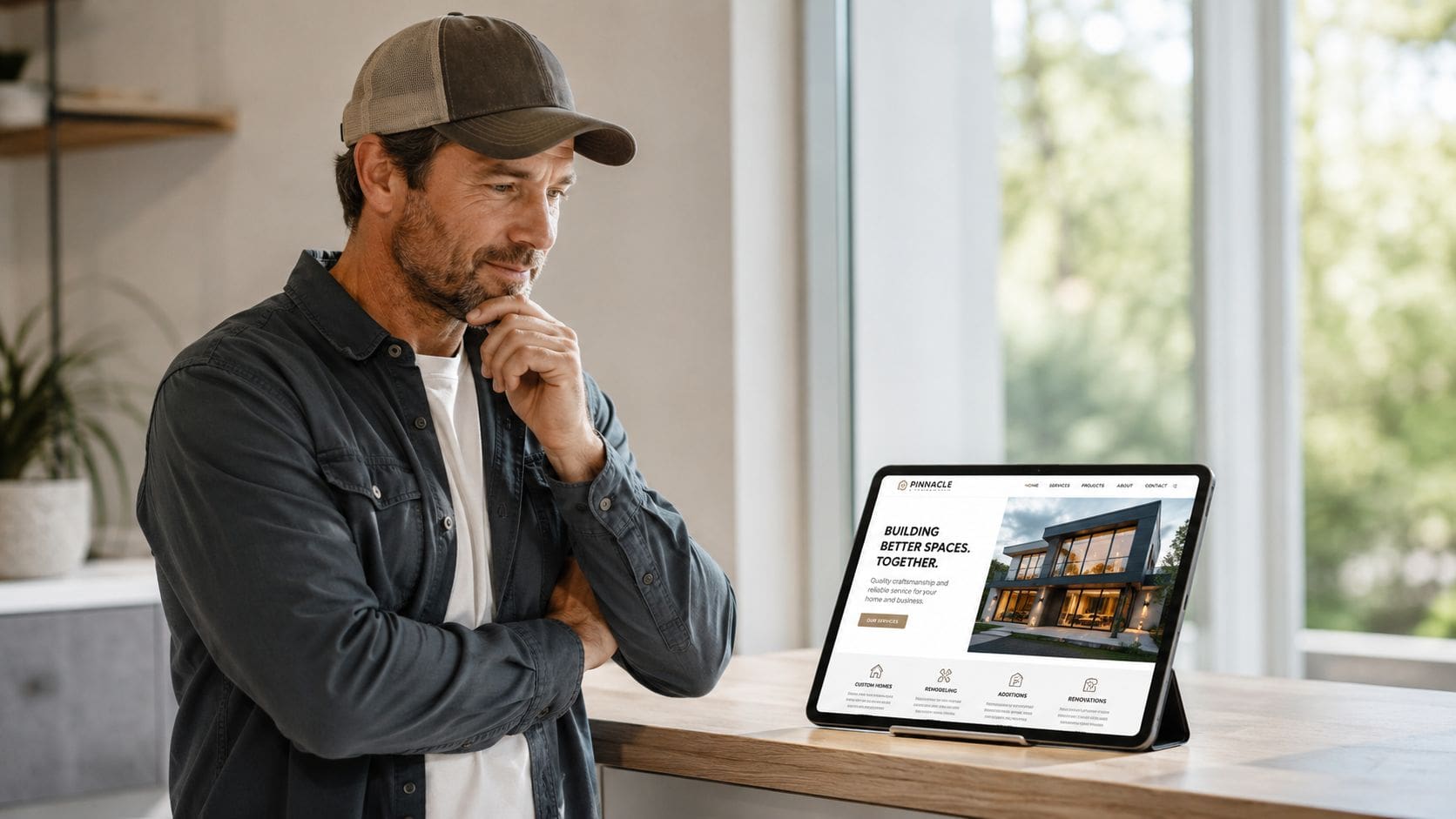
A pretty site is not the goal. Leads are the goal.
If the site looks nice but doesn't help a buyer trust you, call you, or ask for a quote, then it's a brochure. Nothing more.
This gets even more important when you want larger work. For projects over $100,000, decision-makers expect contractors to prove capability with detailed case studies, not just photos, and websites that include project metrics like timeline, cost savings, or equipment used tend to win larger bids according to Probill's contractor lead generation guide.
That matters because owners and developers don't hire on looks alone. They want proof that you can handle the job.
What most contractor sites get wrong
A weak site usually has the same problems:
- It talks about the company, not the buyer: Too much chest beating. Not enough proof.
- It gives no clear next step: No strong call to action. No easy path to contact.
- It covers services too broadly: Everything is lumped together and easy to ignore.
- It doesn't support bigger bids: There's no strong project detail, no real trust signals, and no reason to pick you over the next contractor.
Your website should help a buyer decide. If it only exists so you can say you have one, it's dead weight.
That's why generic websites for contractors underperform. They look fine. They just don't sell. If you want to see what a lead-focused build should do, look at lead generation website design for home services contractors.
A Lead Machine Turns Clicks Into Calls
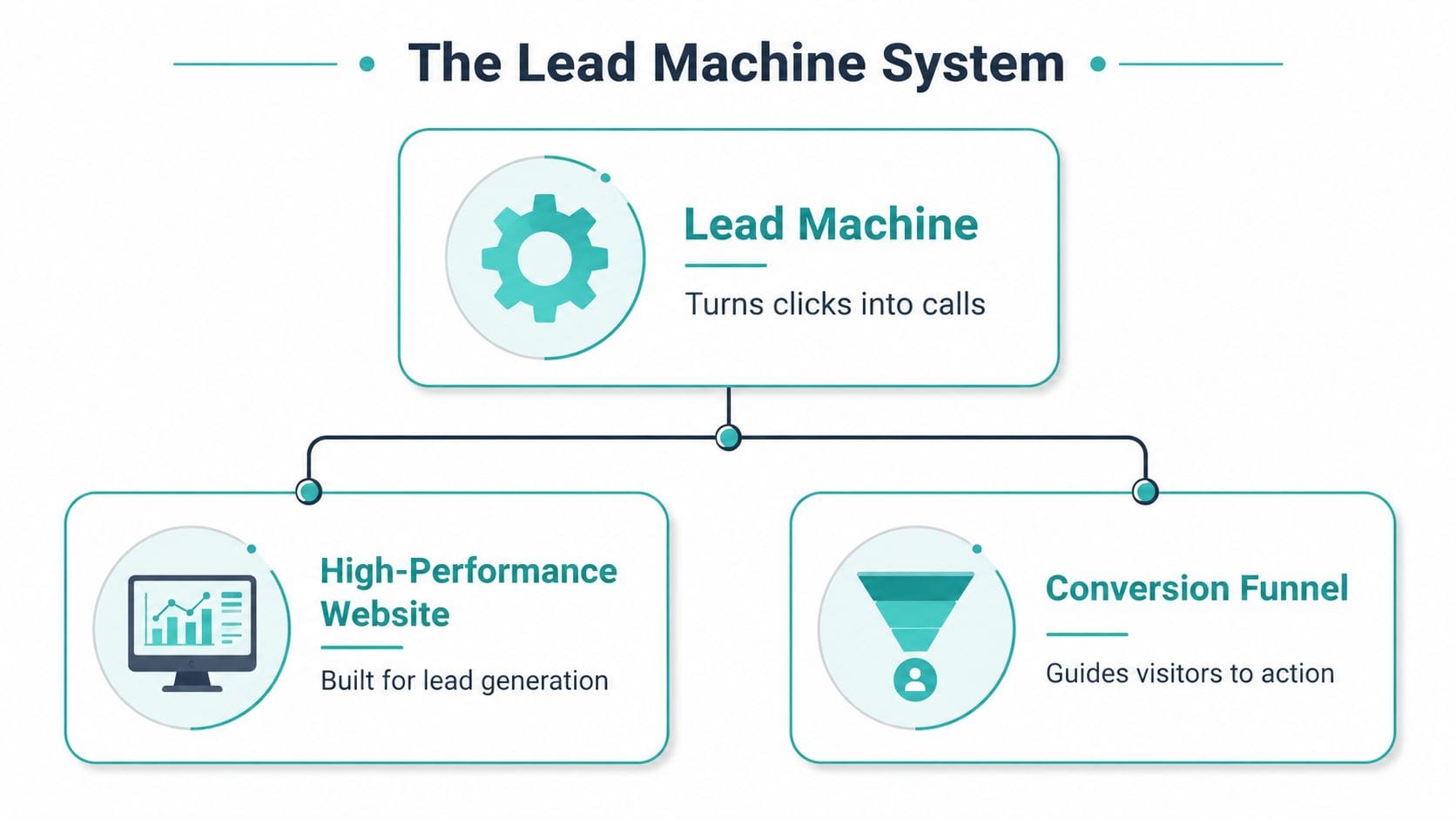
A Lead Machine is not a pretty website.
It's a website built for one job. Turn traffic into calls.
That means it's built around the places you want work, the services you sell, and the actions you want buyers to take. It is not built to impress other marketers. It is built to help a contractor get found and get contacted.
What a Lead Machine actually is
A Lead Machine works in two steps.
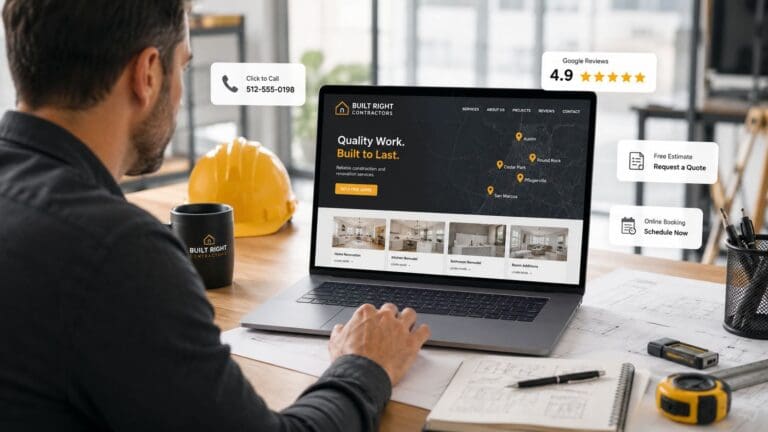
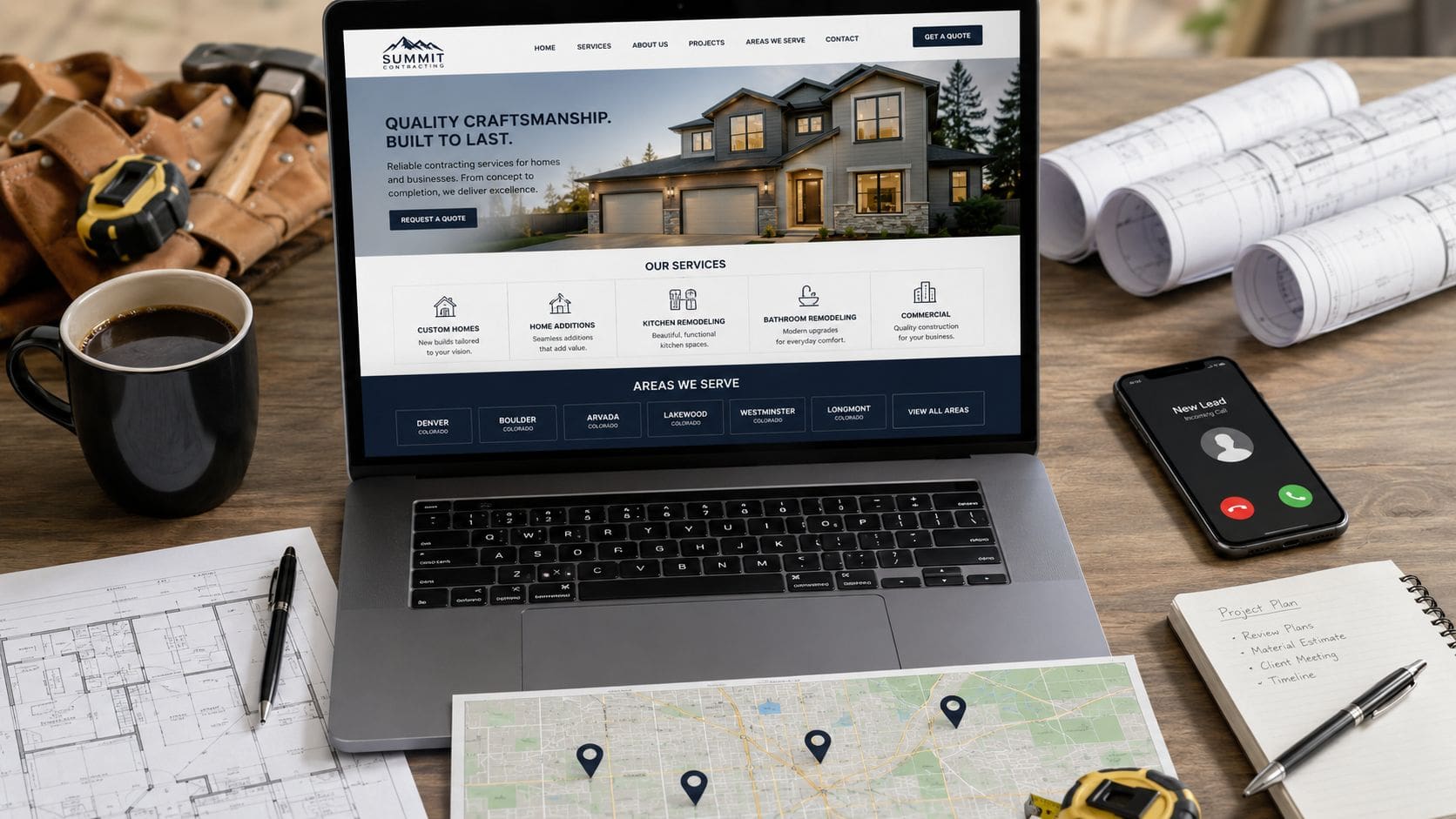
First, the machine gets built. That means a high-converting website structured by service and city, with clear calls to action, fast load speed, mobile design, tracking, call routing, quote forms, and alignment with your business listing. It is built to rank, convert, and capture demand in more than one city.
Second, the machine gets fueled with paid traffic. Ads put your business in front of local buyers who are searching right now. The site captures that demand and turns it into calls and form submissions.
The website is the asset. The ads are the fuel.
Why this structure works
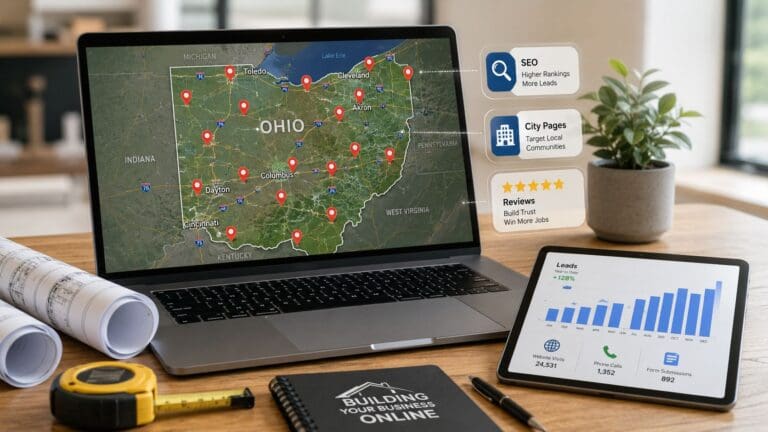
The strongest websites for contractors don't stay broad. They get specific. The most dominant contractor websites use a location-service matrix, and sites with 10 to 15 unique, geo-targeted pages account for 80% of first-page local rankings, leading to 12% to 30% monthly increases in organic traffic and calls according to this local search architecture analysis.
You do not need a marketing lesson to understand that. You need a site that clearly says:
- What you do
- Where you do it
- How people contact you
- Why they should trust you
That's the machine.
If your quote process is clunky, a clean inquiry form template can help you see what a better intake flow looks like. Keep it simple. Ask for the basics. Make it easy to start the conversation.
What should be on it
A real Lead Machine includes things most brochure sites skip.
- Service pages for each core job: Not one vague page trying to cover everything.
- City pages for each target area: Not just your home base.
- Phone-first layout: Buyers should be able to call fast.
- Proof: Reviews, project photos, and job detail that supports trust.
- Clear quote paths: Buttons, forms, and direct next steps.
One company that builds this type of system is The Cherubini Company's Lead Machine page, which describes a contractor website built as a lead asset rather than a brochure.
Fueling the Machine to Create Predictable Work
A Lead Machine without traffic is still parked.
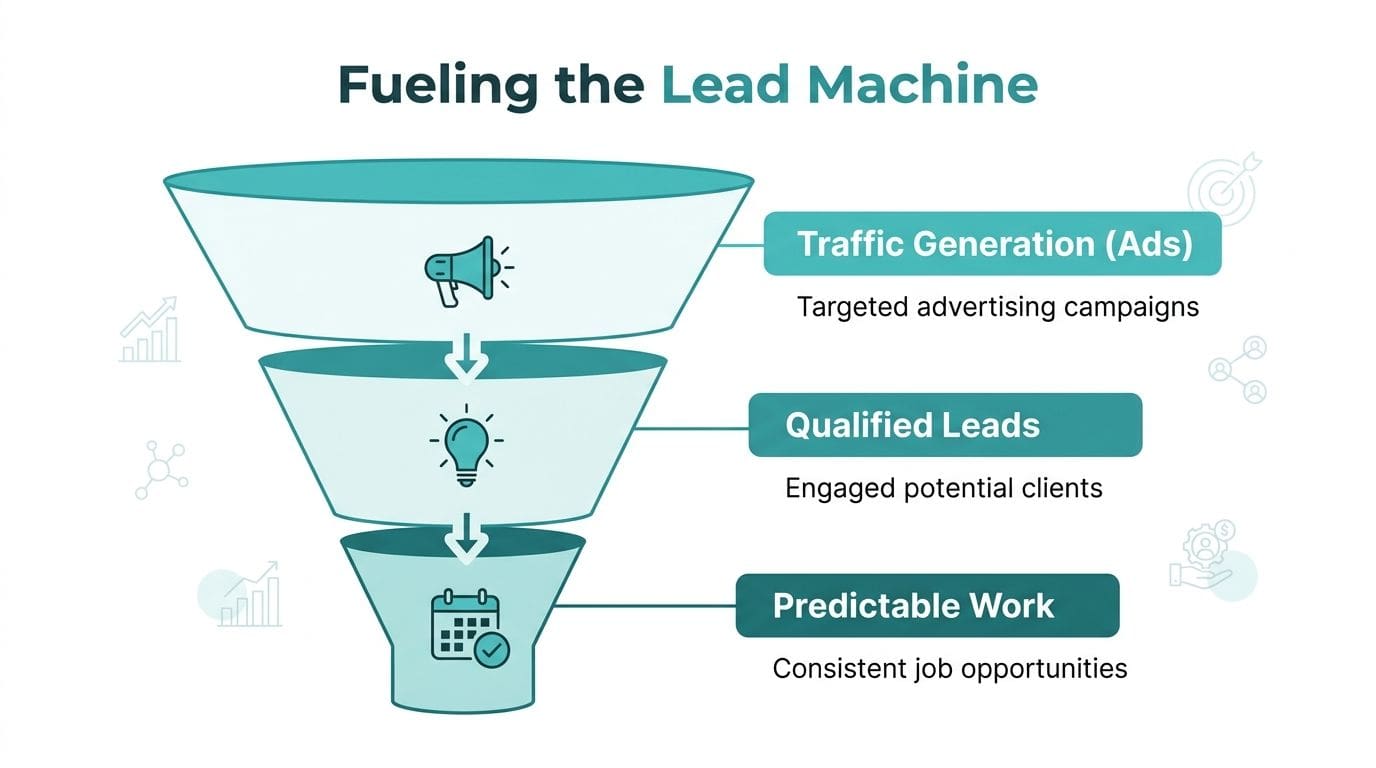
That's why the second half matters. Ads create visibility. They put you in front of buyers who are searching right now. Not next month. Not after they ask around. Right now.
Why ads fail for many contractors
A lot of owners say ads don't work. Usually what really happened is this. They sent paid traffic to a weak website.
That old brochure site couldn't do its job. It didn't match the search. It didn't build trust fast. It didn't make calling easy. So the money got spent and the results felt random.
That doesn't mean ads were the problem. It means the system was broken.
Ads without a strong website waste money. A strong website without traffic sits still.
What control starts to look like
When the machine and the ads work together, you stop treating marketing like a gamble.
You start getting a repeatable flow. You can watch what's bringing calls. You can see which services and areas are active. You can make decisions based on real demand instead of gut feel.
A better system helps you do things contractors care about:
- Fill slow weeks: Keep crews moving when work dips.
- Push for better jobs: Stop relying only on whatever referrals happen to show up.
- Cut waste: Stop paying for attention that goes nowhere.
- Reduce stress: Replace guessing with a system that has a purpose.
If you want a direct look at how paid visibility supports the website side of this system, read fuel your leads with Google Ads. The point isn't to “run ads.” The point is to create visibility and send that traffic to a site built to turn it into work.
Stop Guessing and Start Controlling Your Revenue
Contractors don't usually fail because they don't work hard enough.
They struggle because they don't control visibility. And when you don't control visibility, you don't control revenue.
That's why the old model keeps breaking. Word of mouth helps, but it doesn't scale on command. A pretty website helps nothing if nobody sees it. Ads help nothing if the traffic lands on a weak site.
The fix is a system. A Lead Machine built to turn traffic into calls, paired with ads that create visibility in the cities and counties where you want jobs.
The business decision is simple
You can keep hoping people find you.
Or you can build a setup that gives buyers a clear path to find you, trust you, and contact you.
If you want to pressure test the math behind your current site, a simple website ROI calculator can help frame the cost of doing nothing. Most contractors don't need more theory. They need to see whether the site they have is producing anything useful.
You think customers can find you. If customers don't find you, nothing else matters.
That's the whole game. Visibility first. Calls second. Revenue after that.
Lead Machines are built to fix that.
If you want a contractor website that's built to get found outside your hometown and turn traffic into real calls, take a look at The Cherubini Company. They build Lead Machines for local contractors who want more visibility, better leads, and a system that makes sense.