You’ve probably felt this already.
The phone rings. The crews stay moving. But the jobs aren’t the ones you want. Too many small jobs. Too many price shoppers. Too much guessing about where the next real job is coming from.
Then a marketing company tells you the answer is a new website.
So you pay for one.
It looks nice. Maybe. But the calls don’t change. Or worse, they drop off and now you’re stuck wondering if marketing is all smoke.
That’s the wrong diagnosis.
Most contractors don’t have a work ethic problem. They don’t have a service problem. They have a visibility problem. They’re known in their hometown, but when someone ten miles away searches for the work they do, they don’t show up. And if you don’t show up, you don’t get a shot at that job.
Your Phone Rings But The Jobs Are Wrong
You’re busy, but busy isn’t the same as profitable.
A lot of contractors live in that trap. The schedule looks full. The trucks are out. The crew is working. But the work coming in is a mix of small jobs, bad-fit jobs, and people calling three or four companies just to beat you down on price.

That usually happens when you rely almost all the way on word of mouth.
Word of mouth is great. It proves you do solid work. It also gives you almost no control. Some weeks the phone blows up. Other weeks it goes quiet. Then you take work you shouldn’t take just to keep people moving.
What busy looks like when it’s broken
Here’s what that looks like in real life:
- Small jobs clog the schedule so your crew stays occupied, but revenue doesn’t move the way it should.
- Tire kickers eat your time because they want quotes, not solutions.
- Bigger jobs go elsewhere because the people searching for them never found you in the first place.
- Slow seasons hit harder because there’s no system feeding the pipeline.
If that sounds familiar, you’re not lazy and you’re not doing something stupid. You’re dealing with a bad setup.
You can be good at your trade and still lose jobs every day because the wrong people find you, and the right people never do.
A website does matter. It affects whether people trust you when they land on it. 75% of users judge a company’s credibility solely based on its website design according to this website credibility design stat. For contractors, that means a poor site makes you look less capable before a prospect ever checks your photos or reviews.
Trust matters, but trust is not traffic
That’s where a lot of agencies stop. They sell you a prettier site and act like the job is done.
It’s not.
A clean site helps you avoid losing trust. It can also help filter out junk leads if it’s built the right way. If bad leads are draining your time, this breakdown on how to stop getting tire kicker leads gets into that problem.
But trust alone doesn’t make the phone ring with better jobs. First, people have to find you.
You Are Invisible 10 Miles From Home
You think customers can find you.
They probably can if they already know your company name.
That’s not the actual test.
The true test is what happens when someone in the next city over needs your service right now and searches for the type of work, not your name.
How local search really works
Google does not treat “near me” like a vague request. It turns that search into a city-based search tied to the user’s location. Google’s “near me” search is a dynamic location translator. A search for “plumber near me” by a user in Columbus is interpreted by Google as “plumber in Columbus”. If your website only mentions your home city, you are invisible for that search, as explained in Google’s location-based search help page.
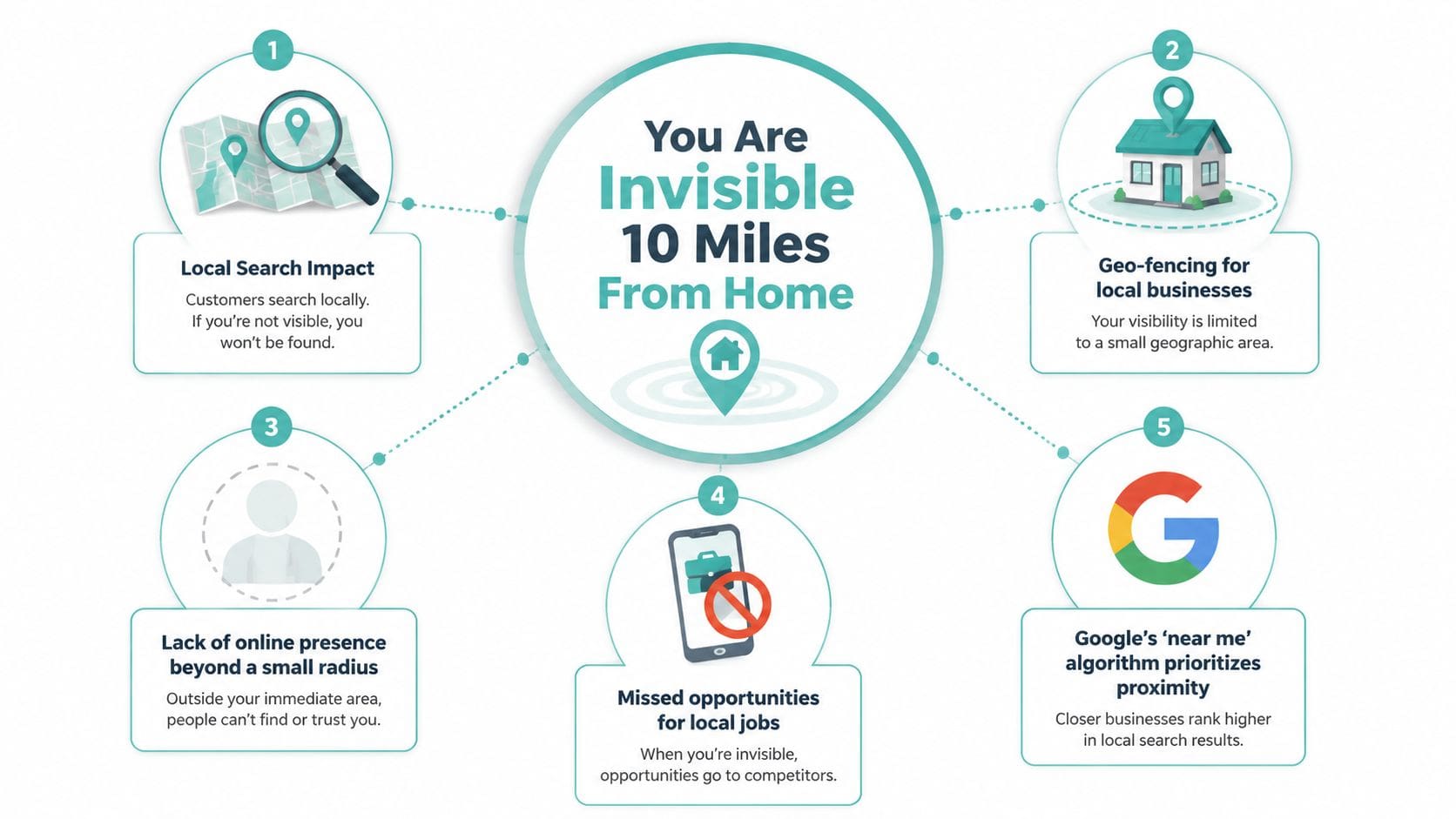
That means this happens every day:
You’re based in one town. Your address is there. Your website mentions that town. Your social pages mention that town. Google gets a clear message that you work there.
But if you also work in the towns around you and never say that on your website, Google has no reason to show you there.
That’s the visibility gap.
Why hometown reputation doesn’t travel online
A solid reputation in your own town is valuable. It just doesn’t automatically transfer into nearby cities online.
If a homeowner, builder, or property manager doesn’t know your name, they search for what you do and where they need it done. They don’t search your brand. They search the service.
If you don’t show up when they search, you don’t exist to them.
That’s why so many contractors say, “We do work all over the area,” but still don’t show up outside one small pocket. They serve a wider region in real life, but their website tells Google a much smaller story.
Here’s the plain version:
| What you believe | What Google sees |
|---|---|
| You serve many nearby cities | You only clearly mention your home city |
| Customers should be able to find you | Search results only show what Google can verify |
| Your address proves your service area | Your address proves your address, not your whole territory |
That’s also why a basic service-area sentence buried on one page usually doesn’t fix the problem. You need a site that clearly matches what you do with where you do it.
If you want a deeper look at that setup, this page on local search visibility for contractors covers the issue in plain English.
Your Website Is A Brochure Collecting Dust
A website does not create traffic.
It waits for traffic.
That’s the part too many contractors never get told before they spend money on one.
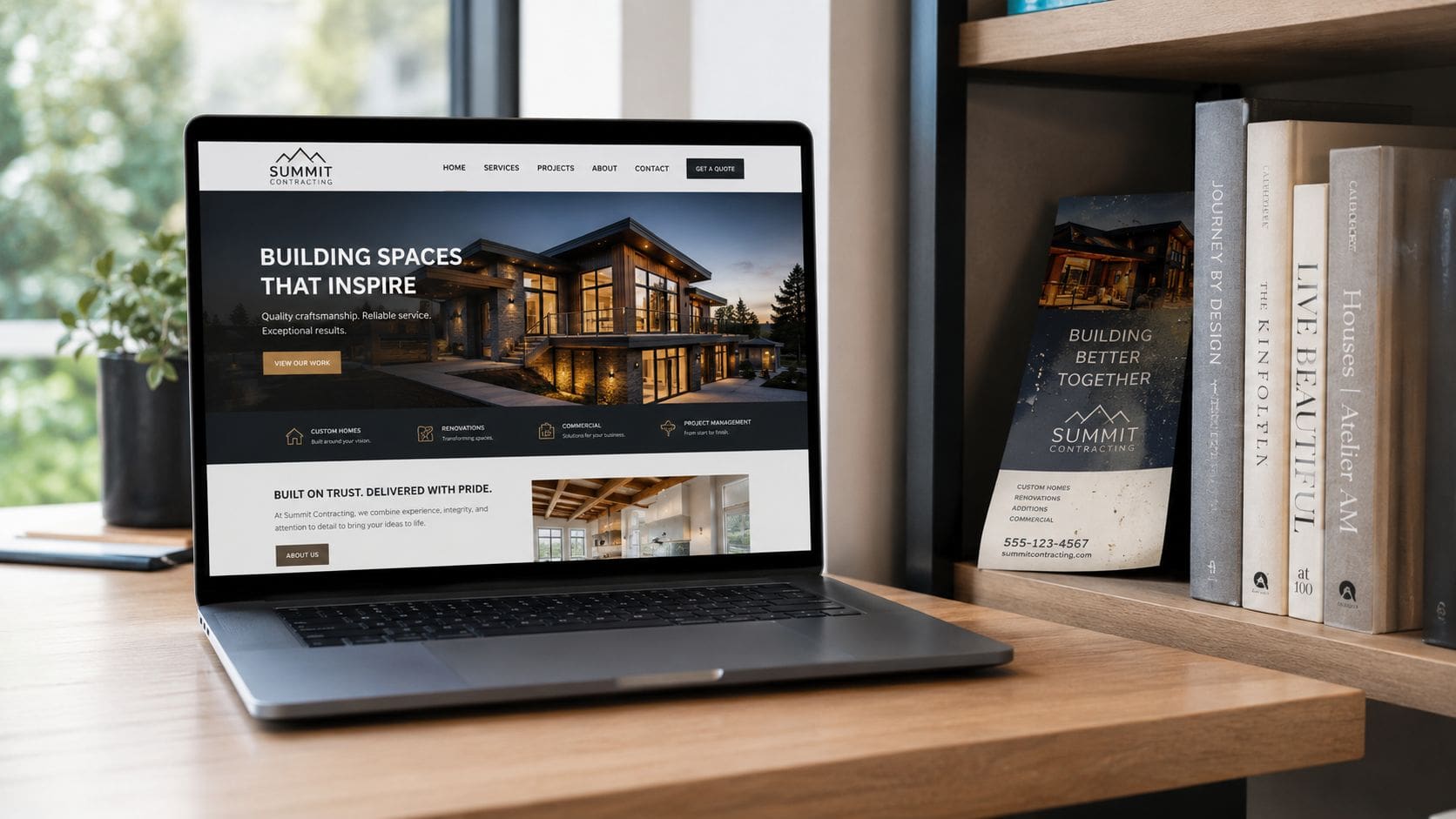
If nobody sees your website, it can’t produce calls. It can’t produce quote requests. It can’t produce jobs. It’s a digital brochure sitting on a shelf.
Why contractors get fooled by pretty websites
A lot of web companies sell design like it’s the finish line.
They talk about colors, layouts, fonts, and polish. Fine. Those things matter. But they matter after a prospect lands there. They don’t make a stranger find you in the first place.
That’s why so many contractors feel burned. They were sold the asset and told it would act like the full system.
Plain truth: Websites alone generate zero organic traffic without active visibility campaigns. They are passive assets. Paid ads bypass the 6-12 month search lag, placing you in front of high-intent users and generating calls within days, not months, based on this mobile search and local business report reference.
That doesn’t mean the website is useless. It means the website has a job, and that job is conversion.
The asset is not the fuel
Think about it like this:
- The website is the place people land
- Traffic is what brings them there
- Calls happen only when both parts work together
If you’ve already paid for a site and got little back, that doesn’t automatically mean the site was ugly or that your company can’t get leads online. It usually means nobody built the visibility side of the system.
A real contractor site should be built to turn traffic into calls. That’s different from a basic online brochure. If you want to see what that difference looks like, read about how to turn your website into a lead machine.
Build A Lead Machine Fueled By Ads
This is the fix.
Not a pretty website by itself. Not ads by themselves. A Lead Machine fueled by ads.
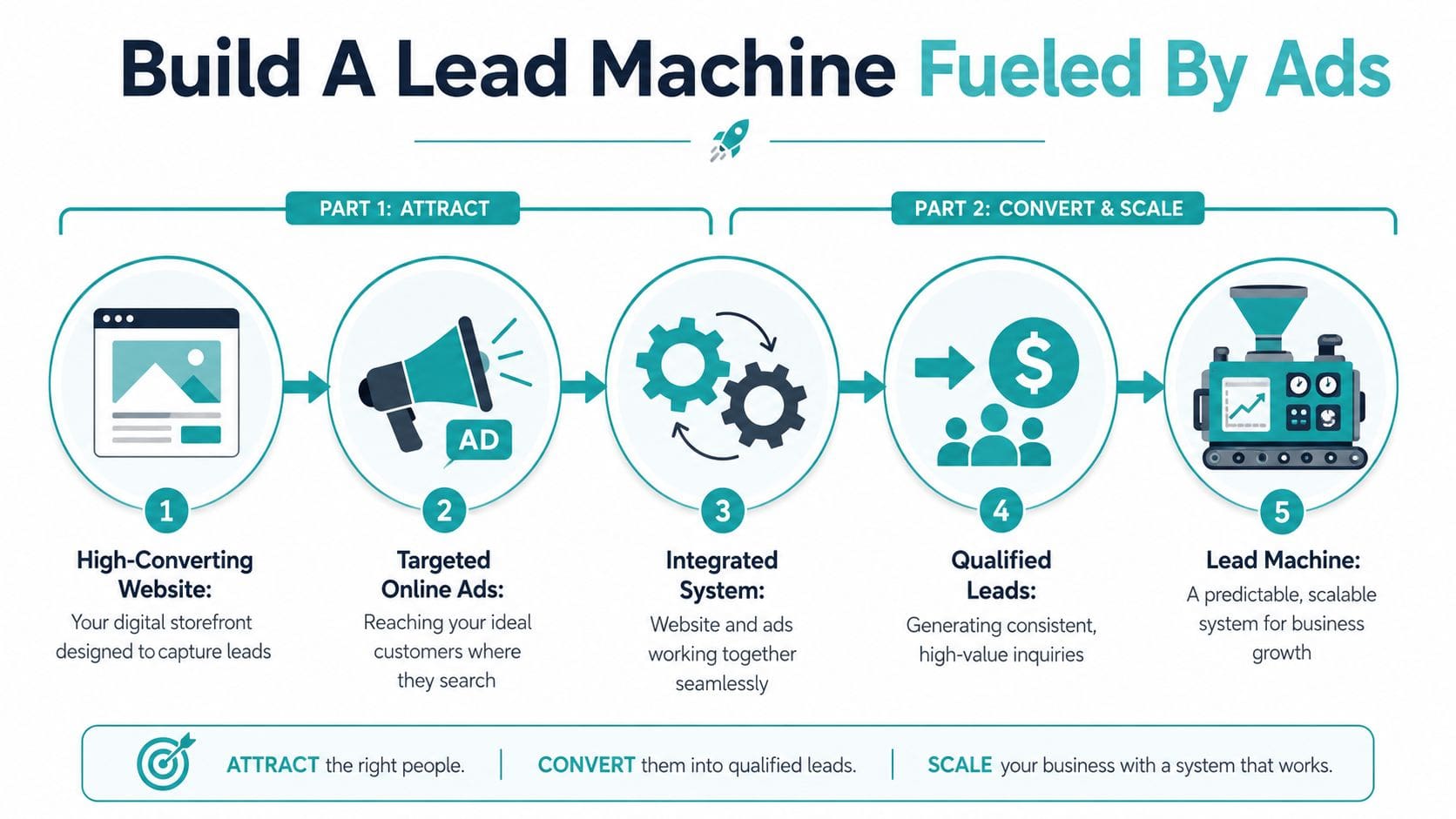
A Lead Machine is a two-part system for contractors.
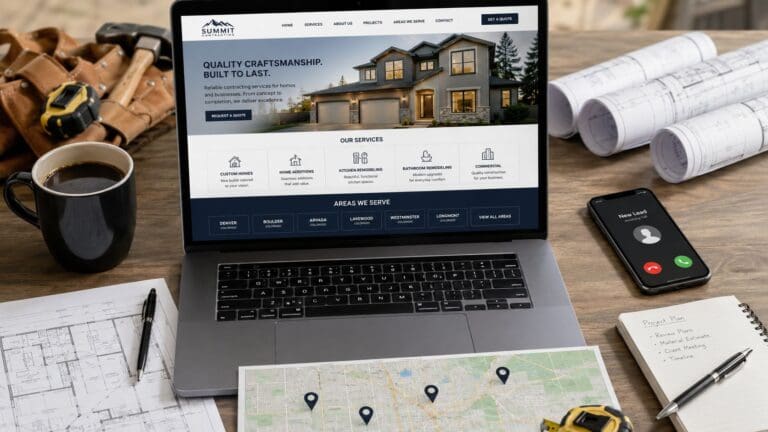
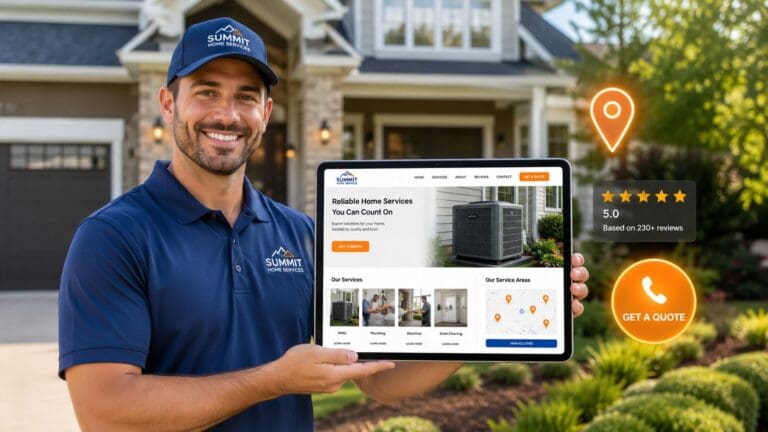
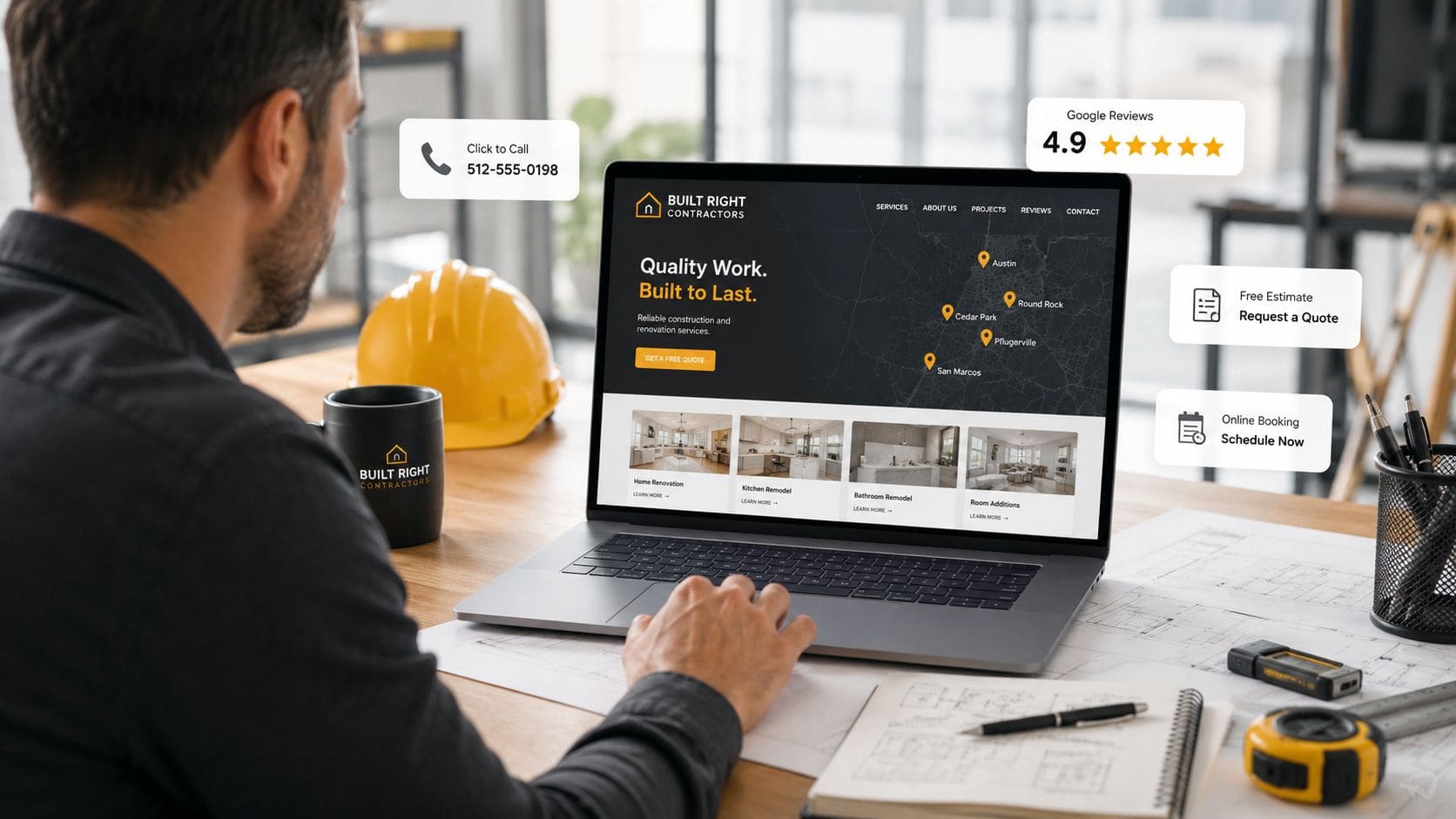
First, the machine gets built. That means a website designed to turn traffic into calls, quote requests, and booked work. It is not just there to look clean. It is built around your services and the cities you want work from. It includes strong calls to action, mobile design, fast load speed, tracking, forms, call routing, and alignment with your business profile.
Second, the machine gets fuel. That means paid ads that put you in front of people searching right now. The website is the asset. The ads are the fuel.
What the website part must do
A contractor site should answer two things fast.
- What do you do
- Where do you do it
If it doesn’t answer those clearly, you lose the visitor.
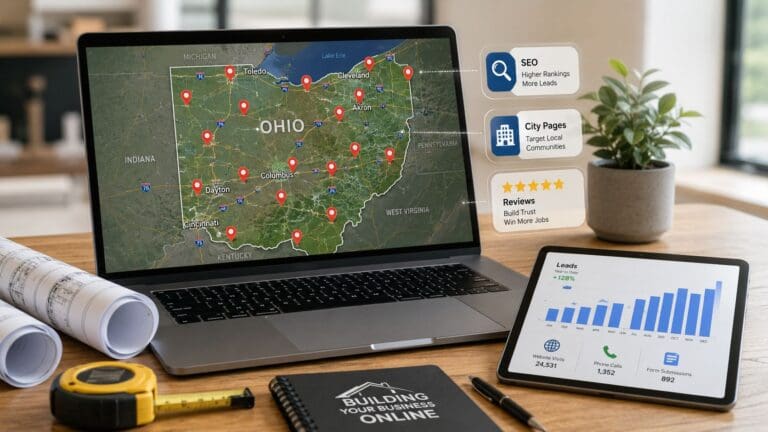
That’s why city pages matter. Businesses that create unique content for each city they serve, using dedicated city pages, see a 2.5x increase in local search rankings because Google’s algorithm prioritizes explicit geographic relevance, according to Moz’s local search guide.
That’s not fluff. It’s basic visibility.
If you work in Newark, Columbus, Heath, Granville, Lancaster, and Zanesville, your site should make that obvious. Not hidden. Obvious.
What the ads part must do
Ads solve the waiting problem.
You don’t sit around hoping search traffic shows up someday. Ads create visibility now. They put you in front of people who are already looking for your service in the cities you want.
Here’s the simple breakdown:
- Website without traffic means no one sees it
- Ads without a conversion site means you pay for clicks that go nowhere
- Lead Machine plus ads gives you visibility and a place built to convert it
Stop treating your website like the whole answer. It’s one half of the answer.
This is the model The Cherubini Company builds for contractors. They create Lead Machines with service pages, city pages, click-to-call setup, quote forms, and ad support so the site can capture demand across multiple nearby cities instead of sitting idle.
If you want the traffic side explained without agency nonsense, this page on Google ads for contractors lays it out clearly.
From Unpredictable Calls to A Scalable Business
Ultimately, this is about control.
Not clicks. Not vanity. Not having a nicer website than the guy down the road.
Control.

When your lead flow depends on referrals alone, your business stays fragile. When your website is just sitting there, your business stays fragile. When you avoid ads because past agencies wasted your money, your business still stays fragile.
A stable contractor business needs a repeatable way to get found and turn that visibility into calls.
What control actually looks like
It looks like this:
- You target the cities you want
- You attract better jobs instead of taking whatever shows up
- You stop guessing where leads came from
- You build a pipeline instead of waiting on luck
That’s how you get out of feast or famine. Not by hustling harder. By fixing visibility.
There’s also a simple mobile reality here. 70% of mobile searches for local services result in a call within 24 hours, but only if the site has a fast load time and clear click-to-call buttons. A Lead Machine is designed to capture this immediate mobile traffic, based on this local mobile call behavior reference.
Growth needs structure
If you want to grow past random referrals, you need a system people can effectively find.
That includes your site structure, your city coverage, and the authority signals around your business. If you’re trying to understand how better links support that wider visibility, PRWiz’s link building playbook is a useful read because it explains one clean way businesses earn stronger supporting links without shady shortcuts.
Predictable leads give you options. Unpredictable leads make every month feel heavier than it should.
If you want a practical look at building steadier lead flow through the year, this guide on building a steady pipeline of jobs year round is worth your time.
You think that customers can find you but, if customers don’t find you, nothing else matters. Lead Machines are built to fix that.
If you’re done guessing and want a direct plan, talk to The Cherubini Company. They help contractors fix the problem, visibility, by building Lead Machines and pairing them with ads so the right people can find you in the cities you want work from.