A lot of contractors are known in their hometown. Their trucks are around. People know the name. Referrals come in. Then work gets thin a few miles away, and nobody understands why. The reason is simple. People who need your service search by what you do and where they are. If you don’t show up there, you don’t exist to them.
That’s the core issue behind how to get more leads. It’s not about doing more random marketing. It’s about getting seen in the places where buyers are already looking like contractor directories.
Why Your Phone Isn’t Ringing Like It Should
A lot of contractors stay stuck in feast or famine.
One month the phone rings enough to keep everyone moving. The next month it gets quiet. Then the panic starts. You ask around. You boost a post. You call the guy who “does marketing.” Nothing feels steady.
That cycle wears people down. It also makes good owners distrust anything that sounds like marketing.

The pain is real
Most contractors don’t need another pep talk. They need the truth.
- Word of mouth is uneven: It can keep you busy, but it doesn’t give you control.
- Low-quality leads waste time: Price shoppers and bad-fit jobs clog the day.
- Bad agencies leave scars: Big promises. Pretty reports. No real work to show for it.
- Slow seasons expose everything: If visibility drops, revenue drops with it.
You can be good at the work and still lose jobs every week because buyers never see you.
That’s why guessing is so expensive. You don’t just lose the money you spent. You lose the jobs you never even had a shot at winning.
The problem usually isn’t your work
Most owners blame the wrong thing. They think they need better branding, more posts, or a nicer logo.
No. They need visibility where they want work.
The hard truth is this. If you only show up in your home town, that’s where your leads stay. If you work in five, ten, or twenty nearby areas but don’t show up there online, your service area on paper means nothing.
A lot of what contractors call a lead problem is really a visibility problem. If that sounds familiar, this breakdown on why contractors don’t get enough leads will feel painfully familiar.
What actually gets the phone to ring
The direct path is simple.
First, get visible in the cities and service areas you want.
Then give that traffic a place to turn into calls and estimate requests.
That’s it.
Not hustle. Not hope. Not waiting for referrals to save the month.
The Real Problem is Your Invisibility Gap
The biggest mistake contractors make is thinking people search for their business name.
Most don’t.
They search for the job they need and the place they’re in. If someone types “excavation contractor near me” or “concrete contractor near me,” Google ties that search to the searcher’s location. In plain English, it becomes a city search. If your business has never clearly shown that you work in that city, Google has no reason to put you there.
That’s the invisibility gap.
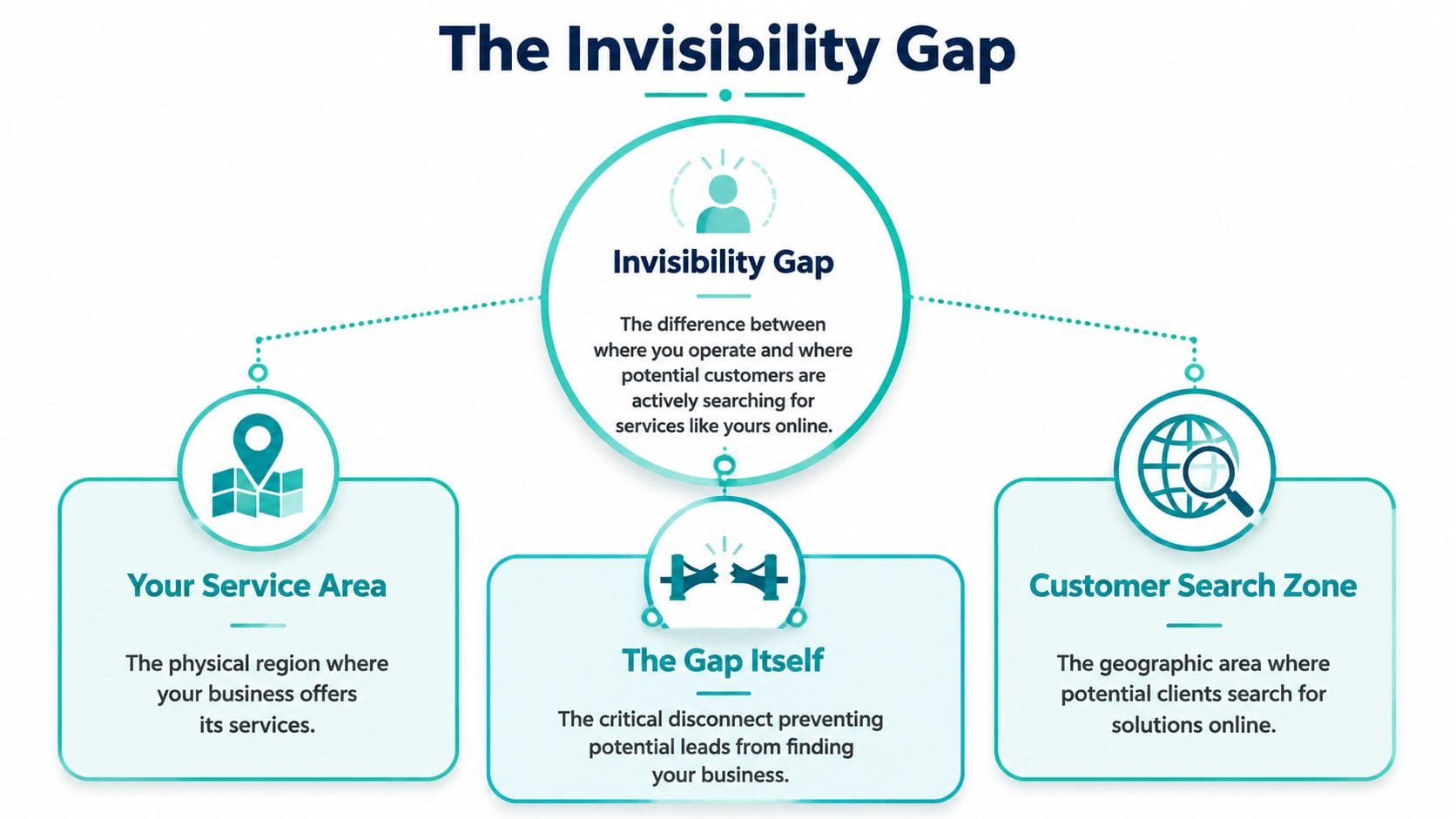
Where you work and where you show up are not the same thing
A contractor might work across several counties and still be nearly invisible outside one town.
That happens all the time. Your address is in your home town. Your website talks about your home town. Your reviews mention your home town. So Google keeps connecting you to that place. Meanwhile, buyers in the next town over search, and your competitor gets the call.
Here’s the part most generic lead advice misses. The goal isn’t just more inquiries. It’s getting inquiries from the right places and the right job types. As Sprout Media Lab’s local lead guidance points out, the question becomes how to get more inquiries from the right cities, neighborhoods, and job types, because a lead from an unprofitable county can be worse than no lead at all if travel time or project size makes the job inefficient.
A bad lead on the wrong side of your service area can cost more than it makes.
This is why generic advice falls apart
A lot of “how to get more leads” advice treats every lead like a good lead. That’s nonsense for contractors.
You don’t need more calls from people outside your service radius.
You don’t need more tiny jobs in areas that burn half a day in drive time.
You don’t need more form fills from people who were never a fit.
You need visibility in profitable territory.
Here’s the simple approach:
| What matters | Bad setup | Strong setup |
|---|---|---|
| Cities | Only your home town shows up | The nearby cities you actually want |
| Job type | Random inquiries | Work tied to the services you sell |
| Travel | Long drive, poor margins | Tight service radius, better jobs |
| Revenue | Unpredictable | More control over where work comes from |
If you want the blunt version, you don’t have a traffic problem first. You have a findability problem. This is exactly what you don’t have a lead problem, you have a visibility problem means.
Your competitors are not beating you with magic
They’re beating you by showing up.
That’s all.
If a buyer never sees your company, your reputation, workmanship, and years in business never even enter the conversation. The job is gone before you know it existed.
Your Website is a Brochure Not a Lead Machine
A normal website doesn’t create traffic.
It just sits there and waits.
That’s where a lot of contractors get fooled. They paid for a site, got some nice photos, maybe an About page, maybe a Services page, and expected calls to roll in. But websites don’t pull people in by themselves. They are not engines. They are assets. If nobody lands on the site, it does nothing.
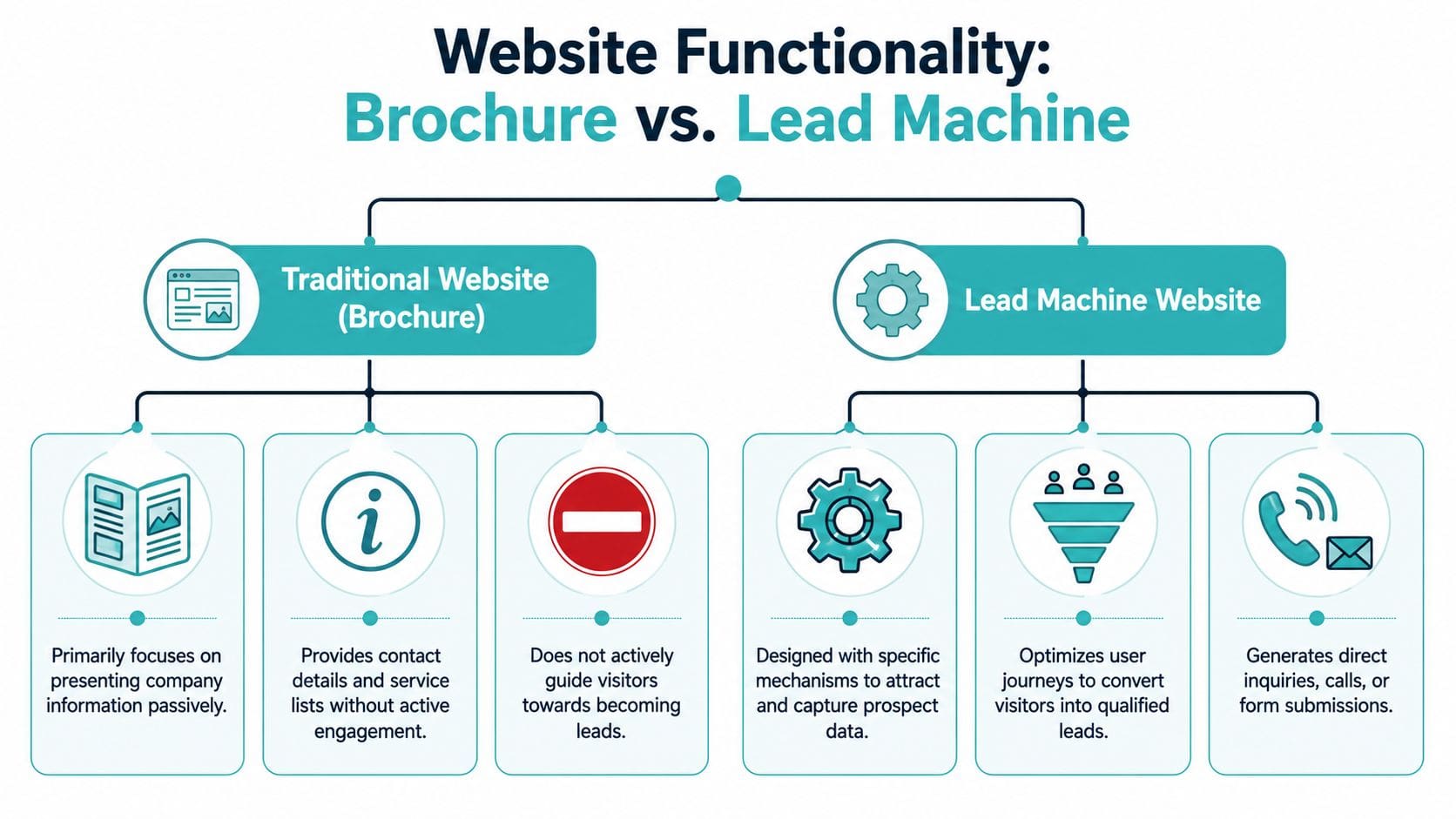
A brochure site tells. A Lead Machine gets calls
There’s a big difference between a website that explains your business and a website built to produce leads.
A standard brochure site usually has:
- Basic pages: Home, about, contact, and a short service list
- Weak direction: No strong next step for the visitor
- No city structure: Nothing that tells search engines where else you work
- Passive design: It looks fine but doesn’t push action
A Lead Machine is built for one job. Turn traffic into calls and form fills.
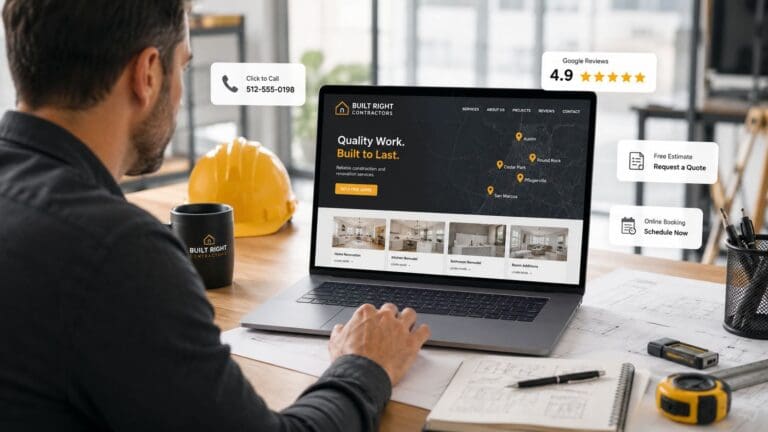
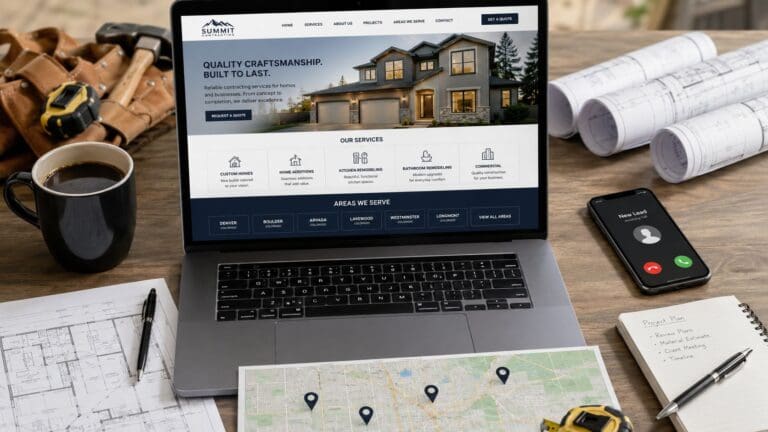
That means it’s built around service pages, city pages, clear calls to action, mobile use, fast loading, quote capture, and alignment with your business profile. It isn’t there to win design awards. It’s there to help a buyer take the next step.
Content only matters if it helps capture demand
Marketers already lean hard on websites and content for lead generation. 90.7% of marketers use websites, 89.2% use blogs, and 91% of B2B companies say content marketing brings in more leads than traditional methods, according to these lead generation figures. The same source says 68% of B2B marketers use landing pages and 70% say video content helps convert leads.
For a contractor, the lesson is simple. Don’t “do content” for the sake of it. Build a site that answers real buyer questions and captures the lead when they’re ready.
Practical rule: If your website makes it hard to call you, hard to request a quote, or hard to see that you work in a nearby city, it’s costing you jobs.
If you want a simple outside example, think about a service like landscape ai design. The idea isn’t just showing something pretty. The page has one job. Help the visitor move toward action. Contractors need the same kind of clarity.
What a contractor site should really be
A lead-focused site should do these things well:
| Website type | What it does |
|---|---|
| Brochure website | Gives information and waits |
| Lead Machine | Helps buyers find you, trust you, and contact you |
That’s the core difference explained in this piece on a lead generation website vs regular website for contractors.
If your current site looks decent but doesn’t help you get found outside your home town, it’s a brochure.
Using Ads to Fuel Your Lead Machine
Once your site is built to convert, you still need traffic.
That’s where ads come in.
Ads are not the whole system. They are the fuel. They put you in front of people searching right now. Without that fuel, even a strong site can sit quiet. Without the site, ad traffic leaks out and your money gets wasted.
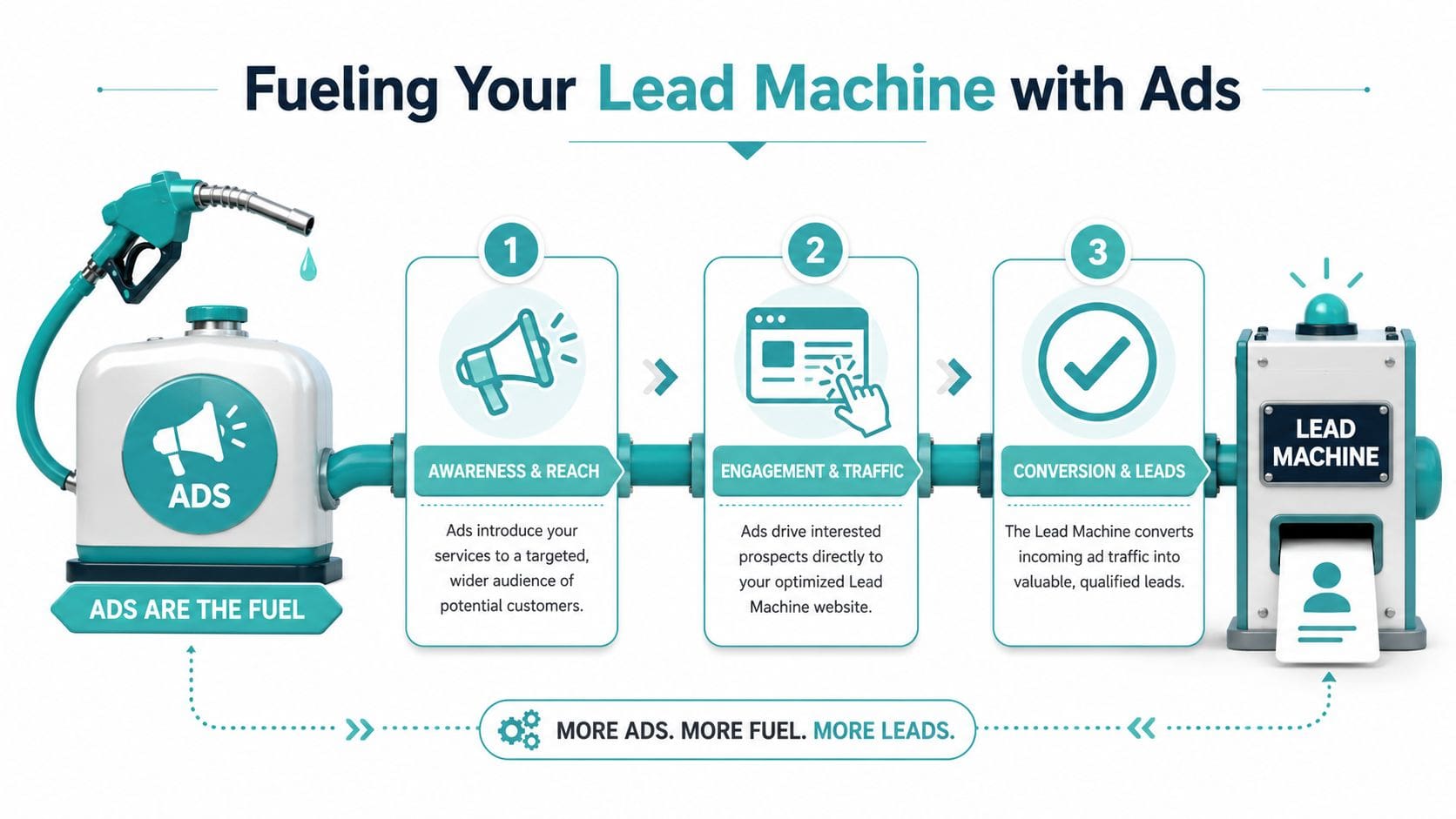
Ads solve the speed problem
Referrals show up when they show up. Ads can create visibility on purpose.
That matters when you want work in a new town, when a crew needs jobs, or when you’re tired of waiting for someone to remember your name. Ads put your business in front of buyers while they’re looking, not later.
For higher-intent lead capture, Improvado’s lead generation guide says typical gated-content conversion rates are 20-30% and average landing-page conversion rates are 23% when pages are tightly aligned to the offer and conversion path. The important part for contractors is not the gated content. It’s the alignment. If the ad matches the page and the page has one clear call to action, conversion gets easier. If traffic goes to a generic page, quality drops and spend gets wasted.
The system is simple when you strip out the nonsense
Here’s how it works in plain English:
-
Ads create visibility
Your company gets in front of local buyers who need the service now. -
The Lead Machine handles the traffic
The click lands on a page built to turn that visit into a call or form. -
The business captures the lead
Calls get routed. Forms get sent. You know someone reached out.
That’s a real system. Not random activity.
Ads without a conversion system waste money. A website without traffic sits there doing nothing.
Better leads come from better handling, not just more clicks
A lot of owners think they just need more leads. Not true. They need better lead handling.
Cirrus Insight reports that AI improves qualification accuracy by 40%, qualification speed by 3x, and conversion rates by 25%–35%. The same source says intent-driven targeting can shorten sales cycles by 40% and increase conversion by 40%, while 80% of leads don’t convert. Warmly adds that nurtured leads make 47% larger purchases, yet 65% of marketers have not implemented nurturing, based on the Cirrus Insight lead generation statistics roundup.
For contractors, that means this. Traffic alone isn’t enough. Fast response, good filtering, and follow-up matter just as much.
If you want a plain-language example of this website-plus-traffic setup, Google Ads to fuel your Lead Machine lays it out the right way.
Building a System You Actually Control
Control is the whole point.
Not vanity. Not reports. Not hearing that your impressions went up. Control means knowing where leads come from, knowing which areas produce good jobs, and having a repeatable way to stay visible.
That’s what most contractors are missing.
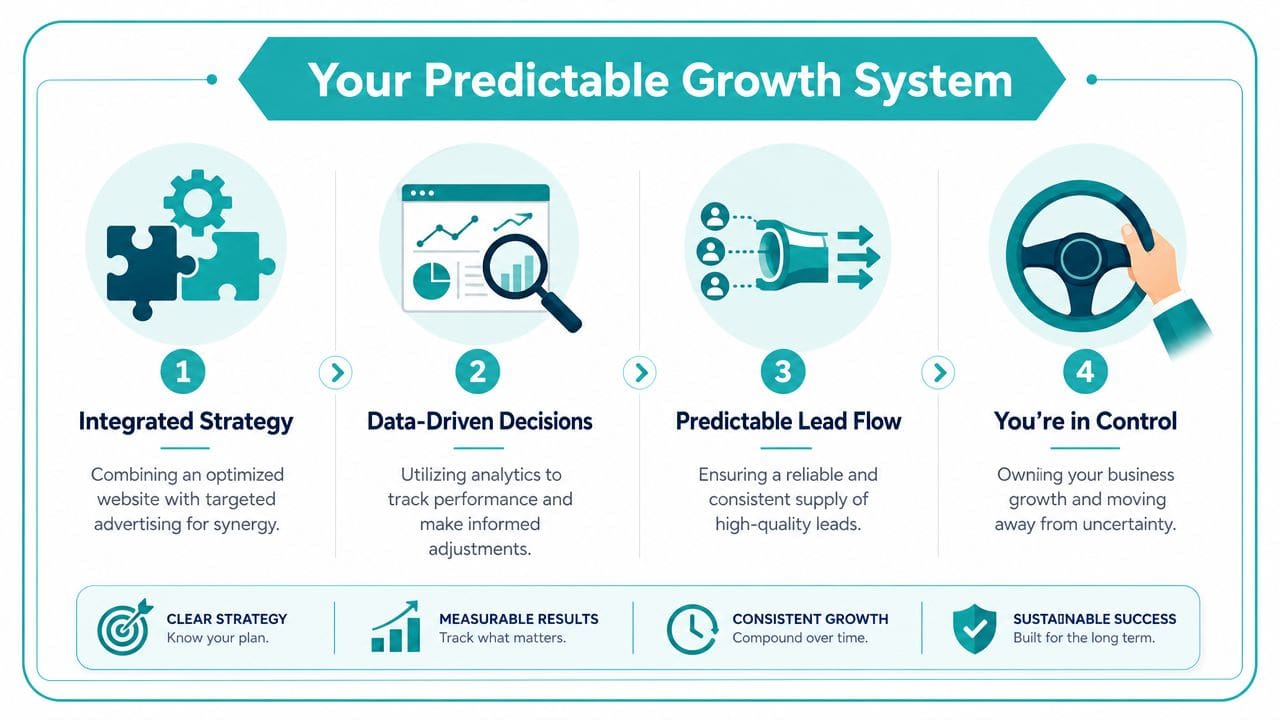
A real lead system has clear parts
A working system usually follows the same basic pattern. Monday.com’s lead generation process guide lays it out in seven steps: define the ideal customer profile, set up multi-channel lead capture, create conversion-focused landing pages, automate lead scoring, route qualified leads to sales, nurture unready prospects, and keep measuring and improving.
You don’t need to obsess over the labels. The important part is discipline.
- Know who you want: Not every job is worth chasing
- Capture leads clearly: Calls and forms need to go somewhere reliable
- Route fast: Good leads die when nobody answers
- Follow up: A missed first contact shouldn’t end the process
- Measure what happened: Stop running blind
This is what gets you out of feast or famine
When you build around visibility and capture, you stop depending on luck.
You can decide which cities matter.
You can decide which services deserve more push.
You can stop chasing junk leads that burn time.
You can see what’s working and cut what isn’t.
One option in this space is Lead Machines for contractors, which combine a lead-focused website with city and service structure so traffic has somewhere useful to go. That’s the type of setup contractors need if they want a system instead of a brochure.
What control looks like in real life
Control isn’t complicated. It looks like this:
| If you have no system | If you have a system |
|---|---|
| You guess where leads came from | You can track calls and form fills |
| You take whatever comes in | You focus on better-fit jobs |
| You disappear outside your town | You build visibility in target areas |
| Slow months surprise you | You have a repeatable way to create demand |
The contractor who controls visibility has a stronger business than the contractor who waits on referrals.
You think that customers “can” find you but, If customers “don’t” find you, nothing else matters. Lead Machines are built to fix that.
If you’re tired of guessing, The Cherubini Company builds Lead Machines for contractors who need more visibility, more calls, and more control over where their leads come from. The setup is simple. A website built to turn traffic into calls, plus ads that put you in front of buyers in your desired cities.