That frustration is real. Most contractors aren’t lazy. They’re already working hard. The problem is they’re working without a system that controls visibility.
If you want to learn how to run Facebook ads for contractors, start with the truth. Facebook ads are not the business. They are not the fix by themselves. They are one part of a lead system. Without that system, you’re just paying to send people into a dead end.
Tired of Marketing That Doesn’t Work
A lot of contractors get sold the same bad deal.
A marketing company builds a pretty website. Maybe they boost a few posts. Maybe they run some ads for a while. Reports show up. Bills show up. Calls don’t.

Then you’re left with the same mess you had before.
You still rely on word of mouth. You still have feast or famine months. You still don’t know where your leads came from. You still get people who want a cheap quote and nothing else.
What contractors usually tell me
- They were promised leads: What they got was traffic, clicks, or vague updates that never turned into jobs.
- They were sold a website: The site sat there like a brochure and waited for visitors that never came.
- They were told to be patient: Meanwhile, payroll, trucks, fuel, and equipment payments kept moving.
That’s why so many owners stop trusting marketing at all.
They don’t hate growth. They hate waste.
Most contractors don’t need more marketing activity. They need a lead system that makes the phone ring from the places they actually want work.
A lot of agencies never solve the actual issue because they focus on motion instead of visibility. They talk about content, branding, and campaigns. Fine. None of that matters if the right people never see you.
If you want a practical example of simple ad structure for local businesses, this breakdown of Super Simple Ads is worth looking at because it keeps the focus on visibility and response, not fluff. And if you’re trying to understand how businesses scale location pages without hand-writing everything forever, tools for automated SEO content can help support the city-by-city visibility work that most contractors ignore.
Your Real Problem Is Invisibility
Most contractors think they have a lead problem.
They do. But that lead problem is usually caused by invisibility.
You might be known in your hometown. People there know your trucks. They’ve seen your signs. Maybe your address is there, your Google profile is there, and your website talks about that town over and over.
Then someone ten miles away searches for your service.
They don’t search your company name. They search for the job they need.
Roof repair near me. Septic contractor near me. Concrete contractor near me.
Google reads “near me” as the city that person is standing in. If you’ve never clearly shown that you work in that city, you’re easy to miss.
Why this keeps happening
Google doesn’t assume.
It doesn’t assume you work in the next town over.
It doesn’t assume you serve the whole county.
It doesn’t assume you travel for the right job.
If you never say it clearly on your website and in the way your online presence is built, then you stay stuck in one bubble.
What that costs you
This is the part most owners miss.
You aren’t only losing jobs you bid and lost. You’re losing jobs you never even saw. The customer never called. Never filled out a form. Never knew you existed.
That’s the visibility gap.
You think customers can find you. But if they don’t find you when they search, you were never in the running.
A website by itself doesn’t solve this. Websites don’t create traffic. They wait for traffic.
That’s why contractors who only “have a website” are often still invisible. They have an online brochure, not a lead system.
Why Facebook Ads Fail on Their Own
Facebook ads fail when owners expect them to do a job they were never meant to do.
Facebook is not the primary destination for individuals urgently needing a contractor right now. They go to search for that. Facebook is where you buy attention, stay visible, and get in front of homeowners before they search or after they’ve already seen you once.
That’s why contractor campaigns on Facebook are usually cheaper per click, but lower intent. One contractor-focused source reports Facebook clicks at $2 to $4 and Google Ads clicks at $6 to $10 for contractors. That same source frames Facebook as a cheaper awareness channel, while search captures stronger demand, and notes that 72% of contractors with consistent lead generation use both Google and Facebook together in practice (JobNimbus contractor ad comparison).
What Facebook ads are actually for
Facebook ads are useful when you want to:
- Get seen in new service areas: Especially where your name means nothing yet.
- Stay in front of local homeowners: So your company feels familiar before they need you.
- Retarget interested people: If they visited before and didn’t call.
This matters if you’re trying to grow outside your home city.
If you want a clean look at campaign structure and mistakes that waste spend, these Facebook advertising best practices are useful because they keep the focus on local intent and lead quality.
Why most campaigns burn money
The ad gets the click.
Then the click lands on a weak homepage, a slow site, or a page that says too much and asks for nothing. No clear service. No city focus. No reason to call now.
That isn’t a Facebook problem. That’s a broken system.
Buying traffic without a page built to convert is like paying to fill a bucket with a hole in the bottom.
If you’ve ever said, “Facebook ads don’t work,” what probably happened is this. The ads did their job. Your system didn’t.
The System That Actually Generates Jobs
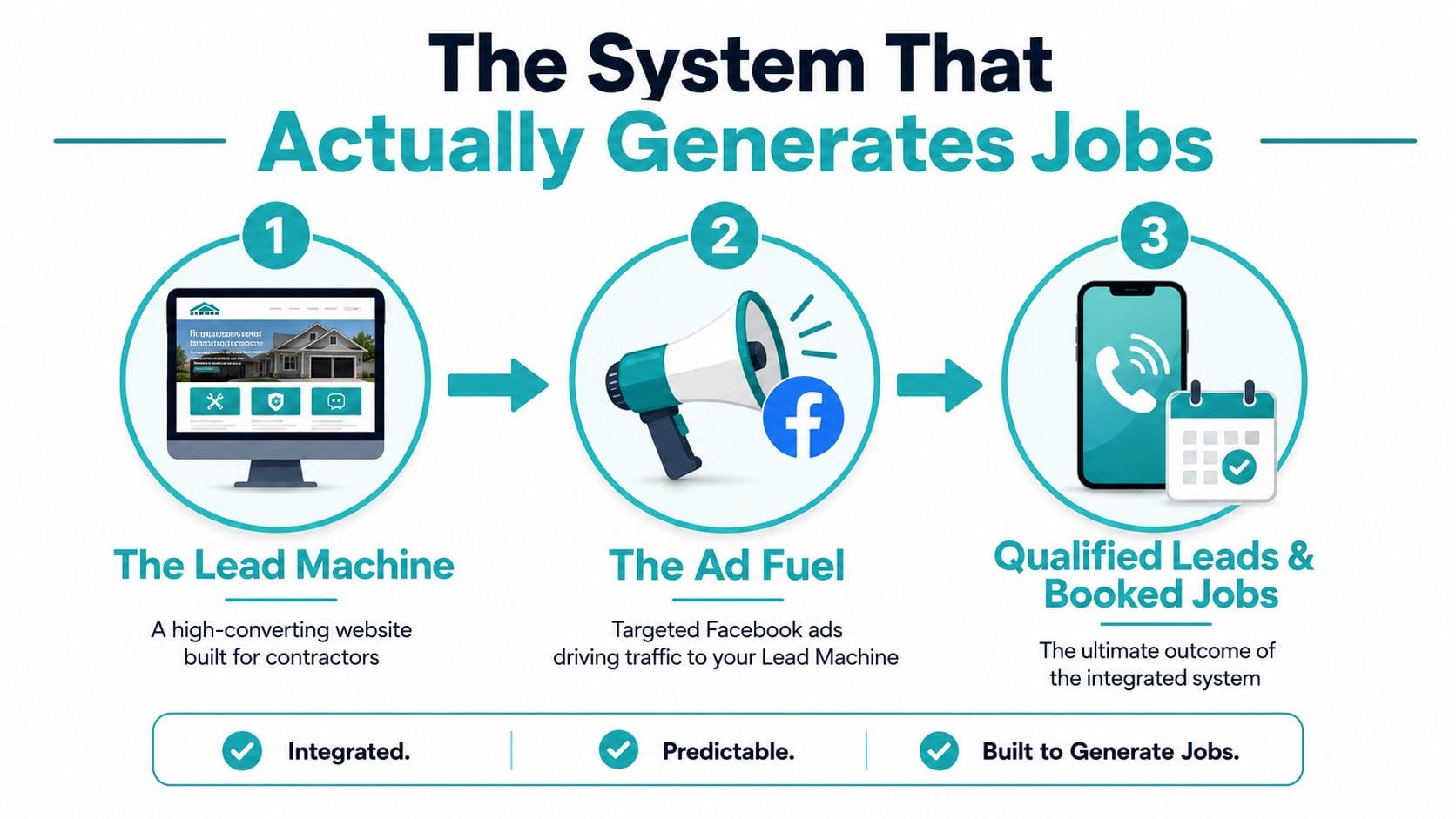
You need two things working together.
First, you need a Lead Machine.
Second, you need ad fuel.
That’s it.
The Lead Machine
A Lead Machine is not a pretty website.
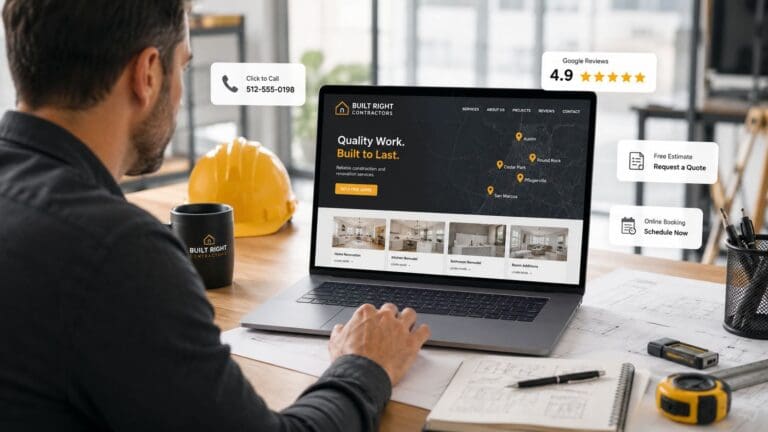
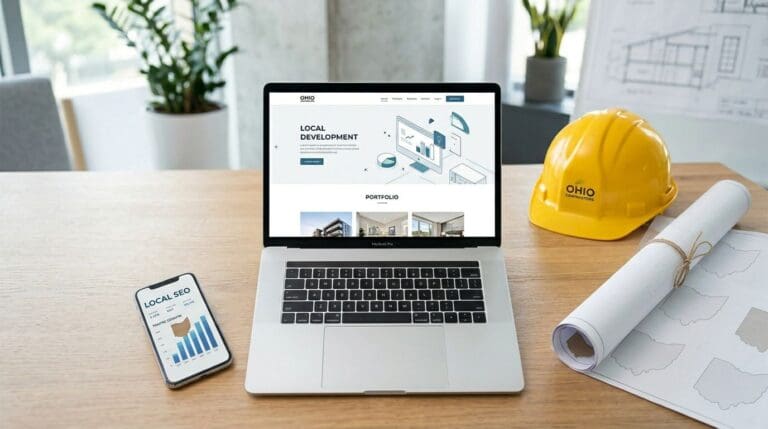
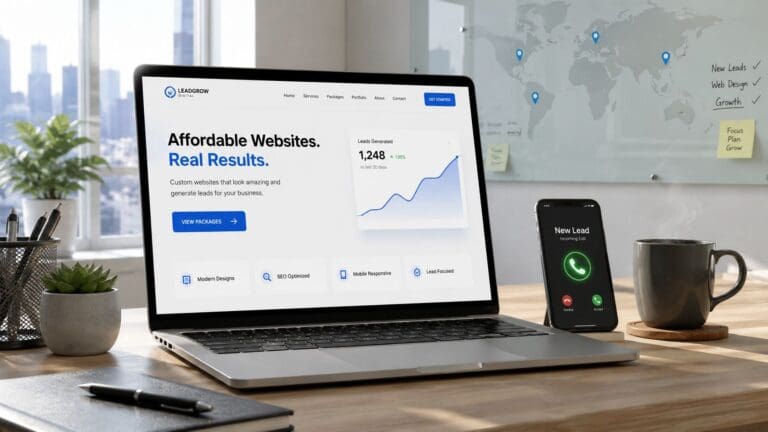
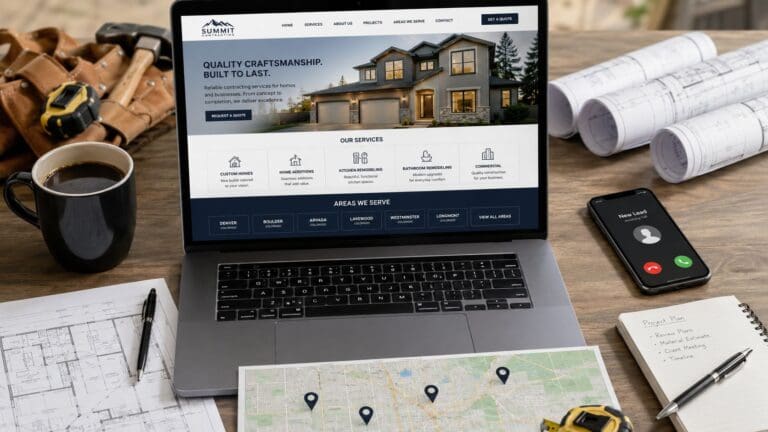
It is a website built for one job. Turn visitors into calls and form leads from the exact services and cities you want. It has clear calls to action, strong service pages, city pages, mobile-friendly layouts, and tracking so you know what is producing work.
It exists to capture demand.
If someone clicks because they need concrete work in one city and they land on a generic homepage, you lose them. If they land on a page built for that service in that city, your odds improve because the message matches the need.
The ad fuel
Ads create visibility.
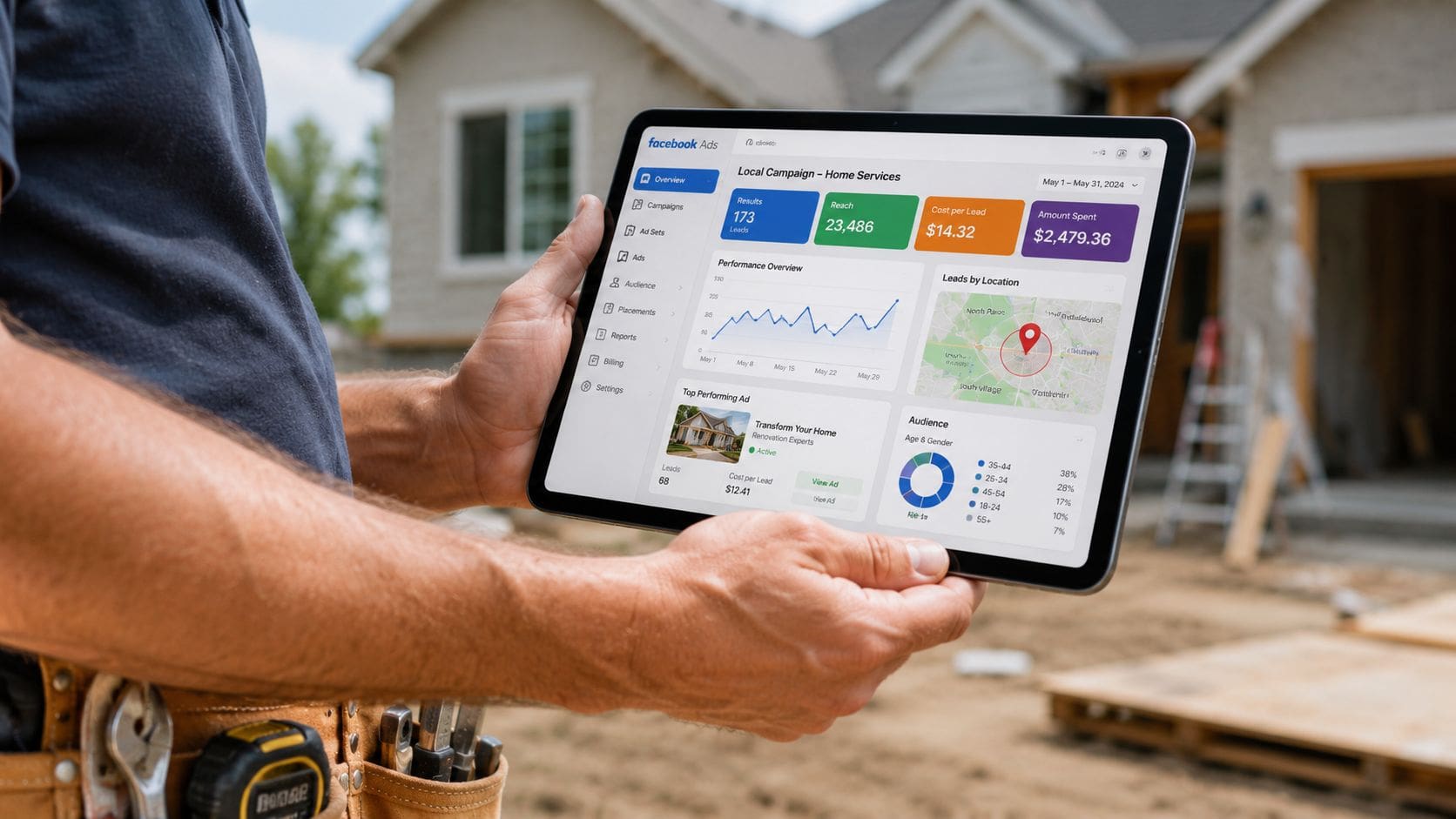
They put you in front of buyers and potential buyers in the places you want to grow. On Facebook, a practical setup for contractors is a Leads campaign with Instant Forms, local targeting built around your service area, and exclusions so you don’t waste spend outside the radius, according to a contractor tutorial on campaign setup (contractor Facebook leads walkthrough).
That gets attention and response. But the system still matters more than the button clicks.
Here’s the simple version:
| Part | Job |
|---|---|
| Lead Machine | Turns traffic into calls and quote requests |
| Ads | Create visibility and send traffic into the system |
| Tracking | Shows what is working and what needs to change |
One resource that explains the early side of how to start advertising on Facebook can help you understand the platform side. That still won’t replace the need for the full system around it.
The Cherubini Company offers Lead Machines for contractors, which combines a contractor-focused website with paid traffic support. That model fits this problem because the site is treated as the asset and the ads are treated as the fuel.
A website without traffic does nothing. Ads without a conversion page waste money. Together, they give you a shot at steady jobs.
How to Plan Facebook Ads That Get Calls
Planning matters more than fiddling with buttons.
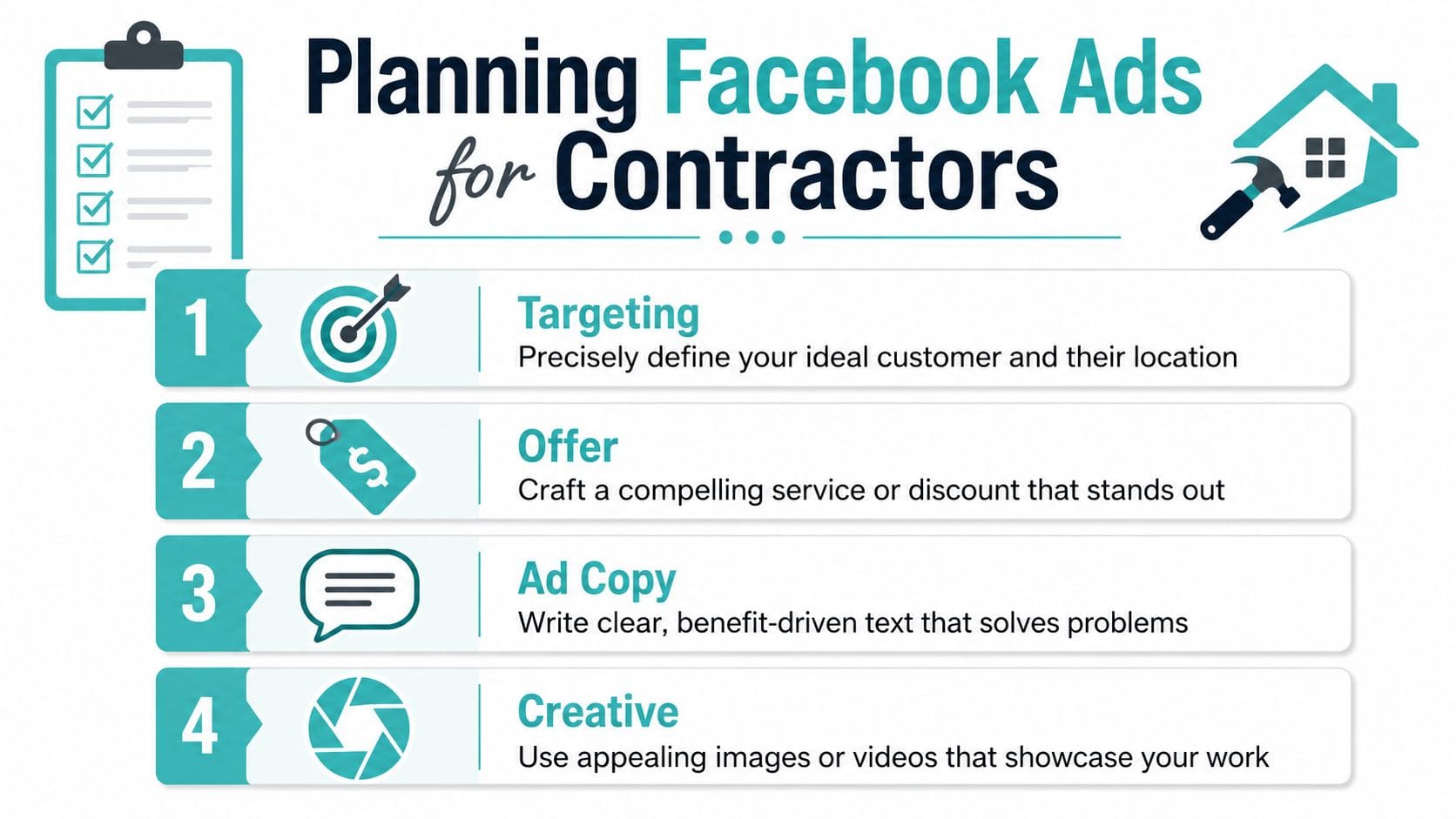
Most contractors don’t need more complexity. They need a tighter plan. If you want to know how to run Facebook ads for contractors without wasting time, focus on who sees the ad, what they see, and where they go next.
Start with the service area
Don’t target everywhere.
Pick the cities and towns where you want work. Then make sure the ad and the landing page match those areas. If your crews don’t want to drive there, don’t advertise there.
A contractor-focused case study recommends keeping the audience broad enough for delivery to learn, with at least 100,000 people in the target area and age 30+ when the goal is homeowners. The same source reported 297 cheap leads from that approach, while also stressing that contractors should track cost per lead and close rate before scaling (Tradespeople Online contractor Facebook guide).
That doesn’t mean copy the numbers blindly. It means stop strangling the audience so tightly that the campaign can’t move.
Keep the ad simple
Most contractor ads are too vague.
The best ads are plain. One service. One problem. One next step.
Use real job photos or simple video. Speak to the homeowner’s need. Don’t talk like a brand agency. Don’t try to be clever. Tell them what you do, where you do it, and how to contact you.
A generic ad says, “We offer quality solutions.”
A useful ad says, “Need a septic installer in Licking County? Request a quote.”
Filter bad leads before they waste your time
Lead quality matters more than lead count.
Too many campaigns chase the cheapest form fill. That’s how you get price shoppers, tire kickers, and people who were never serious. To improve lead quality, your Facebook Instant Form should include qualifying questions, and higher-intent forms can ask about project timeline or require phone verification so you speak with more serious prospects (contractor lead quality guidance).
Use questions that help you sort real jobs from noise.
- Project type: Make people say what they need.
- Location: Confirm they are in the area you serve.
- Timing: Ask whether they need the work soon or are just browsing.
- Best contact method: Make follow-up easier and faster.
A lot of website conversion advice for large companies still applies here in plain English. This piece on IMADO’s insights on enterprise CRO is useful because it reinforces the core idea that conversion doesn’t happen by accident. The page and the form have to reduce friction and move people to act.
If you want a contractor-focused version of that idea, these Facebook ads for local businesses show the local side more clearly.
Cheap leads can be expensive when your estimator spends time chasing people who will never buy.
Take Back Control of Your Business
The point of ads isn’t vanity.
The point is control.
When you control visibility, you stop sitting around hoping referrals show up. You stop taking every small, low-margin job just to keep crews moving. You get a better shot at bigger work because more of the right people can find you.

A contractor business without a repeatable lead system is fragile. Maybe the phone rings this month. Maybe it doesn’t. That’s not a plan. That’s gambling.
A contractor business with a real system can make better decisions. It can grow into nearby cities. It can be pickier about jobs. It can stop guessing.
If you’ve been trying to figure out run contractor ads yourself, be honest about what usually happens. Most owners don’t need another side job managing marketing. They need a system that makes visibility and lead flow more predictable.
You think that customers “can” find you but, If customers “don’t” find you, nothing else matters. Lead Machines are built to fix that.
If you want a clear path instead of more marketing noise, talk to The Cherubini Company. They build Lead Machines for contractors and pair them with ads that create visibility in the cities you want to work. The goal is simple. More of the right people find you, contact you, and book jobs.