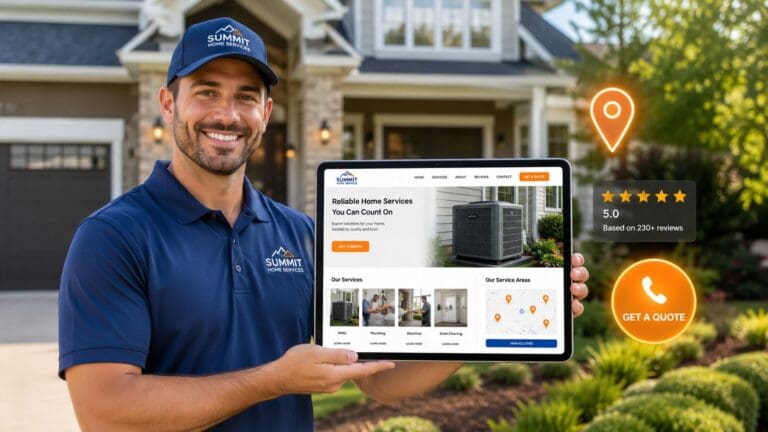

Tired of your ads not working? Here’s why that’s happening.
If you’ve been burned by marketing agencies, tried running ads yourself, or you’re just tired of waiting for the phone to ring, your frustration makes sense. Most contractors don’t have a skill problem. They have a visibility problem. You’re known in your own town. Then a customer ten miles away searches for your service in their town, and you don’t show up.
That job is gone before you even know it existed.
People don’t search your company name if they don’t know you yet. They search for the work they need and the place they need it. If Google doesn’t connect your business to those service areas, you stay invisible. Your website won’t fix that by itself. Websites don’t create traffic. They wait for traffic.
That’s why random ads fail too. Ads without the right system just buy clicks. They don’t buy leads. They don’t buy calls. They don’t buy booked work.
Google Ads can work. It is not some side channel Google barely cares about. Google’s ad business is the core of Alphabet’s revenue engine. Semrush cites Google’s 2023 revenue at about $305.6 billion and notes that more than 77% came from ads, which tells you this is a mature, heavily optimized system, not a gamble or an experiment (Semrush on Google Ads statistics).
So stop treating ads like a scratch-off ticket. Treat them like a lead system.
If you want more practical actionable Google Ads strategies, start with these.
1. Show Up In Every Town You Service
You might dominate your hometown. That doesn’t mean Google thinks you work in the next town over.
If a homeowner in the next city searches for “concrete contractor near me,” Google reads that as “concrete contractor in my city.” If your business only signals your home address and one main location, you won’t show up in your desired work areas. That’s the visibility gap, and it’s why good contractors lose jobs they never even knew were available.
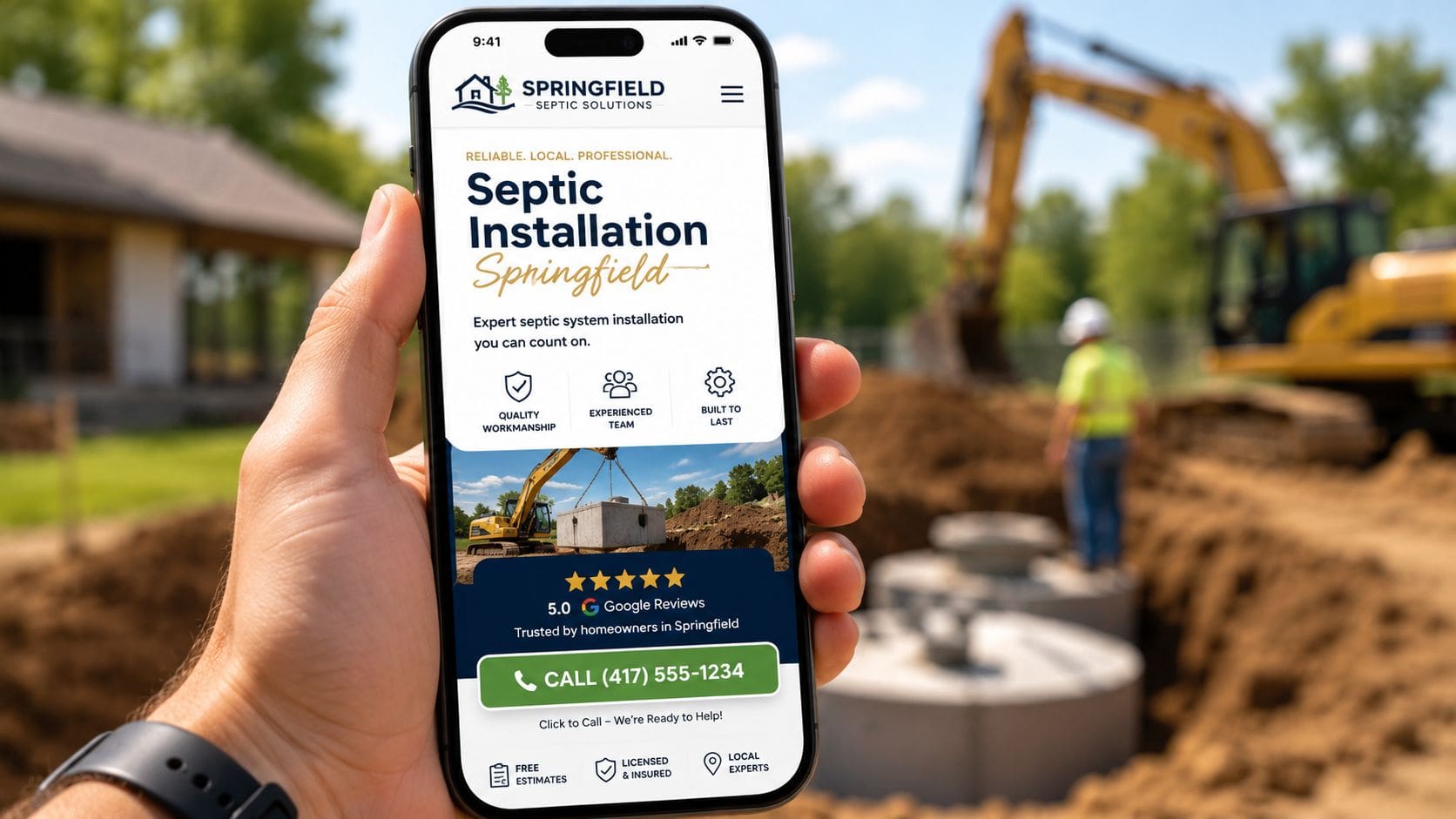
Service area visibility has to be intentional
Google Ads best practices start with coverage. Not vague coverage. Real coverage. City by city. Service by service.
A septic installer in Newark might also work in Granville, Heath, Pataskala, and nearby towns. If the ad system and website don’t clearly support those locations, Google has no reason to trust that business as a fit there. You can’t expect Google to guess.
That is why a contractor needs pages and signals built around the places they serve. This is the same reason adding the right keywords to your website matters. You are telling Google where you work and what you do, instead of hoping it figures it out.
Practical rule: If you want jobs from a city, your lead system needs to say you work there.
Most contractors are mistaken. They think, “Customers can find me.” Sure, they can if they already know your name. But strangers don’t search your name. They search the job they need in the city they live in.
If you don’t show up there, you don’t exist there.
2. Send Ad Traffic to a Website Built to Convert
You work to get the click. Then the visitor lands on a generic homepage, pokes around for ten seconds, and leaves. No call. No form fill. No job. No chance.
That is the contractor version of lighting money on fire.
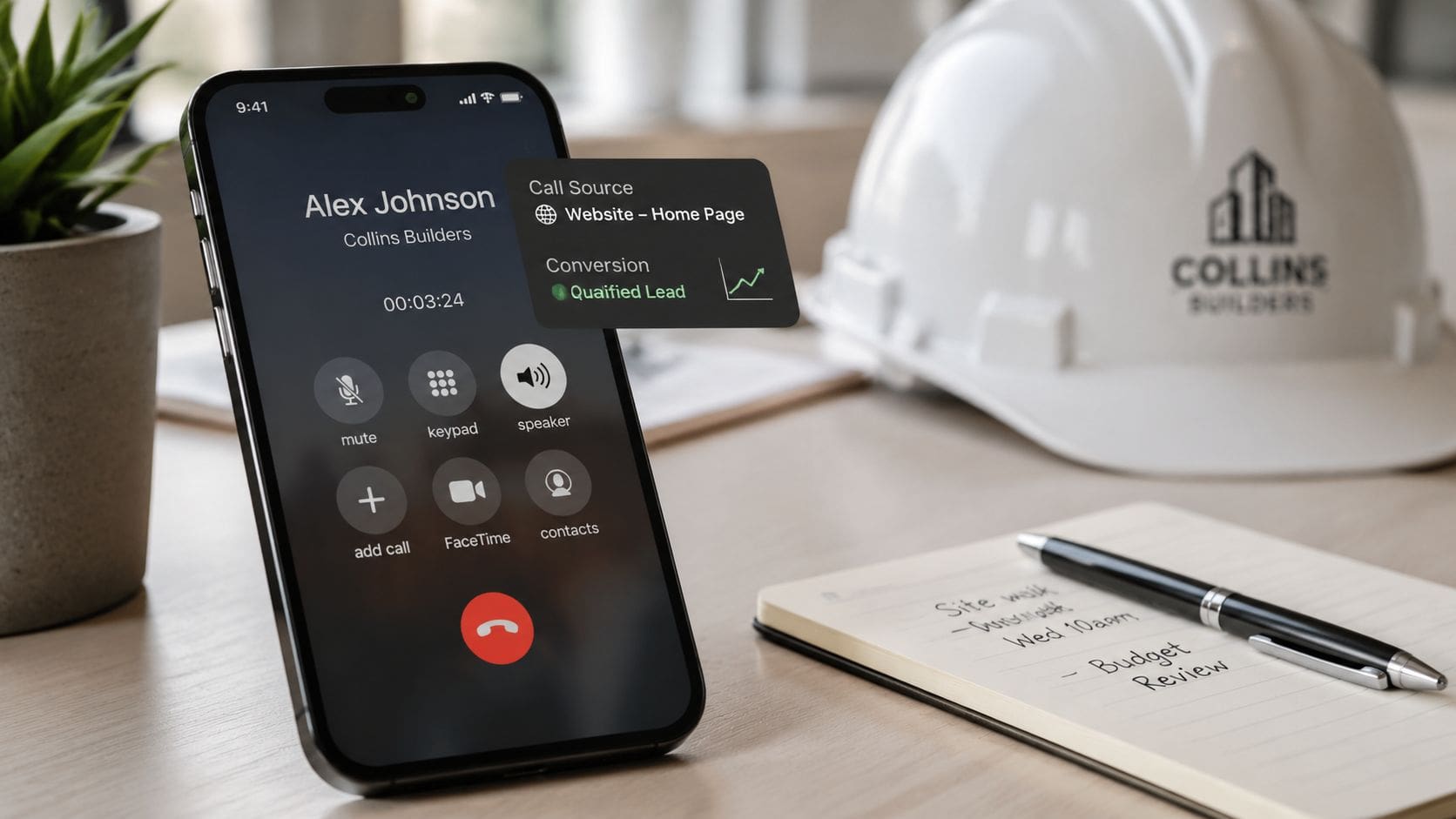
Your website needs one job
Your website has to turn paid traffic into calls and quote requests.
A real lead system is built for that outcome. The page matches the ad. The service is clear. The location is clear. The proof is clear. The call button is easy to find. The next step takes no effort.
Contractors get burned here all the time. They agree to “try ads,” but nobody fixes the page where the traffic lands. Then they blame Google Ads, even though the problem is the site was never built to convert in the first place.
A land clearing contractor does not need a pretty homepage with vague marketing copy. He needs a page that says land clearing, names the service area, shows proof, and gives people a fast way to call. That is why landing page best practices for lead generation matter.
If you want a second opinion on usability, these actionable tips for landing page UX can help frame the issue.
Ads drive visibility. The page closes the lead.
This is the part many contractors miss.
Google Ads are not a standalone tactic. They are fuel for a lead machine. If the machine is weak, more fuel just creates more waste. You do not need more clicks hitting a page with mixed messages, thin service details, or a buried contact form.
You need message match. If someone clicks an ad for septic installation in a specific town, the page should confirm septic installation in that town right away. No guessing. No hunting through the menu. No generic “welcome to our website” headline.
A bad website stays bad after you pay for traffic.
Stop treating the website like a brochure. Treat it like a sales tool. Every ad campaign needs a destination page built to capture demand while the buyer is ready to act.
That is how ads become calls instead of bounce rates.
3. Target Buyers, Not Window Shoppers
Not every click is worth paying for.
A person searching for “how to fix a retaining wall” is looking for advice. A person searching for “retaining wall contractor near me” is looking to hire. Those are different people with different intent, and mixing them together is how budgets get burned.
Intent matters more than traffic
Contractors don’t need more random visitors. They need better visitors.
That means your ads should focus on searches that show hiring intent. Emergency terms. Local terms. Service-specific terms. The kind of searches people make when they’re done researching and ready to call.
A plumber wants the person searching for “water heater repair in my city.” He doesn’t want the person reading tutorials at midnight and trying to fix it with a wrench and a video.
This is also how you cut down on junk leads. The more your ad system matches real buying intent, the less time you waste talking to shoppers, price checkers, and people who were never serious. That’s the same problem covered in how to stop getting tire-kicker leads.
Stop chasing clicks
Google’s own business guidance points to a bigger issue for service companies. Most advice still talks about forms and generic conversions, while real contractors need to measure qualified calls, booked estimates, and revenue. Google also warns that automation only works when conversion tracking and consent are set up correctly (Google on reaching the right customers on Search).
So don’t judge success by traffic alone.
Judge it by whether the click came from somebody trying to hire you.
- High intent search means the person needs the service now.
- Local intent search means the person needs it in your service area.
- Service-specific search means the person knows what kind of contractor they want.
That’s the traffic worth buying.
4. Get Better Ad Placements for Less Money
Google rewards relevance. It punishes sloppiness.
Gold nugget:
If someone searches for “excavation contractor in Zanesville” and your ad talks about excavation in Zanesville, then sends them to a page about excavation in Zanesville, that is a tight match. If your ad is vague and your page is generic, you force Google to work harder to guess what you mean.
Tight matches win
This is one of the simplest Google Ads best practices to understand. Match the search. Match the ad. Match the page.
A roofing contractor shouldn’t run one generic ad for every job type and every city. A concrete contractor shouldn’t send every click to the homepage. The closer the match, the stronger the result.
Contractors often get frustrated. They tried ads before, but the setup was loose. Broad messaging. Weak pages. No local match. Then they concluded Google Ads doesn’t work.
No. Bad systems don’t work.
Hard truth: Better ad placement starts before the ad ever runs.
A cleaner setup also makes future decisions easier. You can tell what city is producing calls. You can tell what service is pulling weight. You can see where the system is strong and where it needs work.
If you want a broader look at how contractors run Google Ads, keep this rule in mind first. Relevance lowers waste. Relevance improves visibility. Relevance is what gets the right job to the right page.
That is how you make your money go further without turning this into a guessing contest.
5. Know Which Ads Make Your Phone Ring
Most contractor reports are full of useless fluff.
Clicks. Impressions. Traffic charts. Maybe a few bright colors on a dashboard. None of that matters if the phone didn’t ring and the lead wasn’t worth a damn.
Track calls, not vanity
For contractors, the primary conversion is usually a phone call, a booked estimate, or a qualified lead that can turn into revenue.
Google’s guidance emphasizes measurement, data quality, conversion-focused optimization, and Google Analytics integration for better lead-quality analysis. That is the backbone of good account management. Business outcomes first. Clicks second.
So if you’re running ads, you need to know:
- Which ad triggered the lead
- Which search brought that person in
- Which service page closed the action
- Which leads were real and which were junk
That is why Google Ads for leads has to be about more than traffic reports. If a campaign generates a pile of weak form fills, missed calls, or spam, that isn’t performance. That’s noise.
Bad tracking creates bad decisions
A restoration contractor might think one campaign is winning because it gets a lot of clicks. But if another campaign generates fewer clicks and more real calls, the second one is stronger. Without proper tracking, you won’t see that.
Then you cut the wrong thing. Or fund the wrong thing. Or trust the wrong agency.
If you can’t see what caused the call, you’re not managing ads. You’re gambling.
This is why real Google Ads best practices are built around measurement. Not pretty reports. Not excuses. Clean tracking tells you what deserves more budget and what needs to go.
6. Run Ads That Automatically Match the Search
A homeowner searches “emergency tree removal near me” at 9:12 p.m. Another searches “lot clearing contractor in York” the next morning. If both people see the same stiff ad, your account is not built to win.
Google Ads works better when the ad can adjust to the search in real time. That is the point of responsive search ads. You give Google strong headlines, descriptions, and assets. The system mixes them to match the query more closely and compete in more auctions.
For contractors, that only works inside a real lead generation system. You are not “trying ads.” You are building a Lead Machine that shows up with the right message, in the right town, for the right job.
Matching the search gets you better clicks
Generic ads attract generic traffic. Specific ads attract buyers.
A grading company should not run one flat message across every service and every location. It should give the platform enough material to speak to site prep, excavation, land clearing, and local service intent without creating a bloated mess of one-off ads.
That requires disciplined inputs:
- Clear service themes so the ad stays relevant to the job
- Town and county coverage so local searches get local language
- Distinct headlines and descriptions so Google has real options to test
- Ad assets that add trust, service detail, and more ways to win the click
If you want a plain-English overview of how modern ad creation works, this AdStellar AI Google Ads tutorial covers the basics.
Automation follows your setup
It’s understandable why contractors get irritated. They turn on automation, get a pile of weak clicks, and conclude Google Ads is a scam. The problem is usually the system around the ads.
Automation does not fix bad structure. It scales whatever you built.
If your services are lumped together, your ad copy is vague, and your account sends mixed signals, automated matching will spread that confusion faster. If your campaigns are organized, your offers are clear, and your conversion actions reflect real lead value, automated matching helps you capture more qualified searches without hand-writing endless ad variations.
That is the practical takeaway. Use automation to extend a strong system, not to replace one.
7. Stop Wasting Money on Tire-Kickers
You pay for every wrong click.
A homeowner searches “how to pour concrete yourself.” A job seeker searches “HVAC installer jobs.” Someone else wants parts, pricing, or free advice with no intent to hire. If your account lets those searches through, Google will spend your budget on people who were never going to become leads.
That is not a traffic problem. It is a filtering problem.
Negative keywords protect lead quality
Contractors get burned here all the time. They turn ads on, see clicks coming in, then realize the calls are weak and the forms are useless. The issue usually starts before the click. The account failed to screen out low-intent searches.
Negative keywords do that screening.
A septic contractor should block DIY searches. An HVAC company should block employment terms. A concrete installer should block supply and materials searches if it does not sell them. Every one of those exclusions protects the budget and keeps your sales team focused on real buyers.
A tighter filter helps you:
- Cut junk searches before they waste spend
- Improve call quality so your crew spends less time chasing dead ends
- Keep budget on buyer intent instead of research traffic
- Feed cleaner signals into automation so the account learns from actual lead behavior
Bad leads usually start as bad searches.
This is the part many contractors miss. Google Ads is not a slot machine you “try” for a month. It is one part of a lead generation system. If the system has no filter, it will produce noise. If the system blocks junk at the search level, routes good traffic to the right page, and tracks real lead actions, ads start working like a Lead Machine instead of an expensive experiment.
Broad matching and automation can expand reach fast. They can also widen the door to irrelevant searches if you do not manage negatives, search terms, and conversion quality with discipline.
A serious ad account does not buy more clicks and hope. It buys qualified attention and rejects the rest.
8. Put Your Bids on Autopilot to Hit Your Goals
Manual bidding sounds tough and precise. Most of the time, it’s just manual guessing.
Google’s own direction for Search campaigns is clear. Pair Smart Bidding with responsive search ads and broad match when you want the system to bid toward likely conversions, not just traffic. That setup is part of current best practice because Google Ads has become a performance system driven by signals and outcomes, not endless hand adjustments.
Let the system optimize for real outcomes
This only works when conversion tracking is clean.
If your account treats every weak form fill like a great lead, Smart Bidding will go find more weak form fills. If your account tracks real calls and real qualified actions, the system has a better target.
That is the whole point. You are not telling Google, “Get me clicks.” You are telling Google, “Find more of the people who become actual leads.”
For a plumbing company, that could mean pushing harder toward emergency searchers who call right away. For a restoration company, it could mean prioritizing searches that lead to urgent jobs rather than casual research.
Don’t switch too early
There is one rule too many advertisers ignore. Data volume matters.
A Google Ads expert briefing notes that advertisers should ideally have at least 100 conversions before relying heavily on machine-learning-driven strategies or drawing strong conclusions from limited account data. The same briefing also says a campaign should reach at least 100 clicks in the first 30 days before big structural changes, because early edits are often based on noise instead of signal (Google Ads optimization briefing on conversion and click thresholds).
That means you don’t launch on Monday, panic on Friday, and rebuild the whole campaign.
You let the system gather evidence. Then you optimize.
9. Get the Google Guaranteed Badge
This placement catches contractors’ attention because it sits in a prime spot and carries a trust signal people notice fast.
For some local service businesses, the Google Guaranteed badge can help you stand out before the customer ever visits your website. That matters in crowded markets where trust decides who gets the call.
Trust has to show up before the click
When homeowners need help fast, they make quick decisions.
If they see one business that looks verified and another that looks unknown, the verified one often gets the first shot. That doesn’t replace a strong website or strong ads, but it can support the same job. More visibility. More trust. Better chance of the call.
For contractors, this works best when the rest of the system is already solid:
- Clear service area coverage so the business appears where work is wanted
- A conversion-focused website so trust turns into action
- Good call handling so leads don’t die after they come in
This point is simple. Visibility alone isn’t enough. Credibility has to travel with it.
A business owner searching for growth doesn’t need more mystery. He needs more reasons for the customer to trust him fast. This badge can be one of those reasons, if it fits the business and is managed as part of the full lead system.
10. Fuel the Fire When It’s Hot
July hits. The phone starts ringing. Search volume jumps. Your crews can handle more work. But your ad budget is still stuck on the same setting you used in February.
That is how contractors lose easy jobs.
Google Ads should not run like a fixed utility bill. It should run like part of your lead generation system. When demand rises, the system needs more fuel. When demand softens, the system needs tighter control. If you are just “trying ads,” you miss the window and hand those leads to faster competitors.
Increase spend when demand and capacity line up
Busy seasons are not the time to get cautious. They are the time to get disciplined.
If homeowners are searching and your team can take the work, increase budget, watch lead quality, and keep your best campaigns in front of buyers. A concrete contractor should push harder when building season starts. A restoration company should respond fast after storms. An HVAC company should adjust around heat waves, cold snaps, and service spikes.
The point is simple. Ads should follow demand, staffing, and margin.
- Raise budgets in peak periods when search demand and close rates are strongest
- Prioritize the cities and services that produce revenue instead of spreading spend everywhere
- Reduce spend fast when schedules fill up or lead quality slips
- Keep the conversion system tight so higher traffic turns into booked jobs, not missed calls
Scaling only works if the machine is already working
More spend does not fix a weak system. It exposes one.
If your landing pages are weak, your call handling is sloppy, or your targeting is loose, a bigger budget just buys more waste. Good scaling happens after the account is already producing qualified leads at an acceptable cost. Then you add fuel carefully. You watch search terms, lead quality, booking rates, and service-area performance. You keep what works. You cut what does not.
Automation can help here. Smart bidding, responsive ads, and broader matching can support growth. But they still need adult supervision. Contractors need leads from specific towns, for specific jobs, at prices that leave room for profit. That requires management, not wishful thinking.
Run your ads like a Lead Machine. Push when demand is hot. Pull back when capacity gets tight. Stay visible when the market is active, and you stop treating lead flow like luck.
10-Point Google Ads Best Practices Comparison
| Item | Implementation 🔄 | Resource requirements ⚡ | Expected outcomes 📊⭐ | Ideal use cases 💡 | Key advantages ⭐ |
|---|---|---|---|---|---|
| 1. Show Up In Every Town You Service | Moderate, create city pages, GMB updates 🔄 | Moderate content & citation work ⚡ | Broader local visibility and more local leads 📊 | Contractors serving multiple towns 💡 | Expands reach; captures local searches ⭐ |
| 2. Send Ad Traffic to a Website Built to Convert | High, landing page and funnel design 🔄 | High, design, dev, CRO, analytics ⚡ | Much higher conversion rate and more calls 📊⭐ | Paid ad campaigns needing better ROI 💡 | Maximizes return on ad spend; reduces wasted clicks ⭐ |
| 3. Target Buyers, Not Window Shoppers | Low–Moderate, keyword selection and filters 🔄 | Low, keyword research and list maintenance ⚡ | Higher-intent traffic and improved lead quality 📊 | Markets with mixed intent queries 💡 | Reduces wasted clicks; improves lead relevance ⭐ |
| 4. Get Better Ad Placements for Less Money | Moderate, optimize relevance, speed, CTR 🔄 | Moderate, site improvements and ad testing ⚡ | Lower CPC and stronger ad positions 📊⭐ | Competitive keyword auctions 💡 | Cost savings; better visibility per dollar spent ⭐ |
| 5. Know Which Ads Make Your Phone Ring | Moderate, call tracking & attribution setup 🔄 | Moderate, tracking tools and integration ⚡ | Clear source-of-lead data and smarter budgets 📊⭐ | Phone-driven service businesses 💡 | Data-driven allocation; removes guesswork ⭐ |
| 6. Run Ads That Automatically Match the Search | Moderate, DKI/responsive ads and templates 🔄 | Moderate, ad templates and geo assets ⚡ | Increased CTR and perceived relevance 📊⭐ | Multi-location campaigns and local searches 💡 | Personalization at scale; higher engagement ⭐ |
| 7. Stop Wasting Money on Tire-Kickers | Low, negative keywords and exclusions 🔄 | Low, ongoing list updates and monitoring ⚡ | Reduced wasted spend and better ROI 📊⭐ | Broad-match or discovery campaigns with junk traffic 💡 | Cuts irrelevant clicks; improves efficiency ⭐ |
| 8. Put Your Bids on Autopilot to Hit Your Goals | Low–Moderate, enable smart bidding and settings 🔄 | Low–Moderate, conversion tracking and data history ⚡ | Optimized cost-per-lead via ML-driven bids 📊⭐ | Accounts with sufficient conversion data 💡 | Saves time; machine-optimized spend ⭐ |
| 9. Get the ‘Google Guaranteed’ Badge | High, application, vetting, and compliance 🔄 | Moderate–High, fees, documentation, setup ⚡ | Higher trust, prime placement, increased leads 📊⭐ | Local services where trust matters (home services) 💡 | Strong trust signal; pay-per-lead access ⭐ |
| 10. Fuel the Fire When It’s Hot | Moderate, seasonal bid & budget adjustments 🔄 | Moderate, analytics and flexible budgets ⚡ | Better peak-season capture and less off-season waste 📊⭐ | Seasonal services (HVAC, landscaping, etc.) 💡 | Aligns spend with demand; maximizes peak revenue ⭐ |
Stop Guessing, Start Controlling Your Leads
Every one of these Google Ads best practices points to the same conclusion. Ads are not the answer by themselves. A website is not the answer by itself. Hope is definitely not the answer.
You need a system.
That system starts with visibility. If people in the towns you serve don’t see you when they search, you don’t get the chance to win the job. It doesn’t matter how good your crews are. It doesn’t matter how long you’ve been in business. It doesn’t matter how many jobs you’ve done in your hometown. If you are invisible when the search happens, you are out.
That is the main problem most contractors have. Not effort. Not talent. Invisibility.
Then the system has to convert that visibility into action. That means the click goes to a page built to turn traffic into calls. It means the ad matches the search. It means the city and service are clear. It means the tracking shows what produced a real lead. It means junk traffic gets filtered out. It means automation is used carefully, with real signals, not blind trust.
That is why “trying ads” is the wrong mindset.
You don’t try visibility. You build it. You control it. You improve it. You use it to create a steadier pipeline so your business isn’t living off word of mouth and luck.
A Lead Machine does exactly that. The website is the asset. The ads are the fuel. Together, they create a repeatable system that helps you show up in more places, get found by more ready-to-hire buyers, and turn that attention into calls and jobs.
That is also why websites without traffic don’t work. They just sit there. And ads without a conversion system waste money. You need both parts working together.
If you’re looking at your current setup and thinking it feels fragile, you’re probably right. A fragile business has no control over visibility. No control over lead flow. No control over revenue swings. A stronger business builds systems that make the phone ring more predictably.
The Cherubini Company is one option in this space. It is a family-owned website design and advertising agency based in Newark, Ohio, and it focuses on visibility and lead generation for local businesses and contractors.
You think that customers “can” find you but, if customers “don’t” find you, nothing else matters.
Lead Machines are built to fix that.
If you’re done guessing and want a clearer lead system, talk to The Cherubini Company. They build Lead Machines for contractors and pair them with ads that create visibility in the cities you prefer to work in.