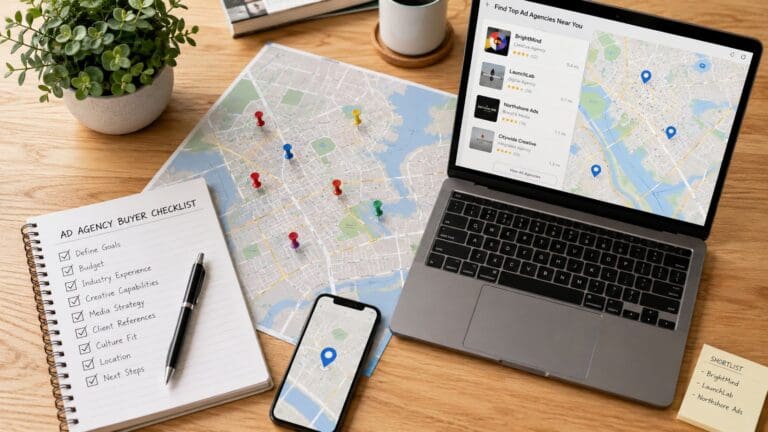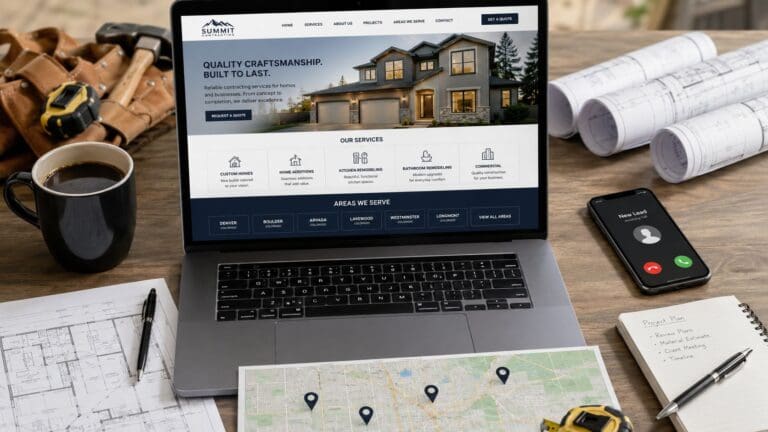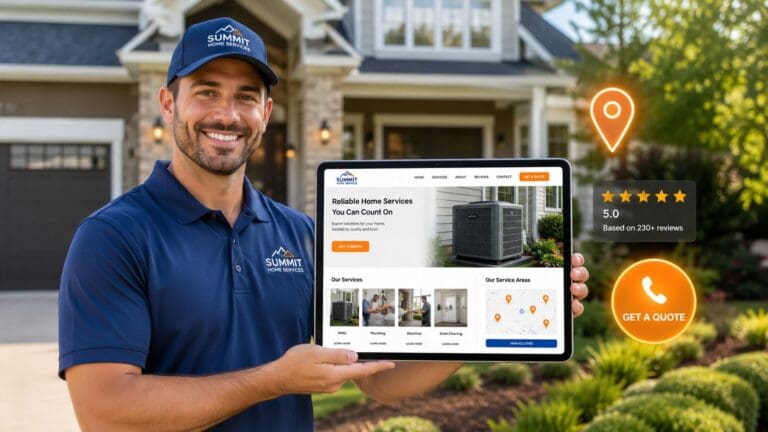
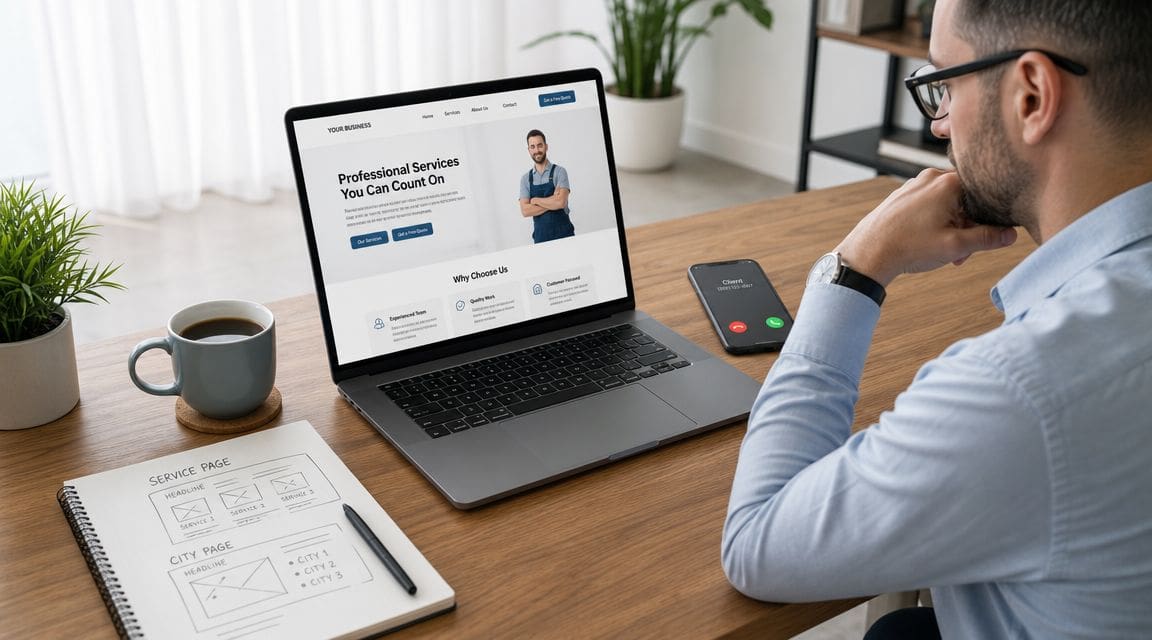
You've probably lived this already.
You paid for a website. Maybe it looked decent. Maybe the agency talked a big game. Then nothing happened. No steady calls. No better jobs. No control.
That's why so many contractors get stuck. They think they have a lead problem. What they really have is a visibility problem. People can't hire you if they never see you when they search.
A cheap website won't save you if nobody lands on it. And an expensive one won't save you either if it's built like a brochure instead of a lead system.
Your Website Is a Brochure Collecting Dust
A lot of contractors still believe their website should generate leads by itself.
It won't.
A website does not create traffic. It waits for traffic. That's it. If nobody shows up, it just sits there like a sales flyer on a shelf.

The wrong question contractors ask
Most guys ask, “How cheap can I get a website?”
Wrong question.
The question is, “Will this thing help me get calls from the cities where I want work?” If the answer is no, it's not cheap. It's wasted money.
A lot of cheap small business web design is built to launch fast, not to produce jobs. You get a homepage, a contact page, a few photos, and some nice words. That is not a lead system. That is a digital brochure.
Practical rule: If your site only talks about your company and doesn't clearly line up your services with the towns you want work from, it's not helping enough.
Why brochure sites fail
They fail for simple reasons:
- No visibility plan. The site says who you are, but not where you want to be found.
- No real structure. It isn't built around services and cities.
- No clear path to a call. Visitors have to hunt for what to do next.
- No support system. Once the site goes live, it just sits there.
If you already have photos, job stories, and customer questions, a smart next move is to reuse that material instead of paying to reinvent everything. A simple content repurposing playbook can help you think about how existing job photos, service explanations, and customer answers can support a stronger web presence.
Cheap small business web design only makes sense when it's lean on fluff, not lean on results.
Why You Are Invisible 10 Miles From Home
You may be known in your town. That doesn't mean you show up in the next town over.
That's the trap.
A homeowner doesn't search for your business name if they've never heard of you. They search for what they need and where they need it. If they type “excavation contractor near me,” Google reads that as “excavation contractor in this person's city.”
If your online presence keeps pointing back to your home base, Google has no good reason to assume you work in the next city.
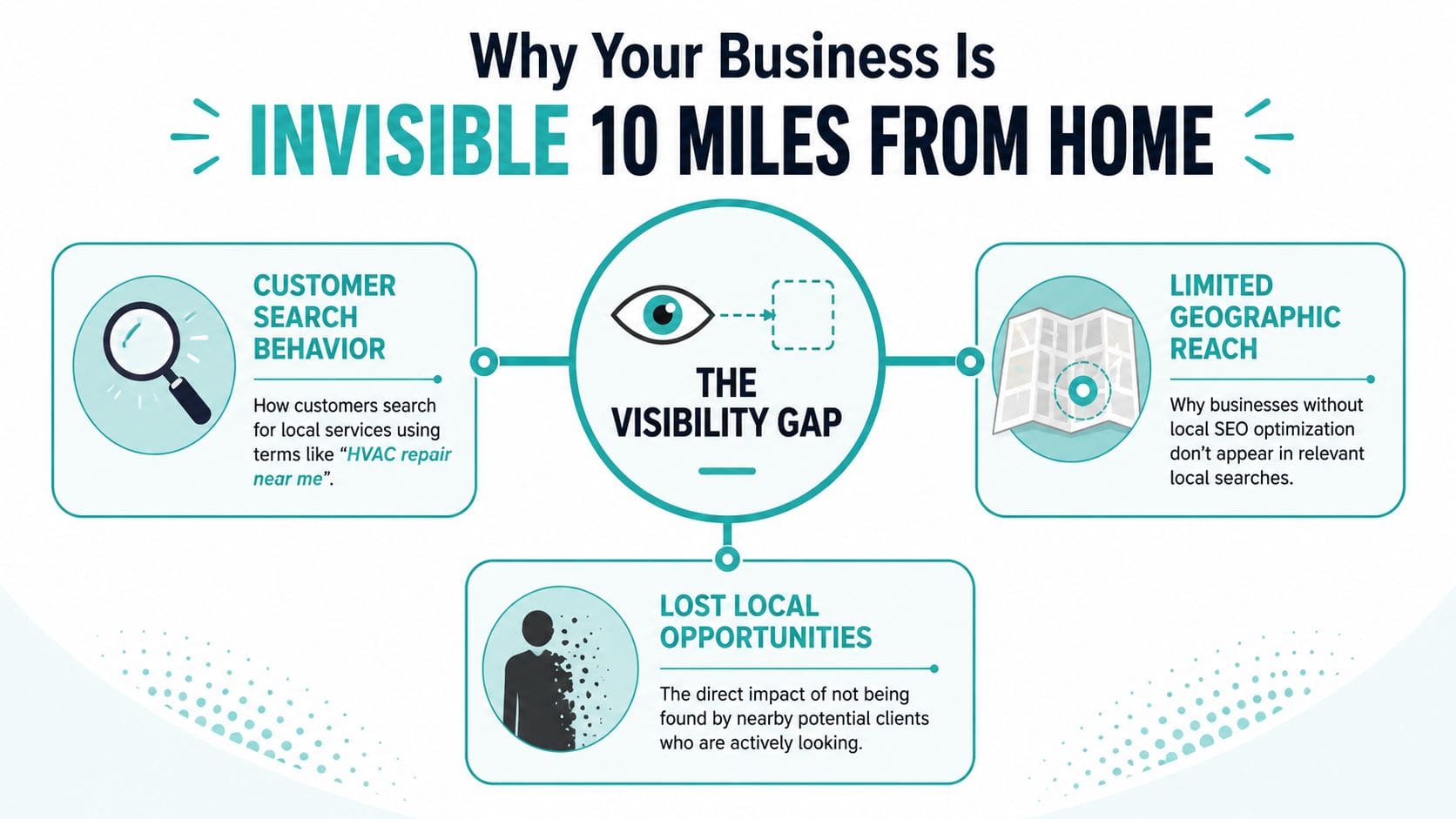
The visibility gap is simple
You work in five, ten, or twenty nearby towns.
Your website talks about one.
Your business profile points to one.
Your social posts mention one.
Then you wonder why the phone doesn't ring from the places where your trucks already go.
That's not bad luck. That's a gap in visibility.
If you never tell Google you work in a city, don't expect Google to send you jobs from that city.
Cheap sites usually break when growth starts
This is where most budget builds fall apart. General affordable web design advice usually covers templates, hosting, and basic setup. It often stops there. But affordable web design guidance rarely addresses what happens when a contractor needs service pages and location pages for multi-city growth.
That matters because a contractor who wants to grow doesn't need a site that only exists. He needs a site that can expand without turning into a rebuild.
If you're wondering why your company isn't showing up where you do work, this plain-English breakdown on why your business doesn't show up on Google is worth reading.
What lost visibility really means
It means:
- Missed calls. People searched. You didn't show.
- Lost bids. Another contractor got the first shot.
- Smaller jobs. You stay stuck with whatever comes from your immediate area.
- No control. Your pipeline depends on referrals and luck.
That's why the problem isn't that your website looks old. The problem is that you're invisible in the places that could feed your crews.
The Hidden Cost of a Bargain Website
The cheapest website is often the most expensive one you buy.
Not because of the sticker price. Because of what it prevents.
A bargain site can make you feel like you checked the box. You got online. You spent less. Done. But if that site can't support growth, can't be found well, or can't turn visits into calls, it starts costing you the second it goes live.
Cheap up front can mean expensive later
One critique of bargain web design says those sites can force a full rebuild within 6-12 months and may produce 317% lower organic traffic than properly built sites, which means lost opportunities before you even know they existed, according to this breakdown of the hidden cost of cheap web design.
That lines up with what a lot of burned contractors already know. The first site looked affordable. The second site was the one they had to buy after the first one failed.
There is a normal price range for cheap small business web design. DIY builders usually run $20–$50 per month, freelancers often charge $1,500–$4,000, and boutique agencies often start around $6,000–$12,000. One industry summary says many small business websites land between $1,000 and $10,000, with a basic five-page brochure site often priced at $1,000–$4,000 and maintenance at $600–$3,000 per year. The same summary also notes an estimated average around $3,200, with 35.1% of agencies quoting $1,000–$1,500 and 24.3% quoting $2,000–$2,500, based on this small business website cost overview.
Cheap Website vs. Lead Machine
| Metric | Typical "Cheap" Website | Lead Machine |
|---|---|---|
| Main job | Look legitimate | Turn traffic into calls |
| Structure | A few generic pages | Built around services and cities |
| Growth | Often hits a wall fast | Built to support expansion |
| Upfront focus | Lowest setup price | Lowest cost per real lead |
| Long-term result | Rebuild risk | Asset you can keep using |
If you want a fuller look at what business owners usually pay, this guide on small business website cost gives a practical breakdown.
The real cost is not what you paid for the website. The real cost is the jobs you never had a chance to bid on.
Stop buying websites like office supplies
A website is not printer paper. It is not something to buy at the lowest possible price and forget about.
For a contractor, the right question is simple. Will this site help me show up in more places and turn that visibility into calls?
If not, the low price doesn't matter.
A Lead Machine Is Not Just a Website
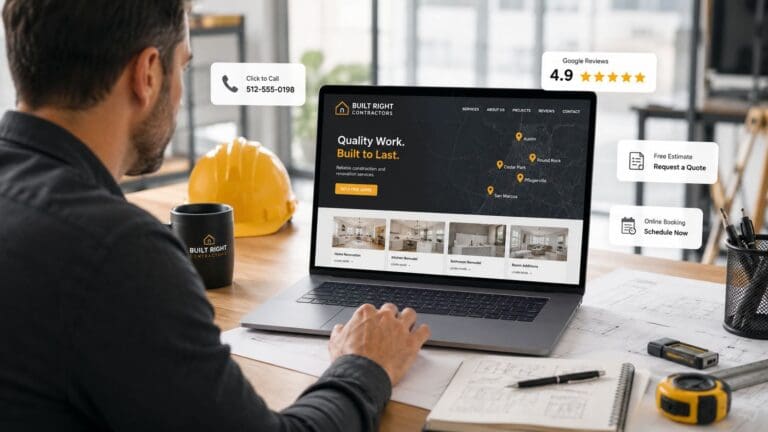
A Lead Machine is a website built for one job. Get the right visitor to call, fill out a form, or request a quote.
That's a different standard from a normal small business site.
A normal site says, “Here we are.” A Lead Machine says, “Here's the service, here's the city, here's how to contact us right now.”
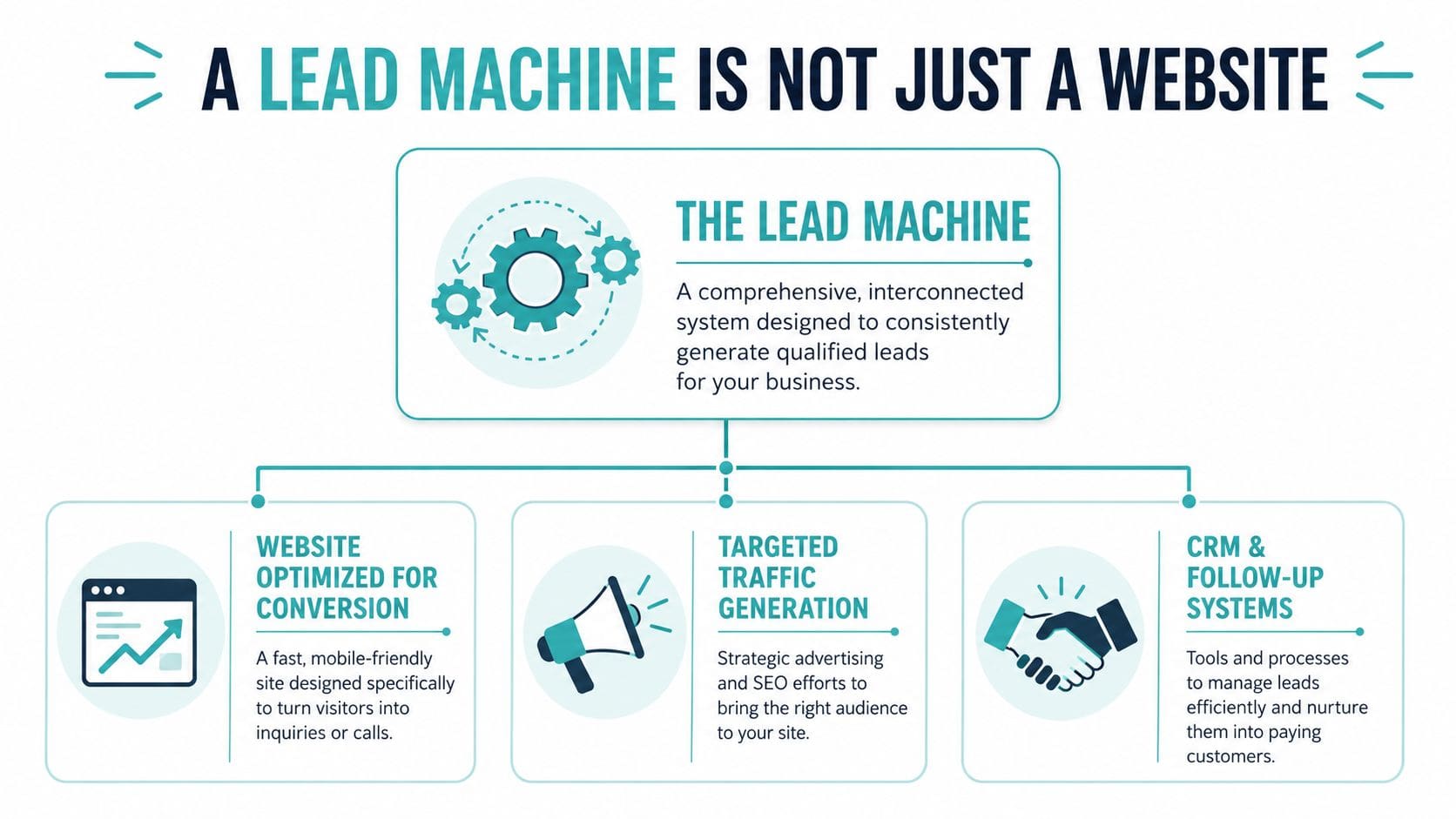
What makes it different
A cost-efficient build should follow a simple path. Study what works in your space, build a reusable framework around that, then customize it with your real services, photos, business details, and search-focused content, as explained in this look at affordable website design workflow.
That approach matters because it cuts waste without cutting the parts that bring in business.
A Lead Machine needs:
- Service pages that match what people are looking for
- City pages that tell search engines and customers where you work
- Fast load speed because speed affects whether visitors stay and act
- Clear calls to action so people can call without digging
- Mobile design because that's where many local buyers search
Industry research says 94% of first impressions are tied to website design, and a one-second delay in load time can reduce conversions by up to 20%, according to Network Solutions' small business website statistics summary.
This is a business tool, not a design trophy
A contractor doesn't need a clever homepage headline and a bunch of effects.
He needs a site that answers three questions fast:
- What do you do?
- Where do you do it?
- How do I contact you right now?
That's why a Lead Machine is closer to a piece of equipment than a piece of art.
For companies that need location-based lead systems, multiple lead machines is one way to think about expansion without stuffing everything into one weak site. The Cherubini Company uses that model to build service-and-city web assets for local businesses that want broader visibility.
If you're curious how other industries think about follow-up and lead handling after the click, this guide to B2B marketing automation for manufacturers gives useful context, even though contractors need a simpler, call-focused version.
Websites Do Not Create Traffic, Ads Do
Even the right website won't do much if nobody sees it.
That's where contractors get fooled again. They buy a site and wait. Then they decide “websites don't work.”
The website wasn't the whole system. It was one part.
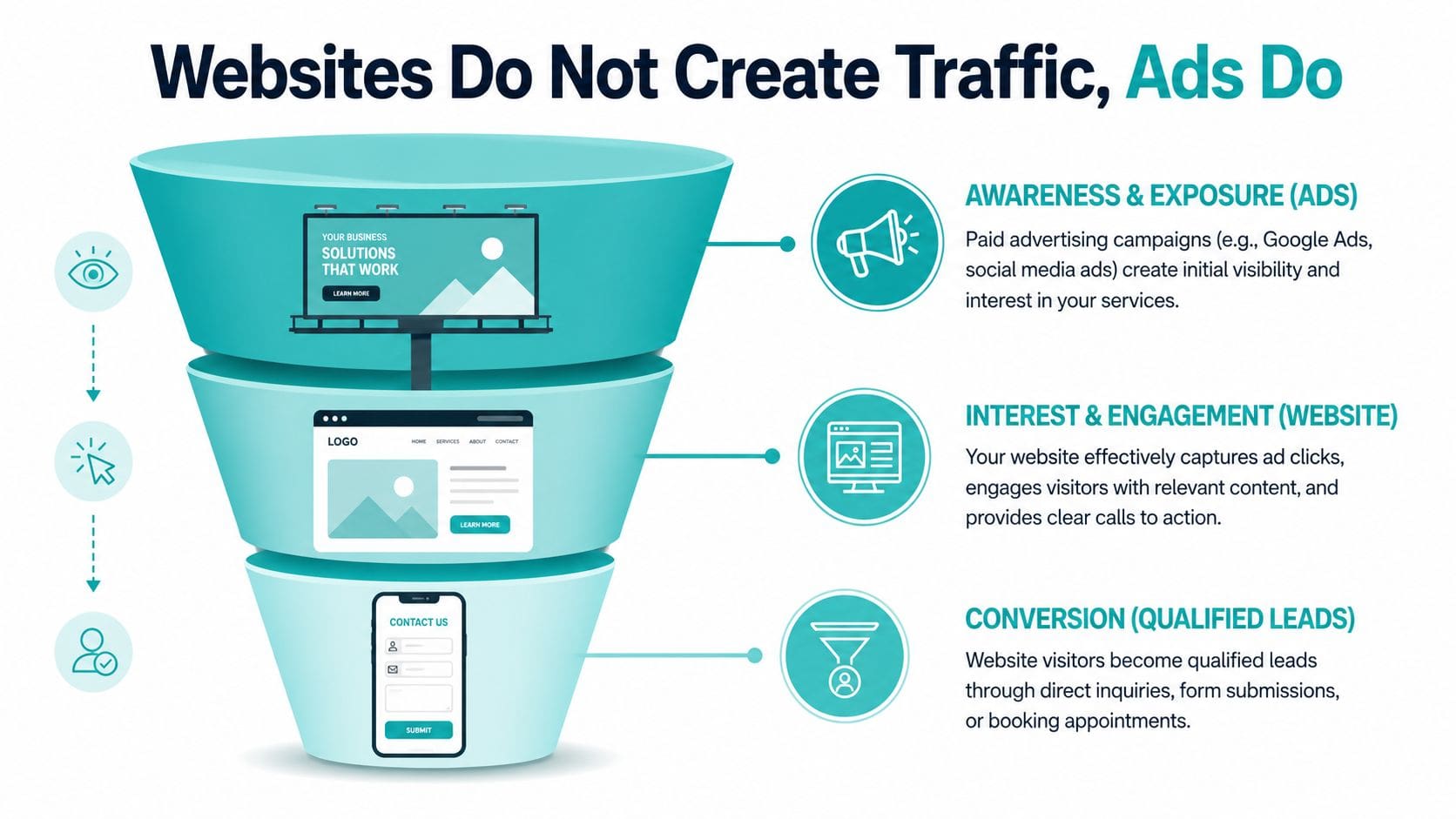
Ads create visibility on demand
Ads put you in front of buyers who are already looking.
That matters because big companies don't wait around for referrals. They buy visibility. They are found online. Small contractors often rely on hope, word of mouth, and whatever trickles in.
That's not a system.
A Lead Machine plus ads is a system. The website converts the visit. The ads create the visit.
One without the other is a waste
- Website with no traffic means a polished brochure nobody sees.
- Ads with a weak site means you pay for clicks that don't turn into calls.
- Lead Machine plus ads means visibility and conversion working together.
If you want a very plain explanation of this approach, super simple ads lays it out without the usual agency nonsense.
Ads don't fix a bad site. A bad site wastes good traffic.
If you also want to understand how ad platforms are changing behind the scenes, this article on understanding AI's role in Meta ad automation gives useful background. The main point for you is simpler. Ad systems keep changing, but the job stays the same. Get seen by the right people, then turn that attention into calls.
Stop Guessing and Start Controlling Your Leads
Feast or famine doesn't happen by accident.
It happens when your company relies on referrals, luck, and a website that just sits there. One slow month hits, and now everybody feels it. Crews slow down. Stress goes up. You start saying yes to smaller jobs you should have passed on.
That isn't a work ethic problem. It's a control problem.
What control actually looks like
Control means you know where visibility comes from.
Control means your site is built for the cities and services that matter.
Control means paid traffic pushes real buyers to a site built to make the phone ring.
If you're not sure what's broken right now, a digital marketing audit is a clean place to start. It helps you look at the actual issue instead of guessing.
Hope is not a lead strategy. Visibility is.
You think that customers can find you but, If customers don't find you, nothing else matters. Lead Machines are built to fix that.
If you're tired of wasting money on websites that don't produce calls, talk to The Cherubini Company. They build Lead Machines for contractors who need more visibility in the cities around them, then pair that with ads to turn visibility into real leads. If your current setup looks fine but isn't bringing in work, that's the problem to fix.