You’re not crazy. You’re not bad at sales. And you probably don’t have a work problem.
You have a visibility problem.
That’s why the phone rings hard for a while, then goes quiet. That’s why you stay busy with small jobs but keep missing better ones. That’s why every agency pitch sounds the same, and none of it feels tied to real jobs.
A lot of home improvement contractor leads advice is fluff. It talks about posting more, branding more, or “being active online.” None of that fixes the actual issue if buyers in the towns around you never see you when they search.
If customers don’t see you, they can’t call you. It’s that simple.
Your Business Has a Lead Problem Not a Work Problem
You know the pattern.
One month is packed. Crews are moving. Estimates are out. Then it slows down and everyone starts asking the same question. Where did the leads go?
Most owners in this spot aren’t lazy. They’re already working too much. They’re answering calls at night, chasing payments, checking jobs, handling sales, and trying to keep the schedule full. The problem is that none of this creates a steady pipeline.
Busy does not mean secure
A contractor can be slammed and still be in trouble.
You can be busy with low-dollar work, bad-fit jobs, and people who just want to shop price. That kind of busy burns time, clogs your calendar, and keeps you from landing the work you desire.
Common signs you don’t have a work problem. You have a lead problem.
- Word of mouth runs the whole business: Good when it flows. Brutal when it dries up.
- Marketing feels like gambling: You spend money, hope for calls, and can’t tell what worked.
- The jobs aren’t getting better: You stay active, but not with the kind of work that moves the business forward.
- You’ve been burned before: Pretty reports. Weak results. No control.
If that sounds familiar, you’re not alone. A lot of owners end up reading resources like a comprehensive guide for contractors because they’re trying to sort real lead systems from recycled agency talk.
You also need a way to think about local visibility as a business issue, not just a marketing issue. That’s why this broader look at local business digital marketing matters. It ties lead flow to whether people can find you.
Practical rule: If your lead flow depends on luck, referrals, or one person remembering your name, you do not have a system.
The real pain is lack of control
Most contractors don’t want “marketing.”
They want control. They want to know where the next jobs are coming from. They want to stop guessing. They want enough good leads to turn down bad jobs.
That’s the main issue behind home improvement contractor leads. Not effort. Not talent. Not even competition by itself.
Control.
And you don’t get control until you fix visibility.
The Real Reason You Are Losing Jobs Every Day
A lot of contractors think, “People can find me.”
No. People who already know your name can find you.
That is not the same thing.
The buyer who doesn’t know you yet is not searching your business name. They’re searching for what they need in the place they’re standing. “Kitchen remodeler near me.” “Roof repair near me.” “Bathroom contractor near me.”
Google reads “near me” as the city the searcher is in.
If the buyer is in a town ten miles away, that search becomes your service in that town. Not your hometown.
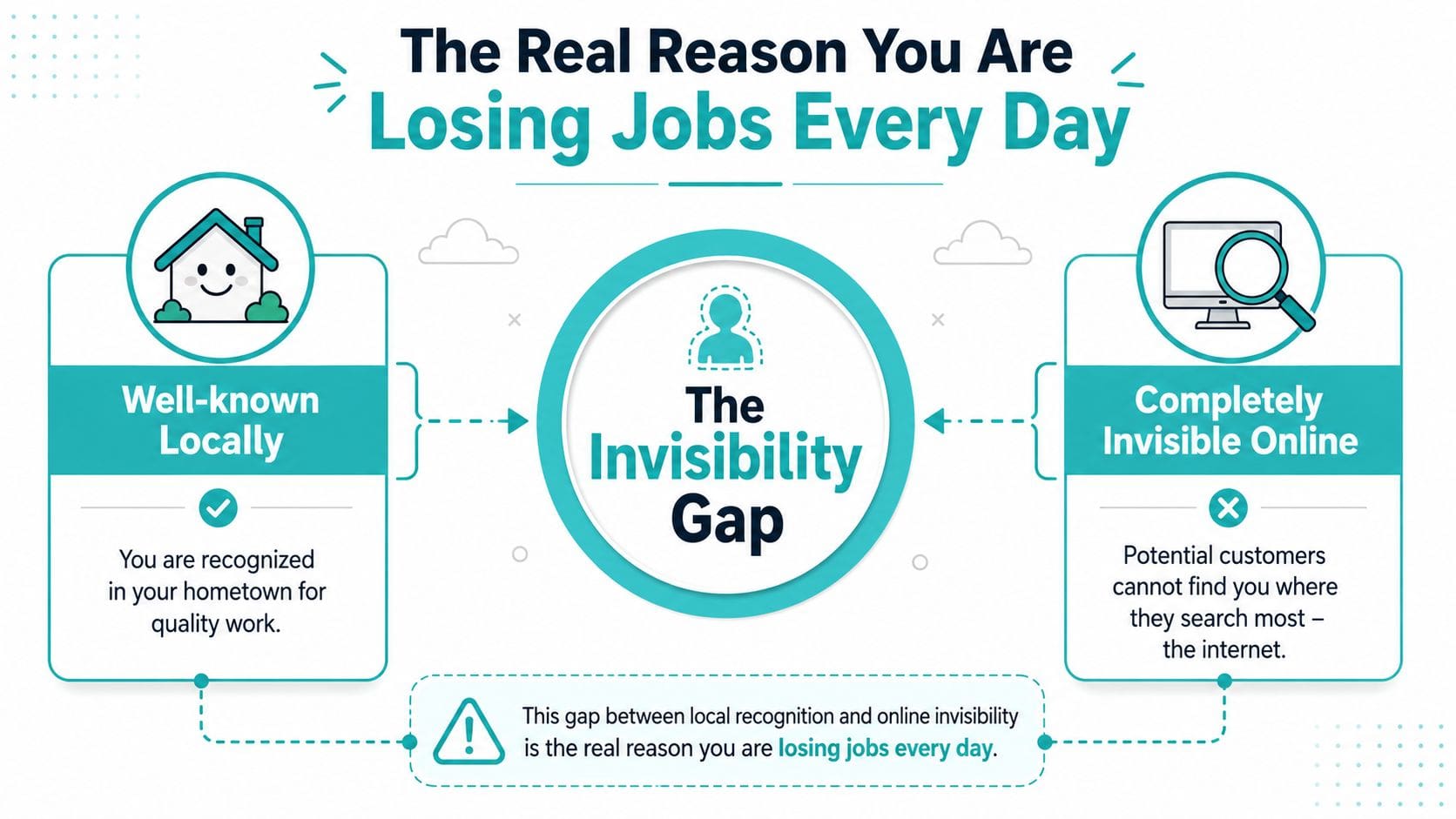
Known at home, missing everywhere else
This is the trap.
You may have solid local reputation where your shop is. Your trucks are known there. Your past customers are there. Your address tells Google that’s your main area. Your website probably repeats that city again and again.
But in the towns around you, Google has no strong reason to believe you work there if you never clearly say it.
That creates the invisibility gap.
| What you believe | What the buyer sees |
|---|---|
| “We work all over the area.” | No clear sign you serve their town |
| “Our website is online.” | You don’t show up when they search |
| “We’ve done jobs there before.” | Google doesn’t assume that |
Invisible means jobs are gone before you know they exist
Contractors lose money without noticing it.
The Harvard Joint Center for Housing Studies remodeling research says the U.S. home remodeling market reached $509 billion in 2025. That means there is real project value moving through local markets every day. If you’re invisible in even a few nearby towns, you’re giving up your shot at that work before the phone ever has a chance to ring.
You don’t lose these jobs because a competitor beat you in the home. You lose them because that competitor showed up and you didn’t.
That’s why this issue keeps hurting owners who are good at what they do. The work quality is not the problem. The visibility gap is. This breakdown of how contractors lose jobs to competitors online gets at the same hard truth.
You are not competing only on price or reputation. You are competing on whether you exist in the search result at all.
Stop telling yourself people can find you
If someone has to dig for you, that’s already a loss.
Buyers choose from what they see first. They call what’s in front of them. If your company doesn’t show up in the city where they search, you don’t get considered.
That’s the problem behind home improvement contractor leads for most established contractors. Not a weak service. Not a bad crew.
Invisibility.
Why Your Website Is a Billboard in the Desert
A website does not create traffic.
It waits for traffic.
That’s the part many contractors never get told. They pay for a site, the agency says it looks great, and then everyone stands around wondering why nothing changed.
A site without visibility is like a billboard in the desert. It may be clean. It may be polished. It may say all the right things. But if nobody passes by, it does nothing.
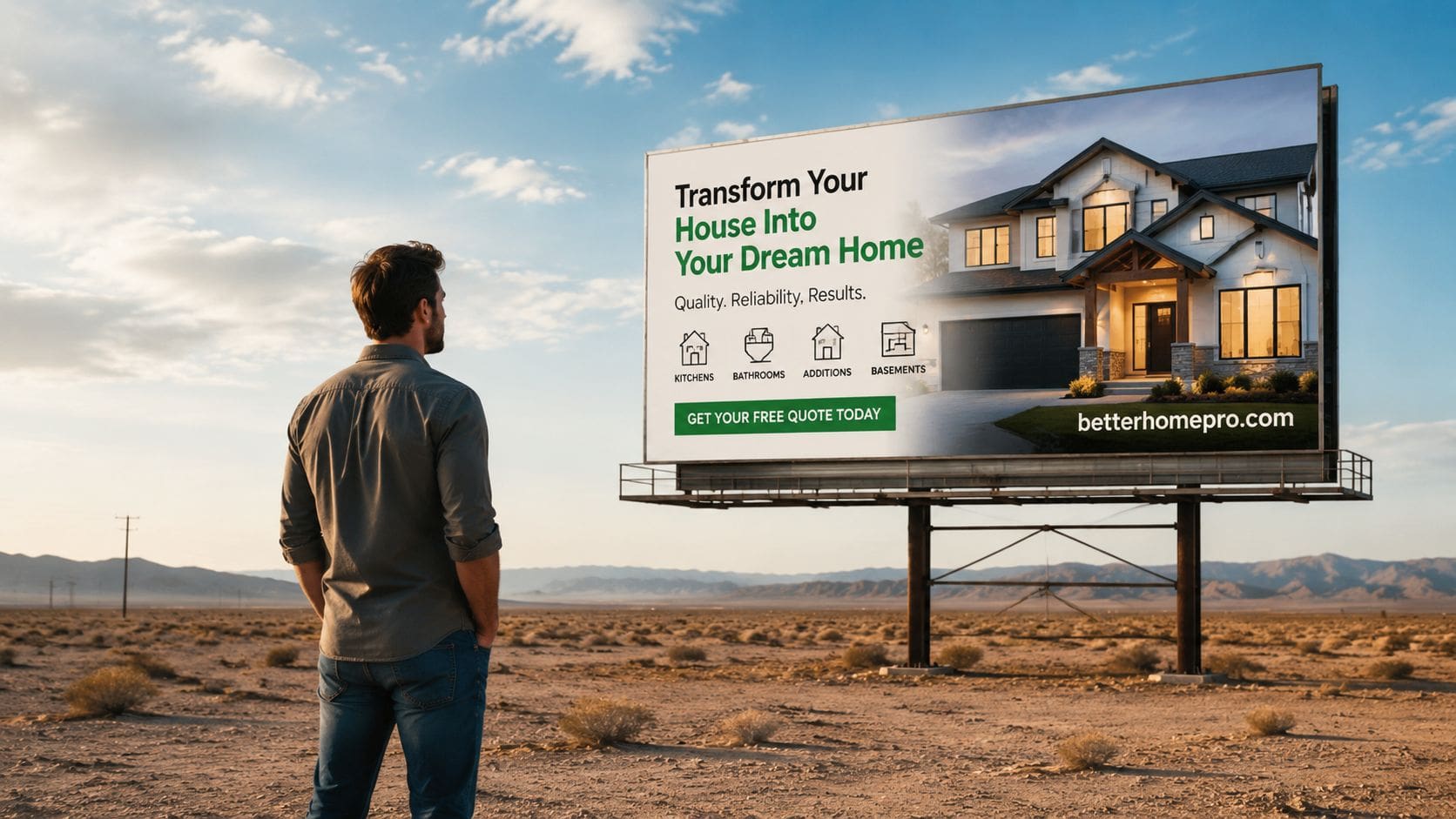
A pretty site is not a lead system
A lot of contractor websites are digital brochures.
They have a home page. A few service blurbs. Maybe a contact page. Maybe some stock photos. They exist, but they don’t pull their weight.
That’s not because websites are useless. It’s because most websites are built to sit there, not to turn attention into calls.
Here’s the difference.
- A brochure site: Talks about the business.
- A lead site: Pushes people to call, request a quote, and take action.
- A real system: Gets seen in the right towns, then turns that visibility into leads.
This matters when people start chasing home improvement contractor leads. They think the website should somehow “generate” leads by itself. It won’t.
Your site needs fuel
A website is an asset. Not an engine.
If no one lands on it, it can’t help you. If the wrong people land on it, you get junk. If buyers in the towns you want never reach it, your site is just sitting online collecting dust.
That’s why the old idea of “just get a new website” keeps failing contractors.
This is also why a site built to convert has to be treated differently from a normal web design project. The point of a lead generation website that sucks in leads is not to impress other contractors. It’s to make a serious buyer take the next step.
Your website is where the sale starts. But it is not what creates the visit.
If you don’t separate those two jobs, you keep blaming the wrong thing. The site isn’t supposed to create demand. It’s supposed to convert demand once visibility puts a buyer in front of it.
The System That Turns Visibility Into Calls
The fix is not more random marketing.
The fix is a system.
A real lead system for home improvement contractor leads has two parts. One part captures and converts. The other part creates visibility on purpose.
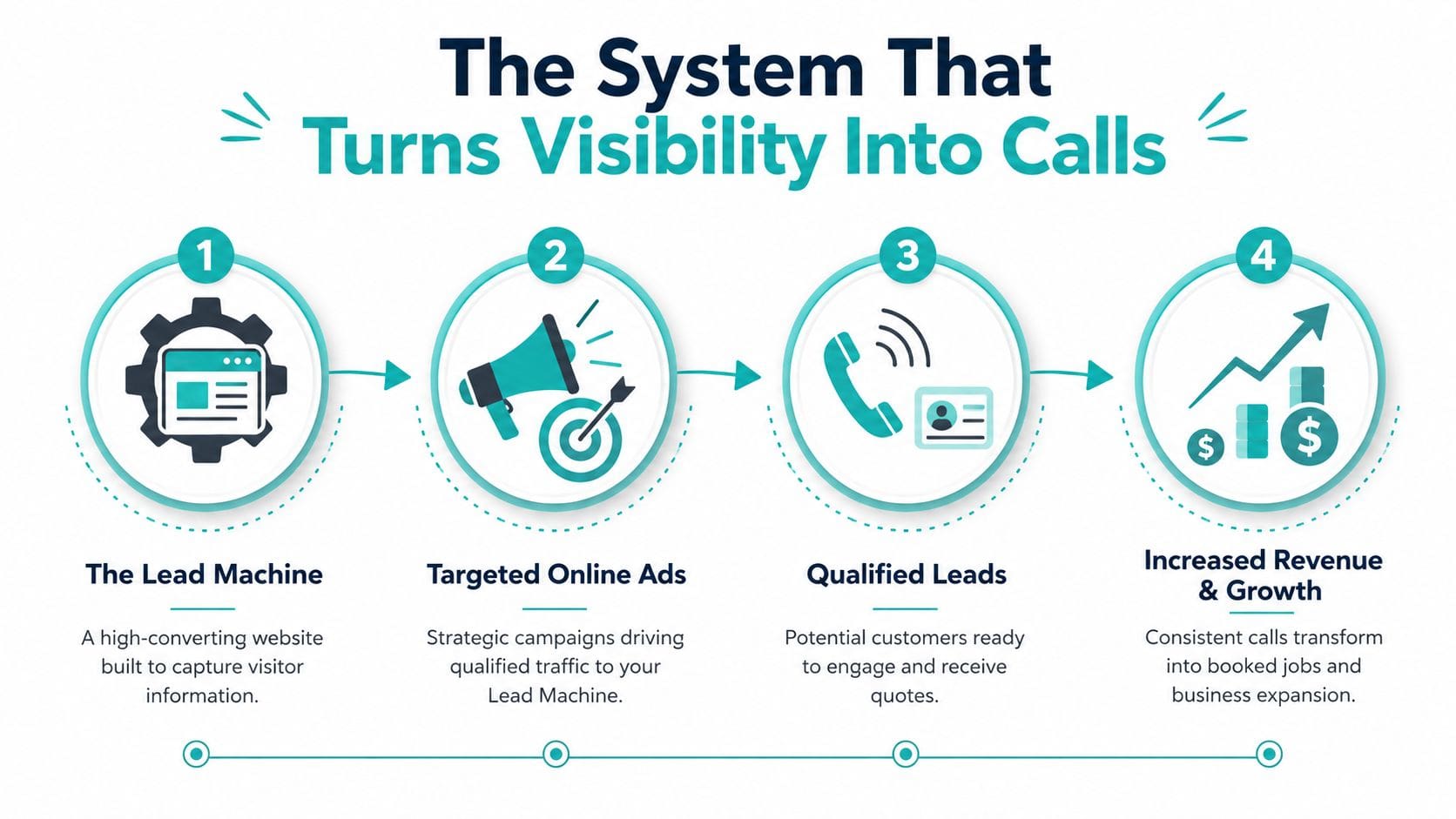
Part one is the Lead Machine
A Lead Machine is not a pretty website.
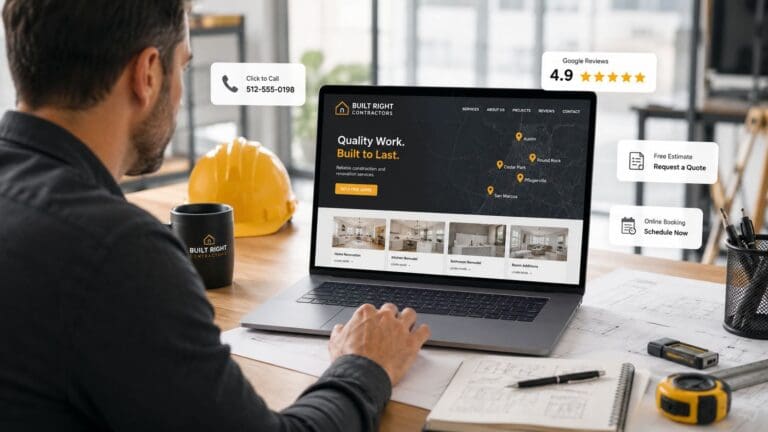
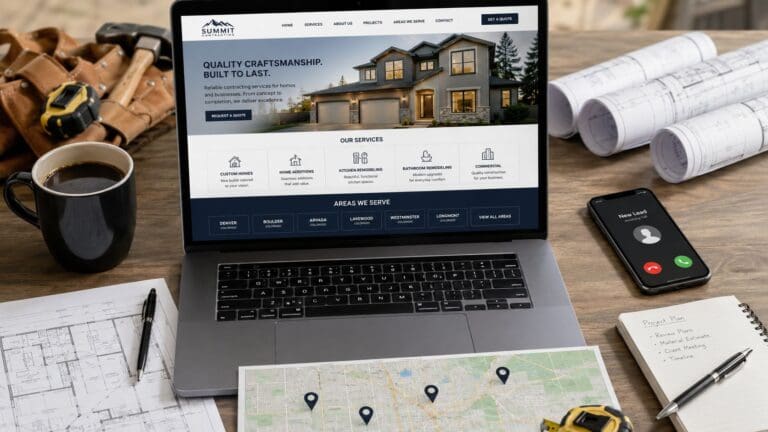
It is a website built for one job. Turn local search traffic into calls and quote requests. That means it has to be built around the services you offer and the towns where you want work. It needs clear calls to action, fast paths to contact, and structure that supports visibility in more than just your home city.
If you want a simple breakdown, this page on what a Lead Machine is explains the idea in plain terms.
A Lead Machine should do a few things well:
- Show up for service plus city searches: Not just your company name.
- Make it easy to call: No hunting around.
- Filter for serious buyers: So you don’t waste time on junk.
- Support fast follow-up: So leads don’t go cold.
If you need examples of form structure, these lead capture form templates are useful because they show what a clear, simple contact path looks like.
Part two is ads
Ads create visibility.
That’s their job. They put you in front of buyers who are searching right now. They don’t replace the site. They feed it.
Without visibility, even a strong Lead Machine sits there. Without a Lead Machine, ads send paid traffic into a weak page and waste money.
Those two parts have to work together.
| Part | Job |
|---|---|
| Lead Machine | Turn traffic into calls and quote requests |
| Ads | Put you in front of local buyers now |
Speed matters once the lead comes in
Getting the lead is only half the job.
The Forbes article on slow sales follow-up notes that responding to a home improvement lead within 5 minutes increases the probability of conversion by 9x compared to responding after 30 minutes. That is why the system has to support speed, not just visibility.
A lead that waits is a lead that leaks.
A structured setup matters. A Lead Machine is built so serious buyers can reach you fast, and so you can respond while intent is still high.
One option in this space is The Cherubini Company, which builds Lead Machines and runs ads as a paired visibility system for contractors. The setup is straightforward. The website is the asset. The ads are the fuel.
That’s the only model that makes sense if your real problem is invisibility.
Stop Guessing and Start Controlling Your Revenue
Guessing feels normal when you’ve been in this cycle long enough.
You hope referrals keep coming. You hope the slow month turns around. You hope the website finally starts doing something. You hope the last agency wasn’t a complete waste.
Hope is not control.
Control starts with visibility
When you control visibility, you stop waiting around for someone else to remember your name.
You start showing up where buyers are already looking. You stop leaning on one town. You stop letting your service area be defined by whatever Google can guess from your address. You build coverage on purpose.
That changes the business.
- Lead flow gets more stable: You are not relying on luck alone.
- Job quality improves: Better visibility brings in buyers looking for what you do.
- Revenue gets less fragile: A slow patch doesn’t hit as hard when there’s a system behind the pipeline.
This is also why tracking matters. If you want cleaner reporting habits, even outside search, resources on mastering social media analytics can help you think more clearly about what’s working and what isn’t.
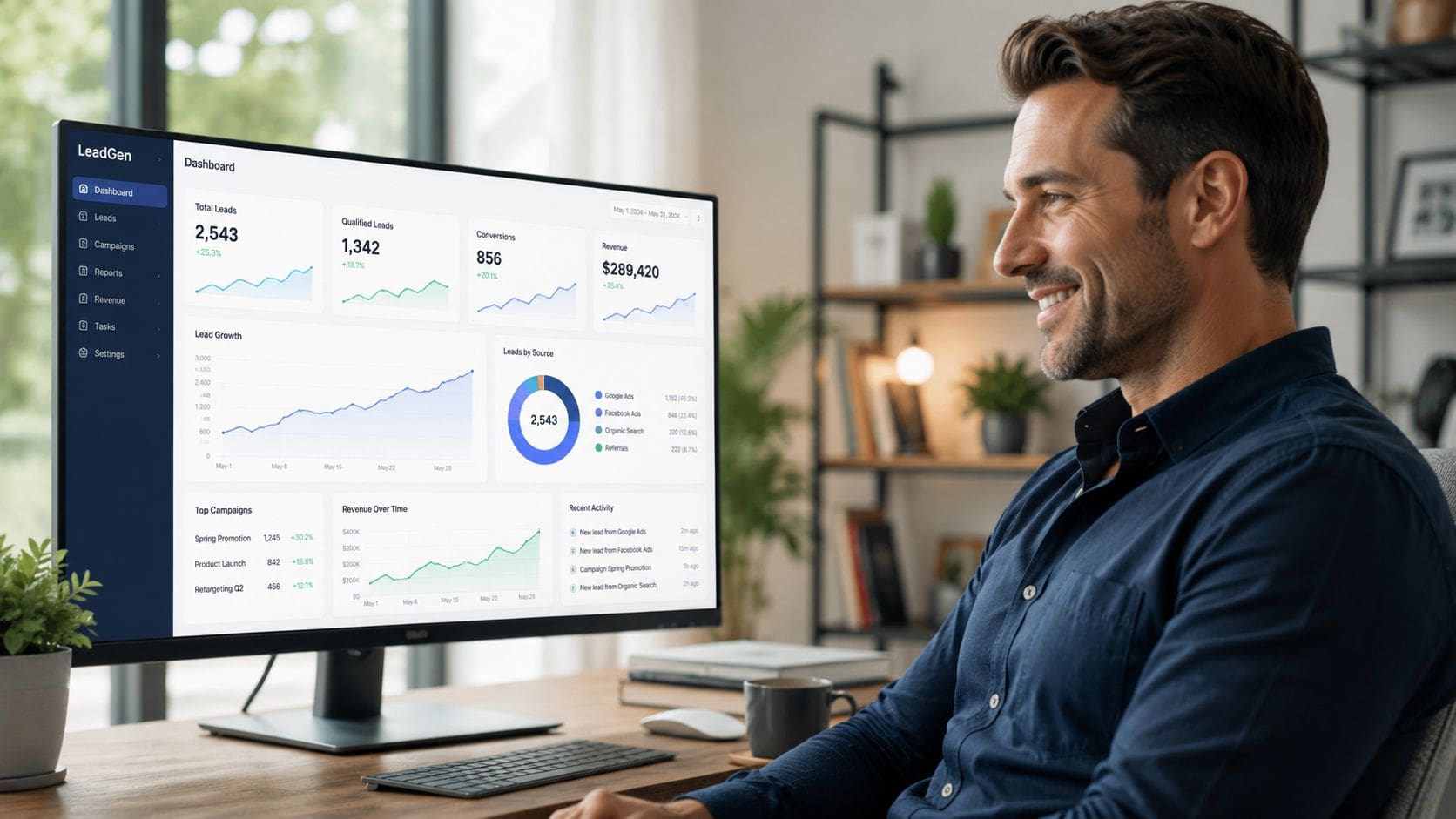
One machine is good. More coverage is better.
A lot of contractors don’t need more effort. They need wider local presence.
If you work across multiple towns, your lead system has to match that reality, making multiple Lead Machines a useful idea. One hometown-focused setup may not be enough if your growth depends on surrounding cities and counties.
The contractor who gets seen in more of the right places gets more chances to win.
That’s the part many owners miss. They assume they have a sales issue, or a pricing issue, or a website issue. Sometimes they do. But the bigger problem is simpler.
They are invisible in the exact places they want work from.
The hard truth
You can be the better contractor and still lose.
You can have better crews, better reviews, better workmanship, and better intentions. None of it matters if the buyer never sees you when they search.
That’s why home improvement contractor leads should not be treated like a mystery. The problem is usually clear. The system is usually missing.
You think that customers “can” find you but, If customers “don’t” find you, nothing else matters. Lead Machines are built to fix that.
If you’re tired of guessing and want a straight answer about why you’re not showing up in the towns you want, talk to The Cherubini Company. They help contractors fix the visibility problem with Lead Machines and ads built to turn searches into calls.