You’ve probably said some version of this already.
“We tried ads. They didn’t work.”
“We had a website built. Nothing changed.”
“We’ve been burned by agencies before.”
Meanwhile, the phone still rings, but not the way you want. Too many small jobs. Too many people shopping price. Too much guessing. Then a slow stretch hits and everybody acts surprised, even though the pipeline was drying up weeks ago.
That’s the trap.
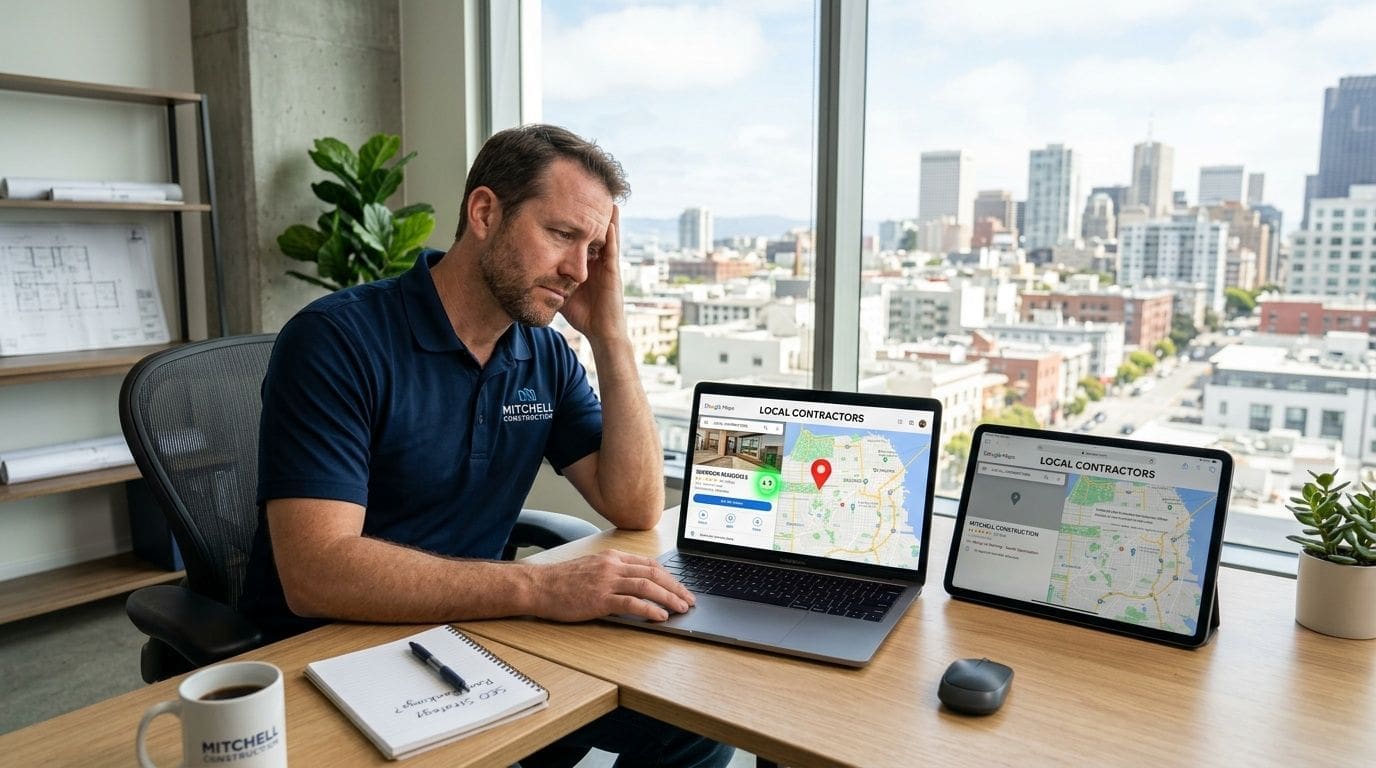
Most contractors don’t have a work ethic problem. They have a visibility problem. They’re known in their hometown. They might even have a solid reputation there. But a few miles away, where people are searching right now for the exact work they do, they don’t show up. So they lose jobs they never even knew existed.
The Real Pain of a Contractor's Lead Problem
A lot of contractors aren’t sitting around with no work.
They’re overloaded with the wrong work.
They stay busy doing small jobs, patchwork jobs, low-margin jobs, and jobs that eat up time without building the business. Then they look up and realize the bigger work keeps going to somebody else. Not because that company is better. Not because that company has better crews. Because that company got seen first.
Busy is not the same as healthy
Word of mouth feels safe until it doesn’t.
It can keep you busy for a while. It can even carry a business for years. But it also creates a feast-or-famine cycle that puts you in a weak position. When referrals slow down, you don’t have a system. You have hope.
That’s why so many owners live in two modes:
- Too slammed to think: You’re running jobs, answering calls, quoting work, and taking whatever comes in.
- Quiet and stressed: Crews slow down, revenue dips, and now you’re scrambling.
- Always guessing: You don’t know what’s working because there’s no real lead system behind it.
If that sounds familiar, you’re not broken. Your business is just running without control.
For many contractors, the issue isn’t effort. It’s that the business never built a repeatable way to get found outside referrals. That’s why contractors don’t get enough leads even when they do good work and have been in business for years.
You can’t build a stable company on random timing and other people’s memory.
The stress most owners don’t say out loud
A lot of owners are tired of hearing marketing talk because they’ve already paid for it.
They paid for the pretty website. They paid for the “strategy.” They paid for ads that led nowhere. Now they don’t trust anybody, and that makes sense. But mistrust doesn’t fix the pipeline.
The hard truth is simple. If you don’t control where and when people find you, then you don’t control lead flow. And if you don’t control lead flow, your revenue stays fragile.
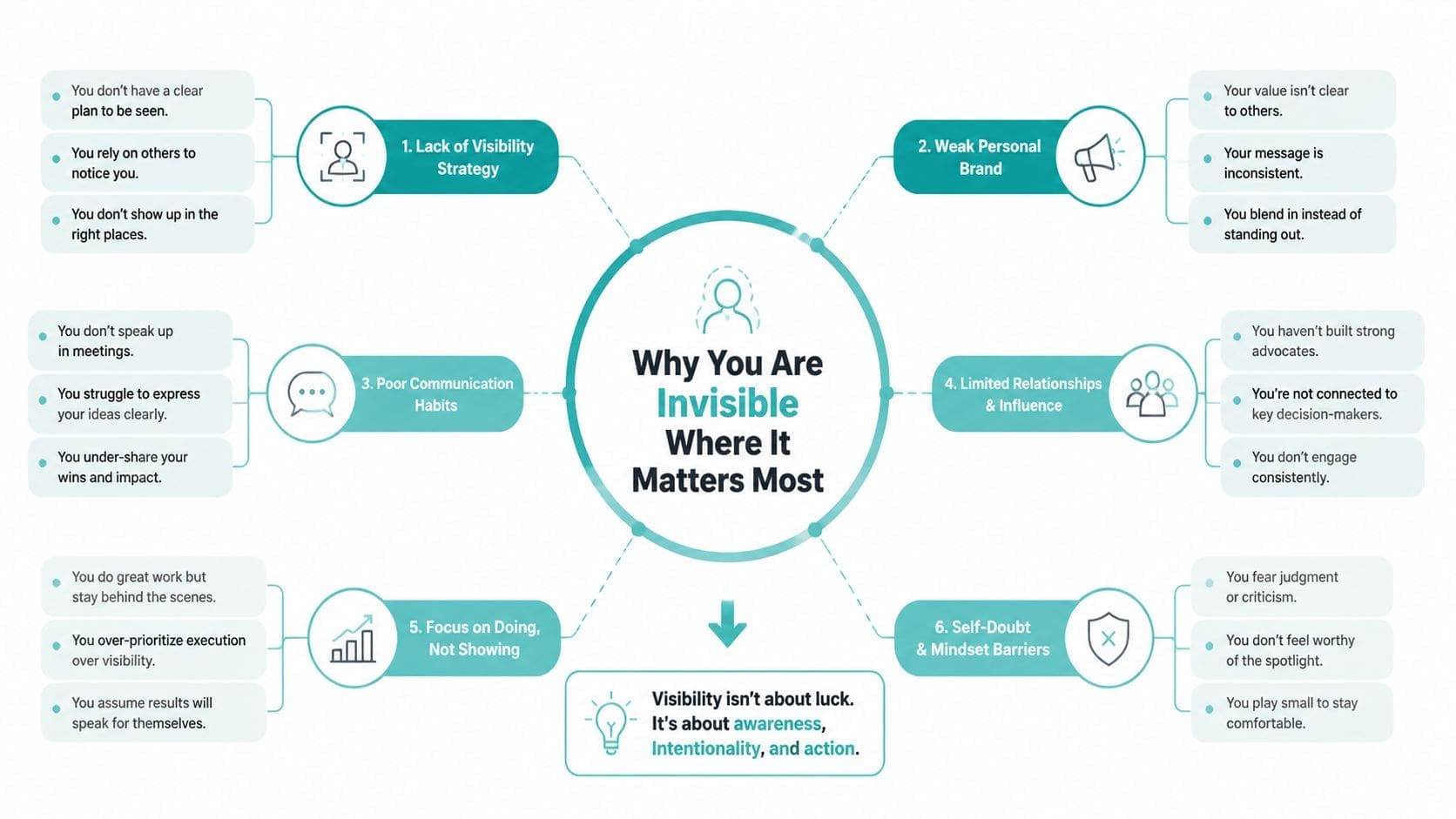
Why You Are Invisible Where It Matters Most
The biggest mistake contractors make is thinking people search for their company name.
Most don’t.
They search for the job they need in the place they’re standing. That means when someone types “excavation contractor near me” or “septic installer near me,” Google reads that as a city search based on the searcher’s location.
If the customer is in a nearby town, Google treats that search like “excavation contractor in that town.”
Your hometown is not your market
You may work all over your county or in several counties.
But online, Google only knows what you clearly show it. If your site, profiles, and pages mostly mention your home city, then Google has no strong reason to show you in the next town over. That’s the visibility gap. You know you service the area. Google doesn’t assume that. Why would it?
This is how contractors lose jobs to competitors online every day. Not because buyers “can’t” find them. Because buyers don’t find them when they search by service and city.
The companies that show up get the first shot
This part is not subtle.
93% of consumers check online reviews before hiring, and the top three positions in Google’s map results capture 46% of clicks according to this breakdown of contractors losing jobs to competitors. If you’re not visible near the top, you’re not getting equal consideration. You’re mostly getting leftovers.
Here’s what that means in plain English:
| What the buyer does | What happens to you |
|---|---|
| Searches by service in their city | You only show if Google sees you in that city |
| Compares a few local options | The visible companies get contacted first |
| Checks reviews before calling | Weak visibility and weak proof kill trust fast |
Practical rule: If you don’t appear where the search happens, your price, skill, and reputation never even enter the conversation.
This is why “near me” feels unfair
It feels unfair because you know you can do the work.
But search is not based on what you know. It’s based on what your online presence says clearly and repeatedly. That’s why many contractors need better local SEO strategies for contractors. Not for vanity. For visibility in the towns they want jobs from.
A contractor can be well known in one zip code and nearly invisible ten miles away. That’s not a small problem. That’s a direct hit to revenue.
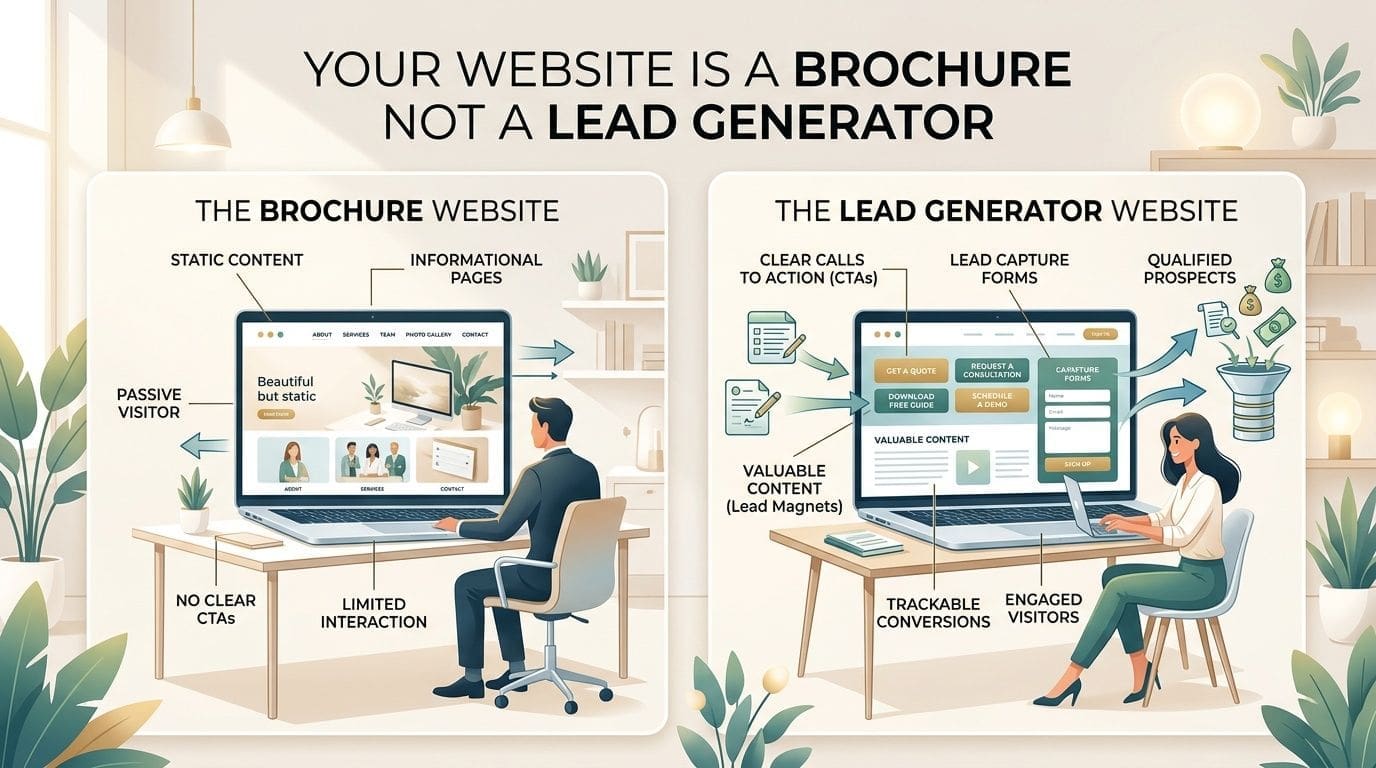
Your Website Is a Brochure Not a Lead Generator
A website doesn’t create traffic.
It waits for traffic.
That’s the part many contractors were never told when they paid for a site. They were sold the idea that once the website went live, leads would start showing up. Then nothing happened, and everybody blamed the market, the season, or “bad leads.”
The website was never a lead generator by itself. It was a brochure.
A nice site on an empty road still gets no calls
A generic website is like a billboard placed where no one drives.
It may look clean. It may have your logo, a few photos, and a contact form. That doesn’t mean it’s doing a job. If nobody is being sent there, it just sits.
And even when somebody does land on it, a lot of contractor websites are built to inform, not convert. They tell people who you are. They don’t push them to call now, request a quote, or take the next step fast.
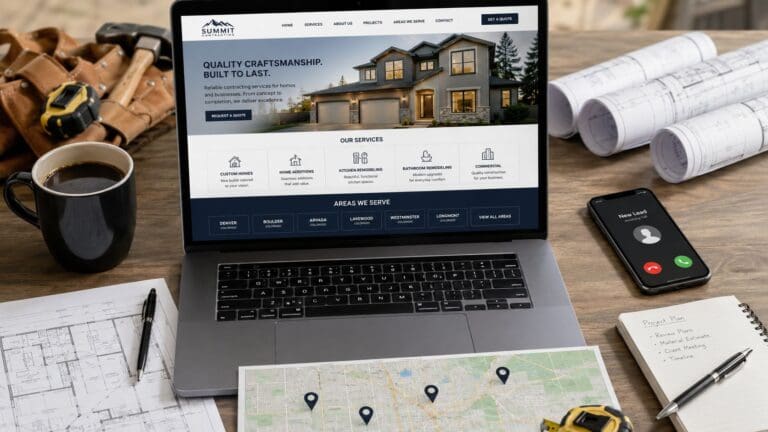
That’s why the difference between a brochure site and a lead-focused site matters. This comparison of a lead generation website vs regular website for contractors gets to the point clearly.
Slow follow-up kills good leads
Even a decent website can still lose the job after the click.
Contractors often lose work not because of price but because of slow follow-up. Businesses that respond to a web lead within 5 minutes have a 21x higher chance of winning the job than those who take 30 minutes or more, based on this analysis of why contractors lose jobs.
That should change how you think about your site.
The problem isn’t just getting traffic. The problem is what happens next. If your site makes it hard to call, hard to request a quote, or easy for leads to wait around while you’re on a job, then you’ve got a leak in the bucket.
A website should help turn interest into action. If it doesn’t, it’s decoration.
What most contractor websites actually do
Most of them do three weak things:
- They explain the business: Good for a brochure. Not enough for lead flow.
- They mention one main city over and over: That limits where you show up.
- They collect forms with no fast response system behind them: That gives the faster competitor the job.
That’s not a website problem alone. It’s a missing system problem.
Why Running Ads Alone Wastes Your Money
A lot of contractors say ads don’t work.
That’s usually not true.
What usually happened is this. Somebody ran ads to a weak site, the traffic bounced, calls didn’t come through the way they should have, follow-up was slow, and the owner got stuck with the bill. Then they concluded the ad platform was the problem.
It wasn’t.
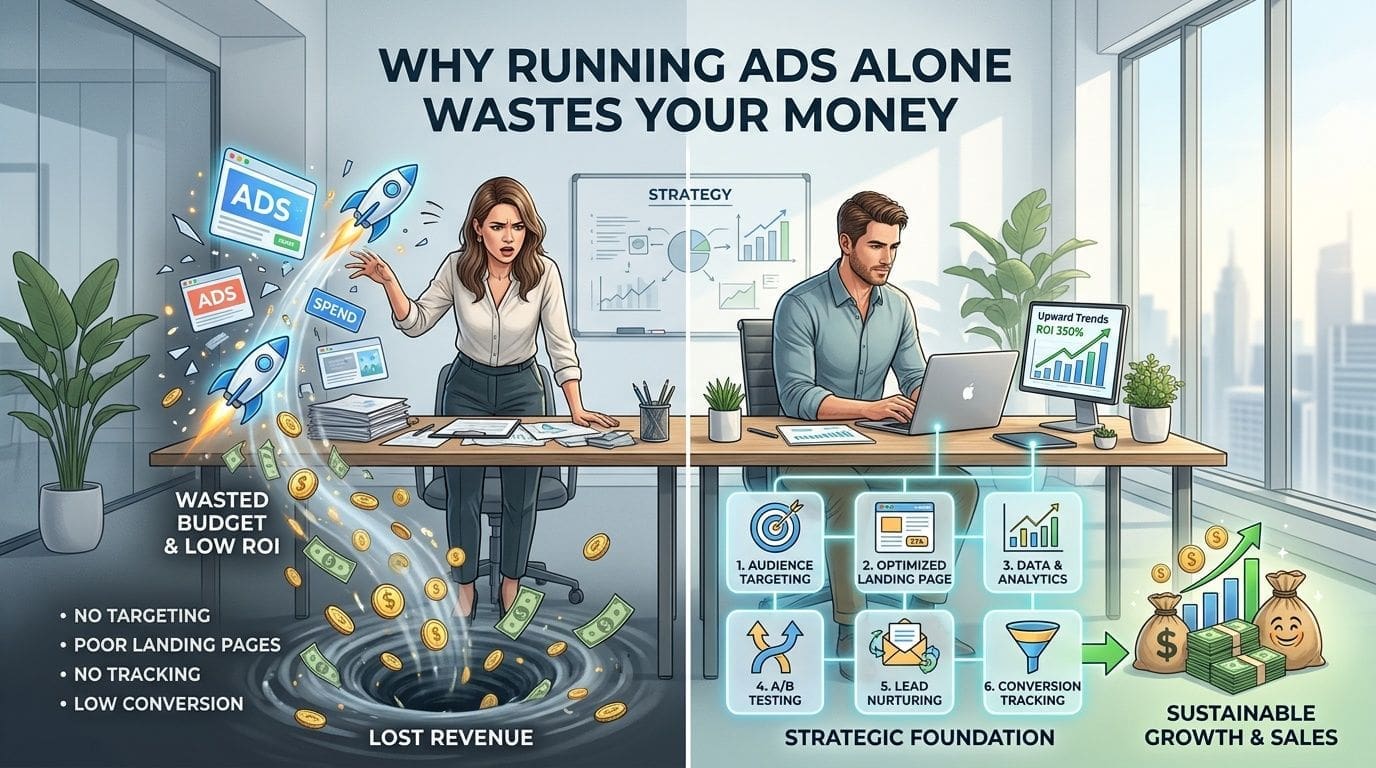
Ads create visibility. They do not fix a broken process
Ads are fuel.
If you pour fuel into a bad setup, you don’t get growth. You get waste.
That’s why running ads alone often fails. The ad may do its job and put you in front of buyers searching right now. But if the place they land is weak, generic, or built like an online brochure, the click dies there.
Here’s the simple split:
| If you have this | What happens |
|---|---|
| Ads with no solid website behind them | You pay to send traffic into a dead end |
| Website with no traffic source | You own a parked asset that waits around |
| Both working together | You get visibility and a path to action |
Why past ad failure doesn’t prove ads are bad
A bad ad campaign doesn’t always mean the ad itself failed.
Sometimes the targeting was sloppy. Sometimes the message was off. Sometimes the website could not convert a serious buyer. Sometimes nobody answered fast enough. The point is the same. The system was incomplete.
That’s why many contractors who “tried ads” never really tested a full lead system. They tested half of one.
If you want the short version, Google Ads for leads only make sense when the click has somewhere useful to go.
If your ads send people to a page that doesn’t move them to call, you bought traffic, not leads.
The expensive mistake
The expensive mistake is not spending on ads.
The expensive mistake is spending on visibility without a conversion system attached to it. That’s what burns contractors. Not the idea of advertising itself. The broken handoff after the click.
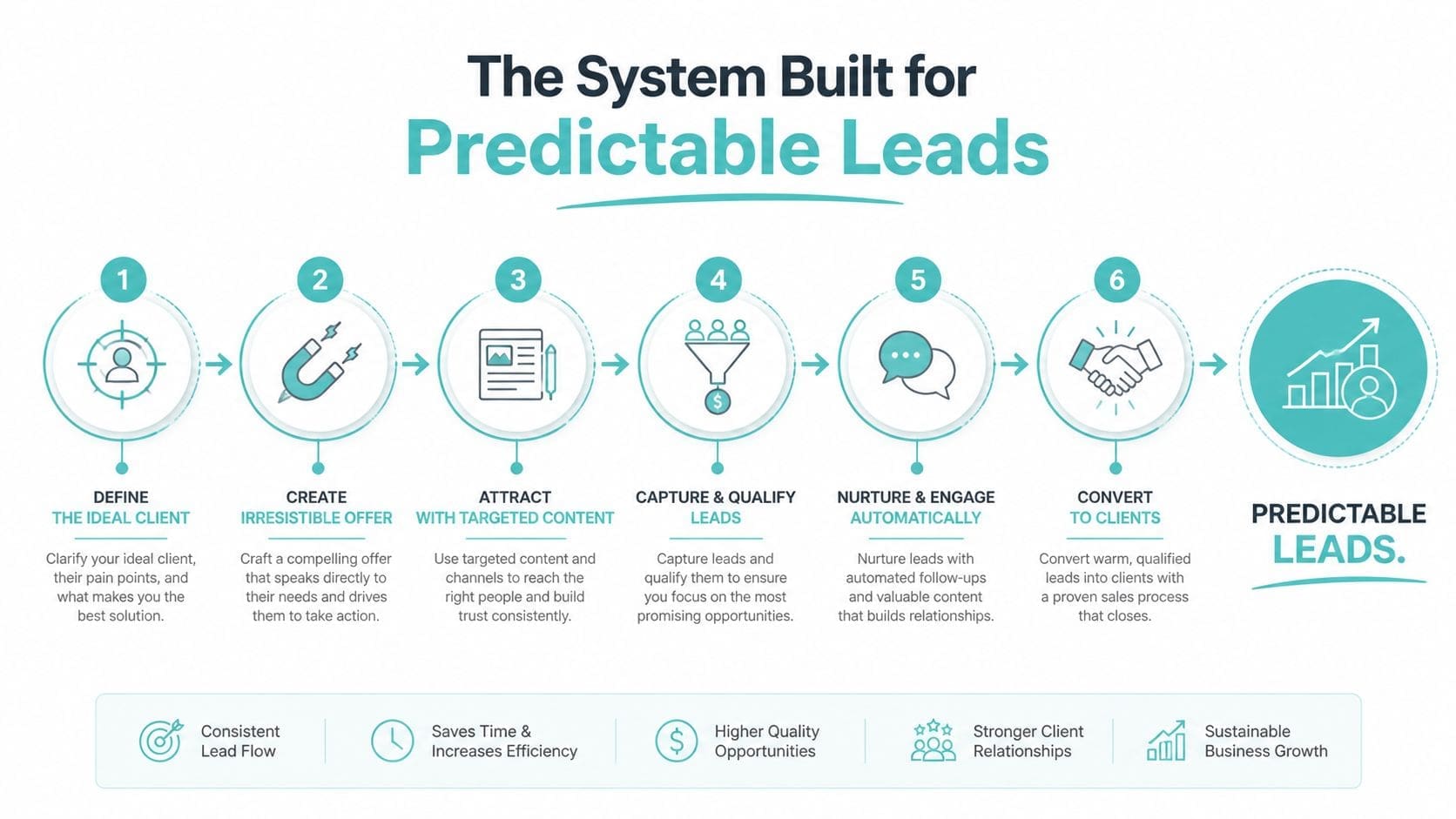
The System Built for Predictable Leads
Contractors don’t need more marketing noise.
They need a system that does two things well. Get found in the right places. Turn that attention into calls.
That’s what a Lead Machine is. It is not a pretty website package. It is not pay per lead. It is not a random bundle of tactics. It is a website built to turn traffic into calls, paired with ads that put the right buyers in front of it.
Part one is the asset
The website has one job. Convert demand.
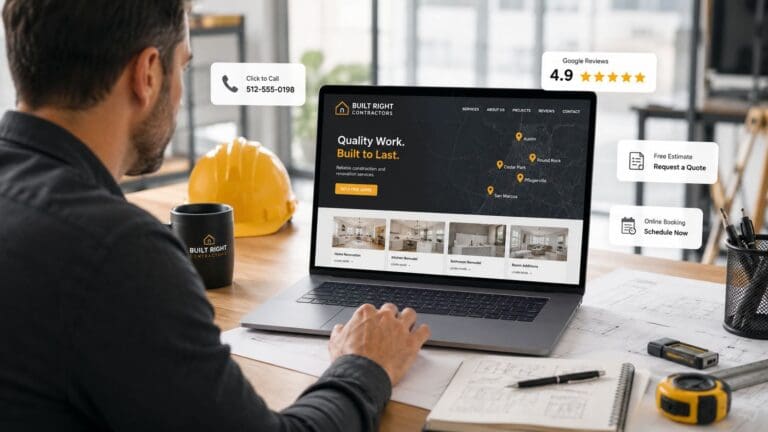
That means it is built around your services and the cities you want work from. It gives buyers a clear path to call, request a quote, and move forward. It also lines up with your business profile so your visibility is not trapped in just one hometown.
At this stage, many contractors finally see the issue clearly. Their old site was not built as an asset. It was built as an online business card.
Part two is the fuel
Ads create visibility.
They put your company in front of people who are already searching for the work. That matters because websites don’t go out and find buyers on their own. They wait. Ads close that gap by sending active demand to the site.
A few points make this system work better:
- Service plus city focus: You stop relying on one general page and start showing up where buyers search.
- Clear calls to action: The site pushes action instead of just describing the company.
- Tracking and routing: You stop guessing where leads came from and how they moved.
Why this works better than random tactics
A lot of owners chase isolated fixes.
New logo. New homepage. A few ads. A social media push. None of that creates control by itself. Control comes from a system where each part supports the next. Visibility brings the visitor. The website turns the visit into contact. The business follows up and closes.
That’s why broader reads on Sup Growth marketing strategies are useful for context, but contractors need the simple version. Get seen. Get the click. Get the call.
A system beats hustle because a system keeps working after the busy week starts.
One example of this approach is The Cherubini Company, which builds Lead Machines for contractors and pairs them with local or regional ads to help businesses show up in more than one city and turn that visibility into calls.
What predictable really means
Predictable does not mean every day is identical.
It means you stop depending on chance. You stop waiting for referrals to rescue the month. You stop acting surprised when the schedule thins out. You start building a pipeline you can influence.
That’s the shift. Not magic. Not marketing theater. Just a better operating system for demand.
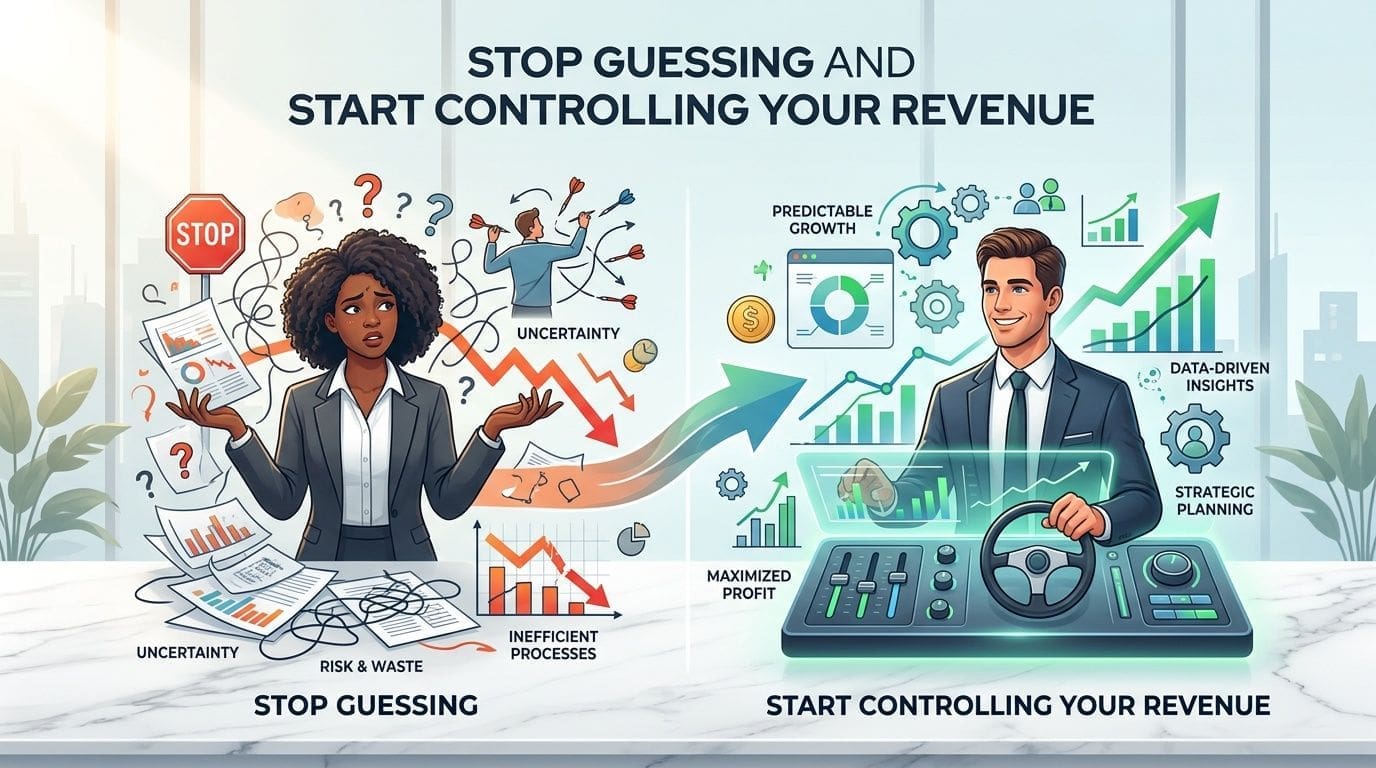
Stop Guessing and Start Controlling Your Revenue
The old way is familiar.
Rely on referrals. Hope the website does something. Run ads once, get burned, and swear them off. Stay busy until you’re not. Then scramble.
That’s not a lead strategy. That’s survival mode.
The shift serious contractors make
Serious growth starts when you stop treating lead flow like luck.
You can keep doing solid work and still lose jobs online. You can have good people, good equipment, and a strong local name and still get beat by a competitor that shows up first in the next town over. That’s why the underlying issue is control of visibility.
Once you see that, a lot of confusion disappears.
- You stop blaming the market for everything
- You stop expecting a brochure website to create demand
- You stop judging ads without judging the full system around them
- You start building a repeatable way to get seen and contacted
A fragile business versus a controlled business
A fragile business depends on memory, referrals, and timing.
A controlled business has a system that supports steady lead flow across the areas it wants to serve. That doesn’t remove every problem. It removes the guesswork that keeps owners stuck.
The contractor who controls visibility has a real shot at controlling revenue.
That’s the whole point. Not more buzzwords. Not more theory. Control.
You think that customers "can" find you but, if customers "don’t" find you, nothing else matters. Lead Machines are built to fix that.
If you're tired of guessing and want a straight answer on why your company isn't showing up where you want work, talk to The Cherubini Company. They help contractors fix the problem, visibility, with Lead Machines and ads built to turn searches into calls.