
You’re probably busy right now. But not busy the way you want.
A lot of contractors stay slammed with small jobs, estimates, callbacks, and price shoppers. Then they look up and realize the bigger jobs keep going to somebody else. Not because that other company does better work. Because that company got seen first.
That’s the main problem.
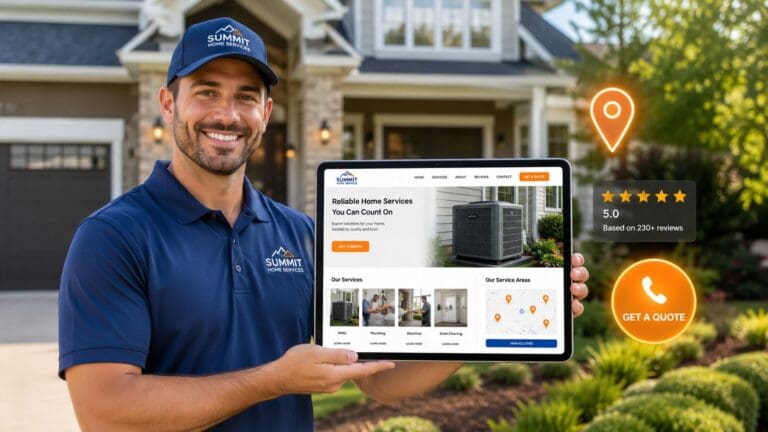
Most contractors don’t have a work problem. They have a visibility problem. In their hometown, people know them. Ten miles away, they disappear. When someone searches for your service near them, Google turns that into a city search. If your business only clearly shows up in your home city, you miss the job before the customer ever calls.
That’s why case study marketing matters.
Not the fluffy kind. Not the brag post. Not the page nobody reads.
Real case study marketing takes the best jobs you’ve already done and turns them into proof that helps serious buyers trust you. Then that proof gets placed where people in every target city can find it. That’s how past work starts helping future revenue.
Your Best Jobs Are Your Best Marketing But Are You Using Them
You already have marketing assets. They’re sitting in your photo roll, in your completed job folders, and in your customer history.
Most contractors never use them right.
They finish a tough project, collect payment, maybe post one photo, then move on. That throws away proof. Meanwhile, the next customer in the next town searches for your service and never sees what you’re capable of.
That’s why the pipeline stays shaky. You rely on word of mouth, referrals, and luck. Some weeks the phone rings. Some weeks it doesn’t. That isn’t a lead strategy. It’s drift.
Pretty projects don’t fix invisible businesses
A nice finished project photo doesn’t do much by itself. Buyers want evidence. They want to know what problem you solved, what made the job difficult, and why they should trust you over the other contractor who also says he does great work.
Case studies have been a mainstream business format for years. 73% of the most successful content marketers use case studies, according to Content Marketing Institute data cited by Thrive Agency. That matters because buyers don’t want empty claims. They want proof.
Your past work only helps you if the next buyer can see it and understand why it matters.
A strong case study follows a simple pattern. Challenge. Solution. Results. That structure works because it mirrors how customers think. They have a problem. They want a fix. They want to know if your fix worked.
The work is done. The system usually isn’t
A lot of owners think their website should create leads on its own. It won’t.
Websites don’t create traffic. They wait for traffic.
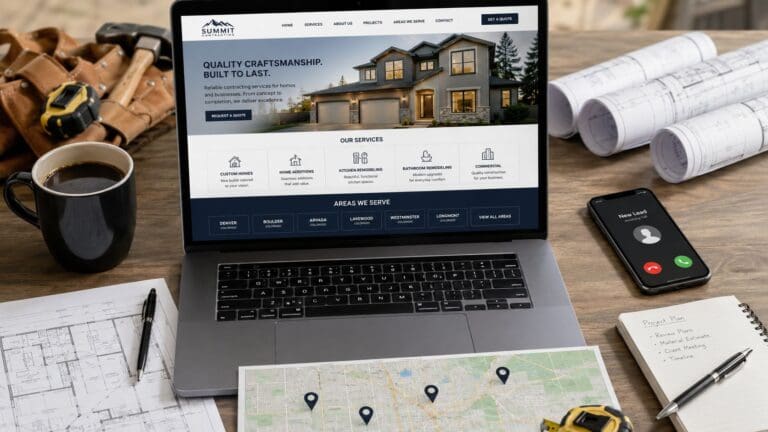
If you want proof to help your business grow, it has to be part of a system built to get found and convert visitors into calls. That’s why a lead generation website for home service contractors matters more than a brochure site.
And if you want a broader view of building a repeatable pipeline, this piece on making outbound lead generation an operating discipline is useful because it frames lead flow as a system, not a random event.
Your best jobs can help you win better jobs. But only if you stop treating them like old work and start treating them like visible proof.
Pick Projects That Prove You Solve Big Problems
Don’t build case studies around your prettiest jobs.
Build them around the jobs that prove you solve the problems you want more of.
If you want larger excavation work, don’t feature three tiny cleanup jobs. If you want high-value restoration jobs, don’t lead with basic patchwork. If you want full replacements, don’t spotlight service calls that attract bargain shoppers.

Choose jobs that match the work you want next
The right project does three things.
- Shows urgency: The customer had a real problem, not a casual want.
- Shows value: The job mattered. It protected time, property, safety, comfort, or money.
- Shows fit: It matches the kind of work you want to sell again.
That last part matters most. A case study is not a scrapbook. It’s a filter.
A good one attracts the right buyer and pushes away the wrong one.
Think like the buyer, not the contractor
The customer isn’t searching for “high quality craftsmanship.” They’re searching because something is wrong. Water damage. A failing system. A cracked surface. A drainage issue. A site that isn’t ready. A project that’s falling behind.
So frame the project around the problem.
Use this simple screen when choosing a job:
| Question | Why it matters |
|---|---|
| Did the customer have a painful problem? | Pain creates action |
| Was the solution clear and serious? | Serious buyers want confidence |
| Does this lead to profitable work? | Case studies should support revenue |
| Would a buyer in another city want the same outcome? | That makes the proof reusable |
What to feature and what to skip
Use projects where the customer had a clear problem, chose you for a reason, and got a meaningful outcome.
Skip projects that only show cosmetic appeal with no business value behind them.
A strong project usually includes:
- A clear starting issue: Delay, damage, cost, risk, poor prior work, or an urgent need
- A specific service delivered: The actual work you want more of
- A result buyers care about: A smoother project, less stress, faster completion, or a finished result they can trust
Practical rule: If a buyer can’t tell why the customer hired you, the case study is weak.
This is how case study marketing starts pulling better leads. It speaks to people with real problems. That means fewer tire kickers and more buyers who already see the need.
Gather Undeniable Proof Not Just Praise
A five-star review helps. It does not give a serious buyer enough confidence to call you for a high-value job in a town where they have never heard of you.
What closes that gap is proof they can verify fast. Show the problem. Show the work. Show the result. Then tie it to the kind of jobs you want more of.
Document the job like evidence
Analysts at Uplift Content found that many companies now include metrics in their case studies. The reason is simple. Buyers trust specifics.
Contractors should apply the same standard without turning this into a paperwork exercise. Build a repeatable proof-collection process for every good project.
Capture these every time:
- Before photos: the actual issue before work starts
- Progress photos: key stages that show how you handled the job
- After photos: the finished result from useful angles
- Customer language: what was wrong, why they acted, what they were worried about
- Outcome details: what improved after completion
That system matters because praise fades into the background. Evidence travels. You can reuse it across service pages, city pages, proposals, follow-up emails, and sales conversations.
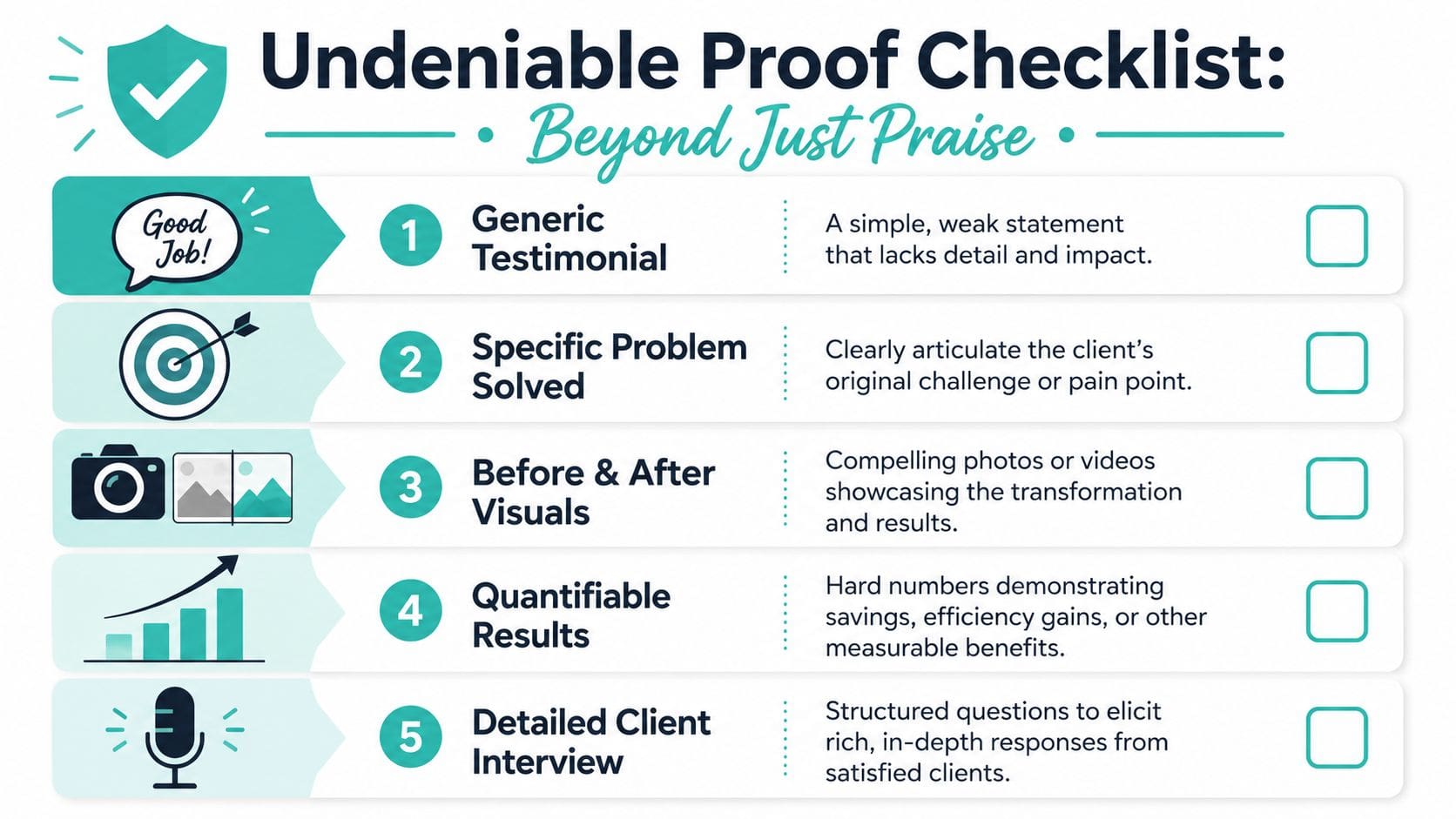
Ask for facts, not compliments
Weak review requests produce weak proof.
Do not ask, “Were you happy with the job?” Ask questions that reveal risk, urgency, decision criteria, and outcome. That gives you material a buyer can trust.
Use questions like these:
- What problem pushed you to call us?
- What had you tried before, if anything?
- What were you worried could go wrong?
- Why did you choose our company over the others?
- What changed once the job was finished?
Those answers turn a generic testimonial into a sales asset. They also expose the exact language future buyers use when they are searching for help.
A good buyer resource like The Pulse Morristown contractor guide makes the same point from the customer side. People hiring a contractor are looking for signs of competence, clarity, and reliability. Your case study should answer those questions before they ever contact you.
Use proof that supports visibility and trust
The best case study proof does two jobs at once. It helps the buyer believe you. It gives your business usable material for every market you serve.
| Type of proof | What it shows |
|---|---|
| Before and after photos | You have fixed this problem before |
| Customer quotes about the original issue | You understand the buyer’s situation |
| Short process notes | You handle the work in an organized way |
| Specific results | The job produced a meaningful outcome |
Keep collecting public trust signals too. A consistent process for getting Google reviews supports credibility. Reviews open the door. Case-study proof gives buyers a reason to walk through it.
That is the standard. Stop collecting compliments and start building proof you can use to win work in every town on your target list.
Make Your Proof Visible in Every City You Serve
A contractor finishes a strong job in one town, posts a few photos, adds a testimonial, and waits for the phone to ring in three other towns.
It does not work.
Your best project only helps revenue when buyers can find it in the places you want to win work. If your proof sits on one generic page, it stays buried. Buyers do not dig for it, and Google does not know where to rank it.
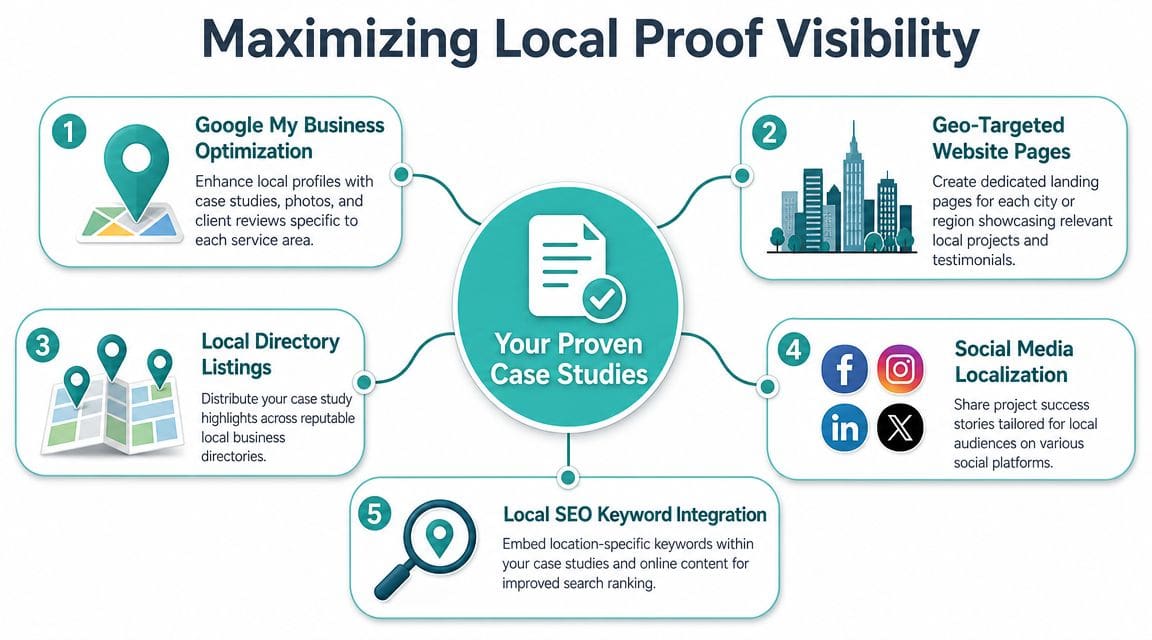
One page won’t solve a multi-city visibility gap
Contractors who serve several towns need proof attached to several towns. That means the same job can support multiple service and city pages, as long as the connection is real and useful to the buyer.
A homeowner in the next town is not searching for your brand. They are searching for the job they need done in their city. If your website only makes a strong local signal in your home base, you leave those searches to competitors.
That is the gap. Good work exists. Visibility does not.
Match your proof to the way buyers search
Case study marketing works when it follows search intent, not when it sits in a blog archive.
Use your strongest projects to support the exact combinations that drive jobs:
- Service match: Show the specific service the buyer is looking for
- City match: Place proof on pages tied to the towns you want to grow in
- Problem match: Use jobs that mirror the buyer’s situation, scope, and concerns
That structure does two things. It helps search engines understand where you work. It helps buyers see that you have already solved their kind of problem nearby.
If your proof only lives on one page, your best work stays invisible in the markets that could be feeding your pipeline.
Build your site so proof can do real work
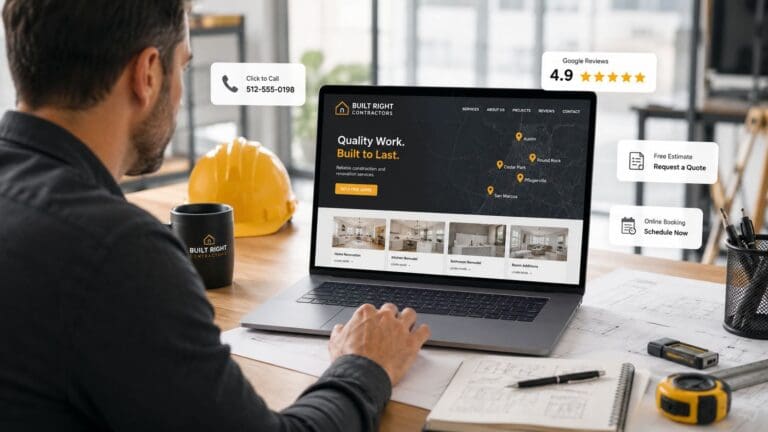
A Lead Machine is a website built to turn search traffic into calls and quote requests.
That requires structure. Service pages. City pages. Proof placed where it supports the page instead of hiding in a portfolio section no one visits. A solid city pages strategy for contractors gives each target market a page that can rank, build trust, and convert.
Use one project more than once, but use it with discipline. A kitchen remodel in one town can support a kitchen remodeling page, a nearby city page, and a broader remodeling page if the proof fits the buyer’s question on each page. Do not paste the same block everywhere. Adapt the proof so it strengthens relevance.
The goal is simple. Make sure past jobs help future revenue in every town you serve. If buyers in those towns never see your proof, referrals stay random and growth stays uneven.
Put Your Proof in Front of Buyers Today
A buyer in one of your target towns searches for your service this afternoon. They need help now. If your proof does not show up in that search, your best job does nothing for your pipeline.
That is the core issue.
Contractors spend good money on a website, then leave visibility to chance. The site sits there. The photos sit there. The proof sits there. Meanwhile, competitors pay to appear in front of buyers who are ready to call.
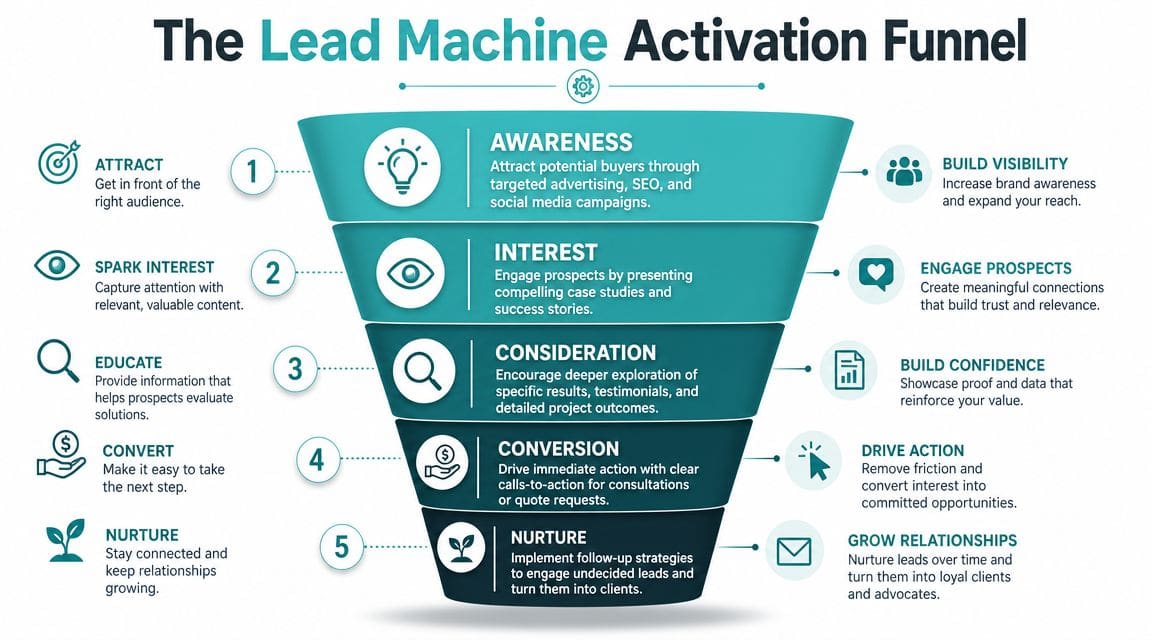
Put proof in front of people who are searching now
Paid traffic has a clear job. It gets your strongest proof in front of buyers while intent is high.
Use ads to send the right prospect to the right page at the right moment. If someone is searching for a major remodel in a specific city, they should land on a page that shows a comparable project, a clear result, and a direct next step. That is how you turn completed jobs into active sales tools instead of archived work.
Visibility first. Proof second. Inquiry next.
Send traffic to proof, not fluff
Sending paid traffic to a generic homepage is a fast way to waste money. Broad claims do not carry a high-intent buyer very far. Specific proof does.
Your ad click should land on a page that answers three questions fast. Have you handled this kind of job? Have you done it for someone nearby? What should I do next if I want the same result?
As noted earlier, case studies work best when you distribute them instead of letting them sit in one corner of your site. Email, social, and paid promotion can all help. For contractors, paid search and paid social matter because they put job-specific proof in front of buyers who are already looking.
Buyers are not looking for a campaign. They are looking for a contractor who feels like the safe choice.
Many contractors often lose control at this point. They pay for attention, then send that attention to weak pages with no proof, no clear service match, and no strong call to action. The click is bought. The lead is lost.
A Lead Machine fixes that. The site does the selling work. The ads create visibility. The proof lowers risk in the buyer’s mind and gives them a reason to call today.
That is how you stop waiting for leads and start creating them.
Stop Guessing and Start Controlling Your Leads
Your business doesn’t get stronger when you hope harder.
It gets stronger when you control visibility.
That’s the core job of case study marketing for contractors. Not storytelling for the sake of storytelling. Not posting random job photos. Not building a page that nobody sees. The job is to turn completed work into proof that helps serious buyers trust you, in every city where you want more work.
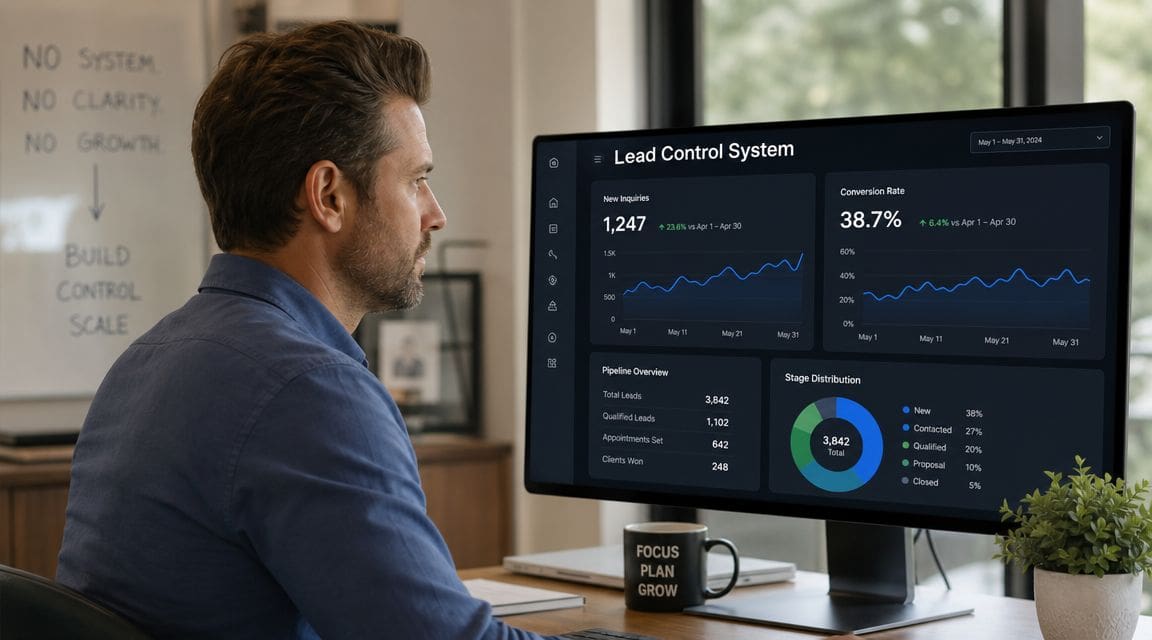
When you do this right, your best jobs stop being history. They start becoming sales tools. They support the bigger work you want. They help pre-qualify buyers. They make your company easier to trust before the first call ever happens.
And when that proof sits inside a Lead Machine and gets fuel from ads, you stop relying on luck, referrals, and whatever scraps fall off the table.
You get a system.
That system gives you more control over jobs, revenue, and growth. It helps you go after better work instead of taking whatever comes in.
You think that customers “can” find you but, If customers “don’t” find you, nothing else matters. Lead Machines are built to fix that.
If you’re tired of guessing and want a real visibility system, talk to The Cherubini Company. They build Lead Machines for contractors who want more calls, better jobs, and stronger coverage across the cities they serve.