You’ve heard the same pitch a hundred times.
“We’ll get you on the first page of Google.”
“Our ads get results.”
“We know contractors.”
Then you write the check. Nothing changes.
You tried ads and they did not work. You got burned by an agency. You got a nice report and a weak phone. You are tired of guessing.
It’s simple: You do have a lead problem. But it is not because people do not need your service. It is because they do not see you when they look.
You might be known in your hometown. Good. That does not help much 10 miles away. When somebody searches for your service “near me,” Google turns that into their city. If your business does not clearly show that you work in that city, you disappear.
That is the core problem.
It is not that people can’t find you. It is that they don’t. The people who already know your company name are not the issue. The problem is the buyer who needs excavation, septic, restoration, concrete, grading, plumbing, or heating right now and searches by service plus city. If you are not there, you are out. No call. No quote. No shot.
This is the visibility gap.
It keeps contractors stuck doing too many small jobs, fighting over weak leads, and hoping referrals show up next week. Bigger companies do not hope. They buy visibility and build systems around it.
If you want Lead Generation Ideas That Don’t Suck, start with ideas that put you in front of buyers and turn that attention into calls.
1. Google Business Profile Optimization & Local Map Ranking
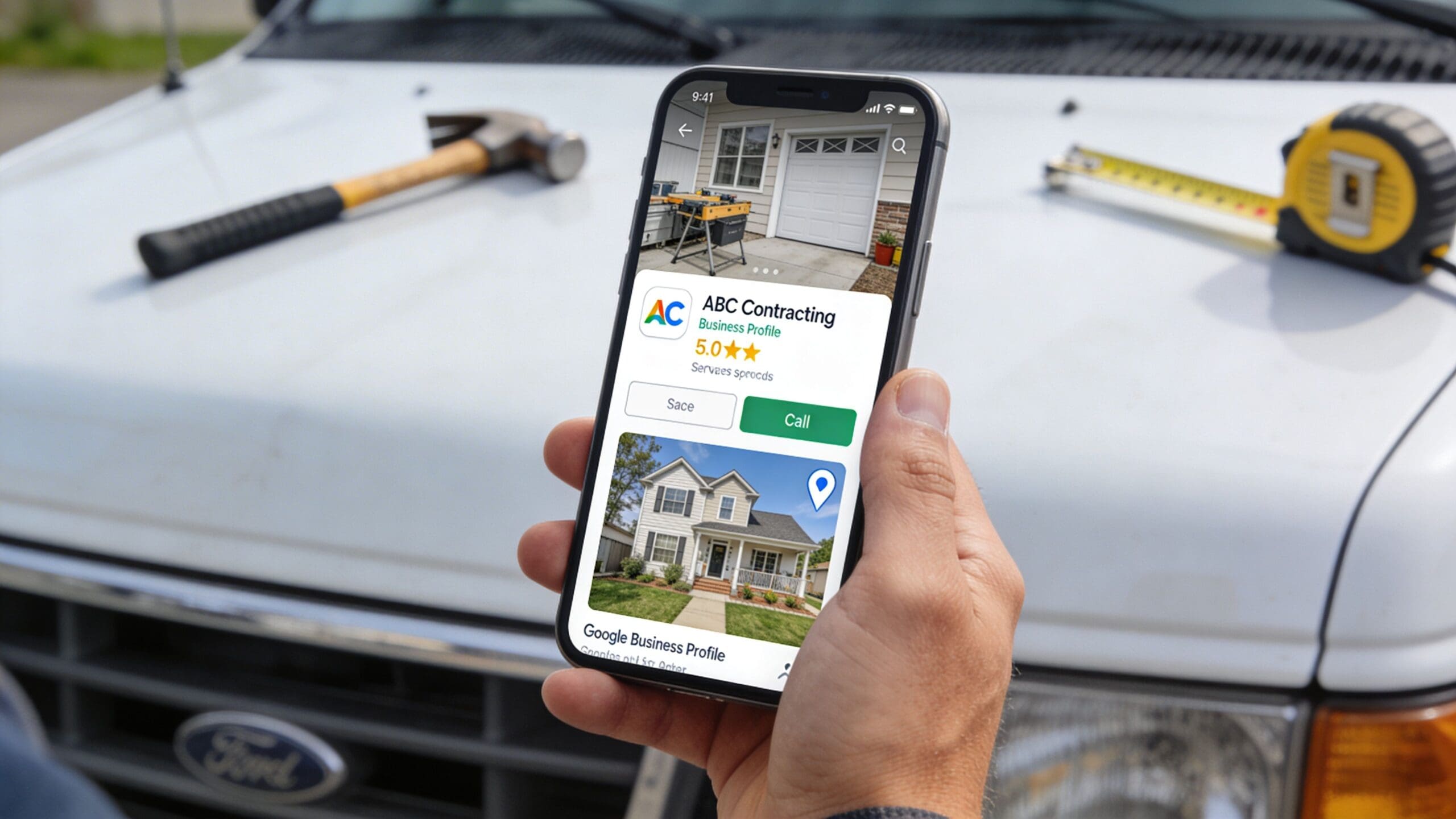
If you do not show in the map results, you are invisible to a huge chunk of local buyers.
That little map pack gets attention fast. People tap. They call. They move on. They are not digging through page two looking for your company.
Start there.
What this fixes
Most contractors set up a profile once and forget it. Bad move.
If your profile is weak, missing service areas, missing photos, missing reviews, or pointing at the wrong pages, you lose calls to contractors who look more active and more trusted.
A strong profile helps buyers do one thing fast. Pick you.
For contractors working outside one town, this matters even more. The visibility problem usually is not your home base. It is the towns around it.
What to do
Keep it practical.
- Show your work: Add real job photos, equipment photos, and crew photos.
- List your services clearly: Do not make people guess what you do.
- Name your service areas: If you work there, say it.
- Collect reviews consistently: Reviews help buyers trust you faster.
- Respond to reviews: Good or bad, answer them.
Your Google profile should match the rest of your online presence. Same business info. Same service focus. Same cities.
If you want a straight look at how this should be set up, this guide on how to optimize Google Business Profile covers the basics without the usual fluff.
If a buyer sees your competitor in the map pack and never sees you, your workmanship does not matter. You already lost.
A restoration company in one Ohio county can look strong at home and still be invisible in nearby counties. Same with HVAC. Same with septic. Same with excavation. That is why map visibility is not a side job. It is part of lead generation.
2. Local Service Ads
Local Service Ads are the fast lane.
You pay for placement at the top. You show up in front of buyers who need help now. That gives you visibility fast, but not much control unless your intake process is tight.
That marks a key distinction in lead generation. You can hope a quick ad buy turns into revenue, or you can build a system that catches, qualifies, and books those calls before they go cold.
Speed exposes weak systems
These ads can produce calls quickly. They also expose every flaw in your operation.
If nobody answers live, you waste money. If your service area is loose, you pay for bad-fit jobs. If your team cannot qualify leads fast, your competitor gets the work.
Local Service Ads reward contractors who are ready now. Everybody else just buys noise.
Run them with rules
Use LSAs when you need immediate demand, but set them up like an operator, not a gambler.
- Tighten the service area: Stop paying for calls outside the places you want to work.
- Push profitable services first: Emergency work, high-ticket jobs, and strong-margin categories should get the budget.
- Review lead quality every week: Bad calls pile up fast if you ignore the account.
- Answer live or call back immediately: Speed wins these leads.
This page on Google ads for local services is useful if you want to see how visibility ads fit into a contractor lead system. Your intake page matters too. These landing page best practices for contractor lead capture help turn paid clicks and calls into appointments.
A plumber chasing emergency calls, a restoration company taking water damage jobs, or a contractor handling urgent site work all deal with the same reality. The lead comes in hot. It cools off fast.
Fast response beats fancy branding. The contractor who answers first usually gets the chance to quote first.
This is a strong idea when you need calls now, not six months from now.
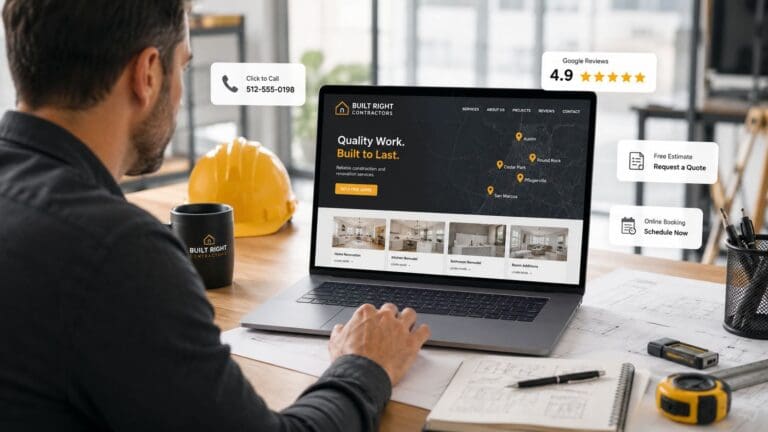
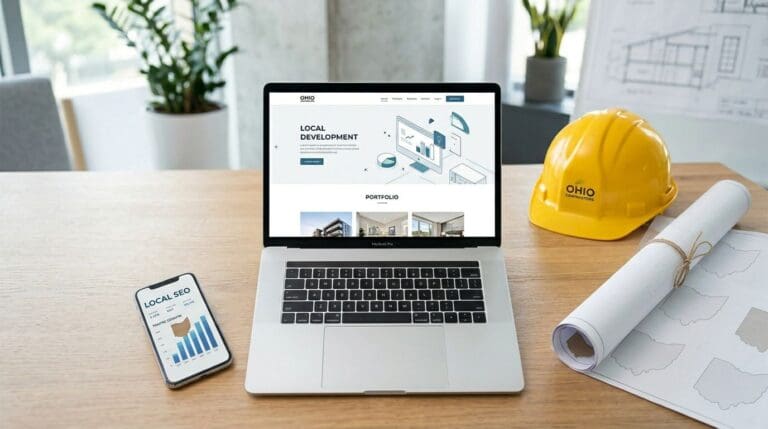
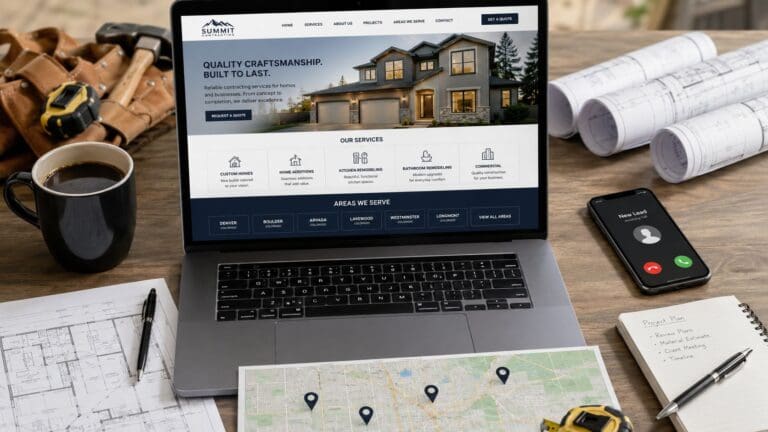
3. Multi-City Lead Machine Websites with Service and Location Pages
A normal website is not enough.
It sits there. It waits. It does not create traffic. It does not create visibility. It does not tell Google where you want work unless the site is built for that.
That is why most contractor websites underperform.
The primary job of your website
Your site should do one thing well. Turn visibility into calls.
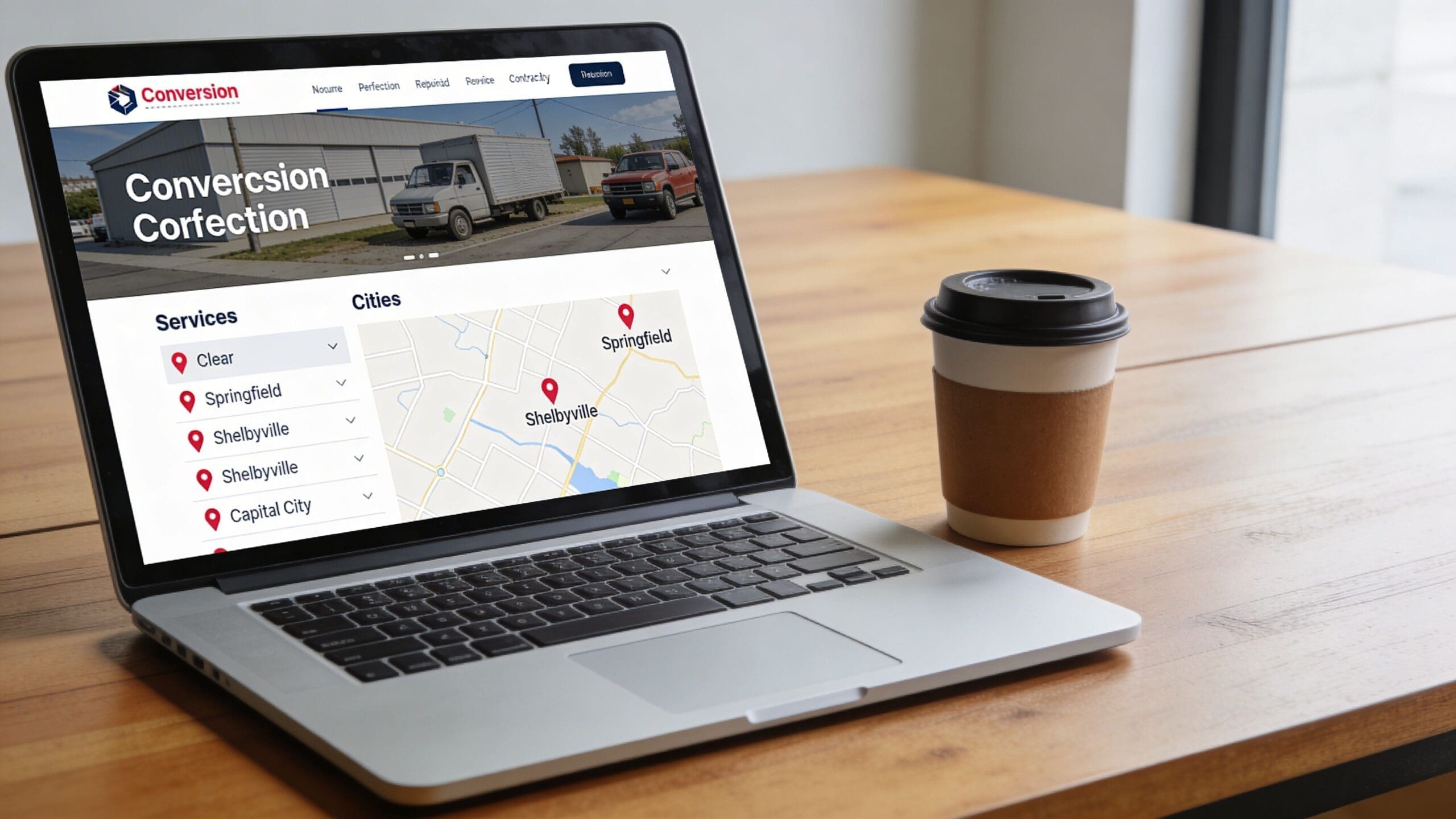
That means separate pages for separate services and separate cities. If you do grading in one county and septic in three nearby towns, your site should say that plainly.
The rank-and-rent model proves the point. Specialist agencies report high conversion rates from service and city-specific lead generation websites for excavation contractors. Why? Because buyers land on pages that match what they searched.
No confusion. No hunting around. No generic homepage.
What a Lead Machine looks like
A real lead site has:
- Service pages: One page for each core service.
- City pages: One page for each target market.
- Clear call buttons: Mobile users should not have to think.
- Quote forms: Short. Direct. Easy.
- Trust signals: Reviews, photos, and proof of work.
If you want to see how landing pages should be built to convert, review these best practices for landing pages.
A site-prep company expanding into nearby counties needs this badly. So does a cleaning or restoration company trying to stop depending on one-town demand. If you never tell Google that you do work in Newark, Granville, Heath, Zanesville, or the next county over, Google has no reason to show you there.
That is the whole game.
4. Fuel Your Machine with Local and Regional Visibility Ads
A lead machine without traffic is parked.
Contractors love to blame the website. Often the site is not the core problem. The challenge is passivity. You built the machine, then sat around waiting for strangers to find it.
That is not a strategy. That is hope.
Ads give you control. You choose the service. You choose the area. You choose the budget. You choose where the click lands. That matters when you are trying to grow beyond the town that already knows your name.
Buy visibility where you want calls
Local and regional visibility ads should do one job. Put your company in front of people searching for the work you want.
Skip broad targeting. Skip vanity campaigns. If you want septic installs in one county and site prep work in the next two, advertise those offers in those markets and send every click to the matching page.
That is how you stop wasting money.
Regional coverage matters because your reputation gets thin fast outside your home base. The next county does not care how long you have been around if they never see you. Ads close that gap fast, but only if they feed a system. Sending paid traffic to a weak homepage is how contractors convince themselves ads do not work.
Run ads like an expansion plan
Start small. Stay tight. Scale what closes.
- Start with proven work: Put budget behind the service and area that already produce booked jobs.
- Expand in rings: Add nearby towns and counties where you can take the work and protect margins.
- Match every ad to intent: Excavation ads go to excavation pages. Drainage ads go to drainage pages.
- Track by market: Know which county, city, and service produced the call or form.
- Cut what does not produce: If an area eats budget and brings junk leads, shut it off.
A contractor running grading ads in the home county and utility excavation ads in two nearby growth markets is building a system. A contractor boosting random posts and sending everyone to the homepage is gambling.
That is the split in contractor lead generation. Hope, or control. Ads only work when they fuel the machine you already built.
5. Customer Review Generation and Reputation Management
Reviews are not vanity. They are sales tools.
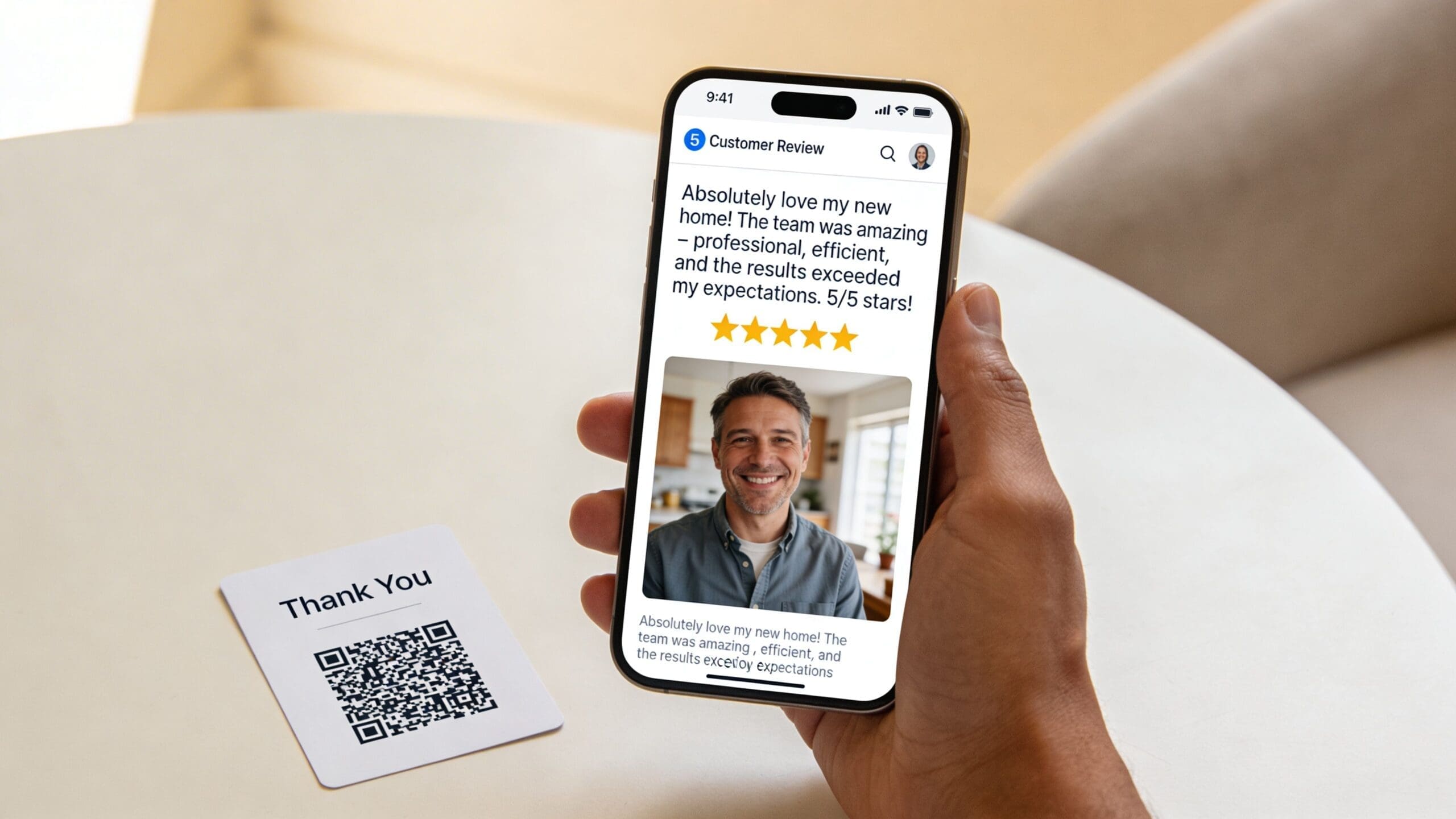
Buyers compare contractors fast. They look for proof. If one company has recent reviews and the other has nothing, the choice gets easy.
Reviews close the trust gap
A buyer in a town that does not know your name needs a reason to trust you. Reviews help do that before the first call.
For contractors expanding into new markets, this matters even more. You may be known in your hometown and unknown everywhere else. Reviews travel faster than word of mouth.
Ask for reviews right after the job. Not a month later. Not when you remember. Right after the customer is happy.
Keep the process simple
- Ask at the right moment: Right after a successful job.
- Make it easy: Send a direct link by text or email.
- Reply to every review: Show that you are active and paying attention.
- Use reviews on your site: Put them near your call buttons and forms.
A restoration company entering a new county can use strong review flow to shorten the trust gap. An HVAC contractor can do the same in nearby suburbs. An excavation contractor can do it with property owners, builders, and general contractors who want proof that the company shows up and does the work right.
Good reviews do not replace visibility. They strengthen it. They help the calls you already earn turn into booked work.
6. Service Area Expansion and Multi-County Territory Domination
Growth usually stalls for one reason. Contractors stay visible in one pocket and invisible everywhere else.
That is hope-based lead generation. You wait for word to spread across county lines and act surprised when it does not. A system works differently. You choose the territory, build visibility there, and track which counties produce calls, bids, and booked jobs.
Visibility dies fast outside your home market
Analysts at ProjectMark found that only 23% of site-prep firms use multi-location Google Business Profiles effectively, and poor multi-location visibility leads to 40% fewer bids in adjacent counties. The takeaway is simple. If buyers in the next county cannot find you, you do not exist there.
That hits hard in excavation, septic, grading, concrete, and land clearing. These jobs are often close enough to serve and far enough to lose if your company has no local footprint.
Expand in a sequence you can control
Territory expansion works when you treat it like coverage, not ambition.
- Start with adjacent counties: Go where your crews can reach without turning every job into a logistics problem.
- Build market-specific pages: One bloated service area page does not rank and does not sell.
- Support each market with local visibility: Map presence, service pages, and ads need to point at the same territory.
- Measure by county: Track calls, form fills, estimates, close rate, and job value by area.
A contractor with the crews and equipment to serve ten counties should not market like a one-town shop. That leaves money sitting in nearby markets for competitors who show up first.
This is the difference between hoping and building a machine. Hope says, “we also serve surrounding areas.” Control gives each county its own visibility plan, then uses ads to push demand where you want more work.
7. Strategic Partnerships and Referral Networks
Partnerships can feed your pipeline. They cannot be your pipeline.
That is the line.
If your lead flow depends on who happened to mention your name this week, you do not have a system. You have luck. Good referral partners help. Controlled visibility still does the heavy lifting, because the buyer, builder, or property manager will usually check you out before they call.
Choose partners based on job access
Pick the people who get involved before the work is bid out.
For excavation and site prep, that usually means general contractors, builders, architects, engineers, plumbers, real estate professionals, and property managers. For restoration, start with plumbers and insurance contacts. For HVAC, start with property managers and real estate agents.
Skip loose networking groups that trade weak leads and wasted breakfasts. Build relationships with people who already touch the exact jobs you want.
Make referral handoffs simple
A referral system needs structure.
Give partners one contact. One phone number. One service area summary. One clear explanation of the jobs you want. If they have to guess who to call or whether you handle the work, they will send the job somewhere else.
Then follow up fast. Slow response kills trust. So does a sloppy handoff, poor communication, or showing up like the lead does not matter.
- Choose partners tied to projects: Go where your target jobs already begin.
- Define your lane clearly: Tell partners exactly which jobs fit and which ones do not.
- Give them an easy handoff path: One contact method beats three confusing options.
- Stay visible: Check in, share wins, and keep your company top of mind.
- Protect the relationship: Every referred lead is a test of your reliability.
A septic contractor can get steady work from plumbers, builders, and real estate contacts. An excavation company can open the door to better commercial jobs through architects and general contractors. Those leads can be profitable and high intent.
Still, referrals give you limited control. You do not decide when they come in. You do not scale them on command. The smart move is to use partnerships as support for a lead machine, not a replacement for one. When referral traffic slows down, your website, map visibility, reviews, and ads should still be producing.
8. Direct Mail and Local Print Advertising
Most contractors ignore mail because it feels old. That is fine. Let them ignore it.
Used right, direct mail still gets attention because it lands in a hand, not in a crowded search result.
Put it where the right jobs are
Do not blanket the world.
Target neighborhoods, property types, or business areas that fit the work you want. If you want better remodeling support work, target higher-value areas. If you want septic pumping or maintenance work, target properties that fit that service. If you want commercial site-prep opportunities, use local trade publications and business journals where decision makers still look.
Mail works better when it supports your visibility system. The postcard gets noticed. The buyer searches your company. Your site and reviews do the rest.
Keep the message tight
- Use one service focus: Do not cram ten offers into one mail piece.
- Show proof: Use real job images.
- Give one next step: Call or request a quote.
- Point to your site: Let your Lead Machine do the heavy lifting.
A contractor mailing targeted neighborhoods after a run of successful jobs nearby can use direct mail to create demand where name recognition is still weak. That is the right use.
This is not the first place I would start. But for the right service, right market, and right message, it can support local visibility well.
9. Strategic Local Search Visibility
Contractors lose local search for one reason. Their site is built like a brochure instead of a lead system.
If you want steady inbound leads, stop treating search visibility like a side project. Build pages around buying intent. Service plus location. That structure gives you reach and control. Everything else is hope.
Structure decides who sees you
A buyer does not search for a vague contractor brand. He searches for a specific job in a specific place. If your site has no clear page for that combination, Google has nothing strong to rank and the buyer has no clear reason to call.
This is why local search visibility is a systems issue, not a content volume issue. You do not need a pile of random blog posts. You need coverage. Clean service pages. Clean location pages. Clear proof. Clear next steps.
Build for visibility you can control
- One service per page: Do not bury core work under one catch-all page.
- One location target per page: Give each city or market its own page when the area matters to your growth plan.
- Match the search intent: Write the page for the job the buyer wants done, not for your company history.
- Make the action obvious: Phone call or quote request. Pick one primary next step and push it hard.
An excavation company should not stuff land clearing, grading, trenching, and septic work onto one page and call it strategy. Break them out. Then pair those services with the cities that matter. A restoration company should separate water damage, fire cleanup, and mold remediation. An HVAC company should split installs, repairs, and maintenance.
That is how a Lead Machine works. It creates more entry points into your business, in more places, for more of the jobs you want.
Visibility without structure stays weak
A generic website can still get some traffic. It rarely gives you control.
A structured site does. You can see which services pull calls. You can see which towns are thin. You can add pages where coverage is weak and support them with ads when you want faster movement. That is the difference between hoping your homepage ranks and building a system that expands with your territory.
Organized pages win because they make you easier to find, easier to trust, and easier to contact. That is the whole job.
10. Visibility Mapping and Free Consultation Strategy
Free consultations are usually throwaway sales calls. That is a mistake.
Use the consult to diagnose a visibility problem the contractor can see. If you cannot show where leads should come from, where the business is visible now, and where the gaps are, you are just talking.
Show the market. Then show the holes.
A visibility map turns vague marketing talk into something concrete.
Pull up the service area. Check the core cities and counties. Search the main services that matter. Look at Maps, paid placements, organic results, and site coverage. Then mark the gaps. A contractor who thinks he is visible everywhere often finds out he owns one pocket and disappears in the next town over.
That changes the conversation fast. It stops being about promises. It becomes a choice between hoping referrals and random rankings keep coming, or building a system that expands visibility on purpose.
What a useful consultation covers
- Current visibility by market: Where you show up now, and where you do not.
- Priority territory: Which cities, ZIP codes, or counties are worth winning first.
- Job mix: Which services produce strong revenue, and which leads waste time.
- Lead handling: Who answers first, how fast they respond, and where inquiries get lost.
- Next move: What gets fixed with pages, what gets pushed with ads, and what gets ignored.
That last point matters. Every visibility gap does not deserve the same fix.
If a market has search demand and no real presence, build the page structure and support it with ads. If the market is weak or outside your target territory, leave it alone. Good strategy is not doing more. It is choosing what gives you control.
A solid consultation should leave the contractor with a clear map, a priority list, and a blunt answer about what to do next. If the person selling lead generation cannot show that clearly, he does not have a system. He has a pitch.
Contractor Lead Generation: 10-Point Comparison
| Item | Complexity 🔄 | Resource requirements ⚡ | Expected outcomes 📊 | Ideal use cases 💡 | Key advantages ⭐ |
|---|---|---|---|---|---|
| Google Business Profile Optimization & Local Map Ranking | Low: setup easy; ongoing maintenance | Low cost; time for photos, posts, review management | Improved local map visibility and qualified calls in 4–12 weeks | Single-location or local service businesses seeking organic leads | Free organic visibility, mobile prominence, review-driven credibility |
| Local Service Ads (Google Guaranteed) | Medium: verification + fast response required | Pay-per-lead budget; background checks; quick lead handling | Immediate top-of-search visibility; high-intent leads once approved | Emergency services, high-margin trades, competitive markets | Google Guaranteed badge, pay-only-for-contacts, pre-screened leads |
| Multi-City Lead Machine Websites with Service & Location Pages | Medium: build many pages and optimize | Moderate–high upfront investment; content, photos, SEO time | Scalable local rankings and conversions across cities in 4–8 weeks | Contractors expanding to multiple cities or counties | Conversion-focused design, built-in review systems, centralized management |
| Fuel Your Machine with Local & Regional Visibility Ads | Medium: campaign setup and continuous optimization | Ongoing ad spend ($500–$5k+/mo); management expertise | Immediate leads in 7–14 days; scalable traffic while organic grows | Testing new markets, seasonal pushes, supplementing SEO | Fast targeted visibility, measurable ROI, market testing capability |
| Customer Review Generation & Reputation Management | Low–Medium: automate and monitor constantly | Low–medium: automation tools, staff time for responses | Higher conversion rates and better local ranking in 2–4 weeks | Businesses relying on trust, repeat customers, or new-area launches | Strong social proof, improved GBP credibility, better conversions |
| Service Area Expansion & Multi-County Territory Domination | High: complex operations and multi-market management | High: crews, equipment, larger marketing budgets, logistics | Significant revenue growth and larger contracts in 8–16 weeks | Businesses ready to scale regionally and pursue commercial work | Market dominance, revenue scale, reduced upfront via leased Lead Machines |
| Strategic Partnerships & Referral Networks | Medium: relationship building and tracking | Low–medium: time investment, possible commissions | Steady high-quality leads over 6–12 weeks with lower CAC | B2B services and trades with complementary providers | Low acquisition cost, trusted referrals, long-term sustainable flows |
| Direct Mail & Local Print Advertising | Medium: list selection, design, distribution | Medium–high upfront costs for printing and lists | Tangible responses in 2–4 weeks; volume by 8–12 weeks | Targeted homeowner neighborhoods and seasonal campaigns | Physical stand-out, effective for specific demographics, trackable |
| Strategic Local SEO (Search Engine Optimization) | Medium–High: ongoing technical and content work | Medium ongoing investment or expert agency support | Sustainable organic traffic; leads in 3–6 months (initial 4–12 wks) | Long-term growth, competitive markets, durable asset building | Lowers long-term CPL, builds authority, durable business asset |
| Visibility Mapping & Free Consultation Strategy | Medium: expert time and one-on-one sessions | Low–medium: consultant time and mapping tools | Immediate trust and qualified leads; conversions in 2–4 weeks | Larger projects, commercial prospects, high-trust sales | Differentiates with education-first approach; high close rates |
Stop Hoping for Leads. Start Controlling Them.
Contractors do not have a lead problem first. They have a control problem.
Random tactics feel productive. A boosted post. A lead list. A directory profile. A few referral asks. Then the phone slows down and the whole plan falls apart because there was never a system behind it.
That is the split.
You can keep hoping leads show up, or you can build a machine that creates visibility in the markets you want and turns that visibility into calls. One path keeps you reactive. The other gives you control over volume, territory, and job quality.
The weak point is usually obvious. Buyers cannot hire you if they cannot find you. If they do find you but land on a generic site with thin service information and no clear city relevance, they leave. If your ads point to bad pages, you pay for clicks that never turn into booked work. If your team is slow to answer, the lead goes to the next contractor.
Control comes from owning the middle of the process. You need pages built around real services and real service areas. You need click-to-call, forms, reviews, and a structure that matches how people search. Then you put paid visibility behind it so the right prospects see it consistently.
That is the point of a Lead Machine plus ads. The website does the conversion work. The ads do the distribution work. Together, they give you far more control than referrals, one-off campaigns, or third-party lead platforms ever will.
Control changes the business fast.
You stop filling holes with low-margin jobs. You hire with more confidence. You expand into nearby counties on purpose, not by accident. You make decisions based on incoming demand instead of whatever the phone did this week.
The Cherubini Company works in that visibility-first model for contractors. They build Lead Machines and run local and regional visibility ads for companies that want direct calls, stronger service-area coverage, and less dependence on chance.
If customers do not see you, they will not call you.
That is the whole game. If you want more leads, stop collecting tactics and build a system you can control.
If you are tired of weak leads, dead websites, and marketing guesswork, talk to The Cherubini Company. They help contractors fix the core problem, invisibility, with Lead Machines and visibility ads built to get your business seen in the cities where you want work.