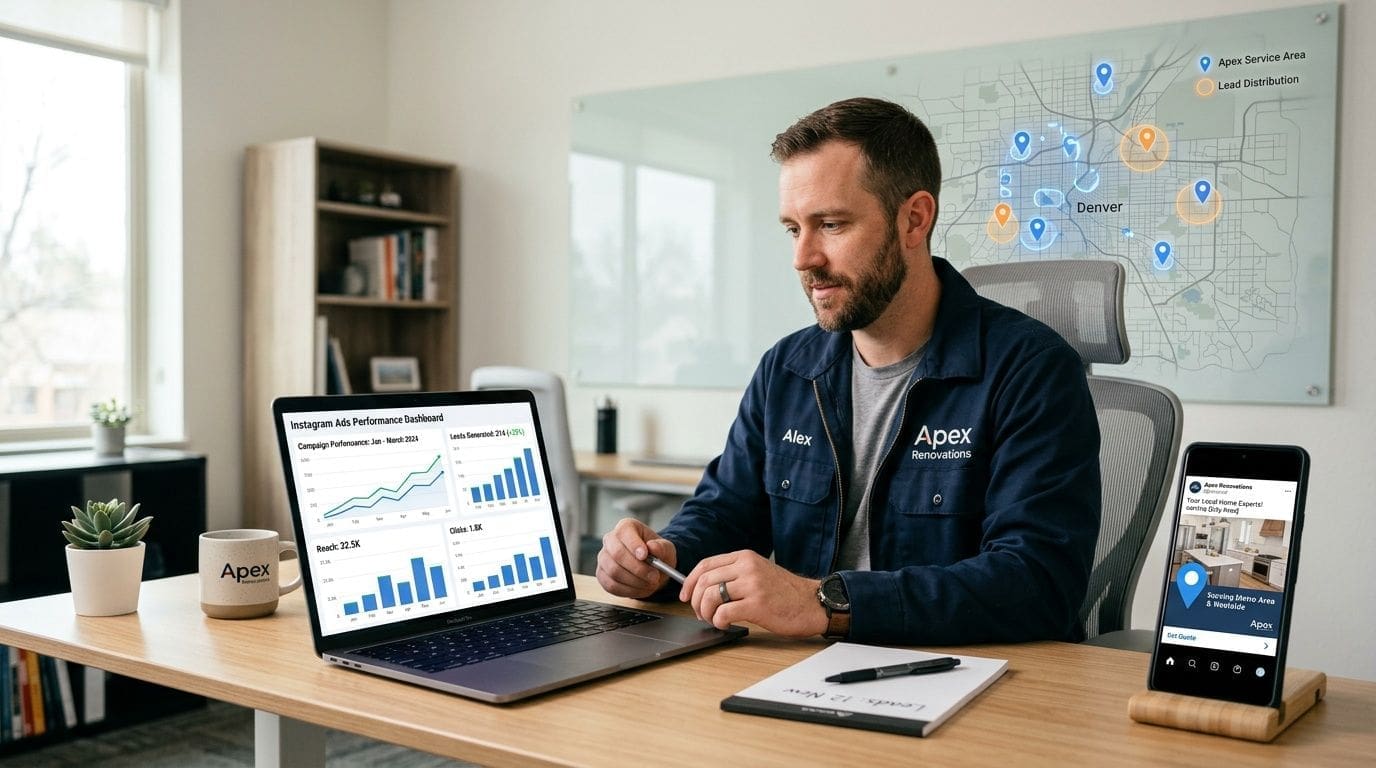
You’ve probably said this already.
“We tried ads. They didn’t work.”
“That’s what the last agency said.”
“We got burned before.”
“I don’t believe you.”
Fair enough. Most contractors have a reason to be skeptical. You spent money. You got clicks, maybe. You got a few junk leads. Then nothing. The phone didn’t ring enough. The jobs weren’t the right jobs. And somehow the agency still had an excuse.
Here’s the blunt truth. Your problem usually isn’t that ads “don’t work.” Your problem is that your business is not visible enough in the very places you want jobs from.
You might be known in your hometown. Good. That doesn’t help much when the next town over is searching for your service and never sees you. People don’t search your company name if they’ve never heard of you. They search what you do and where they need it. If you don’t show up there, you’re out before the job even starts.
That’s why targeting instagram ads matters. Not as a trick. Not as a hobby. As part of a real visibility system.
Why Your Instagram Ads Never Bring In Jobs
You don’t have time for cute marketing theories. You want calls. You want better jobs. You want work from the towns and counties around you, not just scraps close to your shop.
Most failed Instagram campaigns blow up for one reason. They were never built around real local visibility. They were built around random interests, broad guesses, and lazy setup.

An agency runs ads to “homeowners.” Maybe they add “home improvement.” Maybe they toss in a few nearby zip codes. Then they call it strategy. It isn’t strategy. It’s a guess with a bill attached.
Bad leads are still a visibility problem
A lot of contractors say they’re busy. But they’re busy with the wrong work.
Small jobs. Cheap shoppers. Tire kickers. People collecting bids. People outside the intended target area. That kind of busy wears your crew out and keeps your business stuck.
When the bigger jobs go to competitors, owners usually blame price, timing, or luck. Sometimes that’s part of it. Most of the time, the other contractor got seen first in the right place.
Practical rule: If the wrong people keep clicking, the problem isn’t “more ads.” The problem is who sees the ads and where they land.
That’s the part most agencies skip. They’ll show you dashboards. They’ll talk about impressions. None of that matters if the campaign doesn’t bring in the kind of work you want.
Most ad setups look professional and still fail
This is why polished marketing can fool people. Nice graphics. Fancy reports. Clean headshots on the website. If you need better visuals for a profile or team page, even a simple tool like an ai headshot generator can help clean things up fast. But better photos don’t fix bad targeting.
The core issue is still this. Your ads need to be aimed at the right local buyers, in the right surrounding cities, with the right message, and sent to a page built to turn attention into calls.
Here’s what failure usually looks like:
- Broad targeting: Your ad gets shown to people who will never hire you.
- Weak local signal: The campaign doesn’t clearly connect your business to the towns you want.
- No real system: The ad and the website work like two separate pieces instead of one machine.
- No filtering: You pay for clicks from people who were never serious.
That’s why contractors feel like ads are a scam. They were sold traffic, not visibility that turns into jobs.
The Real Problem Is Invisibility Not Effort
You’re probably working hard enough already. That isn’t the issue.
The issue is that people in the next town over often have no clue you exist. Not because you’re bad at your trade. Because the internet doesn’t assume you work everywhere. It only believes what you clearly show.
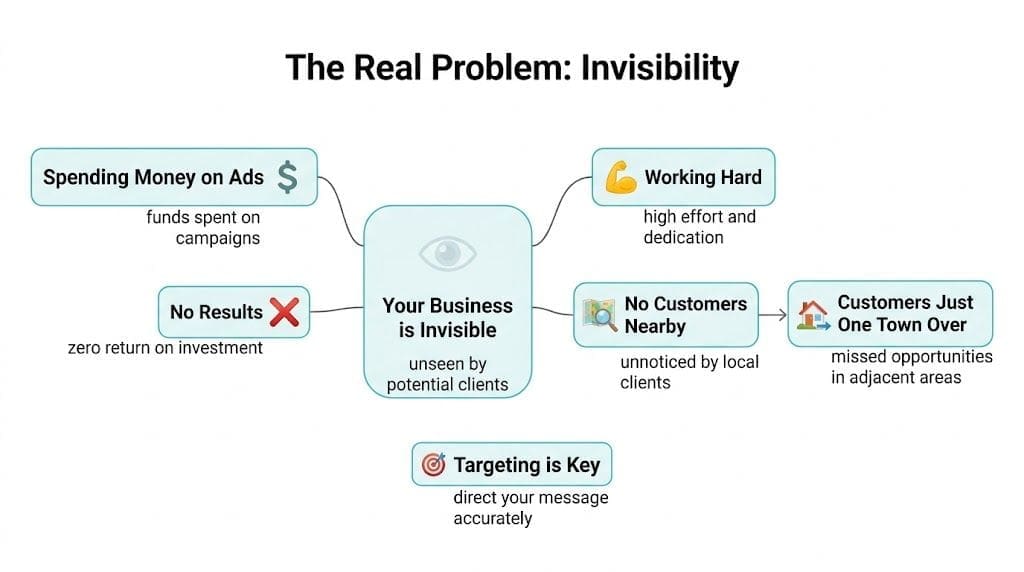
When someone searches for “excavation contractor near me” or “hvac company near me,” the platform reads that as local intent. It turns “near me” into the city where that person is standing. If your business has never made it clear that you work in that city, you’re easy to miss.
That’s the visibility gap. Most contractors never see it until someone points it out.
Your website doesn’t create demand
A website is not a lead source by itself. It’s a waiting room.
If nobody gets sent there, it just sits there. That’s why contractors get frustrated after paying for a site that looks fine but doesn’t produce much. The site didn’t fail because it existed. It failed because nothing reliable was driving buyers to it.
You think people can find you because your business exists online. That’s not the same as them actually seeing you when they need you.
This gets worse once you try to grow outside your home area. You may be well known in one city. Ten miles away, you’re invisible.
Contractors get overlooked in regional targeting
This problem hits site-prep and heavy service contractors especially hard. A lot of marketing advice is built for beauty brands, fitness products, and easy consumer buys. That advice doesn’t fit excavation, grading, septic, land clearing, or concrete work across multiple cities.
One overlooked strategy gap is contractor targeting across several local markets. A report from Prose Media on niche Instagram targeting says the industry often overlooks contractors who need hyper-local but scalable targeting, and it notes that combining buyer-list lookalike audiences with interests like heavy machinery can drop cost per lead by 40% in niche business-to-consumer markets.
That matters because it proves the point. Better results don’t come from shouting louder. They come from showing up with relevance in the right pockets of demand.
A simple way to look at it is this:
| What contractors assume | What actually happens |
|---|---|
| People in nearby cities know we serve them | They usually don’t unless your visibility says so |
| The website should bring leads on its own | The website waits for traffic |
| More effort should fix slow lead flow | Effort doesn’t fix invisibility |
| Social ads should “just work” | Only if targeting matches your real service area |
The fix is not working harder. The fix is building visibility on purpose.
Why Guessing at Audiences Wastes Money
Most contractors target instagram ads the same way they’d throw a sign on a random road and hope the right truck drives by. That’s not a plan.
Professional campaigns use audience layers. Amateur campaigns use guesses.

A strong Instagram ad system usually works through three audience types. It starts with broad saved audiences based on location and relevant interests. Then it builds custom audiences from website visitor data. Then it scales with 1% lookalike audiences based on your best customers. That method is why professional campaigns can see 2-4x lower cost per acquisition than broad, interest-only targeting, according to Karola Karlson’s breakdown of Instagram ad targeting.
That’s the difference between buying attention and buying wasted clicks.
A lookalike audience is not a random crowd
A lot of owners hear terms like custom audience or lookalike audience and think it’s just agency fluff. It isn’t. But it also isn’t something you do well by guessing.
A lookalike audience only gets powerful when it’s built from real buyer data. Not random followers. Not your cousin’s page likes. Your best customers.
That means the system needs real signals coming in from the website. It needs to know who visited, who engaged, and who acted like a real buyer. If your site isn’t built to collect and organize that, your ad targeting is weak from the start.
Guessing creates expensive mistakes
Here’s where money gets burned fast:
- Interest stacking gets too narrow: You shrink the audience so much the campaign chokes.
- Broad targeting gets sloppy: The system reaches people with no real buying intent.
- No customer data is feeding the ads: You can’t build stronger audiences from actual buyers.
- Traffic hits the wrong page: Even good clicks die on weak pages.
The result is predictable. Low quality leads. Rising costs. Frustration. Another contractor saying ads don’t work.
There’s a reason this keeps happening. A contractor usually knows jobs, crews, scheduling, equipment, and margins. He should know those things. He should not have to become a paid traffic operator on top of everything else.
Good targeting isn’t about finding “more people.” It’s about cutting out the people who were never going to call.
If you want the blunt version of the problem, read this piece on why you don’t have a lead problem, you have a visibility problem. That’s what bad audience targeting hides. It makes a visibility problem look like an ad problem.
Hope is not a growth plan
Big companies buy visibility with systems. Small contractors usually rely on hope.
Hope that the boosted post works. Hope that “people around here know us.” Hope that a website alone brings traffic. Hope that the next agency finally gets it right.
Hope is expensive.
If you want better jobs in more cities, targeting instagram ads has to sit on top of a real data system. Otherwise you’re paying to learn the same lesson over and over.
How a System Turns Visibility Into Phone Calls
Ads alone are not the answer. A website alone is not the answer either. One creates attention. The other has to convert it.
That’s why the right setup is a system.
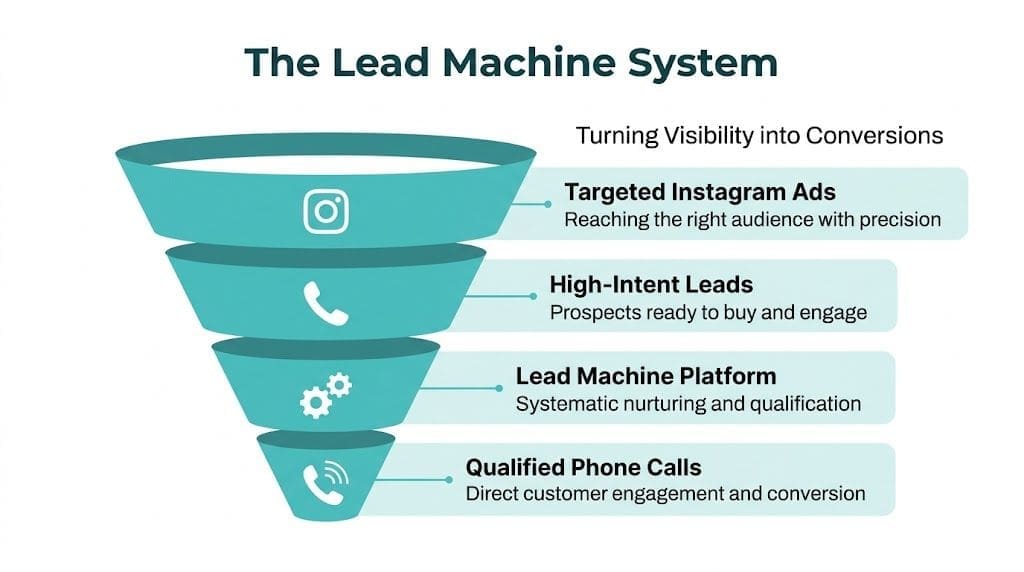
When local service businesses combine AI-driven predictive targeting with localized campaigns, they can see up to 28% higher engagement rates. Lookalike audiences also generate about 32% more clicks than simple interest-based targeting, based on Instagram ad statistics published by SQ Magazine. That matters because visibility gets stronger when the system stops guessing and starts learning from buyer behavior.
Ads are the fuel
The job of the ad is simple. Get you seen by the right people in the right service area.
Not everybody. Not “awareness.” Not vanity traffic. Real local buyers.
A solid Instagram campaign can put your business in front of people who are already showing the right signals. It can also keep your company in front of people who engaged before and didn’t act yet. That keeps you from disappearing after one visit.
If you want a simple outside example of how businesses think through this path from first touch to final sale, these full funnel selling strategies show the value of matching the message to the buyer’s stage instead of blasting everybody with the same pitch.
The website has to do its job
Most campaigns die at this point. The ad works. The click happens. Then the website fumbles the lead.
A contractor doesn’t need a pretty brochure site. He needs a site that answers fast, proves the work, shows the service area, and gives people an easy next step. Clear calls. Clear services. Clear city pages. No confusion.
If you run a good ad into a weak website, you’re paying for people to bounce.
Here’s the plain version:
| Piece | What it should do |
|---|---|
| Instagram ads | Create visibility in the cities you want |
| City and service pages | Match what the buyer is looking for |
| Call and form setup | Turn attention into action |
| Tracking | Show what’s working and what isn’t |
That’s the machine. One part brings the traffic. One part captures it.
A Lead Machine fixes the broken handoff
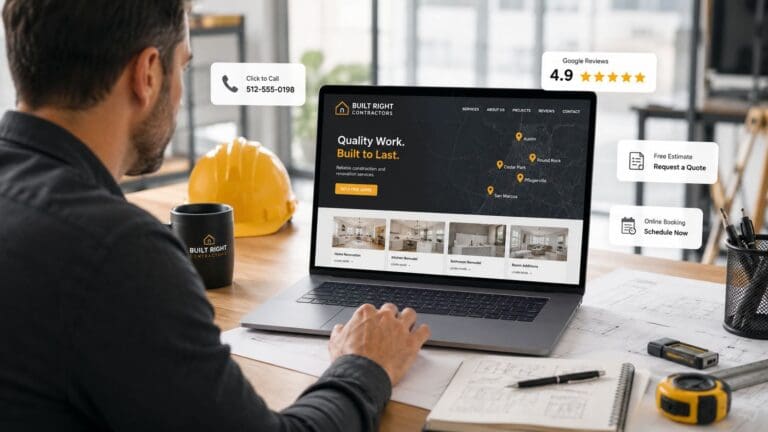
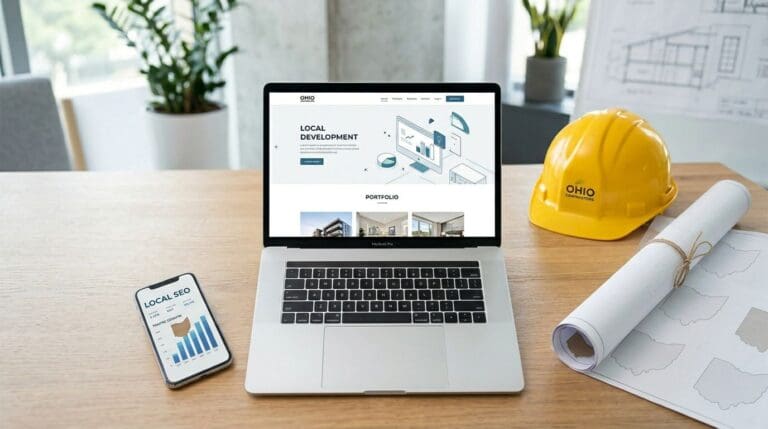
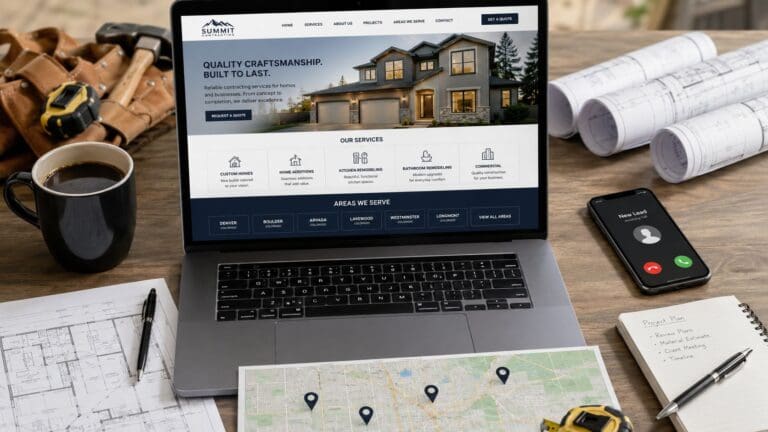
A Lead Machine is a website built for leads, not compliments. It’s structured by service and city, built to convert, and tied to ad traffic so you can expand into nearby markets without leaving the result up to chance.
One option contractors use for that setup is Instagram lead generation ads from The Cherubini Company, which pairs ad traffic with a lead-focused website system instead of treating ads and the site like separate projects.
A website without traffic sits and waits. Ads without a conversion system waste money. Together, they can create steady calls.
That’s the whole point. Visibility by itself is not enough. Conversion by itself is not enough. The system is what turns both into jobs.
Taking Control of Your Entire Service Area
Getting a few leads is not the goal. Control is the goal.
You want to know where the next jobs are coming from. You want to expand into better towns. You want enough steady demand that you can stop chasing every small job that comes along.
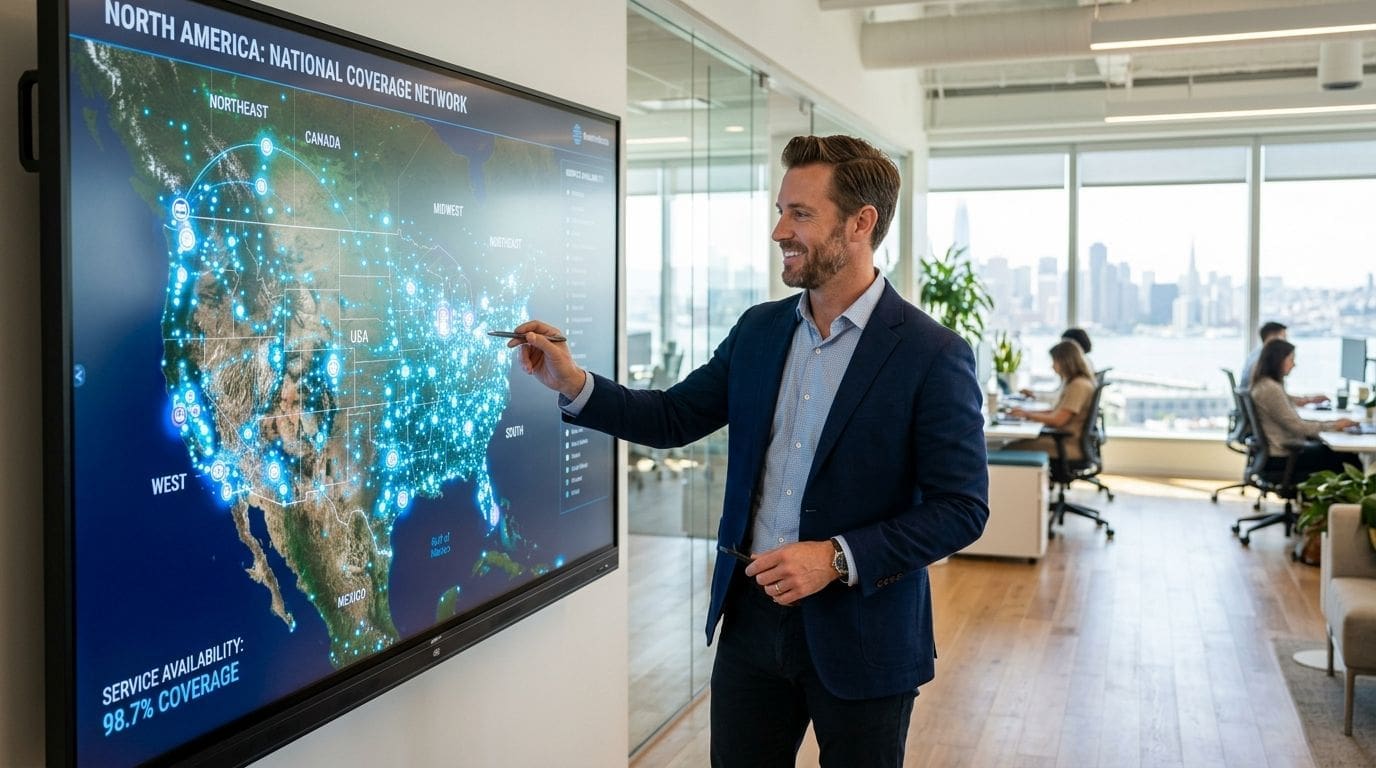
That doesn’t come from boosting more posts. It comes from managing the whole service area like a map, not like a gamble.
For contractors expanding across multiple cities, funnel-segmented campaigns can improve return on ad spend by 25-40% compared with unsegmented campaigns, according to AskNeedle’s Instagram targeting analysis. The same source warns that audience fatigue from high ad frequency can cause a 30-50% drop in engagement.
That tells you something important. Scaling is not just spending more. It’s controlling the moving parts.
More cities means more discipline
A regional campaign has to stay organized. Different towns respond differently. Different offers pull differently. Some audiences wear out fast.
If nobody is watching performance closely, the campaign drifts. Then costs go up and lead quality goes down.
That’s why serious expansion needs things like:
- City-by-city visibility: You need to know where you’re showing up and where you’re not.
- Audience control: One audience can go stale. A good system rotates and adjusts.
- Message match: The right offer has to meet the right local buyer.
- Landing page alignment: The ad can’t promise one thing and dump people somewhere vague.
Predictability changes how you run the business
This part matters more than the ad account.
When lead flow gets predictable, you stop operating scared. You can choose better jobs. You can stop saying yes to every tiny project. You can plan crews better. You can grow on purpose.
Contractors don’t need more chaos. They need a system that gives them control over where calls come from.
That’s the shift. A fragile business waits and hopes. A stable business builds visibility in the markets it wants and keeps feeding it.
If your company only gets jobs where people already know your name, your growth is capped. If your company can get seen across the whole service area, your options open up.
That’s what targeting instagram ads should really do. Not chase random clicks. Take control of your territory.
Stop Guessing and Start Building
You don’t need another trick. You don’t need another agency promise. You need a system that makes your business visible where buyers are looking.
That’s the difference.
If your ads failed before, it doesn’t prove ads are useless. It usually proves the setup was weak. Bad targeting. Weak landing pages. No city coverage. No real conversion system. Same old mess.
Start building assets instead of renting hope. Build visibility in every city you want work from. Build pages that turn traffic into calls. Build campaigns around real buyer signals, not guesses.
If you want to see what that kind of system looks like, review Lead Machines for contractors. The point isn’t more marketing activity. The point is more control.
You think that customers “can” find you but, If customers “don’t” find you, nothing else matters. Lead Machines are built to fix that.
If you’re tired of bad leads, random slow weeks, and paying for marketing that never turns into real jobs, talk to The Cherubini Company. They build lead-focused websites and visibility systems for contractors who need to show up in more cities, get more calls, and stop guessing.