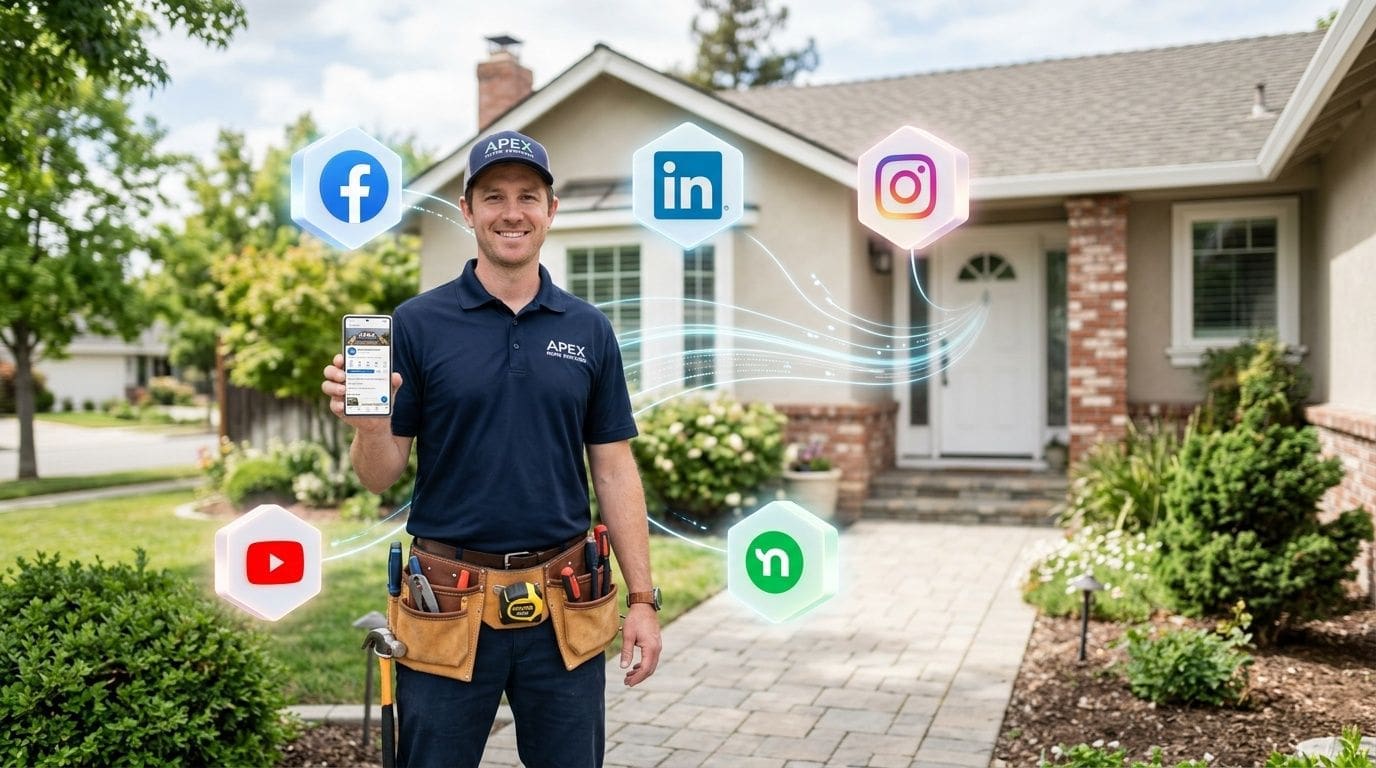
Stop Posting. Start Getting Found.
If you’re a contractor who thinks social media is a waste of time, you’re probably right.
You’ve been told to post more. You’ve run ads that did nothing. You may have even paid an agency that burned you. You heard the pitch. You spent the money. Then the phone stayed quiet.
That doesn’t mean lead generation is broken. It means the advice was.
Most contractors don’t have an effort problem. They have a visibility problem. They’re known in their hometown, but ten miles away they disappear. A customer in the next town searches for your service in their city. If you haven’t made it clear you work there, you don’t show up. You don’t get the call. You never even get a shot.
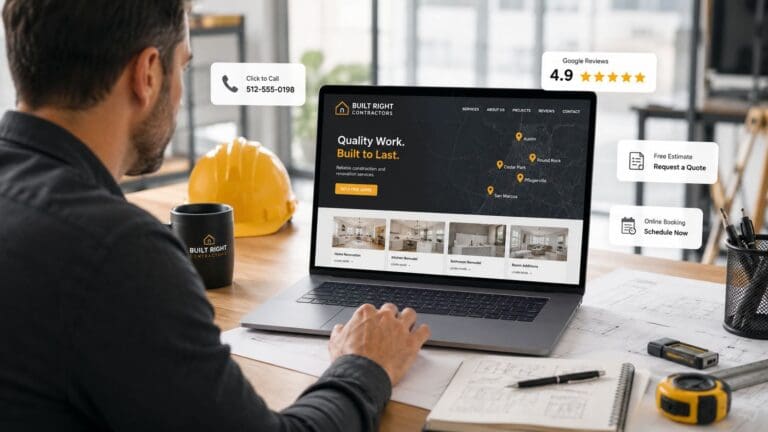
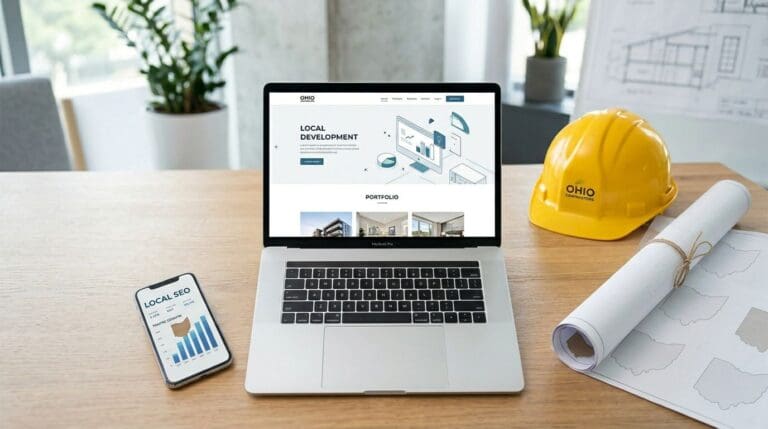
A website alone won’t fix that. Websites don’t create traffic. They wait for it.
Big companies understand this. They buy visibility. Small contractors often rely on hope. Hope that someone will remember the name. Hope that a referral comes through. Hope that a nice-looking site somehow brings in work by itself. It won’t.
That is why this guide is different.
This isn’t a post-more guide. It isn’t about chasing likes. It isn’t about becoming a content creator. It’s about using social media platforms for businesses the right way. As fuel. As visibility tools. As a way to get in front of real buyers in the exact towns where you want jobs.
If you want a deeper look at effective lead generation for small businesses, start there after this. But first, get clear on which platforms help you get seen.
1. Facebook Your Digital Billboard in Any Town
Facebook wins for one simple reason. It lets you buy visibility in the exact towns where you want more jobs.
That makes it one of the best fuel sources for a contractor’s Lead Machine. You are not posting for likes. You are putting your name, your work, and your phone number in front of homeowners inside a target service area, then pushing them toward a call.
A Facebook Business Page handles the basics well. Homeowners can check your service area, hours, reviews, photos, and contact info fast. Then paid ads let you push the right offer into the right town.
That is where the platform earns its keep.
If you want excavation work in one county and drainage jobs in another, Facebook gives you control. You can run separate messages by location, service, and audience. A generic post cannot do that. A website alone cannot do that either. Facebook fills the gap between being good at the work and being seen for the work.
Practical rule: If you want jobs in a town, buy visibility in that town.
Use Facebook to support the sale.
- Show local proof: Post real jobs from nearby towns so prospects see you already work in their area.
- Make calling easy: Use click-to-call ads, clear buttons, and a phone number people can find without hunting for it.
- Send traffic into a real lead path: Ads should point to a page built to get calls, form fills, or booked estimates.
If you want a model for that setup, study how Facebook ads for local businesses should drive calls. If visual proof is part of the sale, pair it with a strong Instagram lead generation ads strategy so homeowners see both the offer and the finished work.
Facebook does have a weakness. Organic reach is unreliable. Good posts often go nowhere. Contractors get frustrated because they treat Facebook like a free posting tool instead of a local distribution channel.
Use the page as proof. Use ads for reach. Use both to feed your Lead Machine in the towns you want to own.
2. Instagram Visual Proof for High-Ticket Jobs
Instagram does one job well. It makes expensive work look worth the price.
That matters for contractors selling projects homeowners need to see before they trust. Kitchen remodels. Roofing upgrades. Retaining walls. Pool decks. Outdoor living. Decorative concrete. If the sale gets easier once the customer sees the finished result, Instagram can feed your Lead Machine with better prospects in the zip codes you want.
Use it as a proof channel, not a posting habit.
Contractors waste Instagram when they treat it like a scrapbook. A few random job photos will not bring in calls. A targeted gallery of real projects in specific towns will. The platform works best when every post answers three questions fast. What did you build? Where did you build it? How does the homeowner contact you?
Build a local proof feed
Post the kind of work you want more of. Lead with finished photos. Add clean before-and-after shots when the change is dramatic. Use short video only if it makes the result clearer.
Then tie the post to a place.
If you want higher-ticket jobs in a certain suburb, show completed jobs from that suburb and nearby areas. Name the service. Name the town. Keep the caption tight. The goal is simple. Help a homeowner say, “They do this work near me.”
A practical setup looks like this:
- Show completed projects first: Final results sell the job better than process shots.
- Mention the town in the caption: Local visibility matters more than clever copy.
- Use carousels for proof: Before, during, after. One job, one clear story.
- Give one next step: Call, send a message, or request an estimate.
Paid reach helps here, especially for high-ticket work with strong visuals. If you want a model for that, this guide on Instagram lead generation ads shows how to turn job photos into actual inquiries.
Where Instagram fits in the system
Instagram rarely closes the sale by itself. It earns trust before the call. That is its value.
Facebook can push an offer into a town. Google can capture demand when someone is ready to hire. Instagram sits in the middle and proves your work is real, current, and local. That makes it a strong fuel source for bigger residential jobs where appearance drives the decision.
Do one more thing right. Make sure your Instagram profile points people to a lead path that works. If your bio link sends them nowhere useful, you lose the benefit of the proof. Your Google Business Profile optimization strategy should support the same service areas and same services shown on Instagram.
Good visuals do not replace salesmanship. They make the homeowner call you first.
3. Google Business Profile Your Digital Front Door
This is not optional.
If a homeowner searches your service near them, your Google Business Profile is often the first thing they see. Not your website. Not your Facebook page. Not your truck wrap. Your profile.
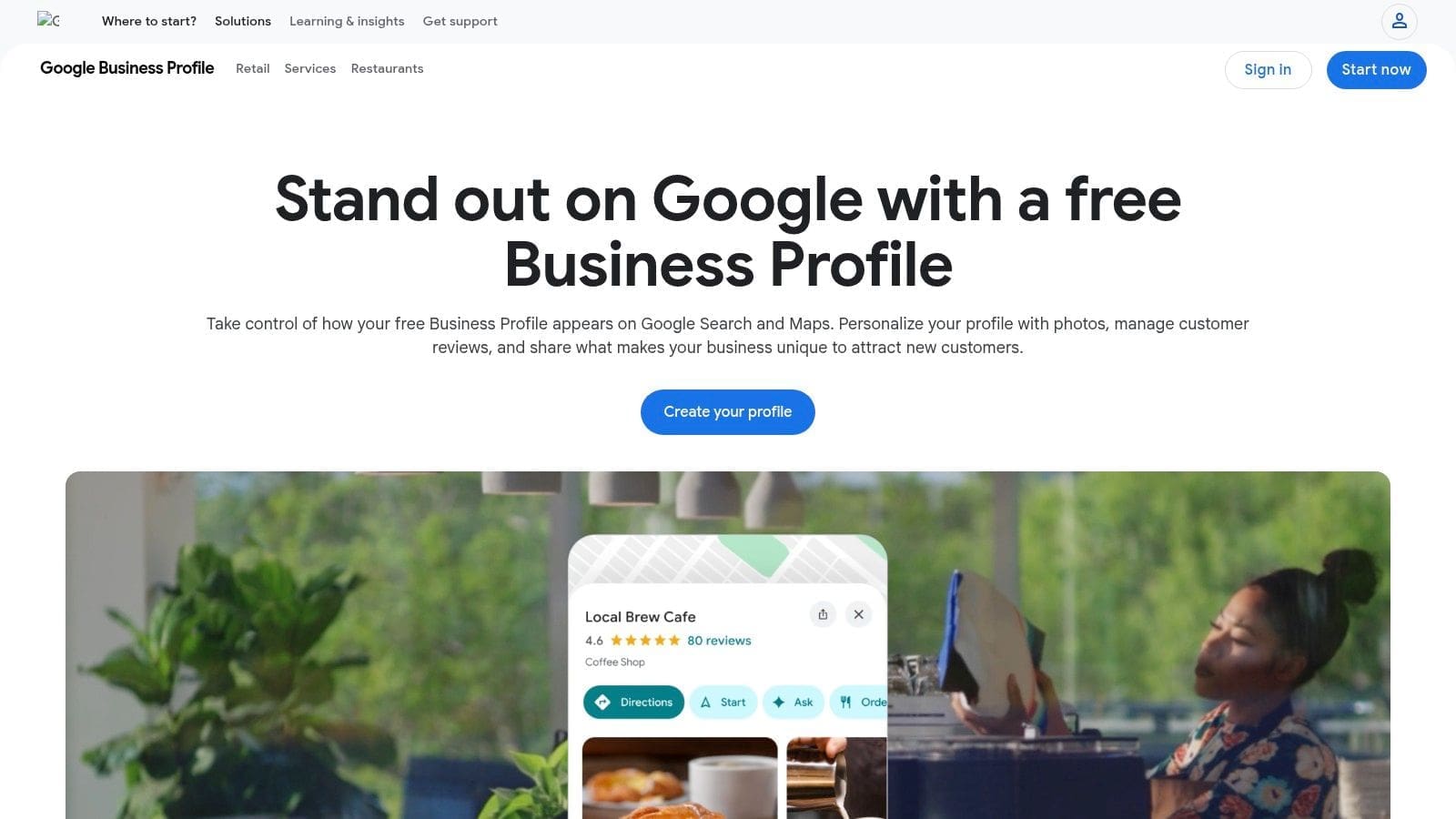
That is why this tool matters more than most social media platforms for businesses. It sits right where intent is highest. Someone is already looking. They already need the job done. Your profile helps decide whether you get the call.
Why contractors miss jobs here
Most contractors only make their profile strong in their hometown. That creates the exact problem hurting them already. They’re visible where they started, but weak where they want to grow.
If your profile, site, and service area signals don’t line up, you stay invisible in nearby cities. Google isn’t going to assume you work in places you never mention. You have to make it clear.
A strong profile does simple things well:
- Shows the right service info: Make sure your services match the work you want more of.
- Uses real photos: Jobsite photos and finished work build trust fast.
- Supports reviews: Reviews are local proof that you’re a real choice.
Google has also changed features over time. For example, native chat and call-history features were removed on July 31, 2024, as noted in the product notes summarized in the planning brief. That means contractors need a better route for leads than relying on one in-platform feature that can disappear.
This is where visibility turns into calls
There is another reason to take this seriously. The research gap is obvious. Current guidance doesn’t give contractors a real framework for deciding how to balance Google Business Profile, Facebook, and LinkedIn for lead quality and return. That gap is called out directly in Salesforce’s discussion of best social media platforms for small business.
That is why you need a system, not random platform activity.
Your profile should line up with city pages, service pages, and paid traffic. Everything should point to the same service area story. That is how you stop being a hometown-only contractor online.
If you need help tightening that up, review this guide on how to optimize Google Business Profile.
If your Google profile says one thing, your website says another, and your ads go somewhere else, you look scattered. Scattered businesses lose calls.
4. YouTube Prove Your Expertise on Big Jobs
YouTube earns its spot in a contractor’s lead machine for one reason. It helps you win the jobs that smaller platforms cannot explain well.
Big jobs create bigger questions. A homeowner spending real money does not want one clean photo and a caption. They want to hear how you diagnose the problem, what can go wrong, and why your fix makes sense for their property. Video does that fast.
That matters most when the sale is slow and the risk feels high.
Use YouTube for work like drainage correction, foundation repair, large tree removal, major hardscaping, full roof replacements, restoration, or whole-system installs. These buyers compare options. They watch. They research. They want proof before they call.
You do not need studio production. You need clear footage, a steady explanation, and local relevance. Walk the property. Point out the issue. Explain the fix in plain English. Say the city name and the service. That turns one project into visibility for the next job in the same service area.
A good YouTube video should do three things:
- Show the problem: Let people see what made the job complicated or expensive.
- Explain your decision: Tell them why you chose that solution, not just what you installed.
- Show the finished result: Help the viewer understand what changed and why the price made sense.
This is what makes YouTube a fuel source, not just another place to post. One solid video can keep showing up for homeowners searching the same problem in the same area, then send them to the right service page or estimate form. That is a stronger path than hoping a photo post gets noticed for a day and disappears.
It also filters leads. People who watch a two- or three-minute job breakdown usually come in better informed. They understand the scope. They trust your process sooner. That leads to stronger calls and fewer wasted estimates.
The tradeoff is simple. YouTube takes more effort than posting a finished-job photo. For high-value work, it pays that effort back.
5. Nextdoor Dominate One Neighborhood at a Time
Nextdoor is smaller. That is why it can work.
This platform isn’t about broad reach. It is about local trust. A contractor who wants to own a neighborhood, not just show up in it, should pay attention.
Homeowners use Nextdoor in a different mindset than they use most other social media platforms for businesses. They’re not just scrolling. They’re asking who to hire. They’re checking who their neighbors trust. That makes the platform useful for service businesses with tight service areas.
Best when you want tight coverage
If you just finished a job in one subdivision, Nextdoor can help you turn that single project into more nearby work. One street becomes three. One neighborhood becomes a pocket of repeat visibility.
That is hard to do on broad platforms unless you spend a lot.
The challenge is that many guides talk about niche platforms but don’t tell contractors when to use them for expansion or how to balance them against Google and Facebook. That missing strategy is called out in Synovus’ article on social media for small business.
Here is the simple answer. Use Nextdoor after you already know the neighborhood matters.
- Use it where home values fit your jobs: Better neighborhoods often mean better job sizes.
- Post around real nearby work: Local proof matters more here than polished marketing.
- Treat it like saturation: The goal is to become familiar, not famous.
One strong neighborhood can produce better work than broad visibility in the wrong part of town.
Where it fits in the stack
Nextdoor should not be your only platform. It is too narrow for that. But it can be very strong as a layer inside a larger visibility system.
Google catches active search. Facebook expands your reach. Instagram shows proof. Nextdoor helps you lock down the neighborhood where you already have traction.
For contractors chasing better jobs close together, that is valuable. Less drive time. Better route density. More chances for yard signs, reviews, and repeat referrals in the same pocket.
6. LinkedIn Win Commercial Jobs and Hire a Crew
LinkedIn earns its spot for one reason. It helps contractors get in front of commercial buyers and higher-level hires.
Homeowners are not the audience here. Estimators, project managers, property managers, developers, architects, and facility directors are. If you want tenant improvement work, ongoing maintenance contracts, municipal opportunities, or subcontracting relationships, LinkedIn can feed that part of your lead machine.
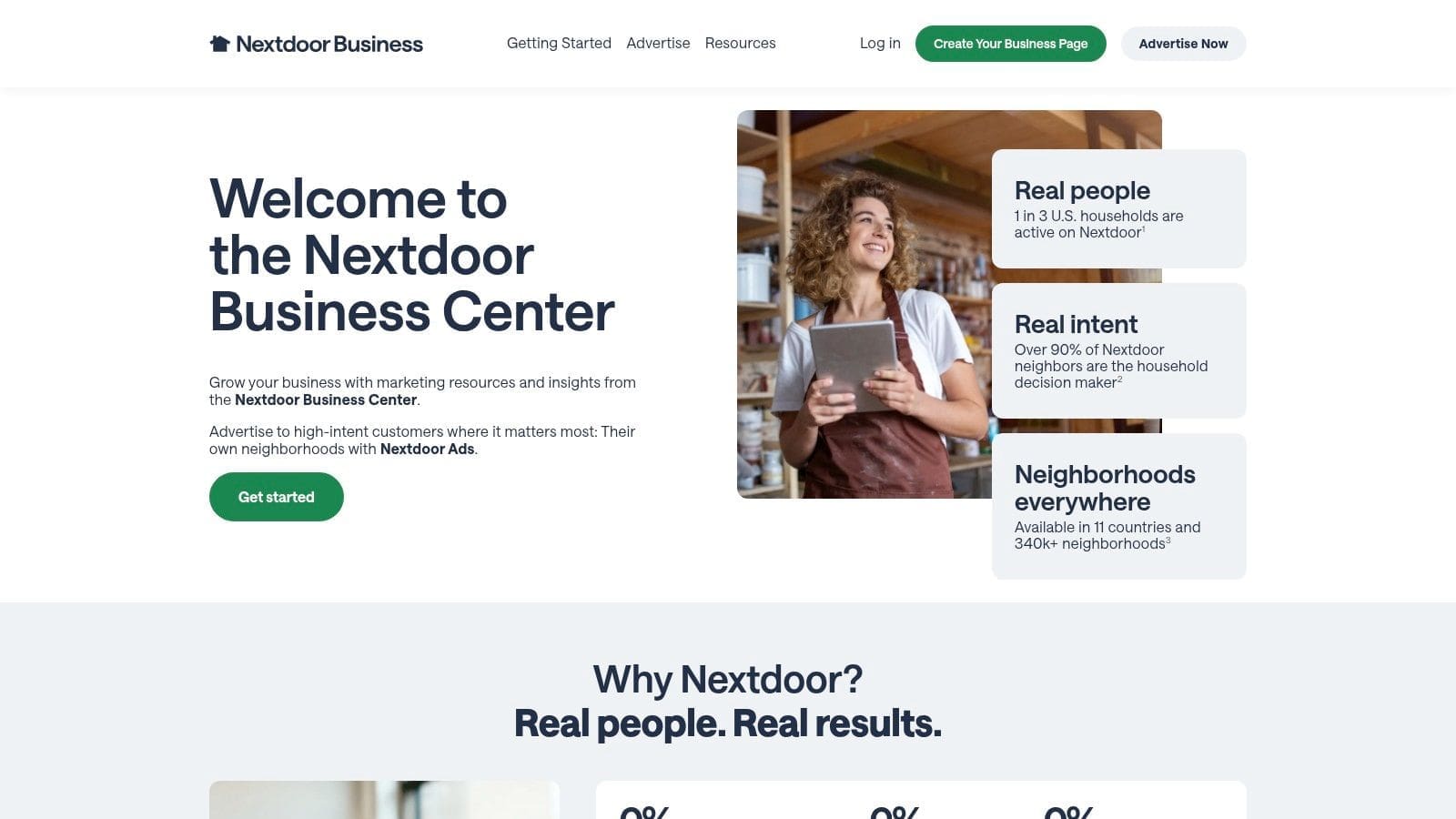
This platform works best when you are trying to create visibility in a specific service area with people who control bigger jobs. A good LinkedIn presence makes your company easier to find, easier to vet, and easier to remember when a bid list is getting built. That is the value. Not likes. Not chatter. More chances to get invited into real conversations.
Use it to show the work that separates you from small residential crews. Post commercial projects. Show your equipment, safety standards, crew depth, and the type of jobs you want more of. If your page looks thin or outdated, you look smaller than you are.
LinkedIn also helps on the labor side.
Foremen, estimators, superintendents, project managers, and office leaders often check LinkedIn before they make a move. A solid company page gives them proof that your shop is active, organized, and growing. That matters if your next bottleneck is staffing, not demand.
Keep your focus tight:
- Show commercial-grade proof: Feature jobs that signal scale, coordination, and reliability.
- Get seen by decision-makers: Connect with local builders, property groups, developers, and facility teams in the areas you serve.
- Use it to support recruiting: Strong pages attract stronger applicants, especially for leadership and operations roles.
LinkedIn will not carry your residential lead flow. That is fine. Its job is different. It feeds the commercial side of the machine and helps you build the crew to handle more work.
7. TikTok Test New Cities and Find Young Talent
Contractors who ignore TikTok are missing cheap visibility.
That matters when you are trying to break into a nearby city before your trucks are a familiar sight. TikTok can put your jobs, equipment, and crew in front of local homeowners fast. Used the right way, it becomes fuel for your Lead Machine. It helps you test whether a service area responds before you spend harder on ads, wraps, mailers, or a second location.
TikTok is not where you close complex contractor sales. It is where you get seen first.
That makes it useful for two jobs.
First, market testing. Post short clips from the kind of work you want in a target city. A roof tear-off. A drainage fix. A retaining wall build. A concrete pour. If videos tied to that area start pulling comments, profile visits, and direct messages from local people, you have a real signal. Keep going. If nobody in that market reacts, move on and test another city.
Second, hiring younger workers. Apprentices, helpers, and future operators spend time here. If your company looks active, busy, and worth joining, TikTok can put you on their radar before they ever search job boards.
Keep the content plain and useful. TikTok rewards motion, speed, and proof. It does not reward stiff sales talk.
- Show work in progress: Excavators moving, shingles coming off, trenches opening, cleanup happening.
- Show proof fast: Start with the best three seconds. Before and after works. Active jobsite footage works better.
- Name the service area: Say the town on screen and in the caption so local viewers know you work there.
- Give one clear next step: Call, message, or visit your site. Do not make people guess.
A bad TikTok strategy wastes time. A simple one can help you spot where attention is building and where your next hires may come from.
Use it as a testing channel. If a city responds, feed that market harder through the rest of your lead system. If it does not, stop posting there and put your effort somewhere that can produce calls.
7-Platform Social Media Comparison for Businesses
| Platform | 🔄 Implementation complexity | ⚡ Resource requirements | 📊 Expected outcomes | 💡 Ideal use cases | ⭐ Key advantages |
|---|---|---|---|---|---|
| Facebook: Your Digital Billboard in Any Town | Moderate, Page + geo-targeted ad setup; ongoing optimization | Low–medium budget ($10–20/day), creative assets, ad management time | Hyperlocal visibility → clicks to Lead Machine, calls/forms | Expanding into neighboring towns; showcasing finished jobs to homeowners | Excellent hyperlocal reach and community proof ⭐ |
| Instagram: Visual Proof for High-Ticket Jobs | Low–moderate, create Reels/photos; occasional ad boosts | Medium, high-quality visuals, time for content creation, small ad spend | Visual credibility → DMs, ad clicks to Lead Machine | High-ticket visual trades; demonstrating workmanship in target cities | Strong visual discovery and cross-posting with Facebook ⭐ |
| Google Business Profile: Your Digital Front Door | Low, claim & optimize profile; continuous updates | Low (time investment), reviews, photos, regular posts (free) | High-intent leads: calls, website clicks, directions | Local “near me” searches across all service cities | Essential local visibility and trust anchor for SEO ⭐ |
| YouTube: Prove Your Expertise on Big Jobs | Moderate, film, edit, publish long-form content; run video ads | Medium, basic video production, small-to-medium ad budget | Deep engagement → higher conversion on high-value projects | Demonstrating complex projects; sales tool for large jobs | Provides detailed proof and justifies premium pricing ⭐ |
| Nextdoor: Dominate One Neighborhood at a Time | Low, business page + frequent neighborhood posts | Low, regular posts, request recommendations, occasional Local Deals | Neighborhood-level saturation → referrals and inbound messages | Building dominance in specific subdivisions and micro-areas | High local trust and precise neighborhood targeting ⭐ |
| LinkedIn: Win Commercial Jobs and Hire a Crew | Moderate, company page, B2B content, targeted outreach | Low–medium, time for networking, small targeted ad budgets | B2B leads, subcontract opportunities, qualified hires | Winning commercial subcontracts; recruiting experienced operators | Strong credibility with GCs, PMs and property managers ⭐ |
| TikTok: Test New Cities and Find Young Talent | Low, short-form clips; fast-paced content cadence | Low, minimal production, organic reach strong; optional small ad tests | Market interest signals, broad discovery, candidate attraction | Testing demand in new cities; recruiting younger crews | Exceptional organic reach for market testing and talent 🎯 ⭐ |
Visibility Is Control
Contractors do not have a social media problem. They have a visibility problem.
Plenty of companies post every week and still get weak leads, dead-end messages, and slow phones. The platform is rarely the reason. The actual failure happens after someone sees you. They click into a bad website. They hit a form nobody answers. They look for service in the next town over and find nothing.
That costs jobs.
If your business only shows up in your home city, you stay small there too. The crews that grow use these platforms to get seen in the exact places they want work, then push that attention into a system built to produce calls and quote requests.
That is the point of a Lead Machine.
Buyers do not start with your company name. They start with the job and the town. Roof repair in Newark. Kitchen remodel in Edison. Concrete contractor in Cherry Hill. If you are not visible in that search path, someone else gets the call. Your experience does not save you. Your workmanship does not save you. Being well known in your hometown does not save you.
Visibility does.
A website alone will not fix that. A website is the place traffic lands. It is not the fuel source. Facebook can put your company in front of homeowners across multiple service areas. Instagram can show high-end work that helps justify a bigger ticket. Google Business Profile gets you found when intent is high. YouTube helps close larger jobs by showing how you work. Nextdoor can help you take over one neighborhood at a time. LinkedIn can open commercial doors and bring in better hires. TikTok can show you where demand exists before you spend real money expanding.
Used without a system, every platform becomes busywork. Used as fuel for a Lead Machine, each one creates visibility in a different part of your market.
That is why so many contractors get frustrated with social media. They spend money, get some attention, and still cannot tell what caused the phone to ring. The fix is not more posting. The fix is better routing and better tracking.
You need city-based landing pages. You need clear calls to action. You need messages answered fast. You need ads and posts tied to your desired service areas. You need to know whether Newark produced calls, whether Cherry Hill produced form fills, and whether the jobs coming in are the ones worth taking.
That is control.
Control means steady lead flow. Control means more of the jobs you want and fewer of the jobs you take out of panic. Control means you are not sitting through a slow week hoping referrals show up. It gives you options. Options improve margins.
If customers cannot find you where they need you, the rest of your marketing does not matter. Lead Machines fix that.
If you’re tired of guessing, The Cherubini Company can help you fix the core problem. They build Lead Machines that make contractors visible in the cities where they want work, then fuel those machines with Google and Facebook ads that drive quality calls. If you want more leads, better jobs, and more control without the usual agency fluff, talk to Pat and Angie Cherubini.