
You’ve probably said some version of this already.
“We tried ads and they didn’t work.”
“That’s what the last agency said.”
“We’ve been burned before.”
“I don’t believe any of this anymore.”
Fair enough.
A lot of contractors already have a website. A lot of them have even paid good money for it. But the phone still isn’t ringing the way it should. Or the calls are weak. Too many small jobs. Too much price shopping. Too much dead time between decent leads.
That usually doesn’t mean your company is bad at what it does.
It means you’re not visible where buyers are looking.
You may show up in your hometown because that’s where your address is. That’s where your truck is seen. That’s where your name gets talked about. But ten miles away, in the towns where you also want jobs, you can disappear fast.
That’s the fundamental problem.
When somebody needs excavation, septic work, grading, concrete, land clearing, or well drilling, they don’t search your business name unless they already know you. They search for the service and the city they’re standing in. If you don’t show up there, you’re out. You never even get a chance to bid.
That’s why a contractor may feel busy and still feel stuck.
You’re working. But you’re not controlling the type of work that comes in.
You’re taking what shows up instead of choosing what fits.
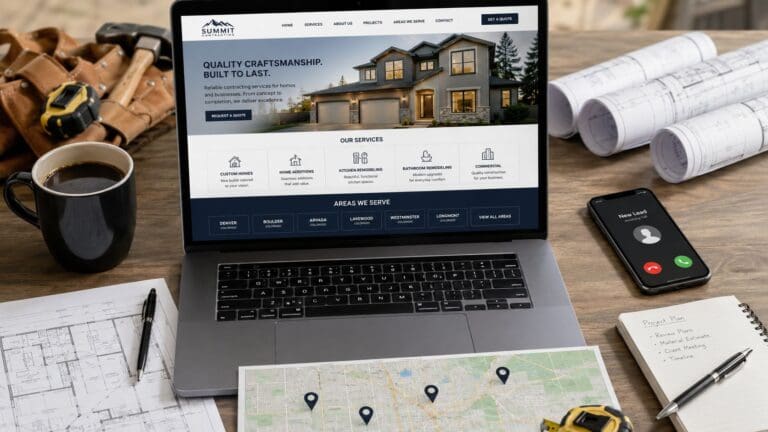
A smart move site to wordpress plan isn’t about getting a shinier website. It’s about turning a weak online presence into a Lead Machine that supports strong visibility, more calls, and better control over where your next jobs come from.
Your Website Is Costing You Jobs Not Getting You Jobs
You can be a solid contractor and still lose jobs every week because your website does nothing useful.
It sits there.
That’s the problem.
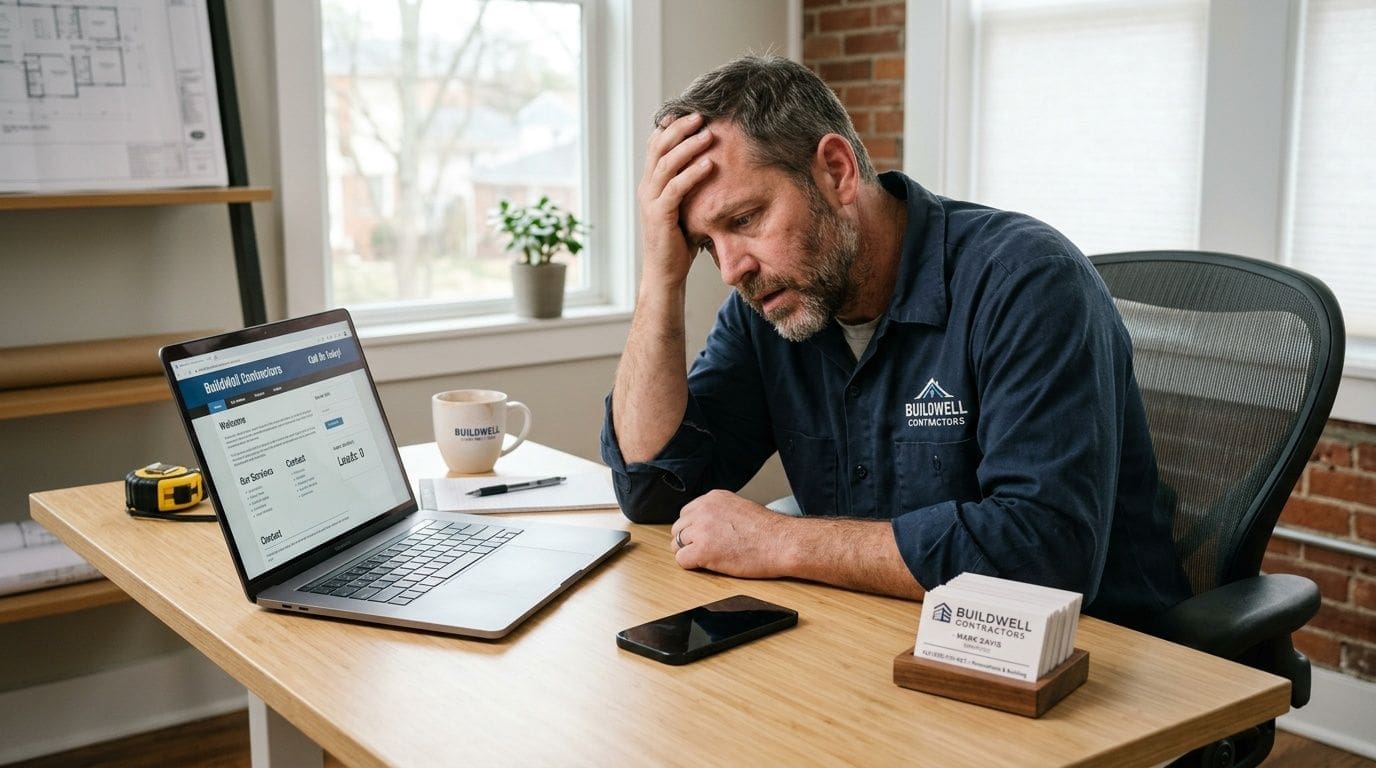
A lot of owners got sold a site that looked decent on launch day and then produced nothing. No steady calls. No stronger jobs. No better control over the service area. Just a digital brochure with a logo, some photos, and a contact page.
That’s not a lead system.
That’s wall decor.
The visibility gap is where the jobs disappear
Most contractors aren’t fully invisible. They’re partially visible.
That’s worse, because it fools you.
You might show up when someone searches your company name. You might even show up around your office. But when a buyer in the next town searches for the service you offer, Google reads that search based on that buyer’s location. If your business hasn’t clearly told Google you work in that area, Google assumes you don’t.
That’s the visibility gap.
And that gap kills growth.
What this looks like in practice
- Known at home: People in your main town may know your trucks, your yard sign, or your name.
- Missing nearby: Buyers in the next city search for your service and see other contractors.
- No shot at the job: If you don’t show up when they search, you’re not in the running.
Practical rule: If customers who need your service today don’t see you, your reputation doesn’t matter yet.
This is why so many contractors stay busy but frustrated.
They’re doing work. But not enough of the right work.
They get pulled into smaller jobs because the bigger jobs never found them first. They compete with too many other contractors for scraps because they are not visible enough where higher-value buyers are searching.
A bad site creates false confidence
A website can make you think you’ve handled marketing.
You haven’t.
A website by itself doesn’t create traffic. It waits for traffic. If nobody is coming, then your website is not a business asset. It’s a parked truck with no fuel in it.
That’s why a lot of contractors feel like marketing is random. They’ve spent money before. They’ve heard big promises before. They’ve been told to “trust the process” before.
But the issue is simpler than that.
You don’t have an effort problem. You have a visibility problem.
If your site isn’t built to show up in the towns you serve and turn visits into calls, it’s costing you jobs. It isn’t helping you get them.
If that sounds familiar, this is the same issue behind weak sites that look fine but don’t suck in leads.
Stop blaming yourself for a broken system
A lot of owners think they didn’t follow through enough. They think maybe they should have posted more, spent more, or waited longer.
No.
If the system was wrong from the start, more patience won’t fix it.
Big companies buy visibility. Small contractors often rely on hope. Hope is not a plan. Hope does not put your company in front of a buyer in the next city who needs your service right now.
That buyer is searching today.
If you’re not there, someone else gets the call.
Why Your Current Website Is A Dead End
Most contractor websites were built for looks, not performance.
That’s why they fail.
A brochure website can list your services. It can show a few photos. It can tell people you’ve been in business a long time. None of that solves the underlying issue if the right people never land on it in the first place.
Pretty websites don’t win jobs by themselves
Owners get trapped by the wrong standard.
They ask, “Does it look professional?”
That’s not the right first question.
The first question is, “Does it help the right buyer find us and contact us fast?”
If the answer is no, the rest doesn’t matter much.
A dead-end site usually has the same problems:
- One generic service page: It says you do a lot of things, but it doesn’t clearly connect those services to the places you want work from.
- Weak paths to contact: The phone number is hard to find, the form is too long, or the site is clumsy on a phone.
- No city structure: You know you work in multiple towns. Your site doesn’t prove it.
Your website is not supposed to impress your friends. It’s supposed to make a buyer call.
Old platforms usually lock you into small thinking
Some sites were built years ago on old systems. Others were thrown together on drag-and-drop builders. Some are custom jobs from agencies that made everything harder than it needed to be.
The platform isn’t the whole problem. But it often reveals the deeper one.
The site was never planned as a lead asset.
It was planned as an online business card.
That kind of thinking leads to the same result every time. Your site becomes passive. It waits. It hopes. It does not expand with your service area. It does not support a serious visibility plan. It does not help you build a stronger presence in nearby cities where buyers are searching.
The wrong website keeps you stuck in reaction mode
Here’s the business problem.
If your website doesn’t support visibility, then every slow week feels personal. Every lead drop feels mysterious. Every agency pitch sounds possible because you don’t have a system you trust.
That creates stress you don’t need.
You start chasing fixes.
New ad idea. New vendor. New redesign. New promise.
But if the core site is still a dead end, all you’re doing is sending more people into a weak setup.
Dead-end website versus lead asset
| Website type | What it does |
|---|---|
| Brochure site | Sits online and waits |
| Lead asset | Helps buyers act fast |
| Generic pages | Blurs your services and service area |
| Structured pages | Tells Google and buyers what you do and where |
| Looks nice | Nice to have |
| Converts calls | What matters |
A contractor doesn’t need more digital fluff.
You need a site built around visibility and conversion. If it can’t support that, it’s a dead end no matter how polished it looks.
Building on Bedrock Not Sand
If you’re going to move your website, move it onto something strong enough to support growth.
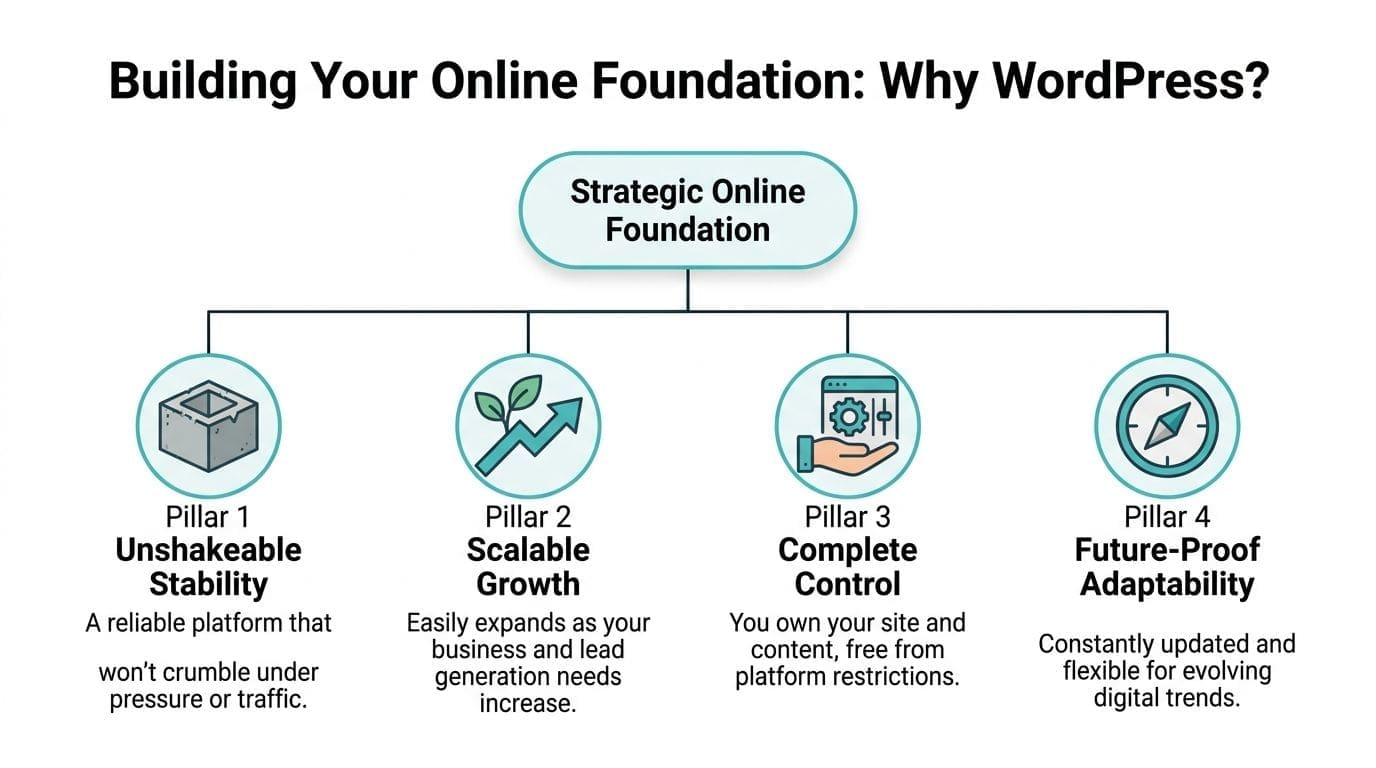
That’s why so many serious businesses choose WordPress.
WordPress powers over 43% of all websites on the internet, which is why it has become the default foundation for businesses that need visibility, flexibility, and room to grow (WP Engine on WordPress migration).
That matters for a contractor.
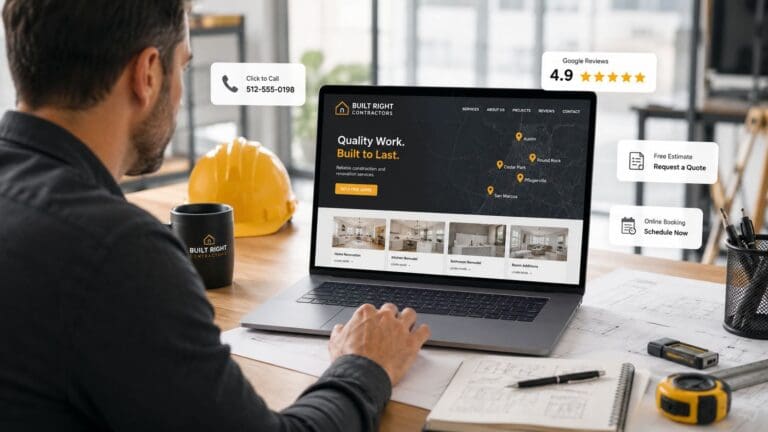
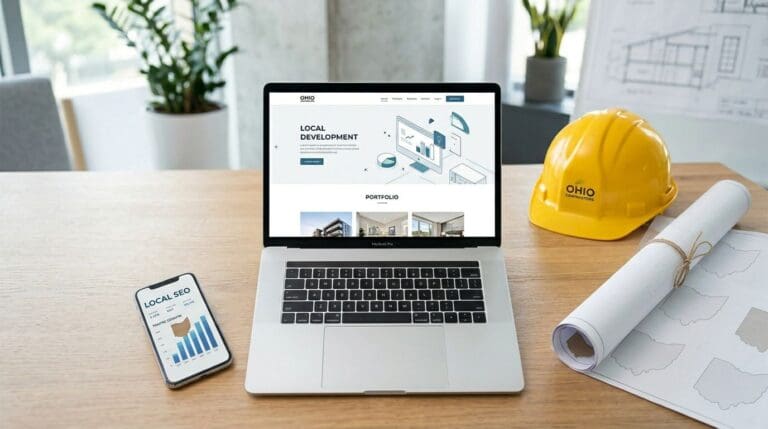
You’re not trying to build a hobby site. You’re trying to build a machine that can support service pages, city pages, reviews, calls, forms, and future growth without boxing you in.
WordPress is the right base for a Lead Machine
A contractor who wants to move site to wordpress shouldn’t care about trendy platform talk.
You should care about control.
You should care about whether your website can expand into more towns, support better pages, and keep working as your business gets more serious about lead generation.
That’s where WordPress wins.
What you need from the platform
- Room to grow: You can build out services and city coverage without hitting weird platform limits.
- Ownership: Your site should be your asset, not something trapped inside somebody else’s system.
- Flexibility: A lead-focused site needs to adapt as your market changes.
- Stability: The foundation can’t feel shaky every time you need an update.
Bottom line: If the site can’t grow with your business, it will hold your business back.
Hosting matters more than most owners realize
A good platform on bad hosting is like building a shop on soft ground.
It doesn’t hold up.
Owners don’t need a lesson in server jargon. You need the result. The site should load fast, stay up, and handle traffic without acting broken. If a buyer taps your site from a phone and it drags, stalls, or glitches, you’ve already lost ground.
That’s why hosting is not a cheap side decision.
It is part of the foundation.
Ask for these standards
| What to demand | Why it matters |
|---|---|
| Fast load speed | Buyers don’t wait |
| Strong uptime | A dead site can’t take calls |
| Secure setup | Your business should not feel risky to visitors |
| Private staging area | Changes should happen off the live site |
WordPress is not the strategy by itself
This part gets missed all the time.
Moving to WordPress is necessary for many contractors. It is not enough by itself.
You’re not buying a result because the site runs on WordPress. You’re choosing the right chassis so the full lead system can be built correctly.
That means the move has to support:
- service pages tied to buyer intent
- city pages tied to service area
- clean paths to call or request a quote
- review proof that builds trust fast
- alignment with your business profile and local presence
A weak site on WordPress is still a weak site.
A Lead Machine on WordPress is different. It gives you a foundation that can effectively support visibility and turn it into calls.
That’s bedrock.
Anything else is sand.
Moving Your Business Without Shutting Down for a Week
A website move should be treated like moving your office, your signs, your equipment, and your phone lines to a better building without losing customers in the process.
That’s the right way to think about it.
Too many agencies treat migration like a file shuffle. It isn’t. It’s a business move. If they handle it casually, you can lose traffic, leads, and trust.
According to agency benchmarks, 60-70% of website migrations that aren’t managed correctly see a significant drop in traffic, which is why a migration plan is a business protection plan, not extra paperwork (Thrive on smooth website transition).
A clean move protects what already works
Even if your current site is underperforming, it still has assets.
It has pages. Photos. Service descriptions. Proof of work. Existing search presence. Maybe some rankings. Maybe some contact flow. Maybe some pages that still bring in useful visits.
A real move protects all of that.
Think of each piece like a physical move
- Backup first: This is your insurance policy. If something breaks, you can recover.
- Content transfer: Your text, photos, and proof of work move with you.
- Address forwarding: Old page locations need to point to the right new locations so buyers and Google don’t hit dead ends.
- Phone lines stay live: Your contact paths must keep working through the change.
If an agency says they can “just rebuild it live and swap it over later,” slow down and ask harder questions.
What a contractor should ask before signing off
You do not need to manage the technical work.
You do need to manage the standard.
That means asking direct questions and refusing vague answers.
Non-negotiable questions
-
How are you backing up the current site before anything changes?
If they don’t have a clear answer, stop there. -
How are you moving all pages, photos, and forms without losing important content?
“We’ll recreate most of it” is not a strong answer. -
How are old page addresses being forwarded to the new site?
If those old paths break, both buyers and search engines get lost. -
Where is the new site being built before launch?
Work should happen off the live site. -
Who is checking every phone number, form, and key page before launch?
“We usually test it” is not enough.
A serious partner should answer those in plain English.
A move site to wordpress plan should feel boring
That’s a good thing.
No chaos. No guessing. No “we’ll fix it after launch.”
A clean migration is calm because it follows a process. The old site gets protected. The new site gets built right. The switch happens with care. Then somebody checks the important stuff before the public sees it.
If you want a sense of what a more serious rebuild process should look like from the business side, this page on website redesign services for small business gives a useful benchmark for how much planning should happen before launch.
A bad migration creates confusion. A proper one protects the business while setting up something better.
That’s the standard.
Flipping the Switch on Your Lead Machine
Once the new WordPress site is built, the job still isn’t finished.
A website can be moved perfectly and still fail if it doesn’t turn visitors into calls.
That’s where most contractors get shortchanged. The agency handles the transfer, calls it done, and leaves you with the same problem in a cleaner wrapper.
A Lead Machine has to do more than exist.
It has to make action easy.

The site should make calling simple
A contractor’s website should not feel like homework.
Buyers are on phones. They’re in a truck, on a jobsite, at home after work, or trying to hire somebody fast. If the site makes them search for the phone number, pinch the screen, or fight a messy form, you’re losing calls.
The site has one job here. Make the next step obvious.
Core lead pieces that should be in place
- Click-to-call buttons: On mobile, the button should do exactly what the buyer expects.
- Simple quote forms: Short. Clear. Easy to finish.
- Review proof: Strong customer feedback should be easy to see.
- Clear service pages: One page should not try to explain everything you do.
A buyer should know what you do, where you work, and how to contact you within seconds.
City pages are how you close the visibility gap
Many contractors finally understand why their old site never worked.
If you want work in multiple towns, your site needs structure that reflects those towns. You have to clearly show the services you offer in the places you want to serve.
Not vaguely. Clearly.
That means dedicated pages built around your service area.
Why this matters
- Google needs clarity: If your site never mentions a city in a useful way, Google has little reason to connect you to searches there.
- Buyers need confidence: A city-specific page tells them you work in their area.
- Your business grows by territory: Expansion happens town by town, not by wishful thinking.
This approach helps contractors stop being “known in one place” and start showing up in the surrounding market.
Protect your local map presence during the move
A move can damage local visibility if the business details are not kept consistent.
That’s not a minor issue.
A recent analysis found that 68% of local businesses saw their Google map rankings drop after moving their website because their Name, Address, and Phone number information wasn’t updated correctly, which is why local consistency has to be protected during a move (Sean Ondes on moving WordPress without losing local SEO).
What needs to stay aligned
| Local detail | What must match |
|---|---|
| Business name | Same on site and business profile |
| Address | Same format everywhere |
| Phone number | Same primary number buyers use |
| Service area messaging | Clear and consistent |
If those pieces drift, your map visibility can wobble.
That’s why the site should connect cleanly with your Google Business Profile and support the same service area story your business is trying to tell.
If you’re serious about getting traffic into that new site after launch, then Google Ads for your Lead Machine becomes part of the bigger system. The site converts. Ads create visibility. Both matter.
A Lead Machine is not a pretty replacement website.
It is a site built to be found in the right places and convert that attention into calls.
Your Final Walk-Through Before Going Live
Before the new site goes live, treat it like a final punch list on a job.
Don’t assume it’s ready because somebody says it is.
Check it.
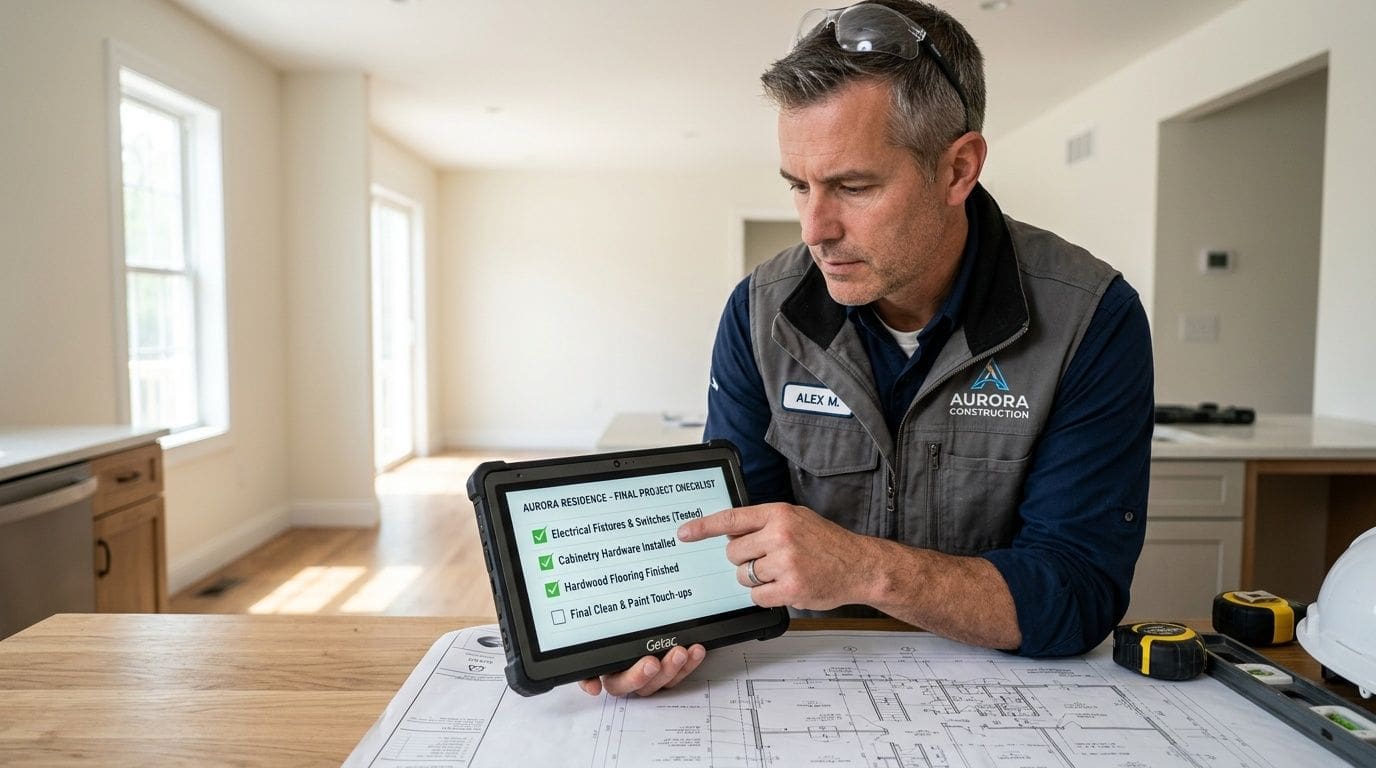
A good agency should build and test the new site on a private staging setup first. Using a private staging server to build and test the new site before it goes live can reduce the risk of downtime and lost leads by over 90%, which is why nobody should be making major changes on your live site (Pagely on advanced WordPress migration strategies).
Your non-technical punch list
You do not need to inspect code.
You need to inspect results.
Check these on your own phone
- Tap every call button: It should dial the right number immediately.
- Send every form: Make sure the message goes through and lands where it should.
- Open key pages: Service pages and city pages should load fast and read clearly.
- Review the layout: Nothing should be cut off, tiny, crowded, or awkward on mobile.
Check the buyer experience, not just the design
A lot of launch reviews focus on colors, logos, and whether the owner “likes the look.”
That’s secondary.
A buyer doesn’t care whether you picked the perfect shade of blue. They care whether the site is easy to use when they need help.
Ask these blunt questions
- Can a first-time visitor tell what you do right away?
- Can they tell where you work without digging?
- Can they call you in one tap?
- Can they request a quote without friction?
- Do the reviews help build trust fast?
Final check: If the site looks good but feels slow, confusing, or hard to use on a phone, it is not done.
Make sure the live switch is controlled
Launch day should not feel dramatic.
It should feel planned.
There should be one clear moment when the new site replaces the old one. Then the important pages, contact paths, and business details should be checked again right after launch. Not days later. Right away.
Red flags before launch
- They worked on the live site the whole time
- You haven’t seen a private preview
- No one tested forms with you
- No one checked mobile use on a real phone
- The agency keeps saying “we’ll fix that after it goes live”
That’s sloppy.
A contractor should expect the same kind of final walk-through from a web partner that a customer expects from a contractor. The job should be complete, tested, and ready to perform.
A Machine Needs Fuel to Run
Moving your site to WordPress matters because it gives you the right machine.
But a machine without fuel still sits there.
That’s the part many owners miss after a rebuild. They think the new website itself will create business. It won’t. Websites do not create traffic. They wait for traffic.
That’s why the complete system is Lead Machine plus ads.
The website is the asset. It is built to convert attention into calls, quote requests, and real opportunities. Ads are what put you in front of buyers who are searching now. One without the other creates problems.
A website without traffic stays quiet.
Ads without a strong website waste money.
That’s why serious contractors stop thinking in pieces and start thinking in systems.
Control comes from visibility you can turn on
The biggest companies in your market don’t rely on luck.
They buy visibility.
They make sure buyers see them when they search. Then they send those buyers to pages designed to convert. That’s how they keep work moving and territory growing.
Smaller contractors often do the opposite. They hope referrals carry the whole load. They hope the old website is good enough. They hope buyers somehow figure out they also work in the next town over.
That’s fragile.
If you want another useful layer on top of your site and ads, it can also help to utilize press releases for SEO when you have a genuine expansion, milestone, or announcement worth publishing. It won’t replace a lead system, but it can support visibility when used the right way.
Predictable leads change the business
When lead flow becomes more predictable, you gain options.
You can go after better jobs.
You can stop saying yes to every small project that shows up.
You can grow your service area on purpose.
You can make hiring and equipment decisions with more confidence.
That’s what control looks like.
You think that customers “can” find you but, if customers “don’t” find you, nothing else matters.
Lead Machines are built to fix that.
If you’re done guessing and want a website that’s built to get found and turn traffic into calls, talk to The Cherubini Company. They build Lead Machines for contractors who need more visibility, better leads, and a system that supports real growth without the usual agency nonsense.