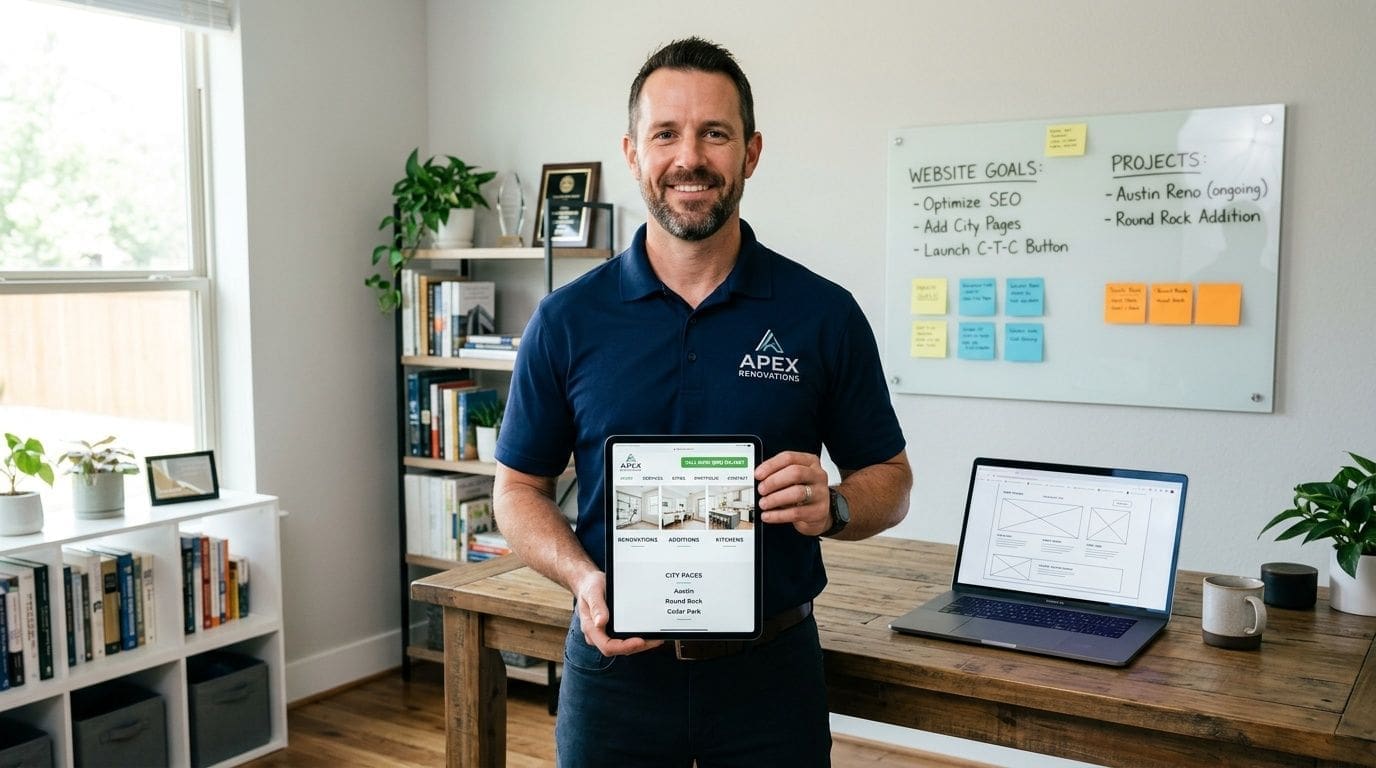
You’re probably in one of these spots right now.
You’ve paid for a website and it mostly sits there. You’ve tried ads and got junk. You’ve talked to an agency that said all the right things, then disappeared when the phone didn’t ring. Now the work coming in feels random. Some weeks are packed. Other weeks are too quiet. And when work does show up, it’s often the smaller jobs you’d rather not chase.
We hear the same things over and over.
“We tried ads and they didn’t work.”
“That’s what the last agency said.”
“We’ve been burned before.”
“I don’t believe you.”
Fair enough.
Most contractors don’t have an effort problem. They have a visibility problem. They’re known in their hometown, but ten miles away they vanish. That’s why the leads feel weak, shared, random, or flat-out missing. And that’s why website design for contractors that gets leads has to be built as a system, not as a brochure.
Why Your Marketing Keeps Failing And It Is Not Your Fault

A lot of good contractors blame themselves when marketing fails.
You shouldn’t.
The bigger problem is that you were sold half a solution. Somebody sold you a website with no real visibility plan. Or they sold you ads that dumped traffic onto a weak site that couldn’t turn visitors into calls. Then they acted surprised when nothing worked.
Here’s the plain truth. Websites don’t create traffic. They sit and wait for traffic.
If nobody sees the site, it won’t matter how nice it looks. If people do see it but the site feels slow, confusing, or sloppy, they leave and call somebody else.
A lot of contractors are stuck in that exact spot. A ServiceTitan study highlighted by Blue Corona found that only 45% of contracting and construction businesses are growing. That should tell you something. There are plenty of good operators doing solid work who still aren’t getting enough of the right calls.
The wrong advice is why you feel stuck
Most bad marketing advice sounds simple.
- Just build a website: That gives you a place to send people. It does not make people show up.
- Just run ads: That can buy attention, but it won’t fix a weak site.
- Just wait on referrals: That works until it doesn’t. Then you’re stuck hoping the phone rings.
- Just get on lead platforms: Now you’re fighting over the same prospect with a pile of other contractors.
That’s why you feel busy but not in control. You’re working. You’re spending. You’re answering calls. But you’re still guessing.
Practical rule: If your marketing depends on hope, it will break the minute referrals slow down.
You don’t need more hustle
You need a better setup.
Big companies buy visibility on purpose. Small contractors are often told to post more, wait longer, or trust the process. That’s nonsense if your goal is calls from real buyers in the towns you target.
The problem usually isn’t that people can’t find you.
It’s that they don’t.
If they already know your company name, yes, they can track you down. But most good jobs don’t start with a name search. They start with somebody searching for the service they need in the city they’re standing in. If you’re missing there, you never even get a shot.
The Real Problem is Invisibility Not Effort
A homeowner doesn’t search for your company name if they’ve never heard of you.
They search for what you do.
“Excavation near me.”
“Septic installer near me.”
“Concrete contractor near me.”
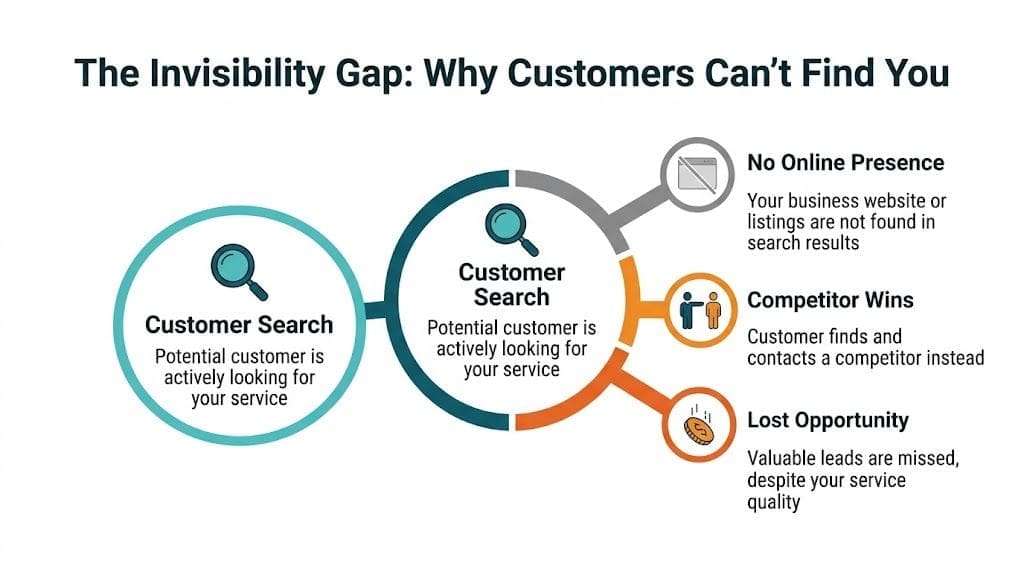
Google takes that “near me” search and ties it to the searcher’s location. So the search effectively becomes your service in that person’s city. If your business only talks about your hometown, then in every nearby town you barely exist.
Why this gap kills leads
This is the part many owners miss.
You may do work in ten or twenty towns. But if your site mostly talks about one town, and your business profile lines up with that one place, Google has no reason to assume you serve all those other areas. That’s not a trick. It’s common sense.
That’s why the calls feel uneven. You’re visible where Google sees you. You’re invisible where it doesn’t.
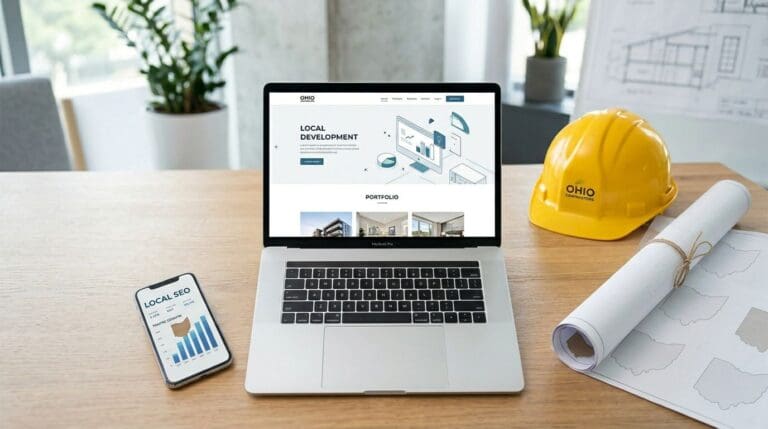
For contractors trying to fix that problem across surrounding towns, local search visibility for contractors is vital. Not because it sounds technical. Because it tells search engines where you do the work and tells buyers you serve their area.
Hope is not a visibility plan
Word of mouth still matters. Your trucks matter. Your signs matter. Your reputation matters.
But none of that helps much when a buyer in the next town grabs a phone and searches for the service right now.
Here’s the split:
| Business type | What they rely on | What happens |
|---|---|---|
| Hope-based contractor | Referrals, random searches, third-party leads | Work comes in unevenly |
| Visibility-based contractor | Clear service area coverage plus paid visibility | More chances to get found |
If you don’t show up when buyers search by service and city, you’re not competing. You’re absent.
That’s the lead problem in plain English.
Not bad luck.
Not a lazy market.
Not a mystery.
Invisibility.
Building Your Lead Machine Not Just Another Website
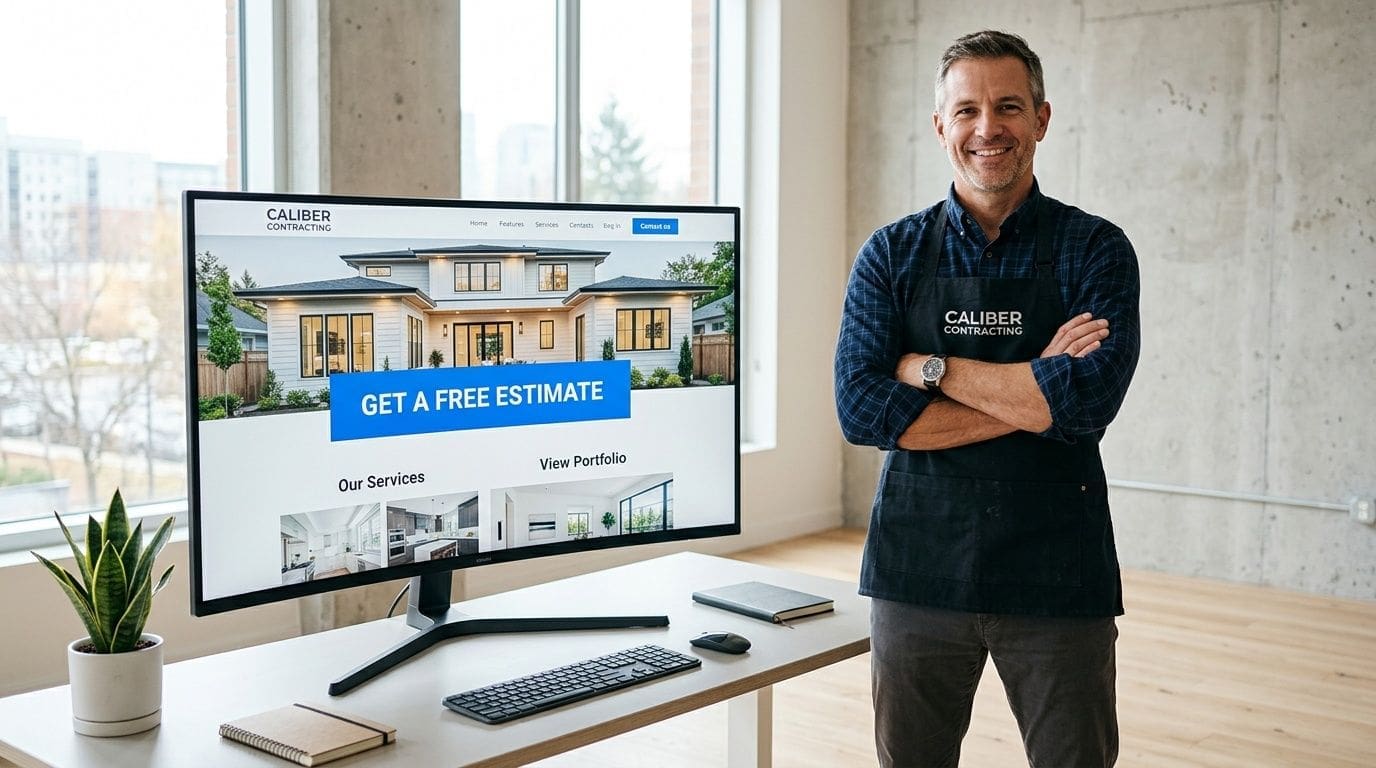
A contractor website should do one job.
Turn attention into calls.
That’s it.
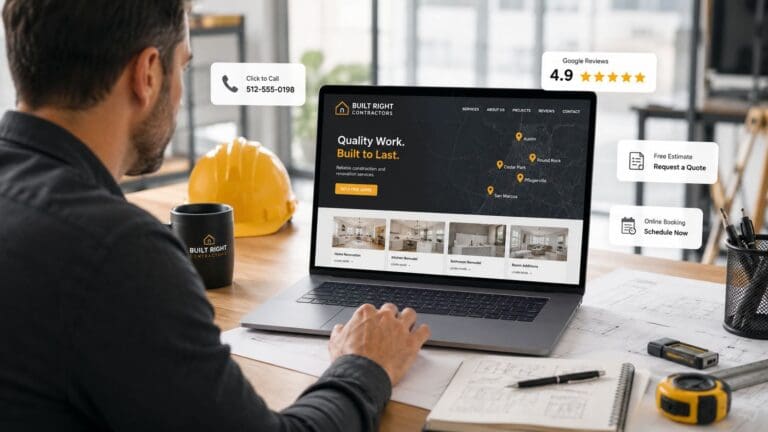
A Lead Machine is not a pretty online brochure. It’s a working asset built to help buyers trust you fast, understand what you do, and contact you without hunting around. If you want website design for contractors that gets leads, stop judging the site by how “modern” it looks and start judging it by whether it helps the phone ring.
What a lead-focused website must do
A good contractor site needs to be built around the way buyers search and decide.
It needs:
- A page for each main service: Don’t bury everything on one generic page.
- A page for each city you want work from: If you want jobs there, the site has to say so clearly.
- A phone number people can tap: Mobile users won’t dig around for your contact info.
- A simple quote path: If they’re ready, make it easy.
- Proof you’re real: Reviews, photos, and clear service details matter.
- Fast load time: Slow sites lose people before you even get a chance.
That last point is not small. Hook Agency’s web design statistics roundup notes that 48% of people cite website design as the number one factor in deciding if a business is credible, and Google reports 53% of mobile visitors will leave a site if it takes longer than three seconds to load. If your site looks rough or drags on a phone, trust drops before the buyer ever calls.
Your site has to work on a phone first
Most contractors still look at their site on a desktop in the office.
Your customers don’t.
They’re on a phone, standing in a driveway, talking to a spouse, comparing you to two or three other companies. If the site is clunky on mobile, they’re gone. If the call button is hard to find, they’re gone. If the page looks like it was built ten years ago, they start doubting the business.
Simple test: Open your website on your phone. If it takes effort to call you, the site is costing you work.
A better standard for what you should expect
A lead-focused website should feel more like a clean sales tool than a digital business card. If you want a good outside explanation of what strong conversion structure looks like, this guide to a high-performance conversion optimization website is worth reading because it keeps the focus on turning visits into action.
That same idea applies to contractors. The website is the asset. It has to support trust, speed, and easy contact.
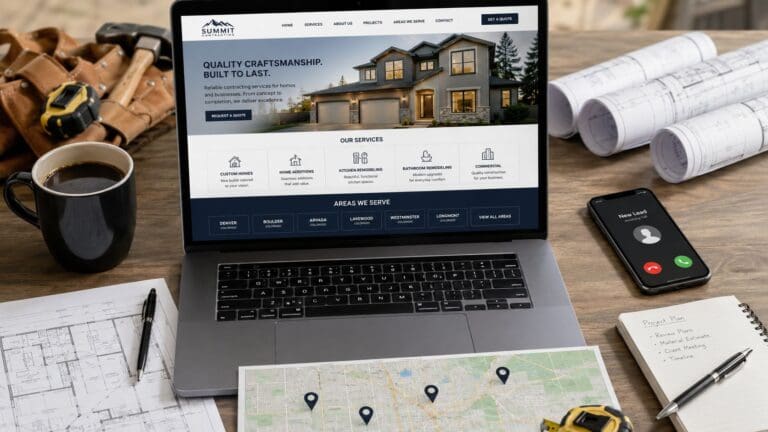
One example of this type of setup is a Lead Machine website for contractors. The structure is simple. Service pages, city pages, clear calls to action, review support, and a layout built to capture demand instead of just sitting there.
What this is not
It is not a vanity project.
It is not “something to have.”
It is not there to impress your buddies or your nephew who knows a little web design.
A contractor website should help you get better jobs with less waste. If it doesn’t do that, it’s decoration.
Fueling The Machine How Ads Create Visibility
A strong website alone won’t fix invisibility.
It gives traffic a place to land. That’s important. But it still needs traffic.
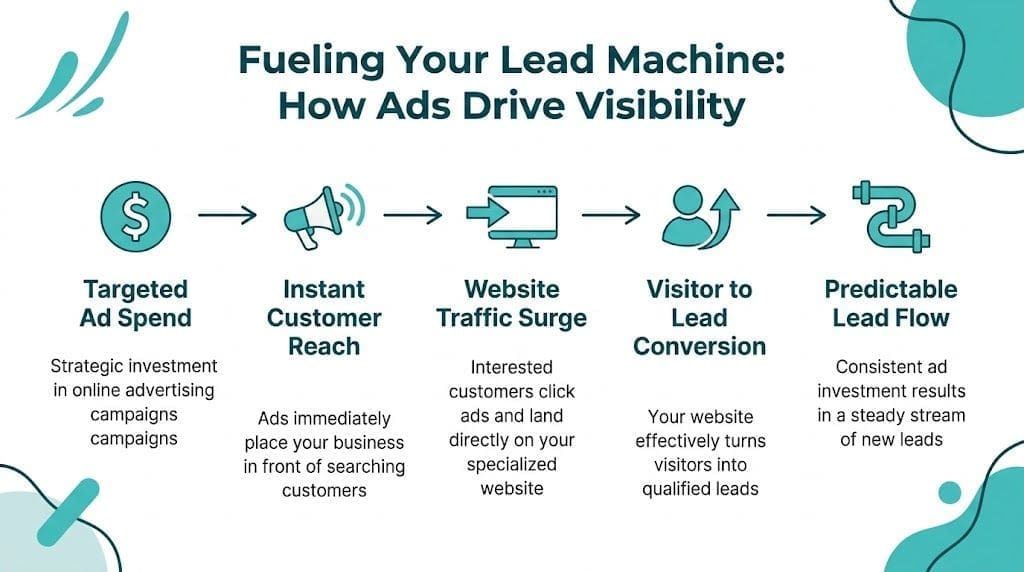
That’s where ads come in. Ads create visibility. They put you in front of buyers who are searching right now. Not next month. Not after they ask around for a week. Right now.
What ads are really for
A lot of contractors got burned because somebody sold them ads as the whole answer.
Ads are not the whole answer.
Ads are the fuel. The website is the machine.
When somebody searches for your service in a target area, ads help put your company in front of that buyer fast. Then the Lead Machine does the heavy lifting. It helps the buyer trust what they see, understand what you offer, and take the next step.
If you skip the machine and only buy the fuel, you waste money.
The two bad setups contractors keep paying for
Here’s where things go sideways.
Ads to a weak website
You paid to get attention. Then the traffic landed on a site that didn’t build trust or make contact easy.A good website with no traffic plan
The site may be decent, but it sits there waiting for people who never arrive.
That’s why the system matters. Asset plus fuel. Site plus visibility. Both have a job.
Running ads without a lead-focused website is like pouring gas on the ground and wondering why the truck won’t move.
For contractors who want the paid side tied directly to the website side, this page on Google Ads that fuel a Lead Machine shows the basic idea. Ads create the attention. The website turns that attention into calls and quote requests.
Why this gives you leverage
Once you stop thinking in pieces, marketing gets simpler.
You’re not asking, “Should I do a website or ads?”
You’re asking, “Do I have a machine that can convert traffic, and do I have fuel going into it?”
That’s the whole game.
Taking Control With A Predictable Lead System
The biggest benefit of a real system isn’t just more leads.
It’s control.
When your work comes from random referrals, third-party platforms, and scattered calls, you’re always reacting. You take what comes in. You chase smaller jobs. You compete on leads that got sold to a pile of contractors. That kind of business feels fragile because it is fragile.

A lead system changes that.
Contractor Accelerator reports that top-performing contractor websites can achieve conversion rates of 11% or higher. The exact number you hit will depend on your market and setup, but the point is simple. A better system can turn the same visibility into far more qualified opportunities than an average site.
What control looks like in real life
A predictable lead flow lets you make better decisions.
- You can be choosier: You don’t have to say yes to every small, low-margin job.
- You can target better work: Bigger jobs become easier to pursue when leads stop feeling scarce.
- You can calm the chaos: Less guessing means less stress.
- You can follow up faster: That alone helps you stop losing good buyers.
And if your system sends form leads by email, make sure those messages land in your inbox. A simple tool like the MailGenius email deliverability tool can help you check whether your email setup is creating missed opportunities. That’s not glamorous, but missed lead emails are expensive.
Predictable leads change how you run the company
This is the part agencies rarely talk about.
Good lead flow changes your standards.
You stop acting desperate. You stop building your week around whatever junk pops up. You stop pretending shared leads are good enough. You start running the company with more confidence because you finally have a way to produce opportunities on purpose.
Bottom line: Predictable leads give you room to choose better jobs, price with more confidence, and grow without feeling like every month is a gamble.
No control means a fragile business.
Control comes from visibility you own and a website built to convert it.
Your Lead Machine Implementation Checklist
If you’re looking at your current site, or talking to another agency, use this list.
A real Lead Machine should include:
- A service page for each core service so buyers land on the exact thing they need
- A city page for every town you want work from so you’re not invisible outside your home base
- A click-to-call phone number at the top of every page so mobile visitors can act fast
- A clear quote form that doesn’t make people work to contact you
- Fast load speed because slow pages lose good traffic
- Strong mobile design because buyers are searching on phones
- Review proof on the site so trust shows up right away
- Clear service area messaging so people know you work where they live
- Tracking and lead routing so calls and form leads don’t disappear
- Ads sending traffic into the site because websites don’t create traffic on their own
If a website proposal doesn’t cover those basics, it’s not a lead system. It’s a design project.
You think that customers “can” find you but, If customers “don’t” find you, nothing else matters. Lead Machines are built to fix that.
If you want a straight answer on whether your current site is helping or hurting, talk to The Cherubini Company. They build Lead Machines for contractors who need more visibility across the cities they serve, then pair those sites with ads that drive calls and quote requests. No fluff. No mystery. Just a clear system built around getting found and turning that visibility into jobs.