Stop Wasting Money on Marketing That Doesn’t Work
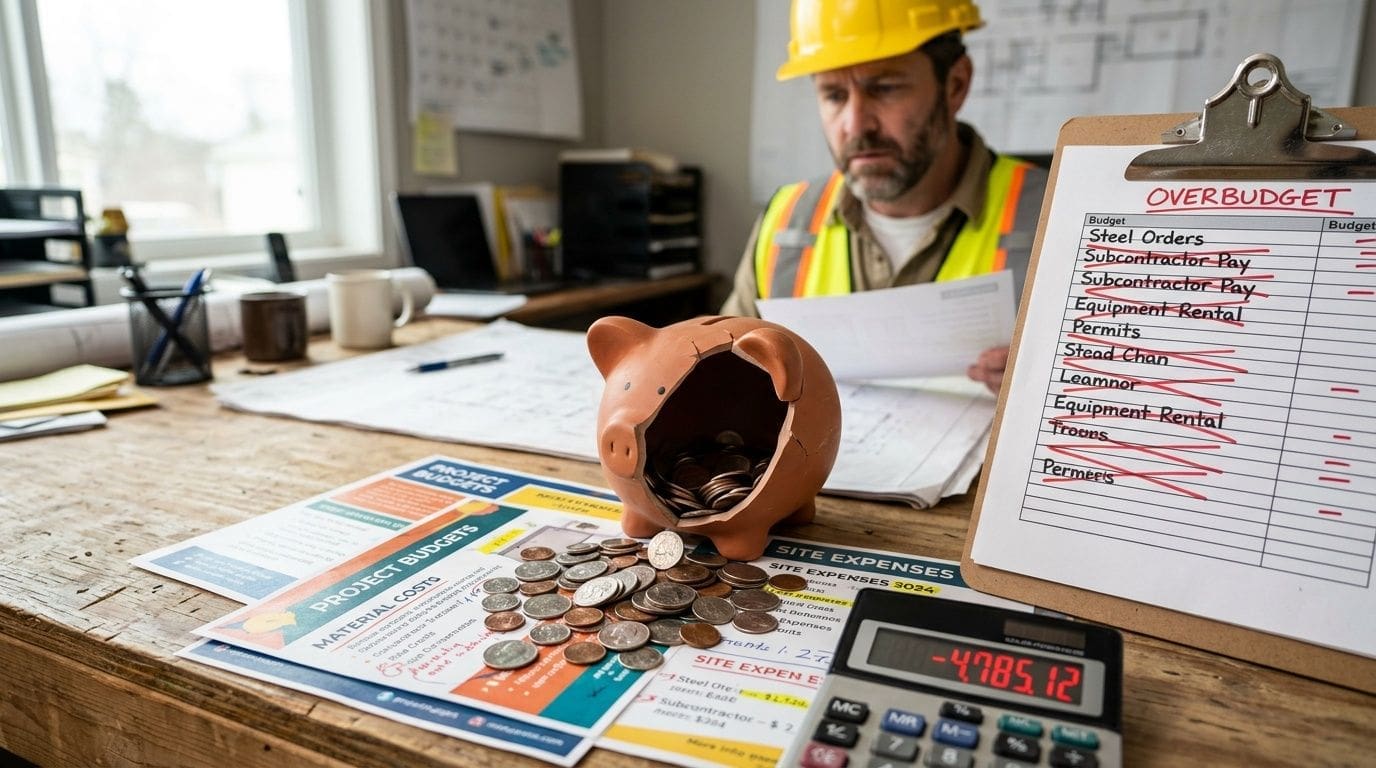
You hired a marketing company. They promised more leads, more calls, more jobs. You signed the contract, paid the retainer, and waited. Nothing changed. Now you don’t trust anyone, and your phone still isn’t ringing enough.
The problem isn’t that marketing doesn’t work. The problem is you’ve been sold the wrong things. Most contractor marketing mistakes that cost you money come from one root cause. You’re invisible to buyers who are ready to hire, right when they’re searching.
That invisibility shows up in different ways. You don’t show up in nearby towns. Your site doesn’t turn traffic into calls. Your ads bring the wrong people. Your reviews don’t back up your work. Your map listing is weak. Your message attracts price shoppers. Your whole business gets stuck in one area while someone else expands.
This is why some contractors stay busy but still feel broke. They’re working. They’re spending. But they don’t control visibility, so they don’t control where the next job comes from.
The fix is simple. Stop buying random marketing pieces. Build a system that makes you visible in the cities you want, then turns that visibility into calls.
1. You’re Invisible in the Next Town Over
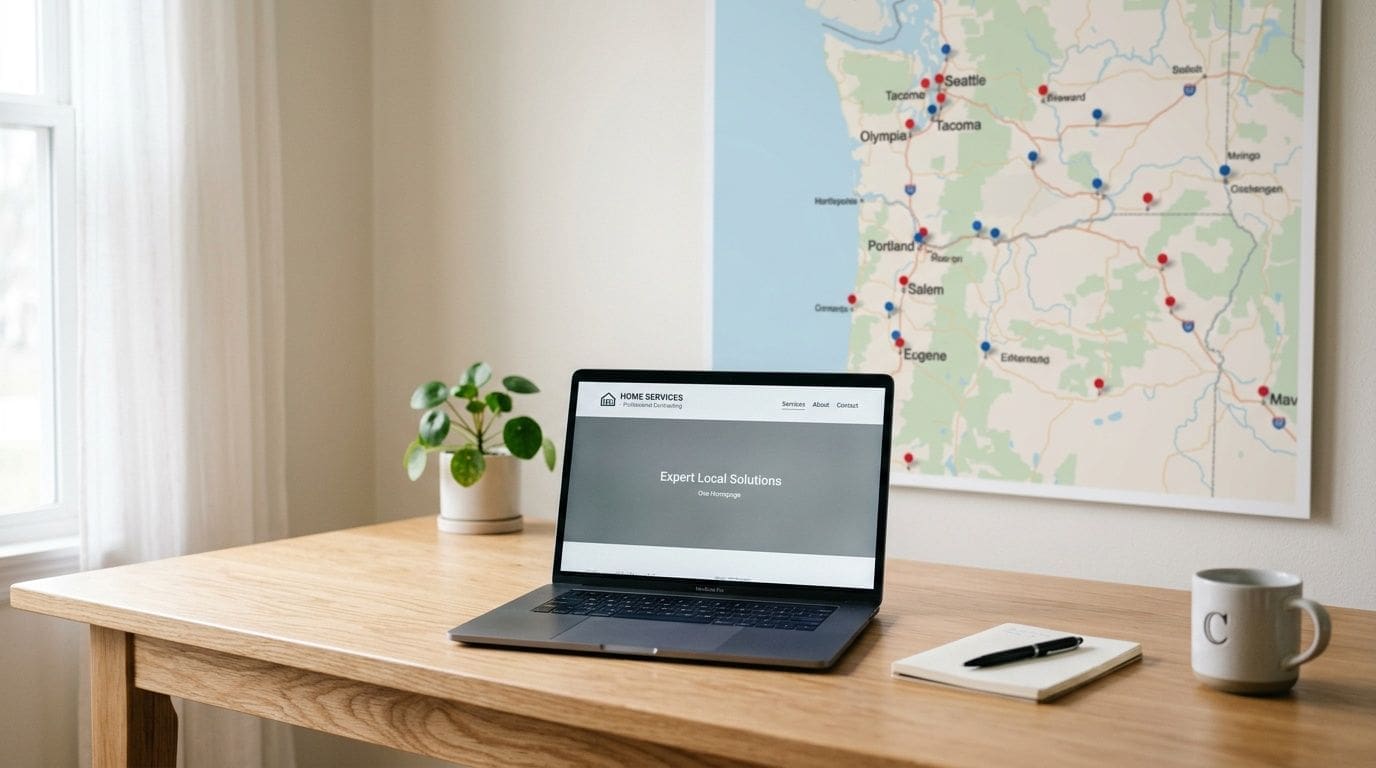
You’re known in your hometown. That doesn’t mean you’re visible where you want work.
A homeowner ten miles away isn’t searching your business name. They’re searching for the service they need in the town they’re standing in. If your website only talks about your home city, Google has no reason to show you in the next town over. That’s the visibility gap. It’s where jobs disappear before you even know they existed.
A lot of contractors think one homepage covers everything. It doesn’t. One page can’t tell Google you do septic in one town, grading in another, and excavation across a full county. If you never say it clearly, you stay hidden.
Why this costs real money
You can be the better contractor and still lose. A smaller company with pages built around the towns they serve can show up first and take the call. The buyer doesn’t know who’s better. They only know who they found.
This is exactly why so many contractors feel like referrals have slowed down. Referrals still happen. But buyers still check online, and new buyers never start with your name.
If customers don’t see you in the town they’re searching from, you don’t exist for that job.
The fix is not more hope. The fix is structure.
- Build city pages: Create a separate page for every city or county where you want work.
- Match service to place: Make each page clearly say what service you offer in that town.
- Use local proof: Show photos and job examples from that area when you have them.
- Connect the site: Link those city pages from your main service pages and homepage.
If you still think your single homepage should do all the heavy lifting, read why contractors don’t show up in nearby towns.
2. Your Website Scares Away Customers
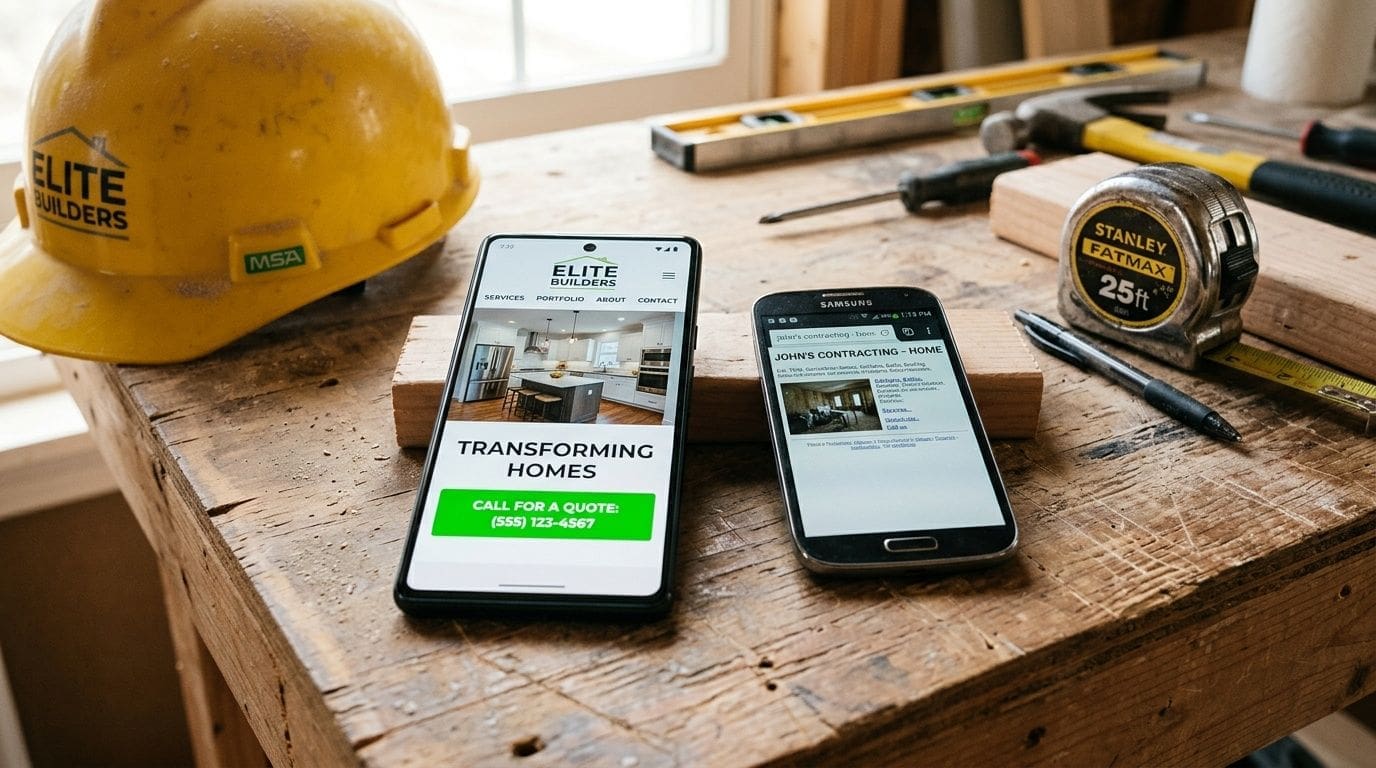
A bad website wastes every dollar you spend to get traffic.
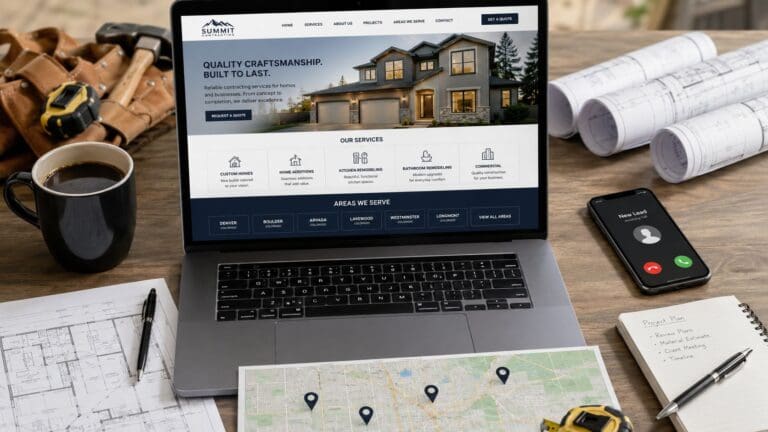
Most contractor websites are digital brochures. They sit there. They look decent enough on a desktop in an office. Then a real customer lands on them from a phone, can’t find the number, can’t tell what towns you serve, and leaves. You paid to get that visit. Your site killed it.
That’s one of the most common contractor marketing mistakes that cost you money. You think the website itself should generate leads. It won’t. Websites don’t create traffic. They wait for traffic. Their job is to turn that traffic into calls.
What a buyer sees
A buyer decides fast. If the site feels old, slow, cluttered, or hard to use, they don’t study it. They leave and click the next contractor.
This gets even worse when your ads are working. You’re paying to send high-intent buyers to a page that confuses them. That’s not a traffic problem. That’s a conversion problem.
Practical rule: If your website is hard to use on your phone, it’s hard to use. That’s the only test that matters.
A strong contractor site needs to do a few simple things right away:
- Show the phone number fast: Put it at the top and make it clickable.
- Say what you do: Don’t make people hunt for your services.
- Say where you work: Put your service area in plain sight.
- Show real work: Use clear photos of actual jobs.
- Ask for action: Make it obvious how to call or request a quote.
If your site is still acting like an online brochure, read why your website isn’t getting you customers and how to fix it easy.
3. You’re Wasting Money on Ads That Don’t Work
You launch ads. The clicks come in. The phone stays quiet, or the calls are garbage. Homeowners are outside your service area. The jobs are too small. The buyers want something you do not even offer.
That is not proof that ads fail. It is proof that your visibility is uncontrolled.
A lot of contractors treat ads like a slot machine. Turn them on. Hope for leads. Blame the platform when money disappears. That is lazy marketing, and it gets expensive fast.
Ads only work when they plug into a lead system. The ad gets attention. The page matches the offer. The form or call gets tracked. The follow-up happens fast. The sale gets tied back to the source. If any part of that chain is weak, you are buying activity, not revenue.
Bad visibility creates bad leads
Wide targeting sounds smart until you pay for the wrong town. Broad keywords sound efficient until you attract bargain hunters and tire-kickers. Generic landing pages sound convenient until buyers hit the page and leave.
Then you say, “We tried ads already.”
What you tried was paying to be seen by the wrong people, in the wrong place, with the wrong message.
Use paid traffic with rules:
- Target only the areas you want: Set campaigns by real service zones, not vague radius guesses.
- Build one message per service: Kitchen remodel ads should go to kitchen remodel pages. Roofing ads should go to roofing pages.
- Track booked jobs, not just calls: A ringing phone can still be wasted spend.
- Use a system for follow-up: A missed lead is still a paid lead. A simple CRM for Sydney small businesses shows why lead tracking and response speed matter.
- Feed your review engine: Paid traffic works better when buyers see proof. Here is how to get Google reviews consistently after every job.
Ads do not end at the click.
If you want ads to produce profit, stop treating them like a standalone tactic. Build a Lead Machine first. Then send paid traffic into it. That is how you control visibility instead of renting random attention and hoping it turns into work.
4. Bad Reviews or No Reviews Are Costing You Jobs

You can do great work and still lose the job before the phone rings.
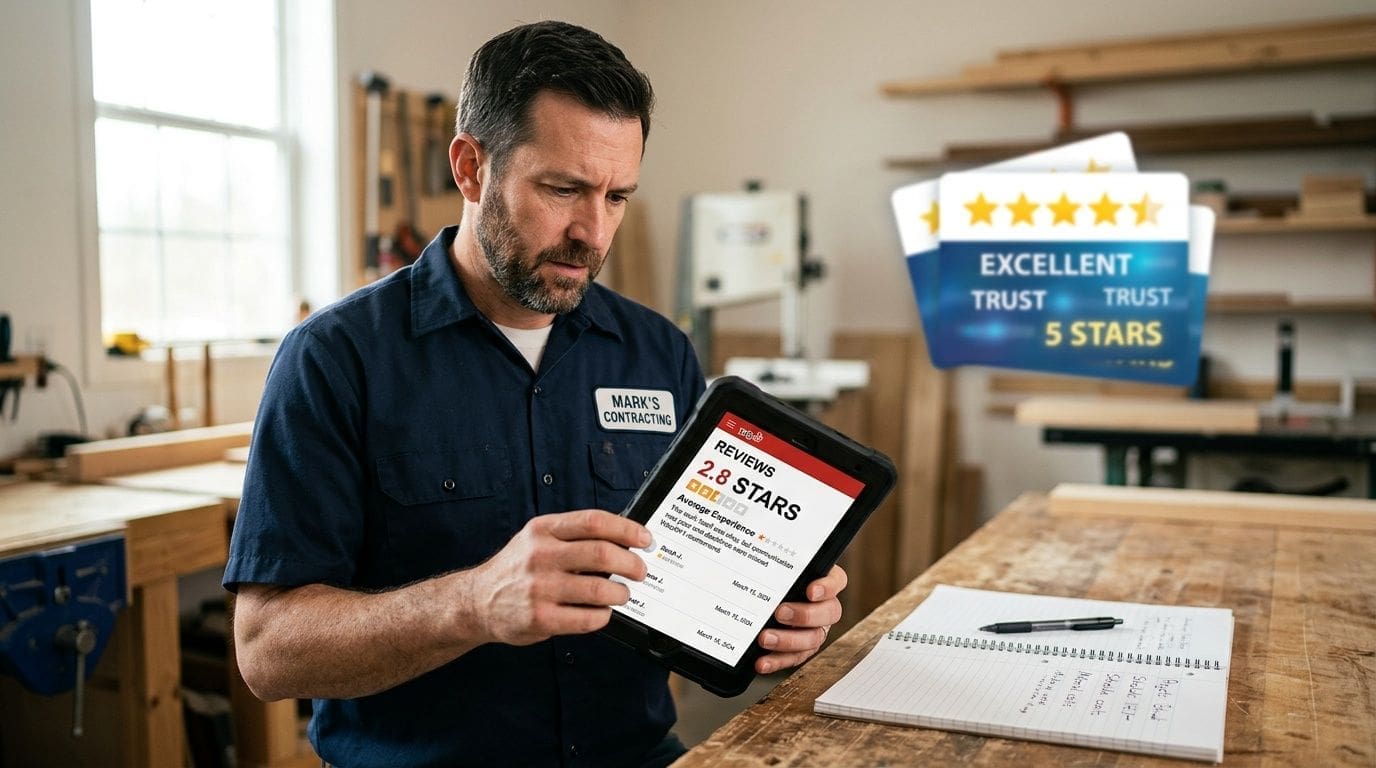
Buyers don’t know you. They don’t know how clean your work is, how fast your crew shows up, or how well you solve problems. They use reviews as a shortcut. If your profile looks thin, stale, or messy, they move on.
This is not about ego. It’s about visibility and trust. Reviews help buyers choose you, and they also help your business look more legitimate when people compare options.
What weak review profiles say to buyers
A profile with very few reviews says you’re unproven. A profile with old reviews says you’re inactive. A profile with ignored bad reviews says you don’t care.
A contractor with a strong review stream looks safer. That’s usually enough to win the click and the call.
Strong work hidden behind weak reviews still loses.
You need a system. Not a once-in-a-while reminder. Not a note to the office manager when things slow down. Ask every happy customer. Make it easy. Do it every time.
- Ask right after the job: That’s when the good experience is fresh.
- Send a direct review link: Remove friction.
- Reply to every review: Good and bad. Fast.
- Keep reviews coming: A steady flow looks alive and active.
If your crew does good work but your profile doesn’t show it, start with this guide on how to get Google reviews. If you also want a simple way to keep customer follow-up organized, a tool like CRM for Sydney small businesses shows the kind of system owners use to keep leads and customer communication from falling through the cracks.
5. You’re Competing on Price, Not Value
A homeowner gets three estimates. Yours looks almost identical to the other two. Same promises. Same vague claims. Same “competitive pricing” language.
Now price decides the job.
That is a visibility problem. The buyer cannot see a meaningful difference, so your business becomes interchangeable. Once that happens, your margins get squeezed, your sales cycle gets longer, and your calendar fills with the wrong jobs.
Cheap messaging does not just attract cheap buyers. It hides your value before the first call.
Contractors create this problem with weak positioning. They talk about being reliable, affordable, and high quality. Every competitor says the same thing. None of it gives the buyer a reason to choose you. Analysts at CyberFunnel found in this analysis of contractor marketing mistakes that broad, weak messaging pulls in lower-quality inquiries and more price shoppers.
You need a message that makes the decision easier.
State what sets you apart in plain English. Faster turnaround. Better communication. Cleaner jobsites. A tighter process. Stronger warranty. A specialty other contractors avoid. Then prove it across every step of your marketing, from the ad to the page to the estimate.
If buyers cannot see the difference, they buy the cheapest option
Price pressure is usually a symptom, not the root problem. The root problem is invisible value.
A website does not fix that by itself. A few project photos do not fix it either. You need a system that shows your edge before the estimate is booked and reinforces it after the lead comes in. That is what a real lead machine does. It pre-sells the job by making your difference obvious.
Use this standard:
- Lead with a clear advantage: Name the one thing you do better than nearby competitors.
- Back it up with proof: Use specific projects, outcomes, testimonials, and process details.
- Match your ads to your message: If the ad promises one thing, the page must prove it fast.
- Stop writing bargain-bin copy: “Affordable” and “best price” turn you into a commodity.
The contractor who is easiest to understand is often the one who gets paid more.
You do not win better jobs by arguing harder in the sales call. You win them by being seen as the right choice before the phone rings.
6. You’re Invisible on Google Maps
Your Google Business Profile is not optional. It’s one of the first things buyers see when they search local services. If it’s weak, incomplete, or inconsistent, you lose map visibility and hand those calls to someone else.
This happens every day. The contractor is doing work across several towns, but the map profile only reflects the office location. Or the phone number doesn’t match across listings. Or the profile has few photos and no fresh reviews. Then the owner wonders why the phone is quiet outside the home city.
A weak profile creates a weak service area
Google needs clear signals. If your profile and website only talk about one place, that is where you’ll be strongest. If you work wider than that, you need to support it with a clean, consistent presence.
This gets harder when you expand across multiple cities and counties. Geographic fragmentation is a hidden cost driver for contractors who try to grow regionally without a coordinated visibility system, as discussed in this piece on marketing fragmentation across multiple territories.
A profile that helps you win work should be handled like an active sales asset.
- Complete every section: Don’t leave basic business details half done.
- Set your service areas clearly: Show where you want work.
- Keep business info consistent: Same name, address, and phone details everywhere they appear.
- Add fresh job photos: Show current work, not old leftovers.
- Build review activity: Reviews support both trust and visibility.
Most contractors think being on the map is enough. It isn’t. You need to be visible in the places buyers are searching, not just where your office sits.
7. You’re Stuck Working in Just One Area
You finish a job twenty minutes outside your home city. The customer is happy. The crew did solid work. Then the next lead from that town goes to a competitor because your business barely shows up there.
That is not a territory problem. It is a visibility problem.
A lot of contractors call this “slow expansion” or “testing a new market.” Wrong. If buyers in nearby towns do not see you, trust you, and contact you fast, you do not have a growth plan. You have a patchy presence with a revenue ceiling.
Regional growth breaks when your visibility system stops at city limits
Your website does not expand your business by itself. Your Google profile does not expand it by itself. A few scattered ads do not expand it by themselves. Growth into the next town happens when all of it works together and turns attention into booked appointments.
Speed matters too. In this contractor marketing mistakes article, AccuLynx notes that lead qualification drops sharply as response time slows. That kills expansion for contractors who rely on office staff, missed calls, and manual follow-up while trying to cover a larger territory.
The real mistake is treating market expansion like a geography issue. It is a systems issue. If your city pages are thin, your ads are broad, your forms go unanswered, and your calls are inconsistent, you stay trapped in one core area no matter how far your trucks are willing to drive.
Fix that with a Lead Machine.
- Build pages for the towns you want to win, not just the town where your office sits.
- Run ads by service and location, so your budget follows buying intent.
- Use clear calls to action, so traffic turns into calls and form fills.
- Set up fast lead handling, so new inquiries get a response while the job is still hot.
- Track results by area, so you know which towns deserve more spend.
The contractor who owns the local search result, answers fast, and follows up with consistency gets the job more often.
Stop acting like one strong hometown is enough. If you want steady growth, create visibility across the whole service area and connect it to a system that captures and converts demand. That is how you stop being the contractor people know in one zip code and become the contractor buyers keep seeing across the region.
7 Costly Contractor Marketing Mistakes Compared
| Issue / Title | Complexity 🔄 | Resources ⚡ | Expected outcomes 📊 | Ideal use cases 💡 | Key advantages ⭐ |
|---|---|---|---|---|---|
| You’re Invisible in the Next Town Over | Medium–High 🔄: create & maintain many city pages | Moderate–High ⚡: content, SEO, dev time | High 📊: improved town-level search visibility and more calls | Contractors serving many nearby towns or expanding service area | Precise local targeting; tracks which towns convert ⭐ |
| Your Website Scares Away Customers | Medium 🔄: redesign, speed & mobile fixes | Moderate ⚡: web dev, photos, UX testing | High 📊: higher conversion rate and better-quality leads | Businesses with slow/outdated or non-mobile sites | Faster load, clear CTAs, improved trust and conversions ⭐ |
| You’re Wasting Money on Ads That Don’t Work | High 🔄: targeted setup, tracking, ongoing optimization | High ⚡: ad budget, analytics, experienced manager | High 📊: lower CPL, more qualified leads, scalable ROI | Businesses running broad/untracked ads or unsure of ROI | Efficient spend with measurable, trackable returns ⭐ |
| Bad Reviews (or No Reviews) Are Costing You Jobs | Medium 🔄: set up review process and response workflows | Moderate ⚡: review tools, staff time to request/respond | High 📊: increased trust, more calls, better map rankings | Firms with few or negative reviews hurting credibility | Strong social proof; higher conversion and local ranking ⭐ |
| You’re Competing on Price, Not Value | Medium–High 🔄: develop positioning, messaging, and training | Moderate ⚡: marketing work, team alignment, case studies | High 📊: attracts higher-value clients and better margins | Companies in commoditized markets facing price competition | Differentiation that enables premium pricing and better jobs ⭐ |
| You’re Invisible on Google Maps | Medium 🔄: GBP setup and continuous optimization | Low–Moderate ⚡: time, photos, review system | High 📊: map visibility and free local calls | Local service businesses missing from map pack results | High ROI long-term visibility; trust from map presence ⭐ |
| You’re Stuck Working in Just One Area | High 🔄: systems for multi-city visibility and logistics | High ⚡: marketing, crews, logistics, multiple city pages | Very High 📊: large market expansion and significant revenue growth | Businesses ready to scale regionally into multiple cities | Exponential growth potential; access to larger contracts ⭐ |
Control Your Visibility, Control Your Business
Every mistake on this list points to the same problem. You don’t control your visibility.
If you’re invisible in nearby towns, you lose jobs you never knew existed. If your website can’t turn traffic into calls, you waste the traffic you paid for. If your ads target the wrong people, you buy bad leads. If your reviews are weak, buyers choose someone else. If your map presence is thin, local searches skip right past you. If your message leads with price, you attract the worst kind of leads. If your whole setup only works in one city, your growth stalls.
None of that gets fixed by working harder.
It gets fixed by building a system. A website built to convert. City and service pages built to make you visible where you want work. Ads that put you in front of buyers who are searching right now. Tracking that shows what’s working. Fast follow-up that keeps leads from dying.
That is the logic behind a Lead Machine. The website is the asset. The ads are the fuel. Together, they create visibility and turn that visibility into calls. Separate those two pieces and you get what most contractors already have. A website that waits around, or ads that waste money.
This is why random marketing feels like gambling. One vendor sells you a site. Another sells you ads. Someone else posts on social media. Nobody owns the whole result. You spend money in pieces and hope it adds up.
It usually doesn’t.
A system does. If you’re serious about fixing contractor marketing mistakes that cost you money, stop buying disconnected tactics. Build visibility in the cities you want. Give buyers a clear reason to call. Make it easy to act. Track what turns into jobs.
The Cherubini Company is one option built around that approach. They build Lead Machines and run visibility ads for contractors who need to show up in more places and turn that attention into calls.
You think customers can find you. But if customers don’t find you, nothing else matters. Lead Machines are built to fix that.
If you’re done guessing and want a system built around visibility, calls, and real service areas, talk to The Cherubini Company. They build Lead Machines for contractors who need to show up in more towns, convert traffic into calls, and stop wasting money on marketing that doesn’t produce work.