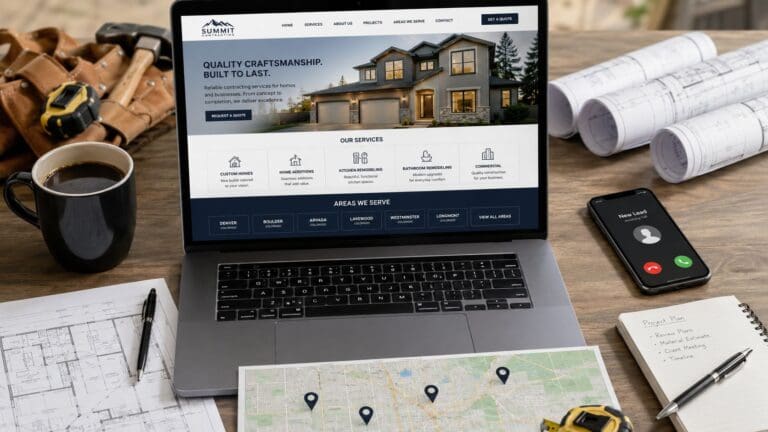
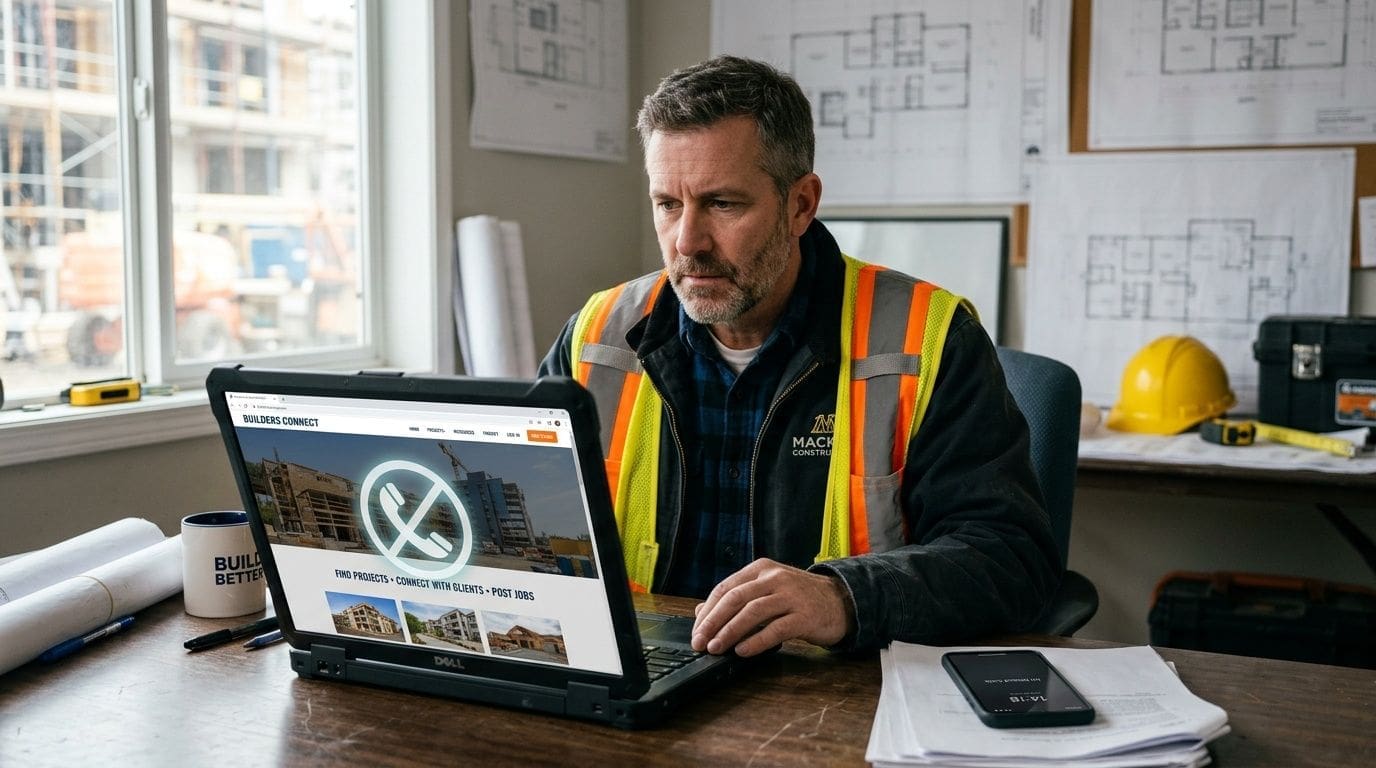
You paid good money for a website. Maybe a lot of money. It looks clean. It has your logo, your service list, a few photos, maybe even a contact form.
And still, the phone doesn’t ring like it should.
That’s the part contractors get sick of hearing about. Some agency tells you the site is “live” like that means anything. Meanwhile, you’re stuck taking the same small jobs, driving too far for thin margins, and wondering why the bigger work keeps going to someone else.
If you’re trying to figure out why your contractor website is not getting calls, stop blaming the colors, the logo, or the homepage layout. The actual issue is much simpler. People aren’t finding you where they’re searching, and when they do land on your site, too many websites make it hard to call.
Your Expensive Website Is Collecting Dust
A lot of contractors are living the same story.
They’ve got a website. They’ve had some ads run before. They’ve heard promises about ranking, traffic, and “online growth.” But the result is the same. A few random leads. Long dry spells. Then panic.
The website sits there like a brochure no one opened.

What the site is really doing
Most contractor websites are built for people who already know the company name. That misses the bigger market. Most contractor websites miss 80-90% of potential customers because they are built to attract people who already know the company’s name, while ignoring homeowners who search for the problem first, like “leaky basement [city]” according to Odiya.org’s breakdown of contractor traffic loss.
That means your website may only help the small slice of people already looking for you by name.
Everyone else? They never even get close.
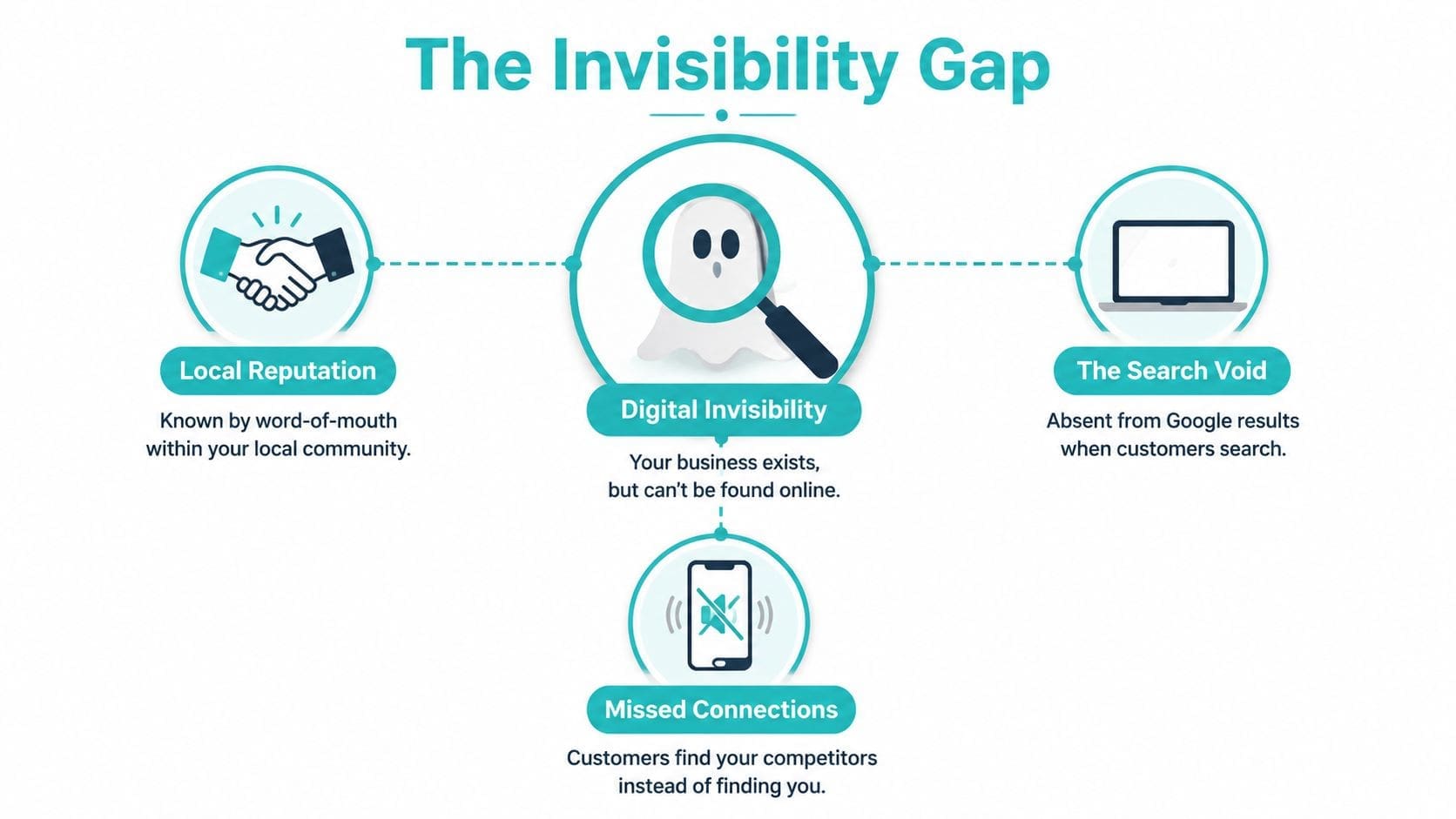
You don’t have a website problem first. You have a visibility problem first.
Why this feels so frustrating
You know your company does good work. You’re known in town. Past customers refer you. Your crews stay busy enough to survive.
But “busy” and “growing” aren’t the same thing.
- Small jobs fill the calendar: They keep you moving, but they don’t always move the business forward.
- Word of mouth feels safe: Until it slows down and you realize you don’t control it.
- Past marketing burned trust: So now every new pitch sounds like the last bad one.
If you’re trying to get your business found better online, a practical place to start is this guide for local business indexing. It helps explain the basic issue many contractors miss. Being online isn’t the same as being visible.
The Real Problem Is You Are Invisible
You probably show up in your hometown. Maybe.
Go ten miles out and it’s a different story.
That’s the trap. Contractors think customers can find them because people in their own town know the name. But search doesn’t work off your reputation alone. Search works off signals. If Google doesn’t see clear proof that you work in a city, it has no reason to show you there.
Near me does not mean near your office
When a homeowner types “excavation near me” or “septic contractor near me,” Google reads that as the searcher’s city, not your office city.
So if the person is in the next town over, Google is looking for contractors connected to that town.
Not your town.
Not your mailing address.
Not the place where your sign is parked.
This is why so many contractors swear they “serve the whole area” but only show up in one place online. If you never clearly told Google that you work in Newark, Heath, Granville, Zanesville, or the other towns you want, Google won’t assume it for you. That assumption costs jobs.
The visibility gap gets worse for regional contractors
This hits heavy equipment and site work contractors even harder. Heavy equipment contractors often lose 70-80% of potential leads because they lack specific pages for each of the 50-100 cities in their service area, and a 2025 SEMrush study cited by PolygonSEO says multi-city contractors without hyper-local pages convert 3x lower because Google prioritizes proximity in this review of contractor visibility problems.
That’s not a small leak. That’s a hole in the boat.
If you want a plain-English look at the local ranking side of this, this piece on how to dominate local search results lays out why city-level visibility matters so much for contractors.
Here’s the blunt version. If you’re not visible in the towns where you want work, then those jobs were never really opportunities for you in the first place. They went to the contractor who showed up.
For a deeper look at that gap, this article on why contractors don’t get enough leads gets to the same core issue. Lack of visibility creates the lead problem.
Being well known is not the same as being visible when someone searches.
Websites Do Not Create Traffic
A website doesn’t go out and get customers.
It waits.
That’s the part too many contractors were never told. A website is not a lead source by itself. It’s a tool that converts attention after something else creates that attention.
Think of it like a billboard built in the woods. If no traffic passes it, the billboard isn’t the problem. It just isn’t being seen.
What your website is supposed to do
A website has one real job. When someone lands on it, that person should know who you help, where you work, and how to contact you right now.
A lot of contractor sites fail that basic test.
Even if a site ranks, it often fails because the phone number is hidden. On mobile, where 70% of contractor searches happen, visitors expect a click-to-call button they can see without scrolling. If they have to hunt for a number in the footer or on a Contact Us page, they hit the back button and call the next competitor according to Green Thumb Local’s analysis of ranking sites that still don’t get calls.
That means traffic alone isn’t enough. Ranking alone isn’t enough. A “nice” website isn’t enough.
What most contractors were sold instead
They were sold a design project.
Not a lead system.
- Pretty homepage: Nice for ego. Useless if it doesn’t turn urgency into action.
- Buried contact page: Fine for browsers. Terrible for homeowners with a problem right now.
- Generic service pages: They don’t match how people search across different towns.
This is why the idea that websites “generate leads” causes so much confusion. Websites don’t generate leads. They convert the traffic you already earned or bought.
If traffic never arrives, the site does nothing. If traffic arrives and can’t call fast, the site still does nothing.
Stop Trying to Fix Your Website
A lot of contractors respond the wrong way when calls are down.
They tweak the homepage. Change photos. Add a new button. Rewrite some text. Pay someone to “improve search.” Then they wait and hope.
That isn’t a system. That’s guessing.
Small fixes don’t solve the real problem
Yes, the site needs to work. Yes, speed matters. 53% of mobile users will leave a contractor’s site if it takes more than 3 seconds to load, and most contractor sites take 6-10 seconds, often because of a single uncompressed photo, based on Double G Consulting’s review of contractor site performance.
But don’t miss the bigger point.
A fast site with no visibility is still a quiet site.
A cleaner homepage with no traffic is still a brochure.
A new logo won’t make you show up in the next town.
What to stop doing
If you’ve been burned before, this will sound familiar.
- Stop buying random fixes: They usually patch symptoms, not the actual issue.
- Stop judging the site by looks: Contractors don’t need online art. They need calls.
- Stop assuming more effort equals more leads: You can work harder and still stay invisible.
The hard truth is simple. If your business isn’t showing up in the cities where people are searching, and if the path to call is weak when they land, no amount of tinkering will save it.
The System That Turns Visibility Into Calls
You don’t need “more marketing.”
You need a system.
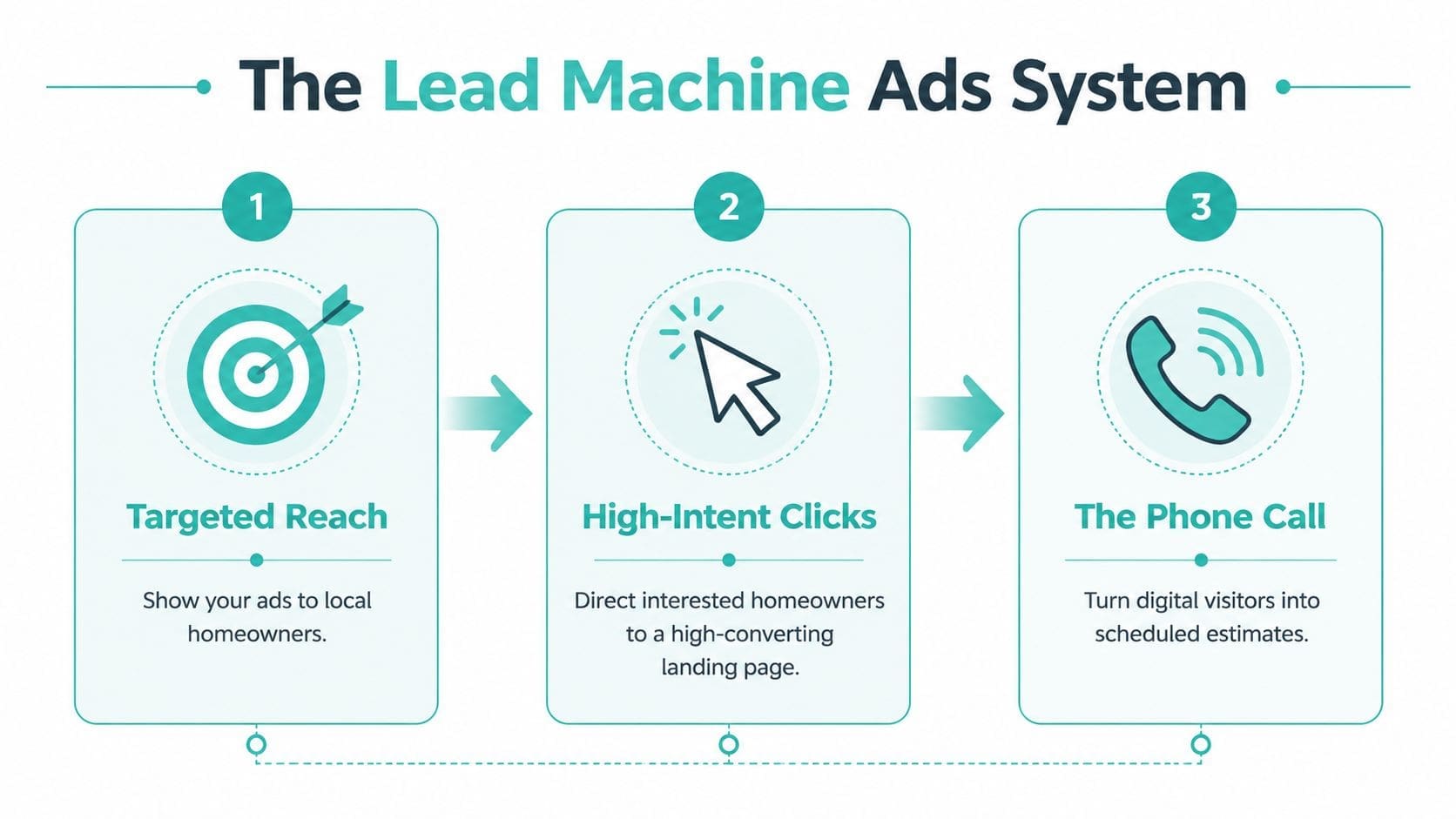
That system has two parts. The first part gets you seen in the right places. The second part turns that visibility into calls. If either part is missing, the whole thing breaks.
Part one is the Lead Machine
A Lead Machine is not a pretty website. It’s a website built to turn traffic into calls.
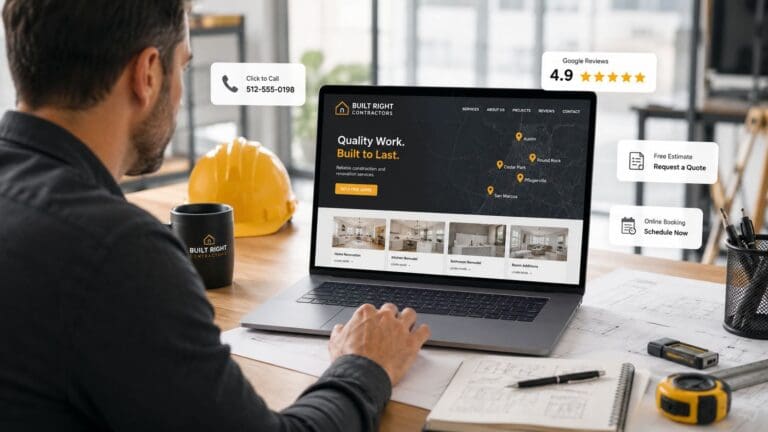
That means it is structured by service and city. It loads fast. It works on mobile. It gives people a direct way to call or request a quote. It aligns with your business profile and service area so your visibility is not trapped in one town.
The Lead Machine overview from The Cherubini Company shows the basic model clearly. The site is the asset. It is built to capture demand instead of just sitting online.
Part two is ads
Ads create visibility.
That’s their job. They put you in front of buyers searching right now. They send that traffic to the Lead Machine. Without that fuel, the site just waits.
Without the site, the ad spend gets wasted.
Practical rule: Websites without traffic don’t work. Ads without conversion waste money.
Why both parts matter
Around 70% of homeowners searching for services like “plumber near me” are on a mobile device. If your website doesn’t have a click-to-call button at the very top of the screen, without any scrolling, you lose that lead almost instantly as noted in VaporSEO’s review of contractor mobile conversion failure.
So the winning setup is not mysterious.
| What you need | What it does |
|---|---|
| City and service visibility | Helps you show up where buyers are searching |
| A Lead Machine | Turns that visit into a call or quote request |
| Ads | Brings in demand instead of waiting on hope |
This is why big companies keep taking market share. They buy visibility. Small contractors often rely on referrals and luck.
Luck is not a revenue plan.
Take Control of Your Revenue Engine
If your leads depend on referrals, seasonality, and random website traffic, then your business is fragile.
It may look stable from the outside. It may even feel busy. But busy is not control.
Control means you know how visibility turns into calls. You know where you show up. You know where you don’t. You know what is feeding the pipeline and what isn’t.

Hope is not control
A lot of contractors stay stuck because they think the problem is effort. It isn’t.
They work hard already.
The problem is that they still do not control visibility outside the places where people already know them. If you want to be honest about that, it helps to audit your digital footprint online and see what your business looks like across the web.
The choice is simple
You can keep doing what most contractors do.
Wait for referrals. Take whatever comes in. Wonder why the phone is quiet in the towns you want to grow in. Keep paying for a website that mostly acts like a parked truck with no fuel in it.
Or you can build a system that gives you a real shot at steady calls, better jobs, and more control over where your revenue comes from.
You think that customers “can” find you but, If customers “don’t” find you, nothing else matters. Lead Machines are built to fix that.
If you’re tired of guessing, The Cherubini Company builds Lead Machines for contractors who need more visibility, more calls, and better control over where their leads come from.