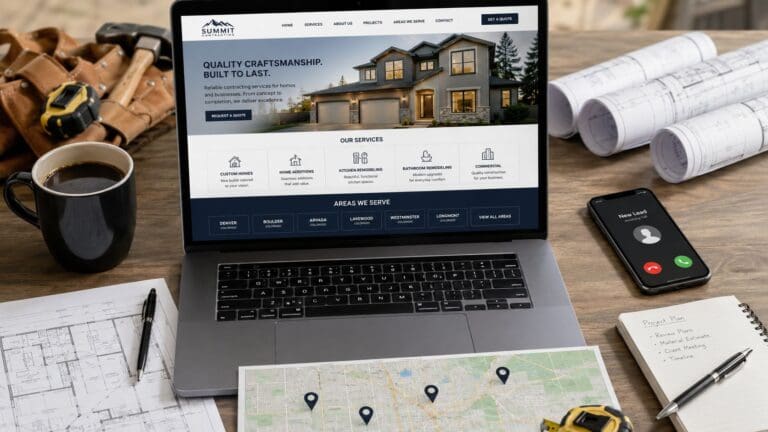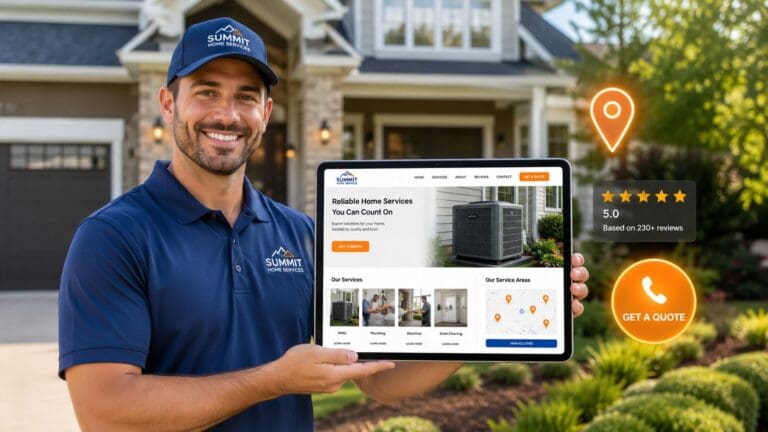

You know the pattern.
You do solid grading work. People in your town know your name. A few builders call you. A few homeowners get referred to you. Then the phone goes quiet, even though there are jobs sitting in the next town over.
That isn’t a skill problem. It’s a visibility problem.
Most lead generation for yard grading contractors fails for one simple reason. The contractor is only visible in the place where people already know him. Everywhere else, he might as well not exist. That’s why the jobs feel random. That’s why small projects pile up while better work slips by. That’s why so many owners keep saying they need more leads when what they really need is more visibility in the cities they already serve.
Why Your Phone Stops Ringing 10 Miles From Home
You probably know this feeling already.
In your hometown, you get calls. People have heard of you. They’ve seen your trucks. Maybe you’ve graded a few yards on the same road and one job leads to another. But go 10 or 20 miles out, and the calls dry up.
That gap has a name. It’s the visibility gap.
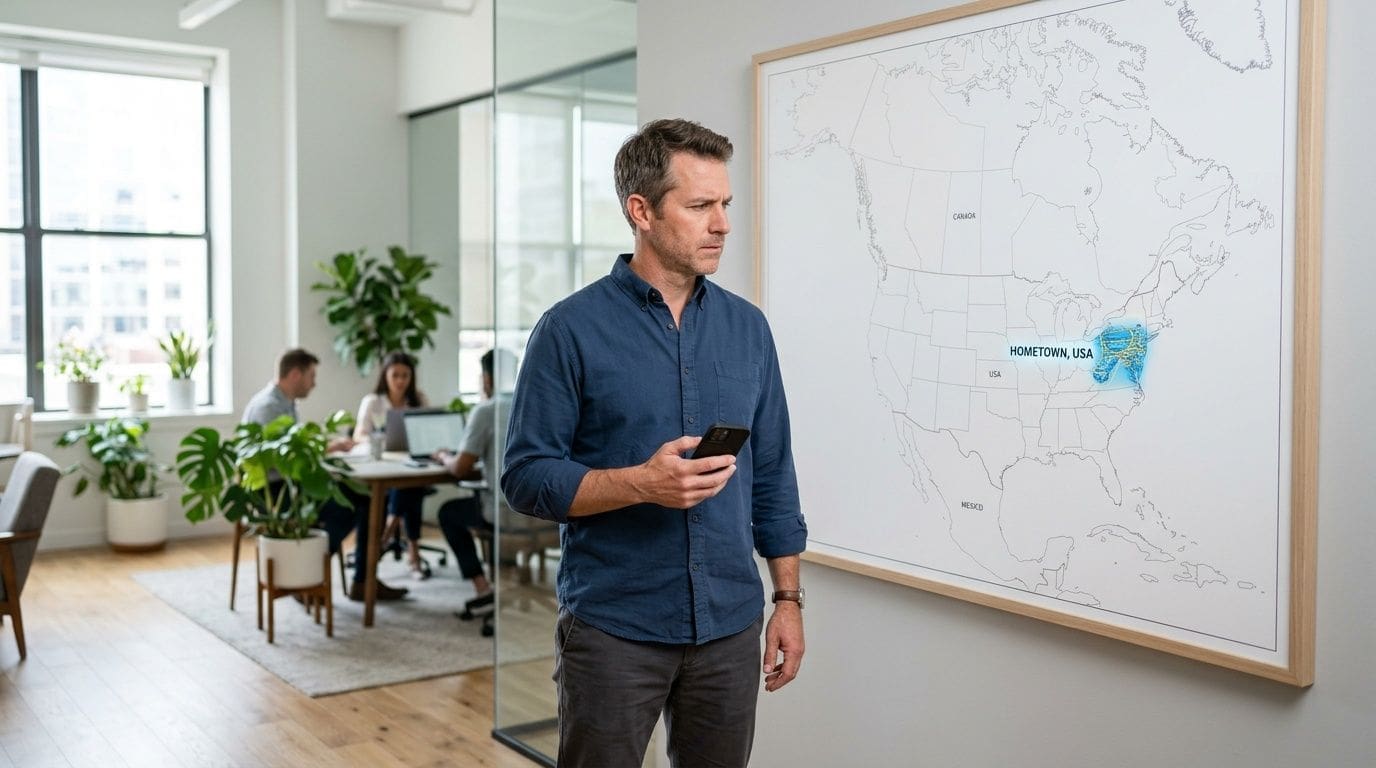
What the customer sees
A homeowner in another town doesn’t search your business name.
They search for what they need. Yard grading near me. Drainage grading contractor. Site prep contractor in their city. Google then treats “near me” like a city search based on where that person is standing.
If your business only clearly points to your home city, Google connects you to your home city. It does not guess that you also work in five, ten, or twenty nearby towns.
If you never tell Google you work in a city, Google has no reason to show you in that city.
That’s why contractors feel confused. They know they can do the work. They already drive there. They may even have jobs there every month. But online, they’re invisible.
Why this keeps costing you work
This is the part that stings. People don’t have to hate your company to never hire you. They just have to never see you.
That means the job is gone before you even know it existed.
A lot of owners assume customers can find them if they really want to. That’s backwards. Most buyers don’t know your name. They know their problem. If you don’t show up when they search for the service in their town, you have no shot.
A deeper look at why your phone isn’t ringing and what it’s costing you makes the same point. The money loss usually starts long before the owner notices the pipeline is getting thin.
The real issue isn’t leads
The root problem is not effort.
It’s not that you need to post more on social media. It’s not that your crew needs to ask for more referrals. It’s not that you need to “build your brand” in some vague way.
It’s that buyers in nearby cities search for yard grading contractors, and you don’t appear where they’re looking.
That’s the whole game. If you fix visibility, lead flow gets better. If you stay invisible, nothing else matters.
Your Website Is a Brochure Collecting Dust
A lot of contractors paid good money for a website that does nothing.
It looks clean. It has a few photos. It says you do grading, drainage, maybe excavation. It has a contact form. And still, no steady leads.
That’s not surprising. Websites do not create traffic. They wait for traffic.
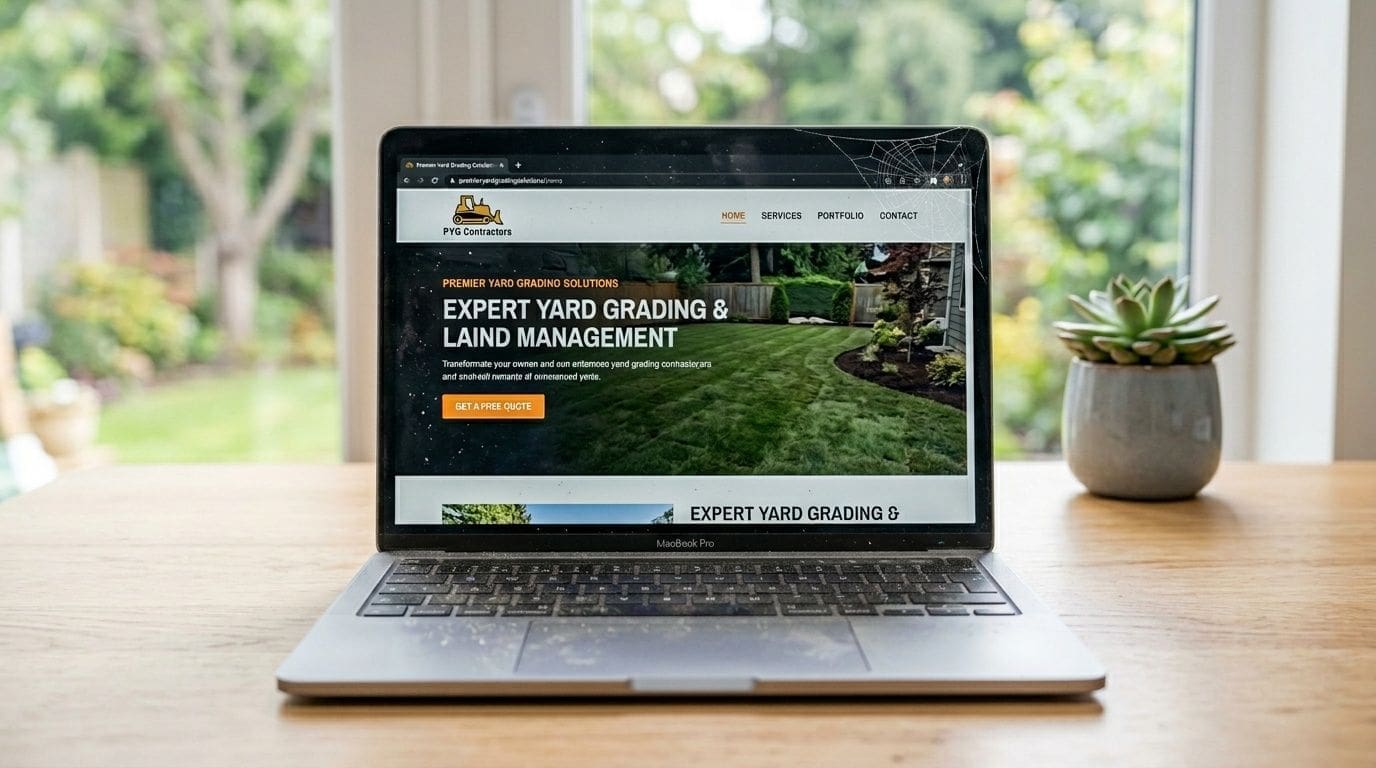
A website alone is not a marketing plan
If nobody is being sent to your site, the site just sits there.
That’s why so many owners get burned. An agency sells them a pretty homepage and a few stock phrases about growth. The site goes live. Then nothing changes. The contractor thinks online marketing doesn’t work. What really happened is they bought a brochure and expected it to act like a sales system.
Here’s the blunt truth.
- Pretty doesn’t matter: A clean layout won’t make the phone ring by itself.
- Existing isn’t enough: Being online is not the same as being visible.
- Generic pages lose jobs: If your site only talks about one city, you’re telling search engines you belong in one city.
What contractors do next, and why it gets worse
When the website fails, many contractors run to pay per lead services.
That usually creates a new problem. According to a 2025 HomeAdvisor lead quality report discussed by TJS Yard Grading, contractors dispute 20 to 35% of those leads as unqualified, which pushes effective cost to $50 to $150 per valid lead. That’s what happens when you rent somebody else’s lead pool instead of building your own visibility.
You get price shoppers. You get junk. You get shared leads. You get blamed when the job never had a real buyer behind it.
Practical rule: If the lead source controls the lead, they control your costs.
What a useful website actually does
A website should have one job. Turn traffic into calls and quote requests.
That means the site needs clear actions. It needs to match the service and city the buyer is searching for. It needs to make calling easy on a phone. If you want a simple outside read on that last point, this guide on how to optimize click to call leads is worth reviewing because mobile visitors don't want to hunt for your number.
A smarter model is a site built for visibility and conversion, like the kind described in lead generation website design for home services contractors. Not a digital business card. A working asset.
That’s the shift. Stop asking your website to magically generate leads on its own. Start using it as the place where visibility gets turned into calls.
How Big Companies Buy Leads While You Wait
Big companies are not sitting around hoping a past customer mentions them at a barbecue.
They buy visibility.
That’s the difference.
Small contractors often rely on word of mouth because it feels safe. No ad spend. No risk. No learning curve. But there’s a hidden cost. Hope is not a system. Waiting is not a strategy. Referrals are nice, but they don’t scale on command.
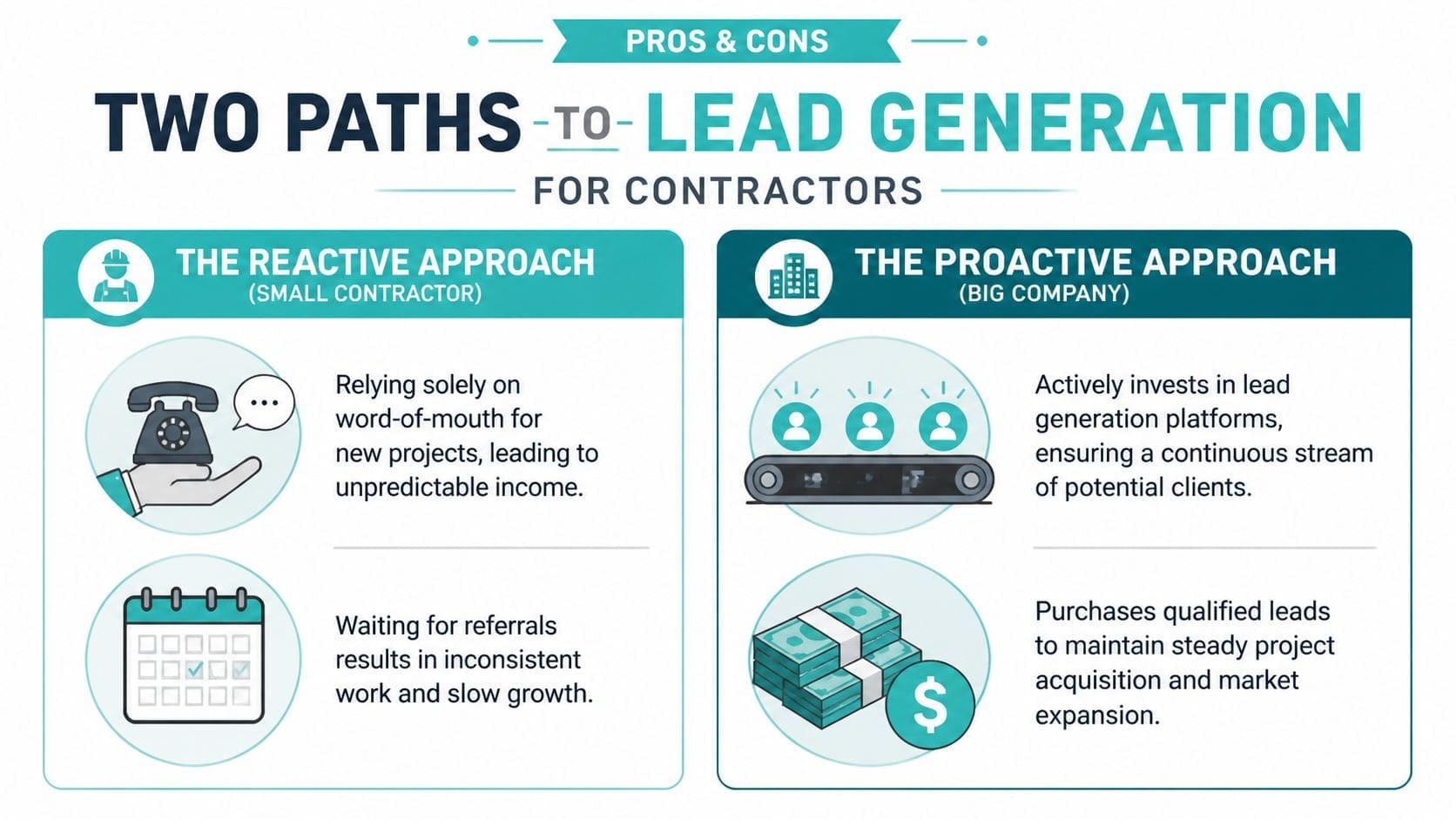
Two different ways to run a business
Here’s the split.
| Approach | What happens |
|---|---|
| Wait and hope | You depend on referrals, old contacts, and random calls |
| Buy visibility | You put your company in front of people already searching for grading work |
The second group usually wins more often, not because they grade better, but because buyers see them.
That should not be hard to accept. Contractors buy equipment to get jobs done faster and better. Visibility works the same way. It is a business input. You either invest in it or you hand the job to a competitor who does.
Predictable lead flow changes the whole business
A documented example from Landscape Marketing Pros showed a similar contracting business growing from $250,000 to $2.5 million annually by building a predictable inbound lead system. The point is not that every grading contractor will hit that exact number. The point is simple. Predictable lead flow changes what a business can become.
Once leads stop being random, owners make better decisions.
- They stop grabbing every tiny job just to keep crews moving.
- They get selective about project size and profit.
- They stop panicking in slow stretches because there is a system feeding work.
Bigger companies don’t always have better service. They often just have better visibility.
Why this matters in lead generation for yard grading contractors
Yard grading is not an impulse buy. A homeowner with drainage issues, a builder needing site prep, or a property owner dealing with slope problems is looking for someone who handles that type of work.
If your competitor shows up first and looks easy to contact, you’re out.
That’s why lead generation for yard grading contractors has to be treated like an operating system, not a side project. The companies that grow are not guessing. They’re putting money into getting seen in the right cities and turning that visibility into inbound calls.
Building Your Lead Machine An Asset That Works For You
A Lead Machine is not a pretty website.
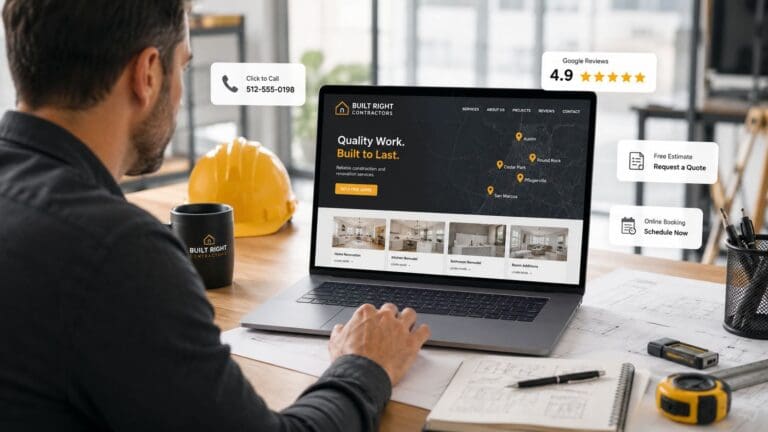
It’s a website built for one reason. To turn visibility into calls, form submissions, and booked jobs.
That means it has to match how people search. A yard grading contractor does not need one vague services page and a nice photo gallery. He needs a structure that tells both buyers and search engines exactly what he does and exactly where he does it.
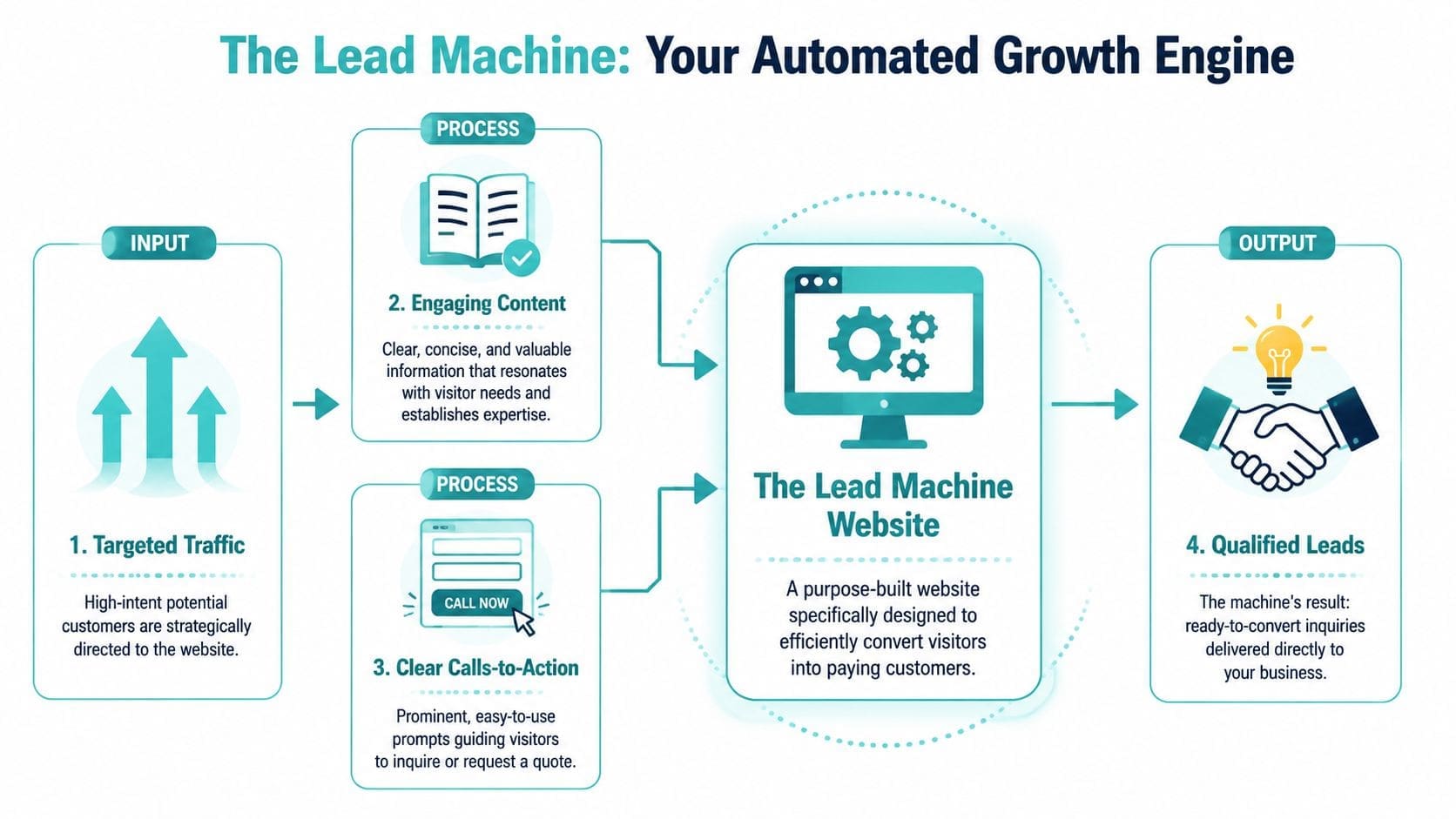
What belongs inside the machine
A real Lead Machine is built around service and city.
That means separate pages for grading, yard leveling, drainage correction, site prep, and related work. It also means separate pages for every town and county you want work from. That’s how you close the visibility gap.
According to Contractor Lead Partners, adding click to call buttons can convert up to 15% of mobile website traffic directly into phone calls, and building 50 to 100 city specific pages helps dominate local search results.
Those are not cosmetic features. They are the core parts of a working lead asset.
What the machine needs to do on every page
A Lead Machine should be easy to use and hard to ignore.
- Show the exact service: If the page is about yard grading, say yard grading.
- Show the exact place: If you want jobs in a city, the city needs its own page.
- Make contact simple: A buyer on a phone should be able to tap and call.
- Support trust: Reviews, project photos, and plain language matter because buyers want proof, not fluff.
A website that tries to say everything usually says nothing clearly enough to win the call.
Why this becomes a business asset
A brochure gets old.
A Lead Machine keeps working. It becomes an asset because it supports multi city visibility, captures incoming demand, and gives your ad traffic somewhere useful to land. That’s why owners who want to grow your business with effective marketing need to think less about design trends and more about structure, intent, and conversion.
One option in this category is The Cherubini Company, which builds contractor lead websites with service pages, city pages, click to call features, review tools, and ad support for local and regional visibility. That model fits grading contractors because the work area usually spreads beyond one town.
A Lead Machine is the website you should have bought the first time. Not something that just looks fine. Something that helps your business get found in the cities where the work is.
How Ads Create Predictable Visibility Right Now
Once the Lead Machine is built, you still need fuel.
That’s what ads do. They create visibility right now.
A lot of yard grading contractors avoid ads because they think ads are gambling. That’s only true when the traffic goes to the wrong place. If you send paid traffic to a weak site, you waste money. If you send high intent traffic to a Lead Machine built to convert, you create a practical system.
What ads are really doing
Ads are not magic.
They place your company in front of buyers who are already searching for the work. That matters because these are not random people scrolling for entertainment. These are people with a grading problem, a drainage issue, or a site prep need.
That’s why ads work best when they are tied to clear buyer intent. The buyer searches. Your ad appears. They click. They land on a page built for that exact service and location. Then they call or fill out a form.
The numbers that matter
When ads are connected to an optimized system, the economics get better. Local Biz Guru reports that top performing contractors reach $50 to $80 cost per lead, compared with an industry average of $120, and close 33% of qualified leads.
That’s the difference between buying noise and buying visibility with a conversion path behind it.
Here’s the simple breakdown:
| Piece | Result |
|---|---|
| Ads without a strong site | Clicks, wasted spend, weak lead quality |
| A strong site without ads | Good asset, low visibility |
| Lead Machine plus ads | Steady traffic, tracked calls, real opportunities |
Why this gives owners control
Most contractors say they want more leads.
What they really want is control. They want to know they can create more visibility when they need it. They want to fill gaps, reach new towns, and stop sitting around waiting for someone to remember their name.
That’s what ads solve when they’re attached to the right system. If you want a plain language look at this side of the process, Google Ads for local businesses lays out the core idea well. Ads are the fuel. The website is the machine. You need both.
Taking Control and Expanding Your Territory
The old model is fragile.
Rely on your hometown. Wait on referrals. Hope the phone rings. Take whatever small jobs show up. Repeat. That is not control. That is survival.
The better model is simple. Build visibility in the cities you want. Send buyers to a Lead Machine built to turn attention into calls. Use ads to create demand flow now instead of waiting for luck.
Growth stops being random
Lead generation for yard grading contractors requires a more serious focus.
Once your visibility expands beyond your hometown, your business stops acting like a one zip code company. You stop depending on the same limited pool of people. You start reaching buyers in nearby towns and counties who already need the work.
That matters even more now. According to Houzz Pro market analysis, multi city operations for contractors are growing 28% year over year, and Google’s recent updates reward optimized multi city visibility with ranking boosts of up to 25%.
That means expansion is no longer guesswork. The companies that structure their visibility across multiple cities have an advantage.
What control looks like
Control means a few practical things.
- You can target better jobs instead of saying yes to every small one.
- You can grow into nearby markets without opening a full office in each place.
- You can smooth out slow periods because visibility is being created on purpose.
- You can make decisions with less stress because lead flow is not left to chance.
You don’t need more marketing fluff. You need to be visible where buyers are already searching.
A fragile business waits to be found.
A stable business makes sure it gets seen.
You think that customers "can" find you but, If customers "don’t" find you, nothing else matters. Lead Machines are built to fix that.
If you're tired of guessing and want a direct plan to fix the visibility gap, The Cherubini Company helps contractors build Lead Machines and run visibility ads that turn nearby cities into real lead sources instead of missed opportunities.