
You know the feeling. One week your crew is slammed with small jobs that wear everybody out. The next week you’re staring at the phone, wondering where the next solid project is coming from.
That doesn’t mean you’re bad at what you do. It means your business still runs on hope.
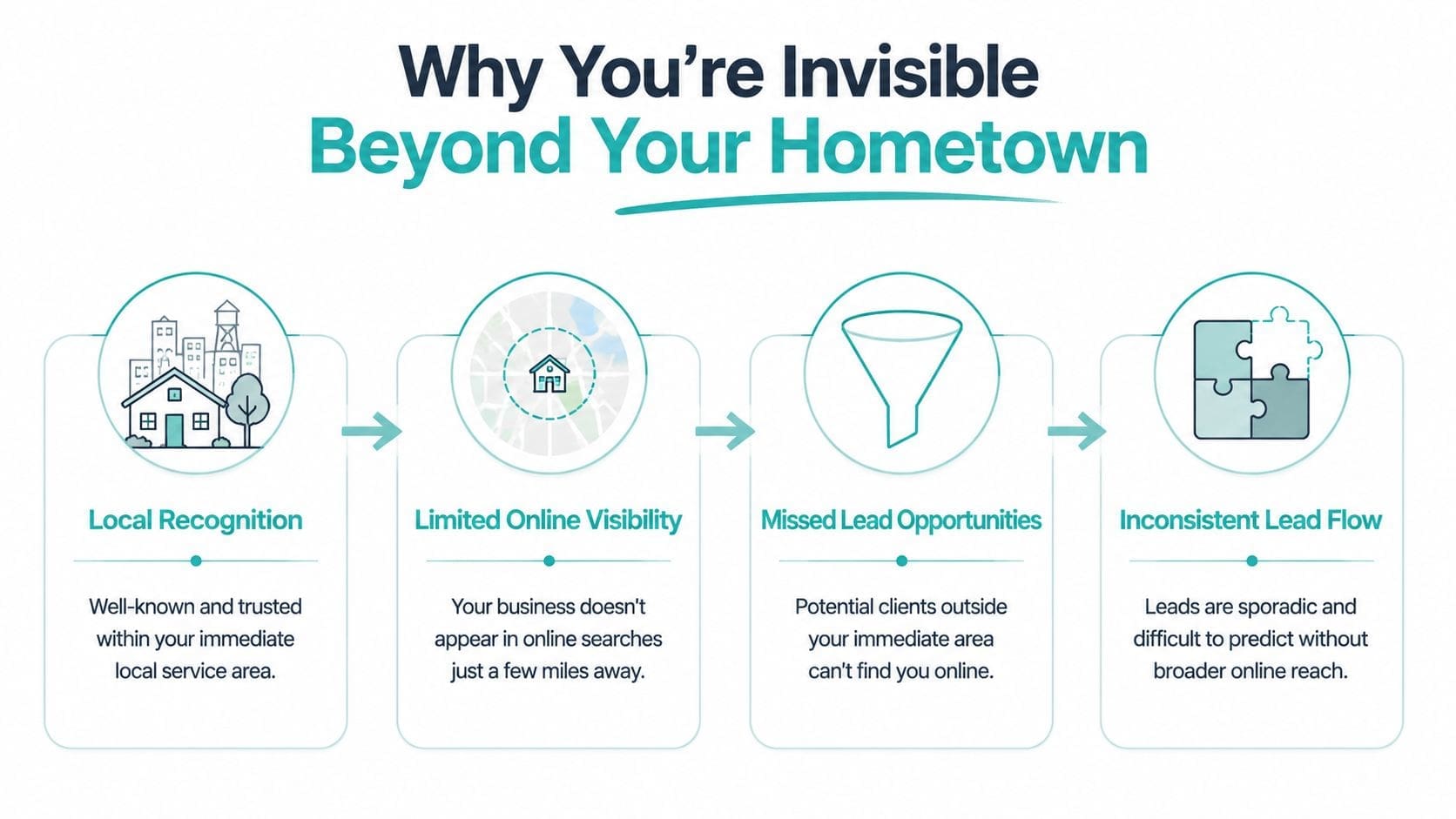
Most contractors don’t have a workmanship problem. They have a visibility problem. They’re known in their hometown. They’re trusted by past customers. But ten miles away, when someone searches for the work they do, they don’t show up. That job goes to somebody else.
This is the core issue behind the whole lead generation website vs brochure website for small businesses debate. You’re not deciding between two website styles. You’re deciding whether your website is just sitting there, or whether it’s part of a system that gets you found and turns that visibility into calls.
Your Website Is a Leaky Bucket Not a Lead Engine
You may already be busy. That fools a lot of owners.
Busy doesn’t always mean secure. Busy can mean you’re stuck taking whatever comes in. Small jobs. Price shoppers. Last-minute work. Gaps between jobs that make payroll feel heavier than it should.
That’s the feast-or-famine cycle. It wears down good contractors.

A common story goes like this. You built a website years ago. Maybe an agency sold it as the thing that would “bring in leads.” It has your logo, some photos, a list of services, and a contact page. It looks fine.
But it doesn’t do much.
It waits.
It doesn’t create demand. It doesn’t put you in front of buyers. It doesn’t help much outside the one city you’ve talked about online for years. If you want the blunt version, websites don’t generate leads by themselves. They sit there until something drives traffic to them.
Why this feels so frustrating
You know how to run jobs. You know crews, equipment, estimates, and deadlines. But in marketing, too many contractors are forced to guess.
That guesswork creates real business pain:
- No control over lead flow because word of mouth comes in waves
- No clear source of jobs because nobody can say what caused the phone to ring
- No reach beyond home base because the business is only visible where Google already connects it
- No confidence in spending because you’ve likely been burned before
Practical rule: If you can’t control visibility, you can’t control revenue.
That’s the core problem. Not effort. Not reputation. Not skill.
Your website is leaking opportunity because it isn’t built as part of a visibility system.
The Two Types of Websites for Contractors
There are only two website types that matter here.
One is a brochure website. The other is a lead generation website.
The end.
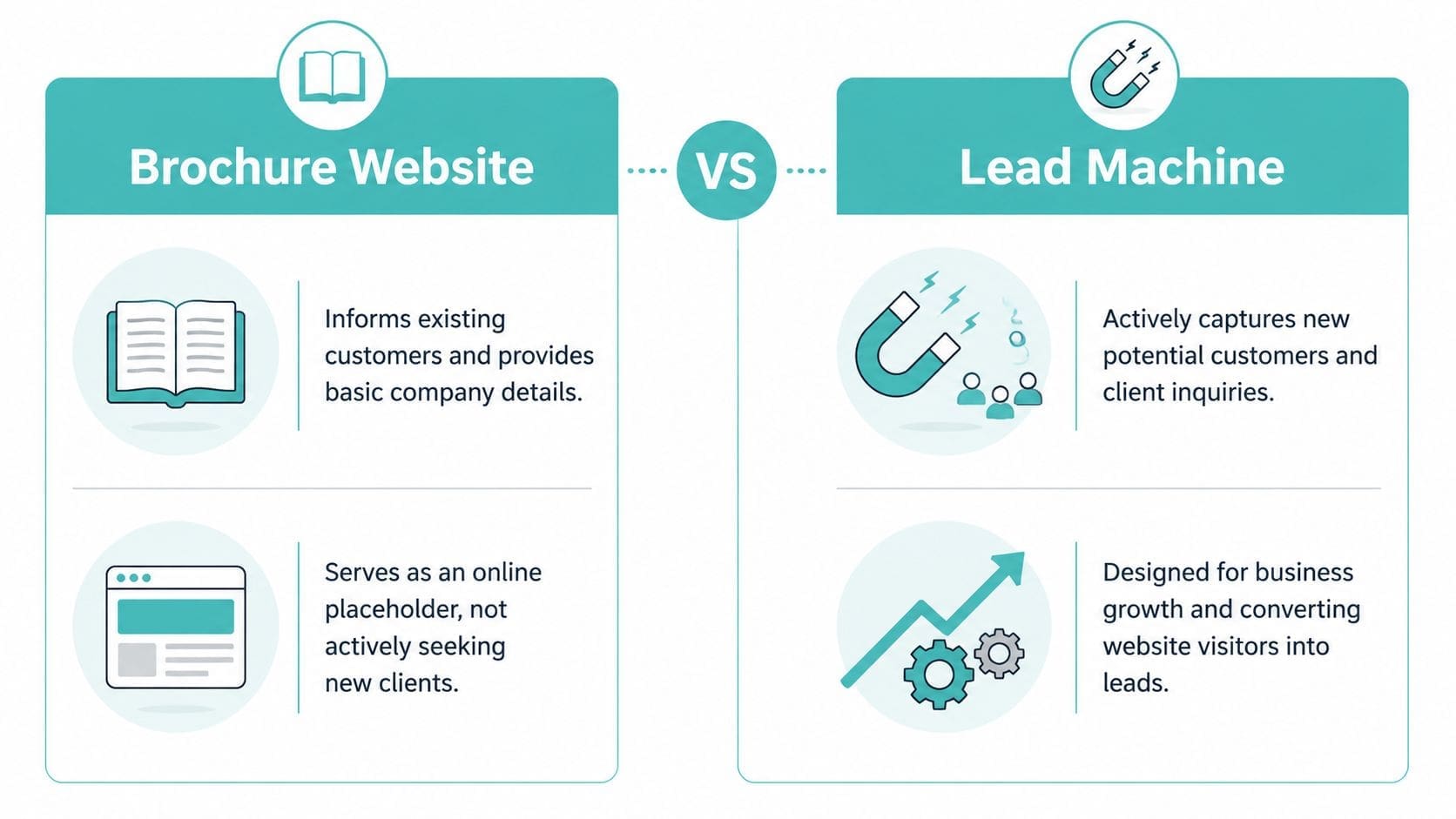
A brochure site is the online version of a business card. It tells people who you are. A lead generation site is built to get action from people who need your service now.
According to small business website data from Network Solutions, 73% of small businesses in the U.S. have a website in 2025, up from 64% in 2020, but the type of site matters. That same source notes that brochure sites act like digital pamphlets and fail to drive measurable results, while optimized lead generation websites report 15% to 50% increases in revenue.
What a brochure website actually does
A brochure website usually says:
- Who you are with a home page and about page
- What you do with a short services page
- How to reach you with a phone number and contact form
That’s not enough for a contractor who wants more jobs from more cities.
A brochure site mostly helps people who already know your name. Maybe a referral heard about you and wants to check if you’re legit. Fine. It can do that job.
But that isn’t a lead system. That’s a placeholder.
What a lead generation website is supposed to do
A lead generation website is built for one purpose.
Turn visibility into calls.
It is structured around the services you want to sell and the cities you want work from. It gives buyers a clear next step. It helps capture demand instead of just sitting there.
A good contractor website isn’t decoration. It’s a tool tied to revenue.
If you’re established and you want growth, stop asking whether you need a nicer website. Ask whether your site is built to support a lead system.
Comparing a Brochure Website vs a Lead Machine
Here’s the plain-English version. A brochure website helps people confirm you exist. A Lead Machine helps strangers find you, trust you, and contact you.
Use this table to see the difference fast.
| What matters | Brochure website | Lead Machine |
|---|---|---|
| Main job | Acts like an online flyer | Turns visibility into calls and quote requests |
| Typical structure | 5 to 10 static pages | Service pages, city pages, conversion pages |
| Best for | People who already know your business | People searching for your service in the cities you want |
| Calls to action | Usually weak or limited | Clear calls to call, form submit, or request a quote |
| Local reach | Usually tied to one main location | Built to support visibility across multiple service areas |
| Tracking | Often little to none | Built for tracking calls, forms, and page performance |
| Business value | Online presence | Revenue asset |
What the features tell you
This isn’t about flashy design. It’s about whether the site can do a job.
As explained in this comparison of brochure websites and lead generation websites, brochure sites usually have 5 to 10 static pages and basic contact forms. Lead generation websites include features like click-to-call buttons, dynamic landing pages, and local search structure that can raise call conversions by 15% to 30% over static information pages.
That difference matters because small business owners don’t need more digital wallpaper. They need a site that helps turn traffic into work.
Why contractors should think of this like equipment
You wouldn’t buy a machine that looks good but can’t produce.
Your website should be judged the same way.
A brochure site is like owning a truck with no fuel. It can sit in the yard and look fine all day. It still won’t get your crew to a job. A Lead Machine is the website version of productive equipment. It has a job. It supports a system.
- Brochure site mindset means “we have a website”
- Lead Machine mindset means “we have a system that turns visibility into calls”
If your site only tells people about your business, it’s not helping enough. It needs to help your business get chosen.
That’s the actual answer in the lead generation website vs brochure website for small businesses debate. One is passive. One is built to perform.
The Real Reason You Are Invisible Outside Your Hometown
Most contractors are more visible than they think in one place, and less visible than they think everywhere else.
You’re probably known in your home city. Your address is there. Your trucks run there. Your website likely mentions it. Your online profiles probably mention it too.
Then somebody in the next town over searches for your service. You don’t show up.
What “near me” really means for your business
When a buyer searches for something like “excavation contractor near me,” Google doesn’t read that as some vague idea. It ties that search to the searcher’s current location.
In plain terms, that search becomes your service in their city.
If your online presence keeps telling Google only about your hometown, then Google has no strong reason to connect you to the next town, the next county, or the place where you want more work.
That is the visibility gap.
Why single-location websites hold contractors back
A one-city brochure site creates a false sense of security. You think people can find you because your business exists online. But buyers who don’t know your company name aren’t searching for your name. They’re searching for the work and the place.
That’s where most contractors lose jobs they never even knew were available.
According to this discussion of brochure websites and territory growth, for contractors moving into new service areas, a single-location brochure site is a major handicap. Lead generation architecture with 50 to 100 geo-targeted city pages can improve local pack rankings by 25% to 50%.
You don’t need to obsess over the technical side to understand the business point. If your business doesn’t clearly show where you work, Google has no reason to show you there.
The cost of being known only at home
This isn’t about vanity. It’s about missed revenue.
- You lose unseen jobs because buyers choose the companies that appear
- You stay boxed into one market even if your crews already travel farther
- You keep competing on scraps while larger players buy visibility in the towns around you
Being trusted in your hometown doesn’t help much if customers in the next city never see your name.
That is why contractors think they have a lead problem. Most of the time, they have a visibility problem first.
How to Stop Guessing and Actually Track Your Results
Ask a contractor with a basic site where the last five jobs came from. You’ll often get a shrug.
Maybe referral. Maybe Google. Maybe somebody saw the truck. Maybe they were sent by a past customer.
That isn’t tracking. That’s guessing.

The numbers are ugly for brochure sites
According to home services website benchmark data from Halstead Media, brochure sites generate 0 to 2 leads per month with conversion rates below 0.5%, and measuring return is often impossible. Lead generation websites, by contrast, deliver 10 to 50 qualified leads per month at 1% to 5% conversion rates, with results that can be tracked and improved.
That gap matters because businesses don’t grow on “I think.”
They grow on knowing what produced the call.
What tracking gives you
A real lead system tells you things a brochure site usually can’t.
- Which pages pull calls so you know what services and cities are working
- Which leads are worth your time so you can spot junk and serious buyers
- Which dollars are paying back so you can stop funding dead ends
If you want a practical overview of how tracked ad results are measured, this guide on accurate Google Ads ROI data is useful because it shows why conversion tracking matters before anyone talks about performance.
Stop funding blind spots
A lot of contractors don’t need more marketing. They need fewer blind spots.
When you can see where calls came from, what page drove the action, and whether the lead matched the work you want, decisions get easier. You cut waste faster. You stop believing every sales pitch. You stop confusing motion with progress.
If you want a straight look at where your visibility and lead flow may be breaking down, a digital marketing audit for contractors is a simple starting point.
The moment you can track results, marketing stops being magic and starts being management.
Upgrading to a System That Actually Generates Leads
A brochure site might be enough if you’re retired in place, don’t want to grow, and only need an online listing. For an established contractor who wants more of the right jobs, that’s not a serious option.
You need a system.

What the upgrade actually looks like
The fix is simple to understand.
First, build the website as an asset. That means a site structured by service and city, with strong calls to action and clear paths for buyers to contact you.
Second, drive traffic into it with paid visibility. The website is where people land. The ads are what put you in front of them.
Websites without traffic sit there. Ads without conversion waste money. Together, they work as a system.
Why active sites beat static sites
Lead generation websites work better because they keep supporting discovery and conversion instead of acting frozen in time. As noted in lead generation statistics from Martal, companies that embrace core lead generation practices like regular content updates generate 13 times more leads.
That doesn’t mean you need to become a marketer. It means your business needs the right structure behind the scenes.
One practical part of that system is handling the calls well once they come in. If your office misses calls or follow-up slips, even a strong website underperforms. Services like Phone Staffer show the other side of the lead equation. Visibility matters, but so does what happens when the phone rings.
What to choose if you’re done with guessing
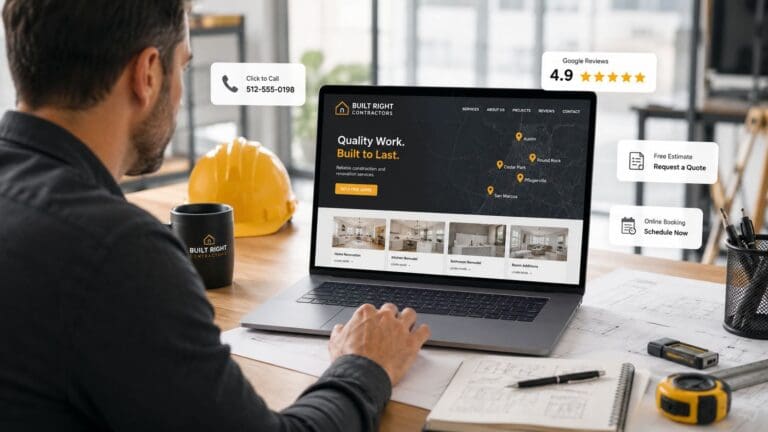
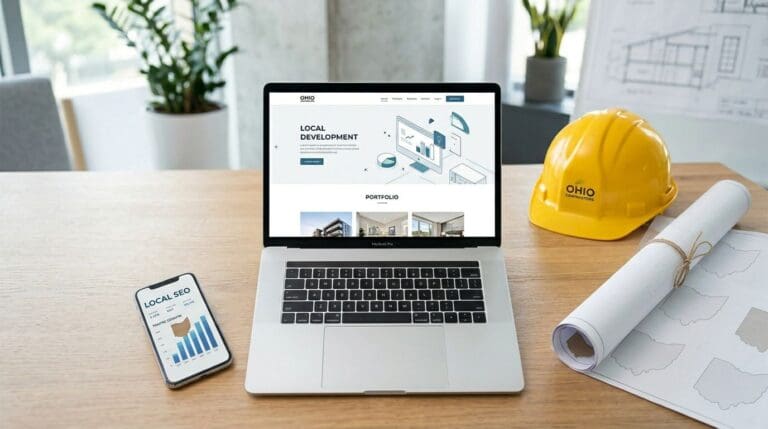
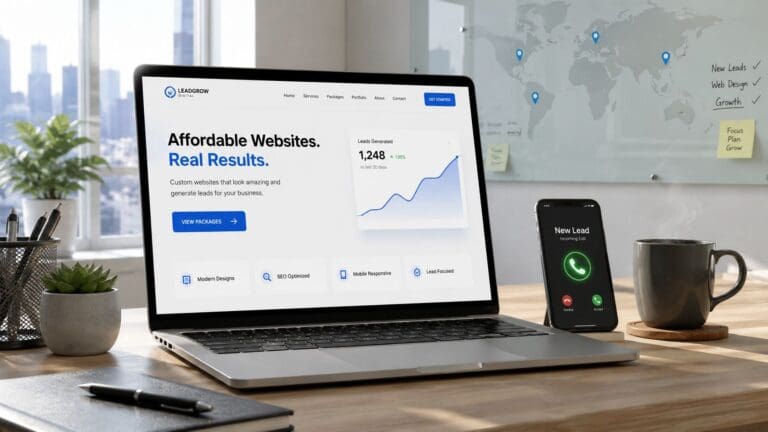
If your current site is just a digital brochure, upgrade it into a lead-focused asset and pair it with traffic. One option is a Lead Machine built for contractors, which is a website structured by services and cities and used with ads to turn visibility into calls.
That is the business move. Not a redesign for looks. A system for demand.
Predictable Leads Mean You Control Your Business
Contractors who rely on word of mouth alone don’t control enough of their pipeline. They’re waiting for somebody else to decide when work shows up.
That makes the business fragile.
A brochure website keeps you in that same position. It gives you an online presence, but not real control over visibility. A lead generation website, paired with ads, gives you a way to show up in the cities you want and turn that attention into calls.
The payoff isn’t abstract. Predictable leads let you be pickier. You can turn down weak jobs. You can protect your schedule. You can grow without feeling like every month is a gamble.
You think that customers “can” find you but, If customers “don’t” find you, nothing else matters. Lead Machines are built to fix that.
If you’re tired of guessing, The Cherubini Company helps contractors address a core challenge. Visibility. They build lead-focused websites and pair them with advertising so your business shows up where buyers are looking, not just in your hometown.