
Most advice about a local contractor directory is backwards.
People tell you to go claim your listings, fix a few profiles, and wait for the phone to ring. That sounds simple. It also keeps contractors stuck in the same mess. You spend time patching little profile problems while the underlying problem stays the same. You are not visible where prospective clients look.
That’s why so many good contractors stay busy in their hometown and still miss jobs in the next town over. Customers don’t search your company name if they’ve never heard of you. They search the job they need and the city they’re standing in. If you don’t show up there, you’re out before the race starts.
And this is not a small market problem. The Associated General Contractors of America reported more than 919,000 construction establishments in the United States in the first quarter of 2023, with 8.0 million workers in the industry, which tells you exactly what you’re dealing with: a huge, crowded, fragmented market where visibility matters a lot according to AGC construction data.
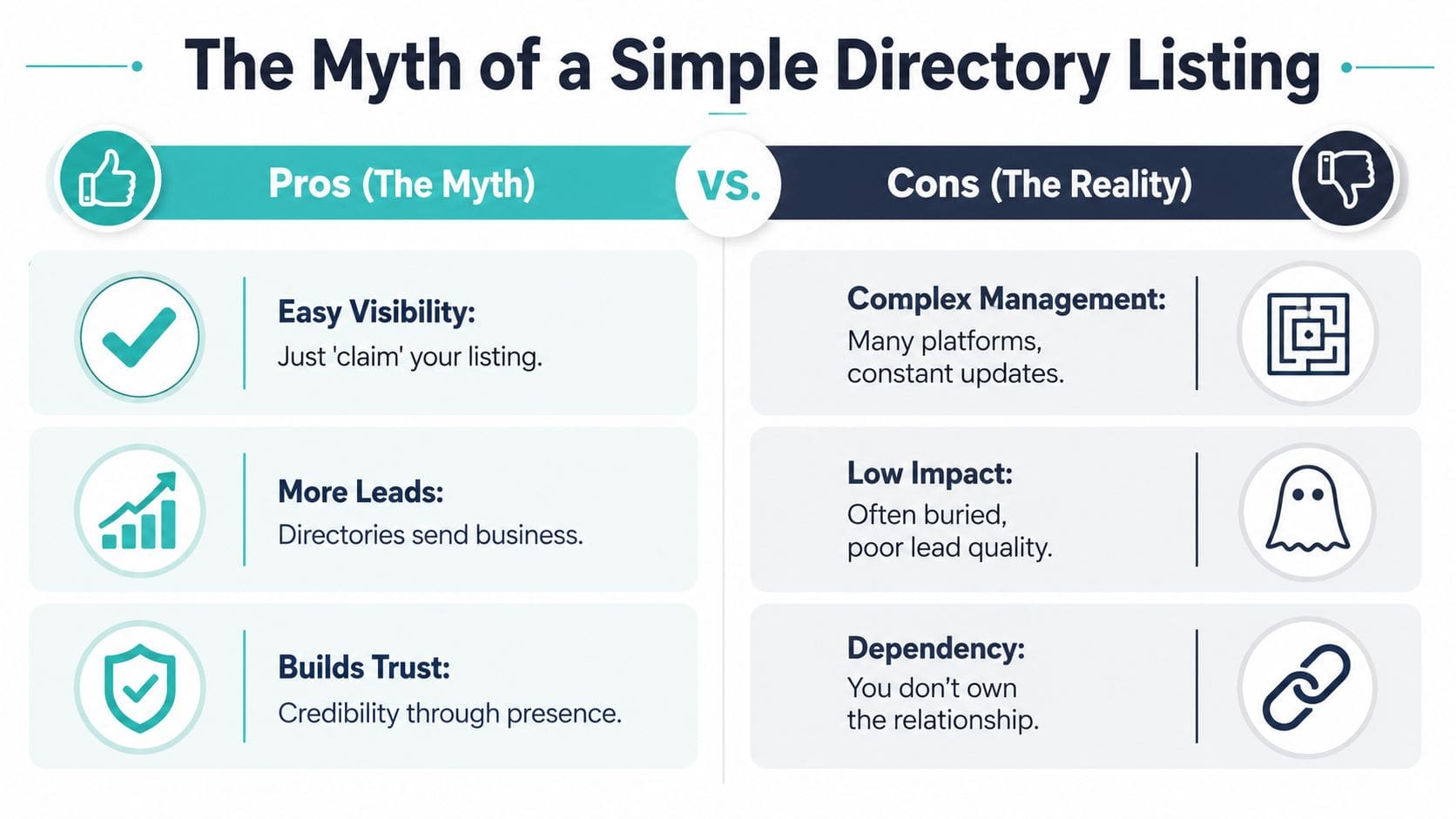
The Myth of a Simple Directory Listing
The popular advice goes like this. Get listed everywhere. Claim your profiles. Keep your info updated. Problem solved.
Nope.
That advice turns your lead flow into a bookkeeping chore. And the worst part is that even when you do it, you still don’t control the result. A local contractor directory is not one thing. It’s a pile of platforms, old profiles, trade listings, map listings, and random business pages you forgot existed.
One wrong detail can break the whole thing
Frustration begins with these inconsistencies. Your name is one way on one listing. Your address is shortened on another. One phone number still points to an old line. One city name is missing. One suite number is different.
That sounds small. It isn’t.
Businesses with consistent local citations across directories see an average 20% increase in search rankings, which is why exact name, address, and phone consistency matters so much in this contractor SEO statistics roundup.
Practical rule: If your business details change in one place and not everywhere else, you don’t have a listing strategy. You have a slow leak.
A lot of contractors think the answer is more listings. It usually isn’t. More listings just create more places for bad info to spread.
The real issue is control
Here’s the trap. A manual directory game never ends.
You move offices. You change your call tracking setup. You add a service area. You update branding. Now you’re chasing corrections across sites you don’t own. That’s not marketing. That’s maintenance.
And most contractors are already too busy running jobs, quoting work, fixing crew issues, and dealing with equipment. They don’t need one more half-broken system to babysit.
If your business doesn’t show up right now, the problem usually isn’t effort. It’s structure. Your online presence wasn’t built to stay accurate across your full service area. If that sounds familiar, read why your business doesn’t show up on Google. It will sound painfully familiar.
What the simple-listing advice gets wrong
- It assumes one profile is enough. It isn’t when you work in multiple towns.
- It treats visibility like data entry. Visibility comes from being present in the right places, for the right searches.
- It obscures the full cost. Every bad listing wastes calls, trust, and time.
- It keeps you reactive. You’re fixing scraps instead of building a system.
A local contractor directory can support visibility. It cannot be your visibility plan.
Why You Are Invisible Ten Miles from Home
You probably know this feeling.
Everybody in your town knows your name. You’ve done work there for years. Trucks are on the road. Signs are in yards. Referrals come in. Then a customer in the next town searches for your service and you’re nowhere.
That’s the visibility gap.
When someone searches for a contractor “near me,” Google ties that search to the city where the person is standing. That means your hometown reputation doesn’t carry very far if your online presence keeps telling Google you’re only tied to one address and one place.
Your service area is bigger than your online footprint
Most contractors work well beyond the town where their shop sits.
They’ll drive out for better jobs. They’ll cover nearby counties. They’ll service rural areas. They’ll take work across a whole region if the project is worth it. But their online setup often says something much smaller.
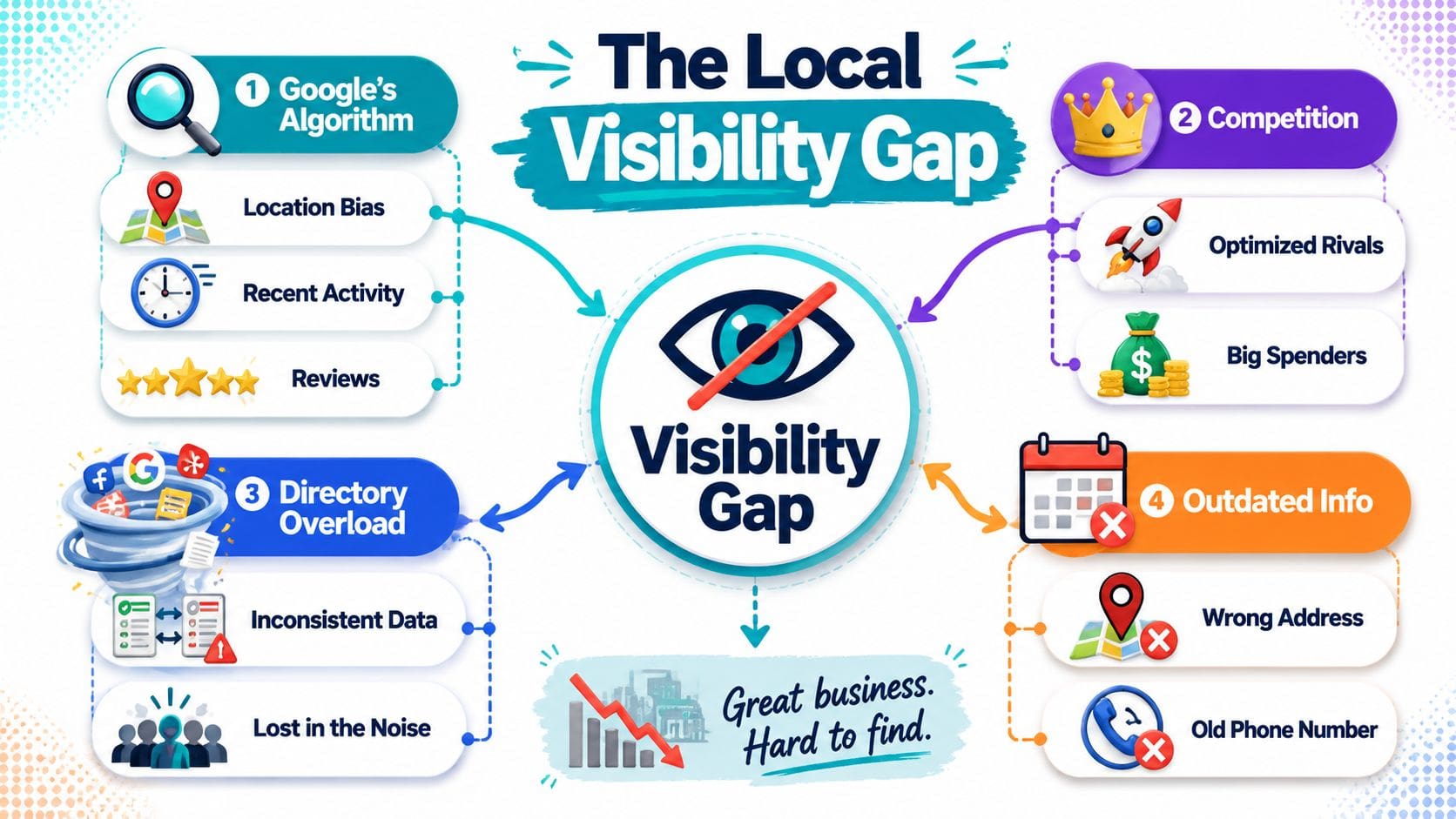
That’s why a local contractor directory can make the problem worse. A lot of directories pin you to one address and call it done. That may help somebody confirm you exist. It doesn’t tell search engines, or customers, that you work in the next town, the next county, or the outer edge of your route.
You don’t lose those jobs because you’re bad at what you do. You lose them because you never showed up.
Directories often favor the already visible
Here’s the blunt question more contractors should ask. Do directories help small local companies compete, or do they mostly make the already-visible companies easier to find?
That question matters because directories without territory-level structure can underrepresent contractors who serve rural or multi-county areas, especially when they work far beyond one city center as discussed in this piece on local contractors.
If you want to see what fixing that looks like, look at how contractors get more calls in nearby towns.
Signs you’ve got a visibility gap
| Problem | What it usually means |
|---|---|
| You rank in your hometown but not nearby | Your presence is tied to one location |
| You get small local jobs but miss larger regional work | Buyers outside town don’t see you |
| People say “I didn’t know you serviced this area” | Your online footprint never told them |
| Your directory profiles look fine but calls are uneven | Visibility is shallow, not wide |
Contractors frequently get fooled. They think they’re online, so they think they’re covered.
They’re not covered. They’re pinned.
Directories Are a Trap Not a Solution
A directory can help someone find a phone number. Fine.
But let’s stop pretending these platforms are built around your best interest. Most aren’t. They’re built to hold attention, sell placement, and keep you dependent on their system.
If your lead flow depends on somebody else’s platform, somebody else controls the rules.

Buyers hate stale listings and dead ends
Research on online directories shows buyers care most about verification, current coverage, and response speed because stale listings and bad contact details waste time and kill trust. Contractor database vendors also frame this as a coverage-gap problem caused by incomplete or outdated records in this analysis of subcontractor database software.
That should tell you something. The directory itself is often part of the problem.
A profile can exist and still fail. It can be live and still be useless. It can make you “present” while doing almost nothing to help a real buyer hire you.
You don’t own the relationship
This is the part contractors ignore until they get burned.
When a directory sends a lead, the platform sits in the middle. The platform decides layout, ranking, exposure, and often who gets seen first. If they change the page, sell better placement, or crowd your listing with stronger profiles, you eat it.
Rented visibility always gets expensive. Sometimes in money. Always in control.
If you want social proof from third-party sites, tools like Testimonial’s Yelp integration can help organize review content you’ve already earned. That’s useful. But it still doesn’t solve the bigger issue. Reviews help trust. They do not create full service-area visibility by themselves.
Why contractors stay stuck in directory dependence
- It feels easy. A listing is simpler than building a system.
- It gives false comfort. You see your name online and assume buyers see it too.
- It hides weak lead quality. You blame the caller instead of the setup.
- It keeps you chasing scraps. You compete inside somebody else’s box.
If you’re still patching listings one by one, you’re doing local citation building without a real hub to support it. That’s backwards.
The System That Fixes Invisibility for Good
The answer is not “more directory work.”
The answer is one system that tells the truth about your business everywhere. One system that says what you do, where you do it, and how people contact you. One system that turns searches into calls instead of turning your week into profile cleanup.
That’s what a Lead Machine is.
A Lead Machine gives your business one center
A Lead Machine is a website built to get found across your service area and turn that visibility into leads. Not a brochure site. Not a vanity project. A working sales tool.
It gives your business one source of truth. Your services are clearly defined. Your cities are clearly defined. Your calls to action are clear. Your forms are built to capture real work. Your paid traffic goes to something built to convert instead of dying on a weak page.
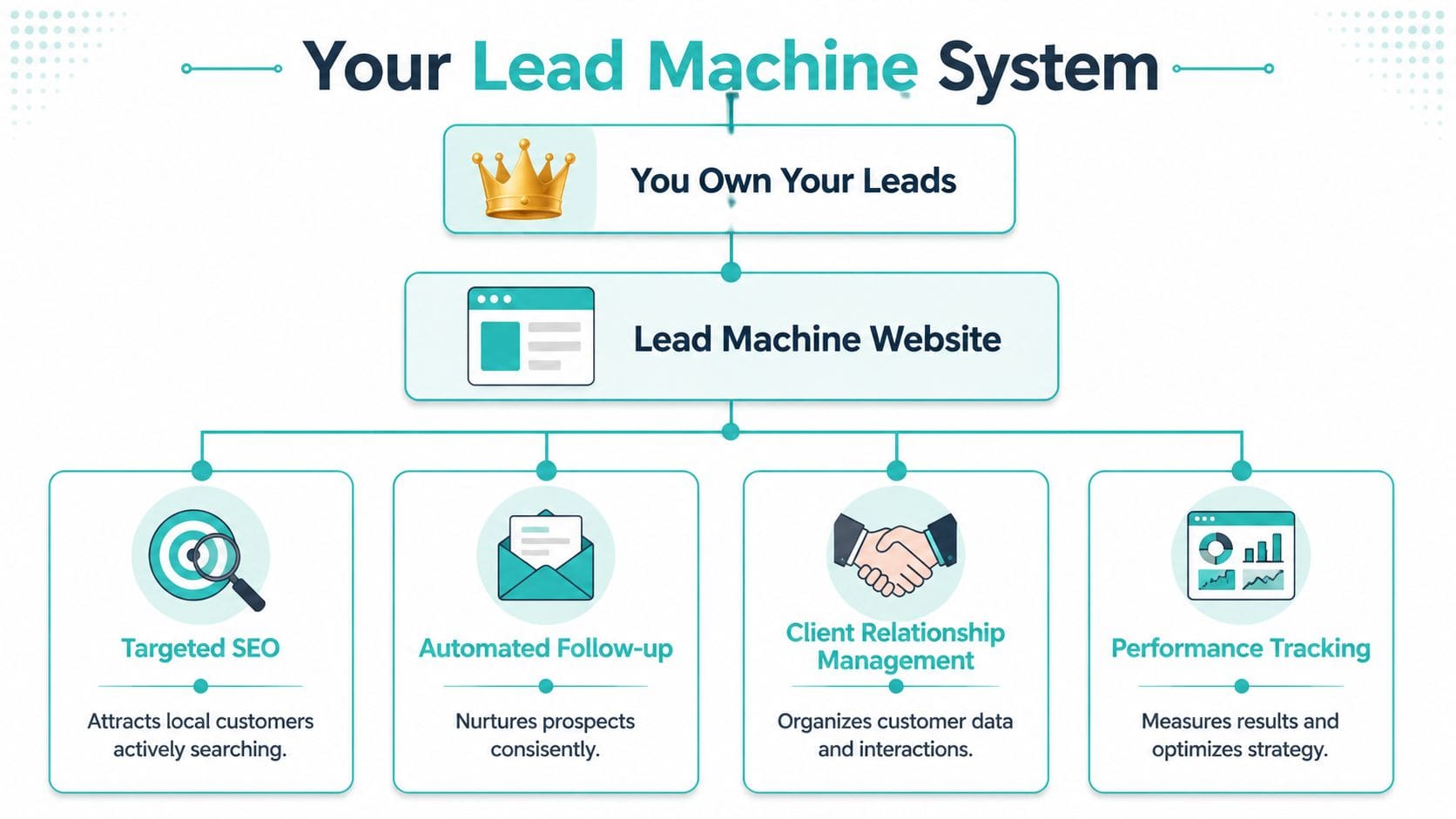
For contractors, that changes everything. Your website stops being a dead brochure and starts acting like a map of where you want work.
This is where directories fit, and where they don’t
A directory should support your system. It should not be your system.
The Cherubini Company builds Lead Machines for contractors with service pages, city pages, calls to action, tracking, and ad support so the website works as the main visibility asset instead of another online placeholder. If you want the plain-English version, read what a Lead Machine is.
A lot of contractors also need to understand the basics of optimizing local business SEO in simple business terms. The key idea is straightforward. Search engines need clear signals about your services and service area. If your setup is vague, your visibility will be vague too.
A website does not create traffic by itself. It waits. Ads create visibility. A Lead Machine turns that visibility into calls.
What the system does that directories can’t
- Shows all your service areas clearly. Not just the town where your mailing address sits.
- Gives ads somewhere useful to land. Ads without a real destination waste money.
- Keeps your business details consistent. One hub makes every other listing easier to support.
- Lets you scale without chaos. Add cities with structure instead of scattered profiles.
There’s a big difference between hoping a dozen outside platforms send you work and owning an asset built for lead flow.
One is fragile.
One is a machine.
Stop Guessing and Start Controlling Your Leads
A lot of contractors don’t really have a lead problem. They have a visibility control problem.
That’s why word of mouth feels good until it doesn’t. That’s why a decent website still sits there doing nothing. That’s why a local contractor directory can make you think you’re covered when you’re still invisible in half the places you want work from.
If you don’t control where you show up, you don’t control your pipeline.
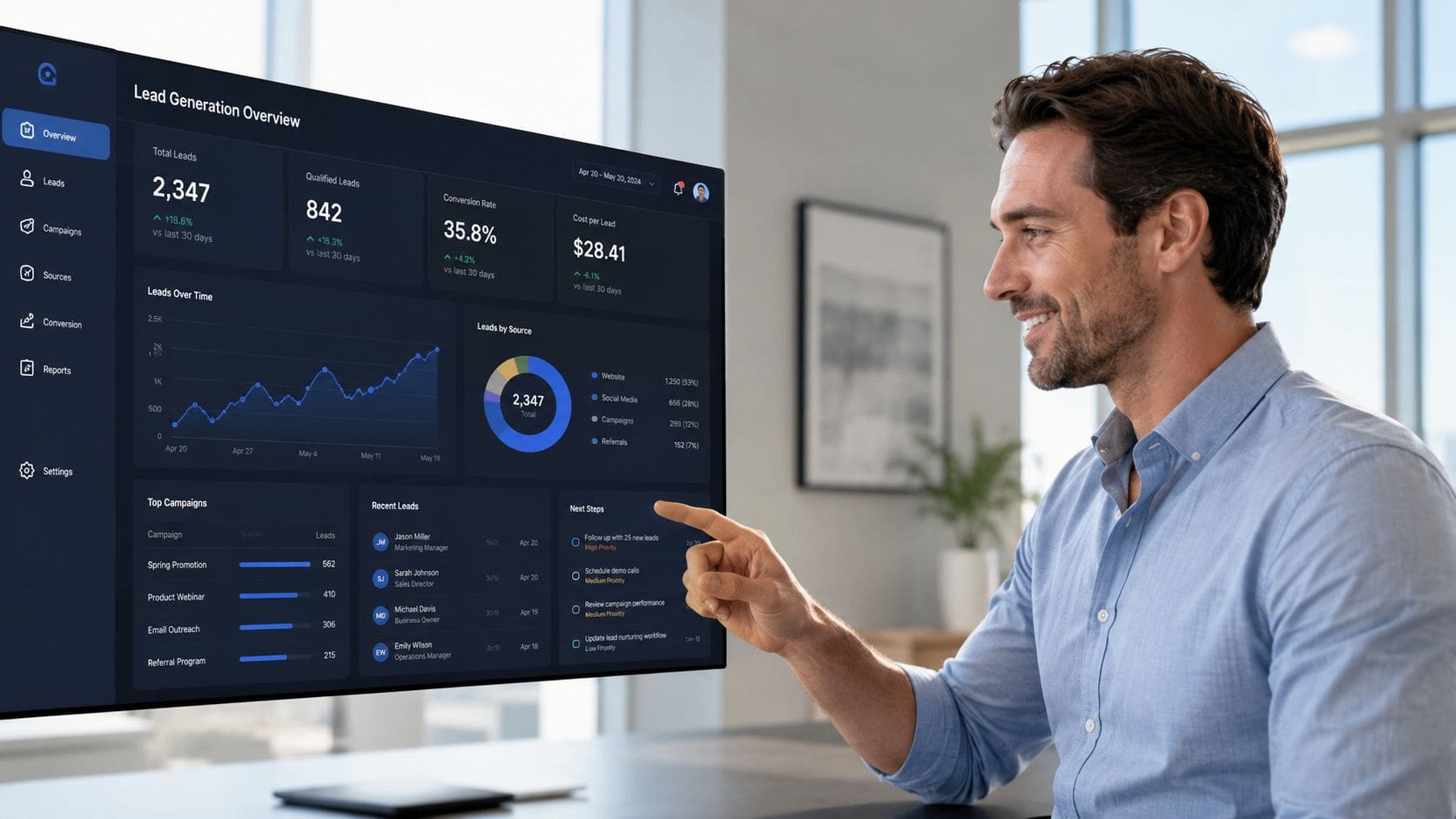
Stop treating symptoms
Claiming profiles, fixing listings, and checking random directories is symptom management. It’s what people do when there’s no real system behind the business.
And when there’s no system, every slow month feels personal. You wonder if referrals dried up. You wonder if the market changed. You wonder if people stopped spending.
Most of the time, buyers are still searching. You’re just not showing up where they’re looking.
Build something you can steer
A business gets stronger when lead flow stops depending on luck.
That means you need two things working together:
- A visibility asset you own. A site built by service and city, with clear paths to call or request a quote.
- Traffic that hits now. Ads that put you in front of buyers who need the job done.
That’s the whole point of the system. Websites by themselves wait. Ads by themselves leak money when the site is weak. Together, they give you a chance to control demand instead of reacting to it.
If you’re serious about growing beyond your hometown, look at Lead Machines for contractors. The idea is simple. You need a setup that makes your business visible where you want jobs.
The contractor who controls visibility gets more chances to bid, pick better jobs, and stop living in feast or famine.
You can keep chasing listings one by one if you want. A lot of contractors do. Then they wonder why they’re still unknown ten miles from home.
Or you can build a system that covers your service area, catches demand, and turns it into calls.
You think that customers “can” find you but, if customers “don’t” find you, nothing else matters. Lead Machines are built to fix that.
If you’re tired of guessing, The Cherubini Company helps contractors fix the core issue: visibility. They build Lead Machine websites and run ads that put your business in front of the right cities, then turn that traffic into calls and quote requests. If your current website is just sitting there and your directory listings feel like busywork, this is the kind of conversation worth having.