
You’ve probably done this before.
You search your service on Google. Your competitor is there. You’re not.
You know you do good work. You know people in your area need what you sell. But the phone isn’t ringing the way it should, and jobs are going to companies you know you can beat in the field.
That’s maddening.
It also isn’t random.
Your Biggest Problem Isn’t What You Think
Most contractors think they have a lead problem.
They don’t.
They have a visibility problem.

You’ve heard the same junk from agencies before. “We’ll get you more traffic.” “We’ll improve your brand.” “Give it time.” Meanwhile, your crews still need work, your overhead still shows up every month, and your pipeline swings from packed to empty.
That feast or famine cycle isn’t happening because you’re lazy. It isn’t happening because your work is bad. It happens because buyers don’t see you when they’re searching.
That’s the whole game.
If someone doesn’t know your company name, they search for what you do and where they need it. They don’t search for your logo. They don’t care about your slogan. They type in the job they need and call whoever shows up.
That’s why you don’t have a lead problem, you have a visibility problem.
What this looks like in real life
- You rely on word of mouth: Good until it slows down.
- You show up in your hometown: Then disappear a few miles away.
- You paid for a website: But it isn’t producing calls.
- You got burned before: So now everything marketing-related feels like a scam.
- You keep guessing: No clear system. No control.
You’re not losing jobs because people decided against you. You’re losing jobs because many of them never saw you in the first place.
That’s a brutal truth, but it’s also good news.
Why?
Because if the problem is visibility, the fix is not “work harder.” The fix is to get seen in the places you want work from.
Revenue follows visibility. Not the other way around.
The Real Reason Your Competitors Get the Calls
Google is simple in one important way.
It believes what you consistently tell it.
If your business is based in one town, and your website mostly talks about that town, Google assumes that’s where you work. That makes sense. Why would Google assume you serve cities you never mention?
This is why your competitors show up on Google and you don’t.
Google turns near me into a city search
When a homeowner searches for “excavation contractor near me” or “septic repair near me,” Google translates that into the city where that person is standing.
So if you’re based in Newark but the customer is in another town, Google is looking for businesses that clearly serve that town.
If your competitor has built visibility there and you haven’t, they get the call.

A lot of contractors work a wide area but market like they only exist in one place. That creates a visibility gap.
You know you’ll drive there.
Google doesn’t.
The top spots take the jobs
This part matters more than most contractors realize. 80% of all search clicks happen in the top 3 results before people scroll further down the page, according to Olly Olly’s breakdown of why competitors rank first on Google.
So when you’re sitting at position 8 or 12, you’re not “kind of visible.”
You’re buried.
Your competitor in the top 3 gets the attention, the clicks, and most of the calls. You get whatever scraps are left, if any.
Practical rule: If you don’t show up where buyers are searching, you don’t get a shot at the job.
This is the visibility gap
Here’s the plain-English version:
| What you believe | What Google sees |
|---|---|
| “We serve the whole region” | “This business mostly talks about one city” |
| “People can find us” | “This business isn’t relevant in that town” |
| “Our competitor isn’t better than us” | “That competitor looks more established there” |
That’s why contractors lose jobs to competitors online.
Not because your competitor always does better work.
Because they showed up and you didn’t.
Your Website Is a Brochure Collecting Dust
A website does not create traffic.
It sits there and waits.
That’s it.
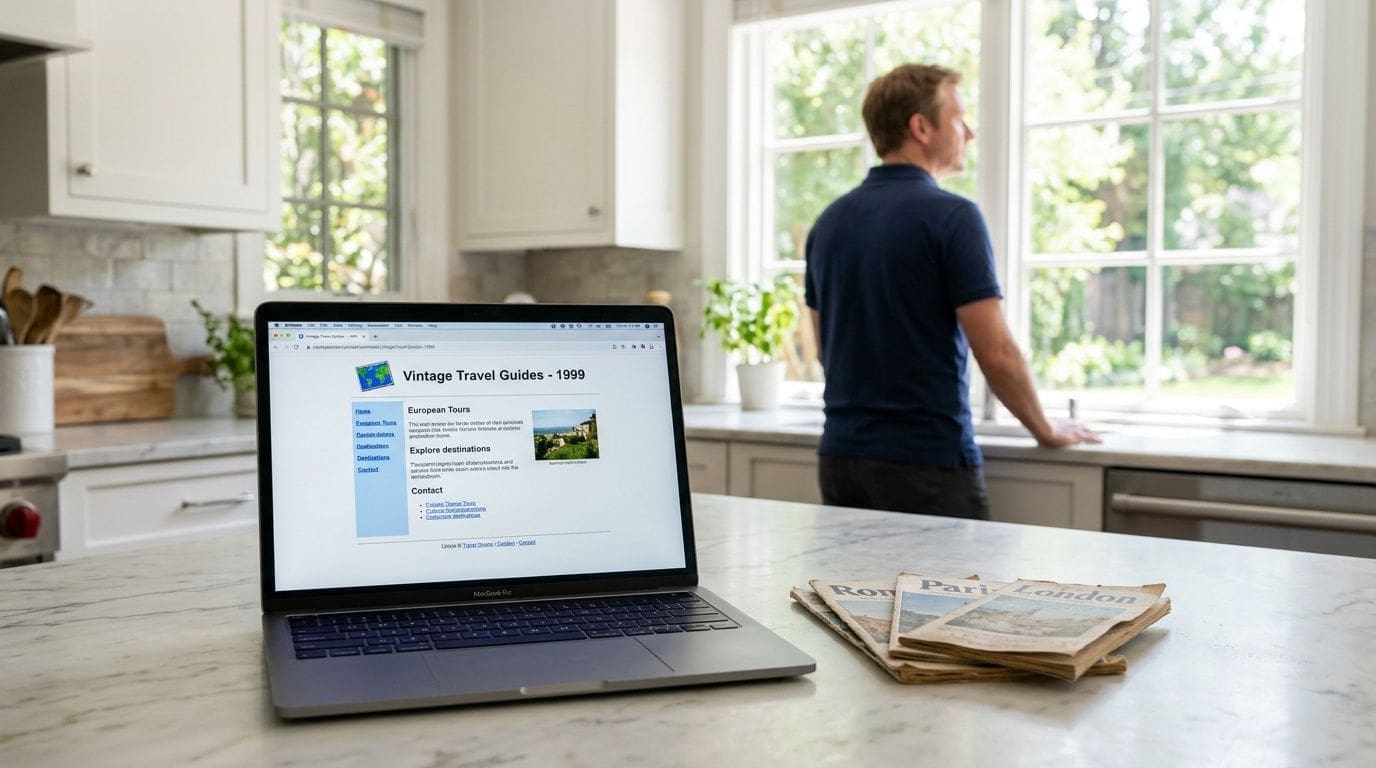
A lot of contractors got sold a fantasy. Build a nice website, toss up a few photos, list your services, and leads will somehow appear. They won’t.
A website is a tool for converting attention into action. It is not the thing that creates attention.
That means if nobody lands on it, it doesn’t matter how nice it looks.
Pretty doesn’t pay the bills
Some websites are expensive brochures. They look polished. They say all the right things. But they don’t pull their weight because they were built to look good, not to get calls.
A contractor doesn’t need a website that wins design awards.
A contractor needs a website that answers one question fast.
Can this company do my job, in my area, and how do I contact them right now?
If your site is slow, that problem gets even worse. Salem Surround notes that slow-loading websites directly hurt rankings, and for home service businesses a site taking more than 3 seconds to load means the lead is already gone. They also note that Core Web Vitals, updated in 2024-2025, are a critical Google ranking factor.
What a website actually does
- It converts traffic: Calls, form fills, quote requests.
- It supports trust: Clear services, real locations, easy contact.
- It helps capture demand: But only after someone gets there.
- It does not produce demand by itself: No traffic in means no leads out.
A dead website and an empty billboard have the same problem. Nobody sees them.
That’s why contractors get frustrated. They spent money on a site, then waited for it to “work.”
But websites don’t work alone.
They need visibility. They need traffic. They need a system behind them.
The System That Turns Visibility Into Jobs
You don’t need more random marketing.
You need a system.
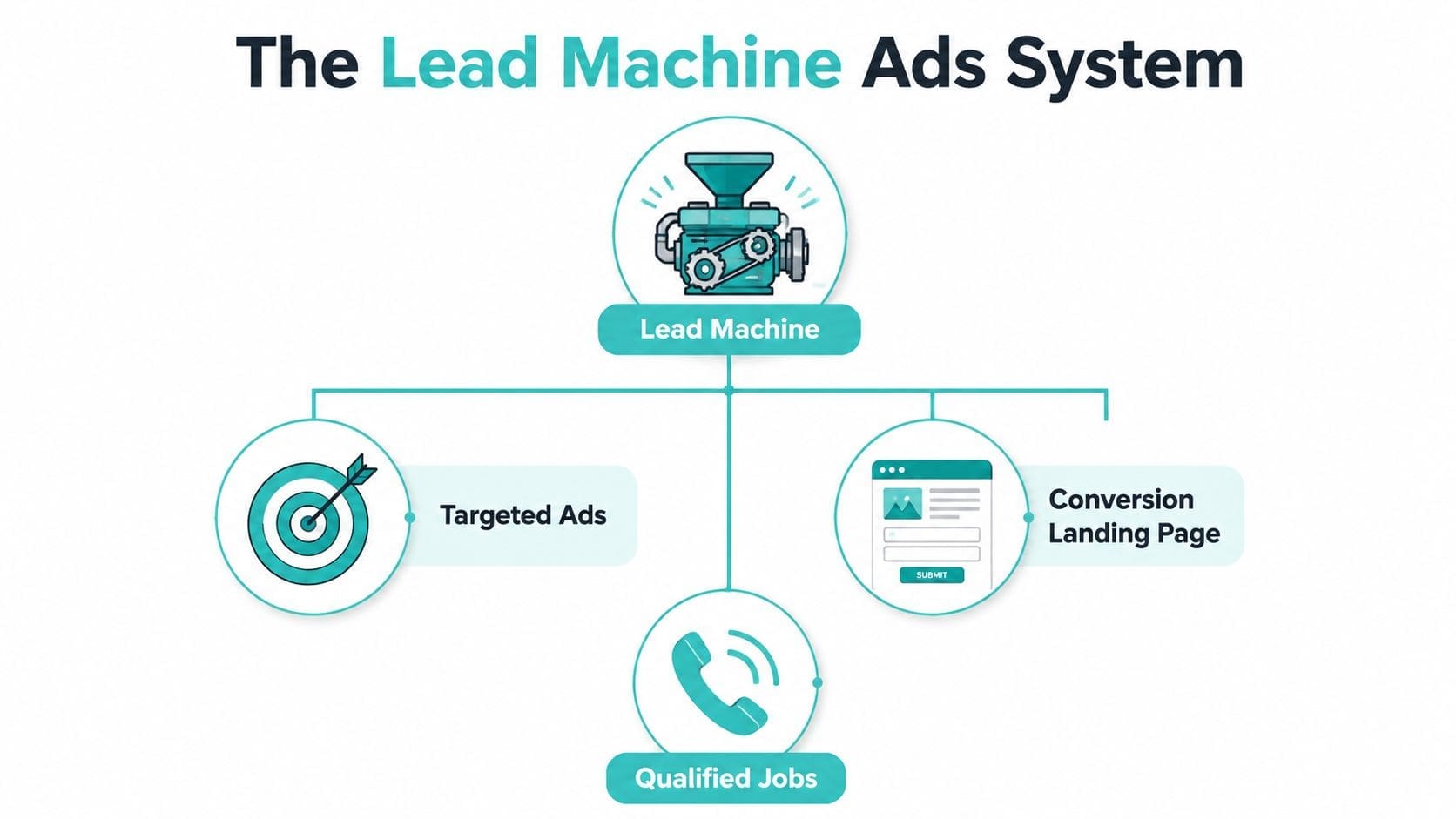
One part gets you seen. One part turns that attention into calls.
The asset
The website has to be built for leads.
Not for compliments. Not for vanity. Not for “branding.”
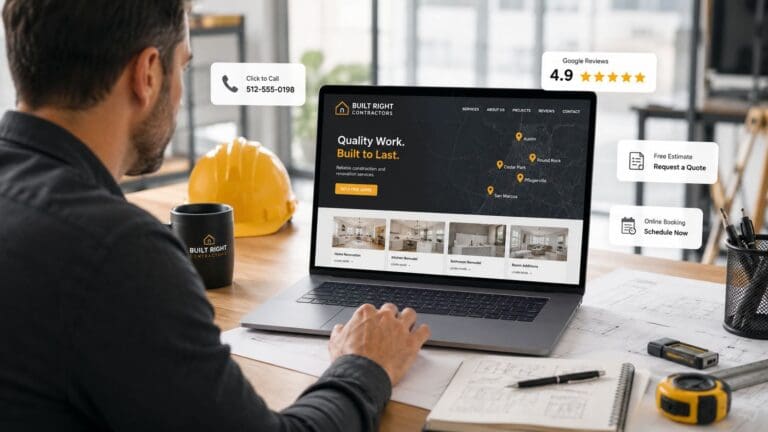
It needs clear service pages, clear city pages, fast load speed, mobile-first design, click-to-call, quote forms, and a structure that tells Google exactly what you do and where you do it.
That matters because competitors often win by building topical authority. A site with 15-20 interconnected pages around a service and linked city pages signals to Google that the business owns that topic, as explained in 321 Web Marketing’s look at why competitors rank above you.
That’s not fluff. That’s structure.
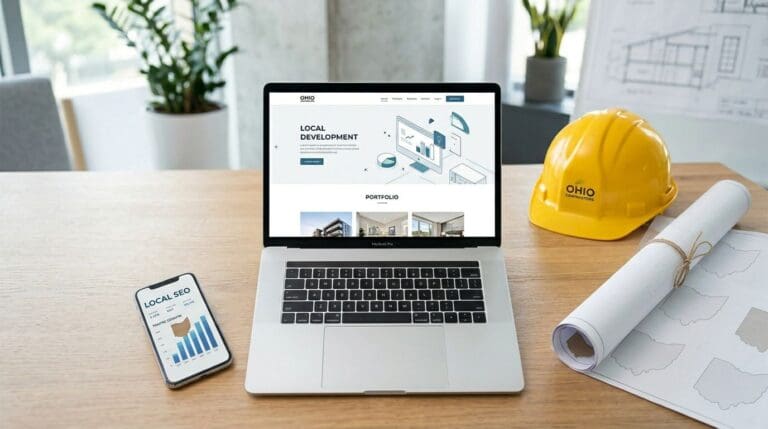
A Lead Machine is built around that idea. What a Lead Machine is is simple. It’s a website asset designed to rank in the right places and turn traffic into calls.
The fuel
Ads create visibility.
That’s the missing piece for most contractors.
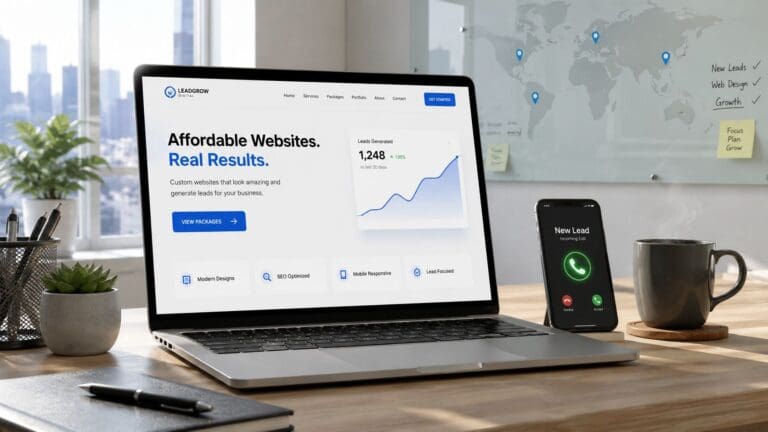
If the website is the machine, ads are the fuel. They put you in front of buyers who are already searching right now. Without that traffic, the site just waits. With the wrong site, ad traffic gets wasted.
That’s why the two have to work together.
A lot of business owners understand this idea faster when they look outside contractor marketing. This Machine Marketing B2B lead generation guide shows the same core truth in another industry. The asset has to be built to convert, and the traffic has to be intentional.
Why both matter
| If you have this | What happens |
|---|---|
| Website without traffic | It waits |
| Ads without a conversion-focused site | You waste money |
| Lead Machine plus ads | Visibility turns into jobs |
You don’t need hustle layered on top of guesswork.
You need a machine and fuel.
That’s how you stop treating marketing like gambling.
Your Roadmap to Take Back Your Service Area
If you want control, the system has to cover the whole service area. Not just your office address. Not just your hometown.
That’s where most contractors fall apart.
They do a little of this, a little of that, and hope the pieces somehow work together. They don’t.
What a real visibility system has to solve
A real system needs to answer these questions:
- Are your service areas clear? If Google can’t tell where you work, it won’t show you there.
- Do your pages match your jobs? One generic services page won’t carry a whole region.
- Is your business information consistent everywhere? Small mismatches chip away at trust.
- Are you building authority over time? This doesn’t happen from one quick fix.
According to Wildcat Digital’s explanation of why competitors still rank above you, competitors ranking higher often have stronger Domain Authority from years of content and backlinks, and inconsistent business information, such as “St.” in one place and “Street” in another, erodes that authority over time.
That should annoy you, because it means sloppy details can hurt a solid business.
It should also wake you up.
What this means for contractors
Here’s the practical checklist a proper system should handle:
-
Google Business Profile alignment
Your business profile has to match the truth of your services and service area. -
Unique city and service coverage
If you want work from multiple towns, the system has to support visibility in multiple towns. One page won’t do that job. -
Consistent business details across directories
Same business name. Same address. Same phone. Everywhere. -
Review flow that keeps moving
Fresh customer feedback supports trust and helps build the signals Google looks for.
If your online footprint is messy, Google doesn’t give you the benefit of the doubt.
Stop trying to patch this together
You shouldn’t be trying to fix this on nights and weekends after running jobs all day.
This is not about learning tricks.
Building a complete visibility system ensures you appear in the towns you want, supports the services you sell, and keeps your business from disappearing outside your home base.
That’s how you take back your service area.
Stop Hoping for Leads and Start Controlling Them
Your competitors aren’t magically better.
Many of them just have more search history, more engagement, and more authority built up over time. Seobility explains that Google uses statistical modeling, so domains with a longer history of traffic and engagement build momentum that often helps them outrank newer sites, even when the newer sites have better content.
That means hope is not a strategy.
Waiting is not a strategy.
A pretty website is not a strategy.
Control comes from visibility. Visibility comes from a system. And a system gives you a shot at steady calls, better jobs, and a business that isn’t hanging by a thread every slow month.
You think that customers “can” find you but, If customers “don’t” find you, nothing else matters. Lead Machines are built to fix that.
If you’re tired of guessing, The Cherubini Company helps contractors build visibility systems that turn service-area searches into calls. They build Lead Machines and run ads to help contractors show up in the cities where they want work.