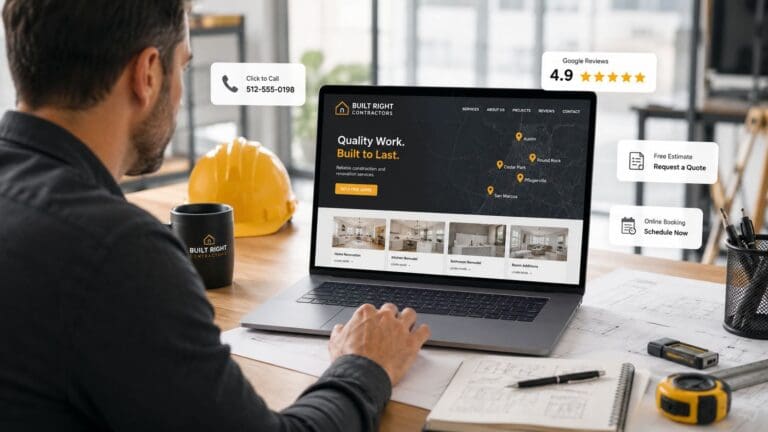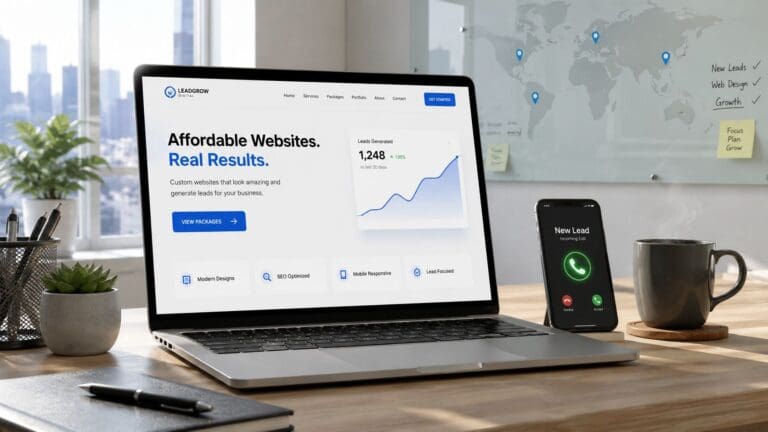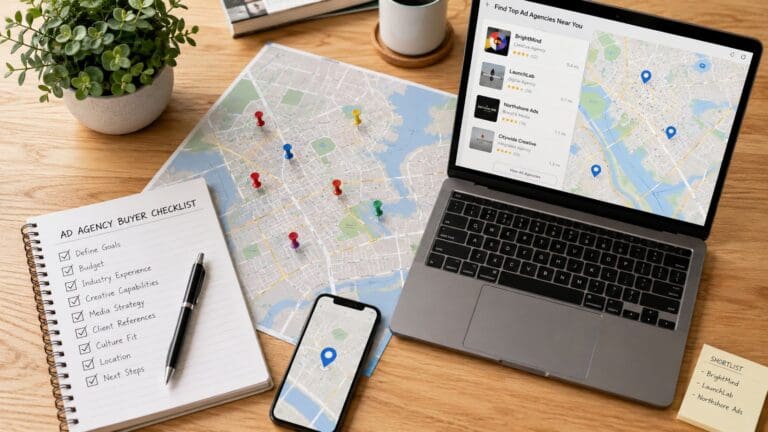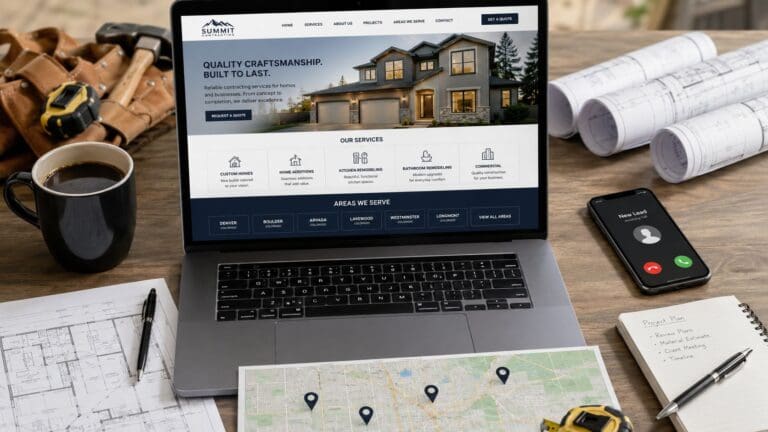

You know the pattern.
The phone rings hard for a while. Then it slows down. Then you start asking old customers, builders, realtors, and friends if they know anyone who needs work. That’s not a lead system. That’s waiting.
A lot of contractors think they have a lead problem. Most of the time, they have a visibility problem. People can’t hire you if they don’t see you when they search. And if your whole pipeline depends on referrals, you don’t control when jobs come in, where they come from, or how many you get.
That’s why word of mouth is not enough for contractors anymore. It’s still valuable. It’s just not enough to run a stable business.
The Feast or Famine Trap of Word of Mouth
Referrals feel great because they usually come with trust built in. The caller already heard something good about you. They’re warmer. They’re often easier to close.
That’s the good part.
The bad part is you can’t control referrals. You can’t turn them up when crews are slow. You can’t point them at the towns you want to grow in. You can’t make them show up on schedule.

Referrals don’t scale
MarketingProfs says there are “no efficiencies of scale” in referral marketing because it happens one-on-one, and once a buyer is more than “two degrees removed” from the source, referrals rapidly lose impact, as explained in their breakdown of why word of mouth doesn’t scale.
That matters for contractors. One happy customer can help. But one happy customer won’t build a repeatable pipeline across several towns, zip codes, or counties.
Practical rule: If a lead source depends on other people remembering your name and bringing you up at the right time, you do not control it.
The real business problem
Referral-only growth makes your business fragile.
When work is heavy, you get fooled into thinking the system works. When work drops, you realize there was never a system. There was just momentum. If you want a steadier schedule, you need something more dependable than hoping people talk about you this week.
That’s why smart contractors build a pipeline on purpose. If you want a better way to smooth out the feast-or-famine cycle, read how to build a steady pipeline of jobs year round.
Here’s what referral-heavy businesses usually deal with:
- No timing control: jobs come when they come.
- No area control: you get work where people know you, not where you want to grow.
- No message control: people may mention one service and forget the rest.
- No planning: you can’t staff crews or make smart ad decisions off guesswork.
Word of mouth should support your business. It should not be carrying the whole thing.
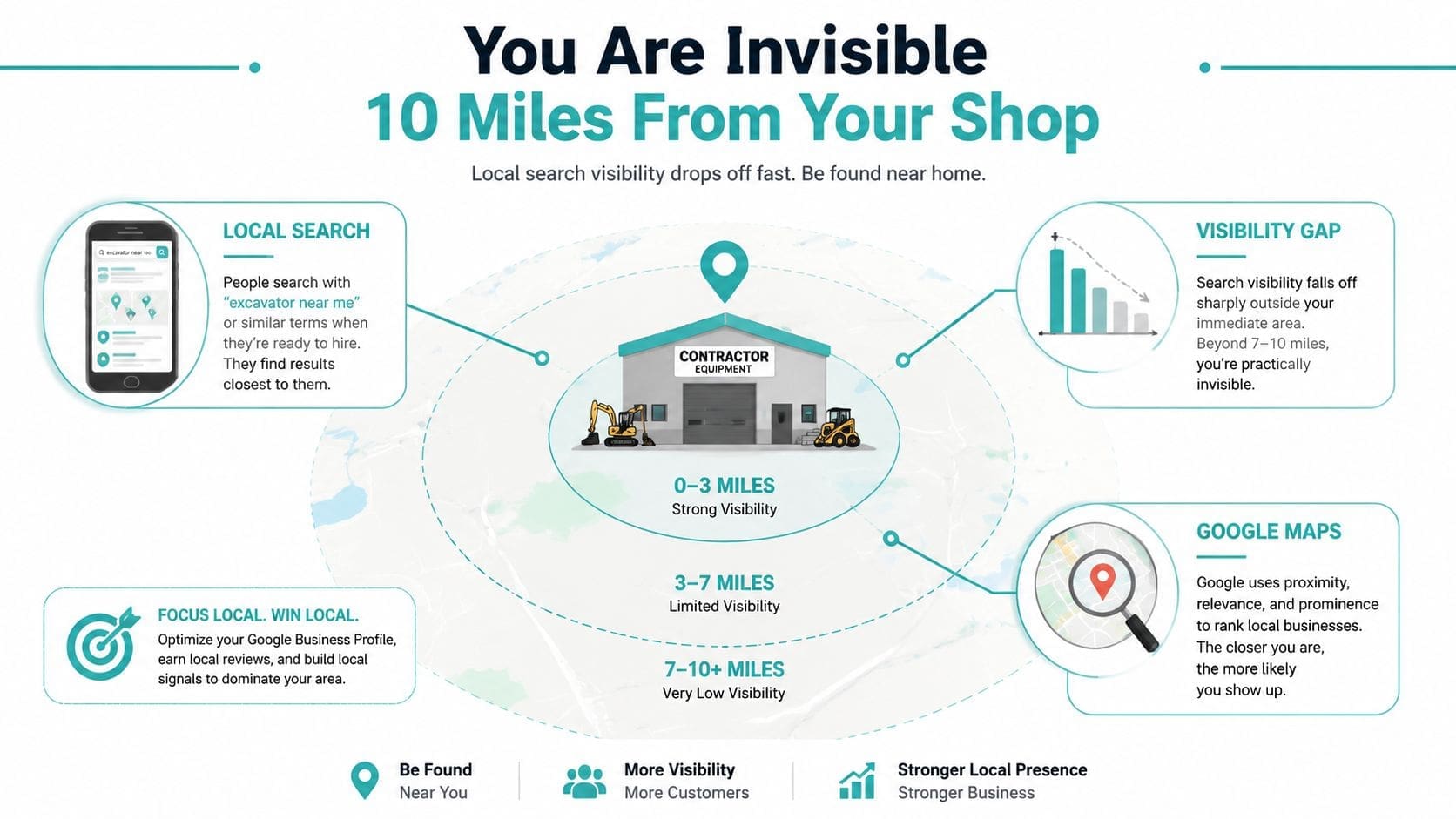
You Are Invisible 10 Miles From Your Shop
Most contractors are more known than visible.
People in your hometown may know your trucks, your last name, or someone who used you before. But in the next town over, none of that matters if you don’t show up when someone searches for the work you do.
That’s the visibility gap.
What near me really means
When someone searches for your service “near me,” Google reads that as the city or area where that person is standing.
So if you’re an excavation contractor based in one town, but you also work in the towns around it, Google still needs clear signals that you serve those places. If your site only talks about your home city, your business profile is tied to your shop address, and your pages never mention the nearby towns, you’ve basically told Google one thing.
You work here. Not there.
That’s why contractors lose jobs they never even knew existed.
Even your referrals get checked
This problem gets worse because buyers don’t stop at a recommendation. Local Boost HQ says that when a client recommends a business, “the very first thing” the prospect does is Google the company, and if they find an outdated website or no website, confidence drops, as noted in their article on modern word-of-mouth behavior.
So even when someone says your name out loud, the job still goes through an online filter.
If buyers search your service in their city and you don’t show up, you’re not in the running.
What invisibility costs you
Contractors often misunderstand the core issue. They think demand is soft. Sometimes demand is there. They just don’t show up in the places they already drive to every week.
The loss looks like this:
- Missed bigger jobs: the customer never calls because another company showed first.
- Weak expansion: you can’t grow into nearby towns if you’re absent there online.
- Wasted reputation: people may have heard of you, but search confirms or kills trust.
- More small jobs: you keep taking whatever comes in because better work never sees you.
You don’t need more hustle. You need more visibility where people are already looking.
Your Website Is Not a Lead Generator
A website by itself is not a lead generator. It’s a tool.
That’s where a lot of contractors get burned. They pay for a site, wait, and expect calls to start. Then nothing happens. So they decide websites don’t work.
It’s simpler than that. Websites don’t create traffic. They sit and wait for traffic.

A brochure is not a pipeline
Most contractor websites are digital brochures. Nice logo. A few photos. A contact page. Maybe a list of services. That’s not enough.
A real lead site has one job. Turn visitors into calls and quote requests. That means the site needs to be built around service intent, city intent, clear calls to action, mobile use, and fast trust.
If you want to see what that kind of site looks like, review this example of lead generation website design for home services contractors.
What a website should actually do
Your website should handle the part referrals can’t. It should help strangers understand three things fast:
| What buyers need to know | What your site should answer |
|---|---|
| Do you do this work? | Clear service pages |
| Do you work in my area? | Clear city coverage |
| Can I trust you enough to call? | Proof, reviews, and easy contact |
That’s it.
A website is the asset that converts attention into action. But if nobody lands on it, it won’t save you. A site without traffic is like a billboard in the woods.
Stop Guessing Where Your Jobs Come From
A lot of contractors don’t hate marketing. They hate not knowing what the hell is working.
That’s fair. If you’ve paid for ads, a website, or some agency package and all you got back was vague reports and excuses, the core problem wasn’t just bad service. The core problem was no tracking.
Guessing feels like getting burned
When you don’t know where calls came from, every decision turns into a guess.
You keep spending because maybe it’s helping. Or you shut everything off because maybe it’s not. Either way, you’re blind. That’s why so many owners get bitter about marketing. They were asked to trust a process they couldn’t measure.
You need booked-job visibility
Industry guidance for contractor marketing says word of mouth is low-volume and unmeasurable, which makes it unreliable for planning. The same guidance says online visibility systems with review generation and call tracking let contractors quantify which channels create booked jobs, which matters when you’re trying to forecast crews, trucks, and seasonal workload, as explained in this contractor marketing article focused on measurable lead flow.
That’s the shift. Stop asking, “Did the marketing feel busy?” Start asking, “What created calls, estimates, and booked work?”
Bad marketing hides behind activity. Good marketing shows you where jobs came from.
What tracked lead flow gives you
Once you can track calls and form leads, the business gets simpler.
- You can plan staffing: more confidence in crew scheduling.
- You can spot dead spend: weak channels become obvious.
- You can manage seasonality: slow periods stop sneaking up on you.
- You can buy growth on purpose: instead of waiting for luck.
Without tracking, marketing feels risky. With tracking, it becomes a business decision.
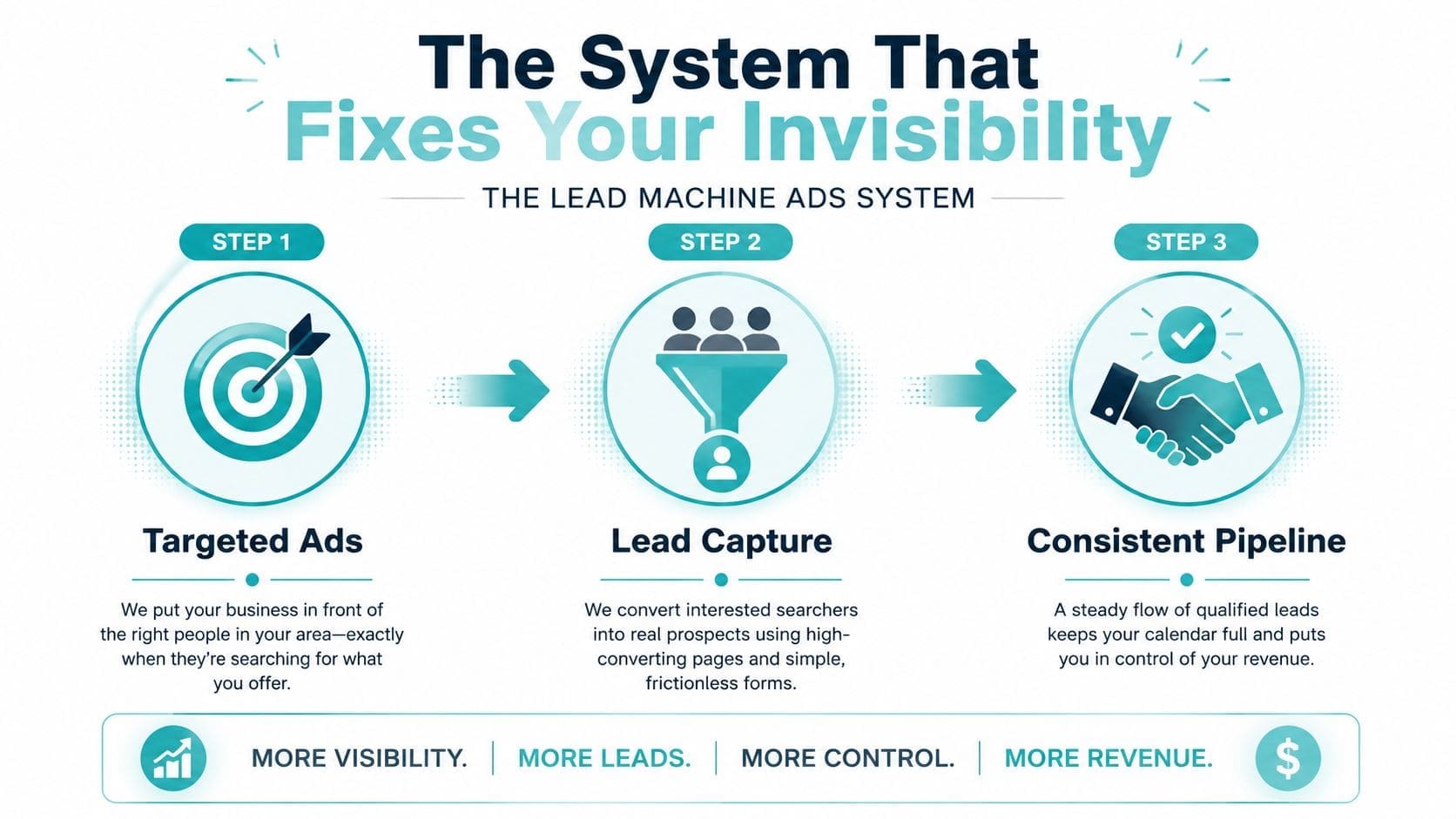
The System That Fixes Your Invisibility
Contractors don’t need more random tactics. They need a system.
The fix is simple. Build the asset first. Then send traffic to it. That’s the part most articles miss. They say word of mouth isn’t enough, then dump a pile of options on you. That’s useless when cash is tight.
Build the machine first
Douglas Digital Agency makes the sequencing point clearly. When cash flow is tight, the logical order is to first build the conversion asset, meaning the website built for leads across multiple cities, and then fuel it with targeted visibility, meaning ads, as laid out in their article on what should replace referrals first.
That’s the right order because ads sent to a weak site waste money. A strong site gives traffic somewhere useful to go.
The two parts that work together
Here’s the mechanical fix.
Part one is the Lead Machine
This is not a pretty website project. It’s a site built to pull calls from the service area you want.
It should include:
- Service pages: one page for each main job type you want to win.
- City pages: pages that tell Google and buyers where you work.
- Clear actions: click-to-call, quote forms, and strong contact paths.
- Trust signals: reviews, proof, and clean messaging.
- Tracking: so you know what produced the lead.
One option contractors look at for this is what a Lead Machine is. The point isn’t the label. The point is the structure.
Part two is ads
Ads create visibility. Fast.
They put you in front of people searching right now for the service you sell. They don’t replace the website. They feed it. Without that traffic, the site just waits.
A website is the asset. Ads are the fuel. You need both.
What happens when you only use one half
| Setup | What happens |
|---|---|
| Website only | It waits for traffic |
| Ads only | You pay to send people to a weak destination |
| Lead Machine plus ads | You create visibility and turn it into calls |
That’s the system that fixes the problem. Not more posts. Not more buzzwords. Not more hope.
Taking Back Control of Your Revenue
The whole point of marketing is control.
Control over how many calls come in. Control over what towns you show up in. Control over whether your crews stay busy. If you don’t control visibility, you don’t control revenue. You just react.

Word of mouth still matters. Keep it. Build on it. But stop pretending it can carry a serious growth plan by itself.
The contractors who grow don’t rely on being remembered. They build ways to be seen. If you want another example of how paid visibility fits a local trade business, this guide on how electricians get higher converting electrical leads is worth reading because the same core lesson applies across contractor services.
Here’s the choice:
- Keep waiting on referrals and live with the swings.
- Build a system that makes you visible where buyers are already searching.
One is fragile. One is controllable.
You think that customers “can” find you but, If customers “don’t” find you, nothing else matters. Lead Machines are built to fix that.
If your business is strong in the field but weak in visibility, The Cherubini Company helps contractors build lead-focused websites and ad systems that make them show up in the cities where they want more work. If you’re tired of guessing, that’s the place to start.