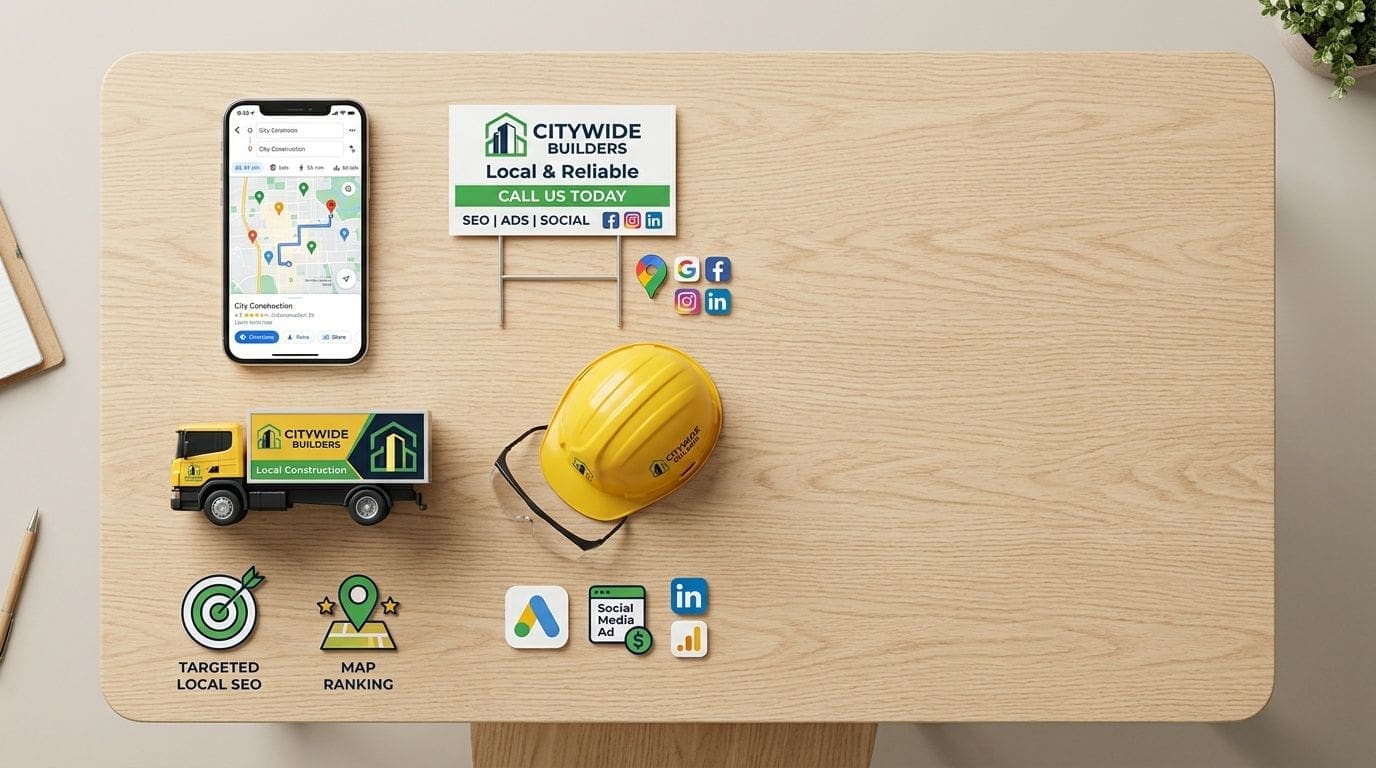
Your construction business probably isn’t short on skill. It’s short on visibility.
You already know how this goes. Word of mouth carries you for a while. One month you’re slammed. The next month the phone slows down and you’re left wondering what changed. Nothing changed except how often people saw you.
That is the core problem. Not your work. Not your reputation. Visibility.
You might be known in your hometown. But if someone in the next town searches for your service, Google shows businesses tied to that town. If your business only talks about your home city, you won’t show up where that buyer is searching. You lose the job before you ever get a call.
Your website by itself doesn’t fix this. A website doesn’t create traffic. It waits for traffic. If nobody lands on it, it can’t help you. Big companies understand this. They buy visibility. Small contractors often rely on hope.
Hope doesn’t keep crews busy.
The best way to advertise a construction business locally is to build a system. You need a website built to turn traffic into calls. Then you need ads and local visibility tools that put buyers in front of it. That is how you stop guessing. That is how you stop depending on referrals alone. That is how you get control.
1. Turn Clicks Into Calls with a Lead Machine
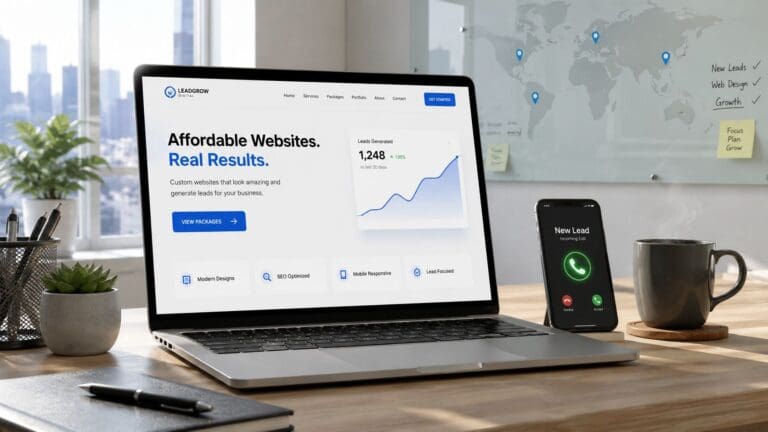
A normal website is a brochure. It sits there. It looks fine. It says you exist.
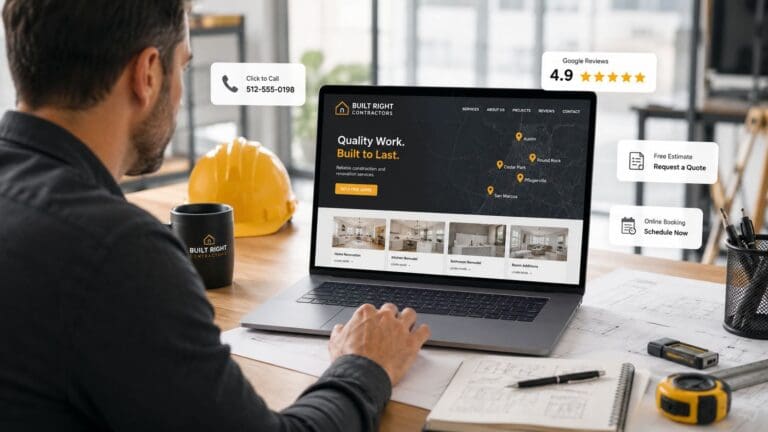
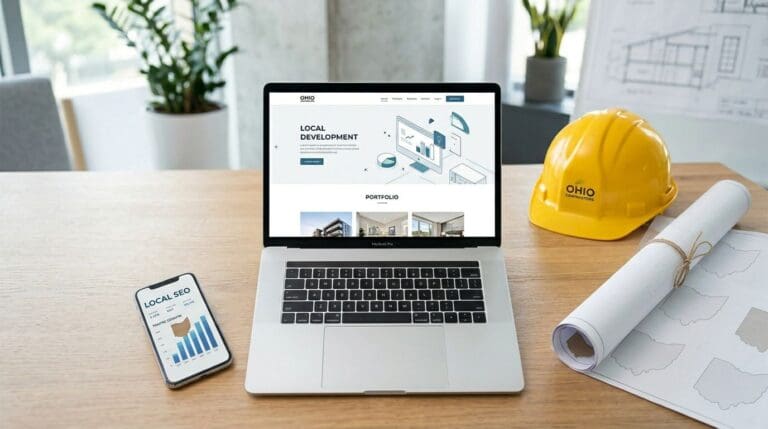
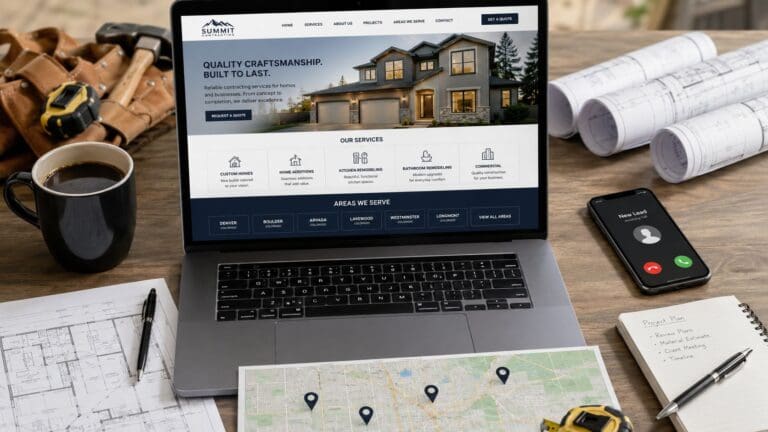
A Lead Machine does a different job. It is built to get calls. It is built to catch demand from the cities you want to work in and turn that demand into estimate requests.
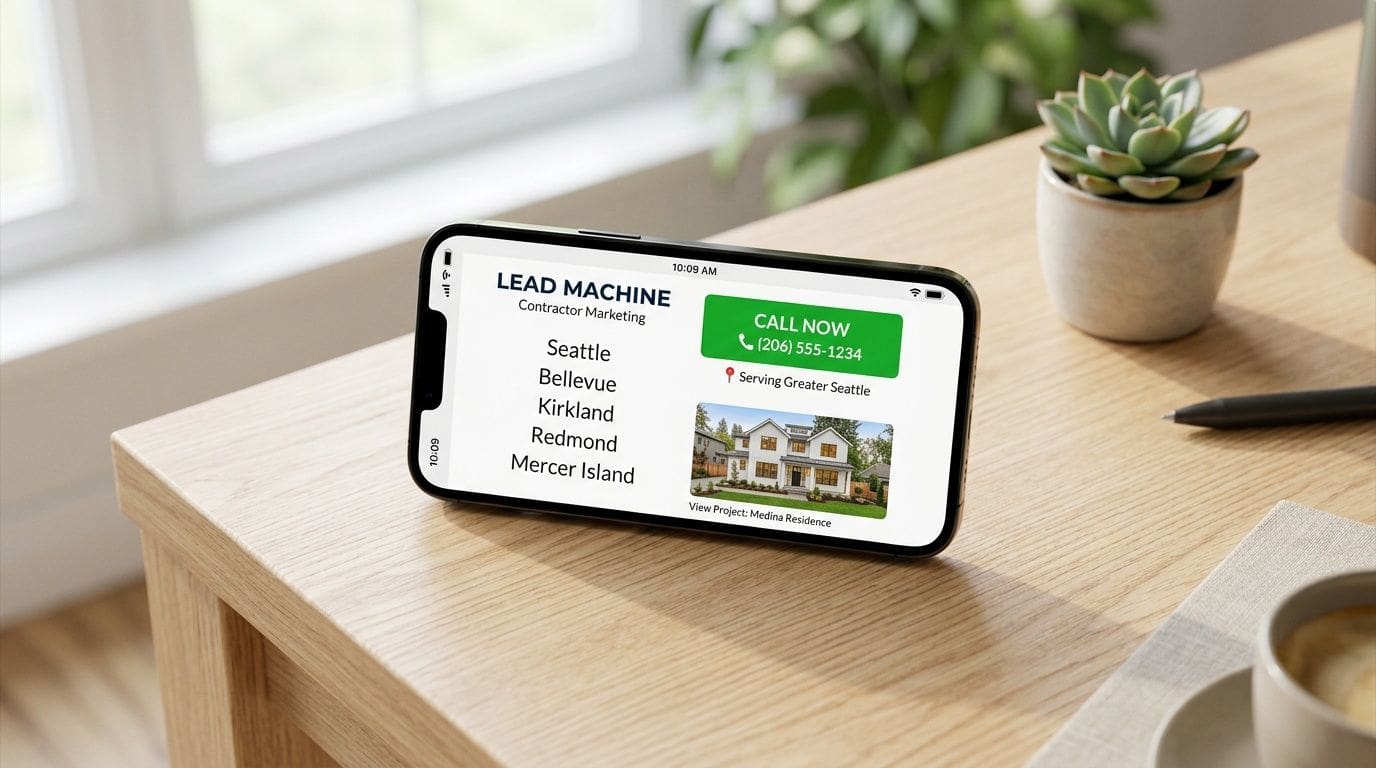
If you want to understand the difference, look at what a Lead Machine is. The point is simple. The site is not there to impress other contractors. It is there to make it easy for a buyer to call you now.
Build for the way buyers act
Most local buyers are on their phones. They are not studying your site like an architect reviewing plans. They want fast proof that you do the work they need, in the area they live, and that they can reach you fast.
That means your site needs:
- Clear service pages: A septic page should talk about septic work. A grading page should talk about grading.
- Clear city pages: If you want jobs in nearby towns, your site needs to say so plainly.
- Clear calls to action: Call now. Request an estimate. Send a message.
- Clear proof: Reviews, job photos, and real service details.
A site built this way becomes an asset. It supports every other part of your advertising.
Practical rule: Ads without a strong website waste money. A website without traffic collects dust.
Think about an excavation contractor who works across several counties. If his site only says he serves the town where his shop sits, he is telling Google and buyers that he is local to one place. A Lead Machine fixes that. It gives each service and each service area a real place on the site. That makes the business easier to find and easier to trust.
2. Show Up First with Google Ads
A homeowner finds water backing up in the yard at 7:10 a.m. They grab their phone, search for “septic repair near me,” and call one of the first names they see.
That job does not go to the contractor with the nicest logo. It goes to the contractor who shows up first and gives the buyer a clear next step.
Google Ads gives you that position now. Organic rankings take time. Referrals are uneven. Yard signs and social posts do not catch buyers at the exact moment they need help. Paid search does.
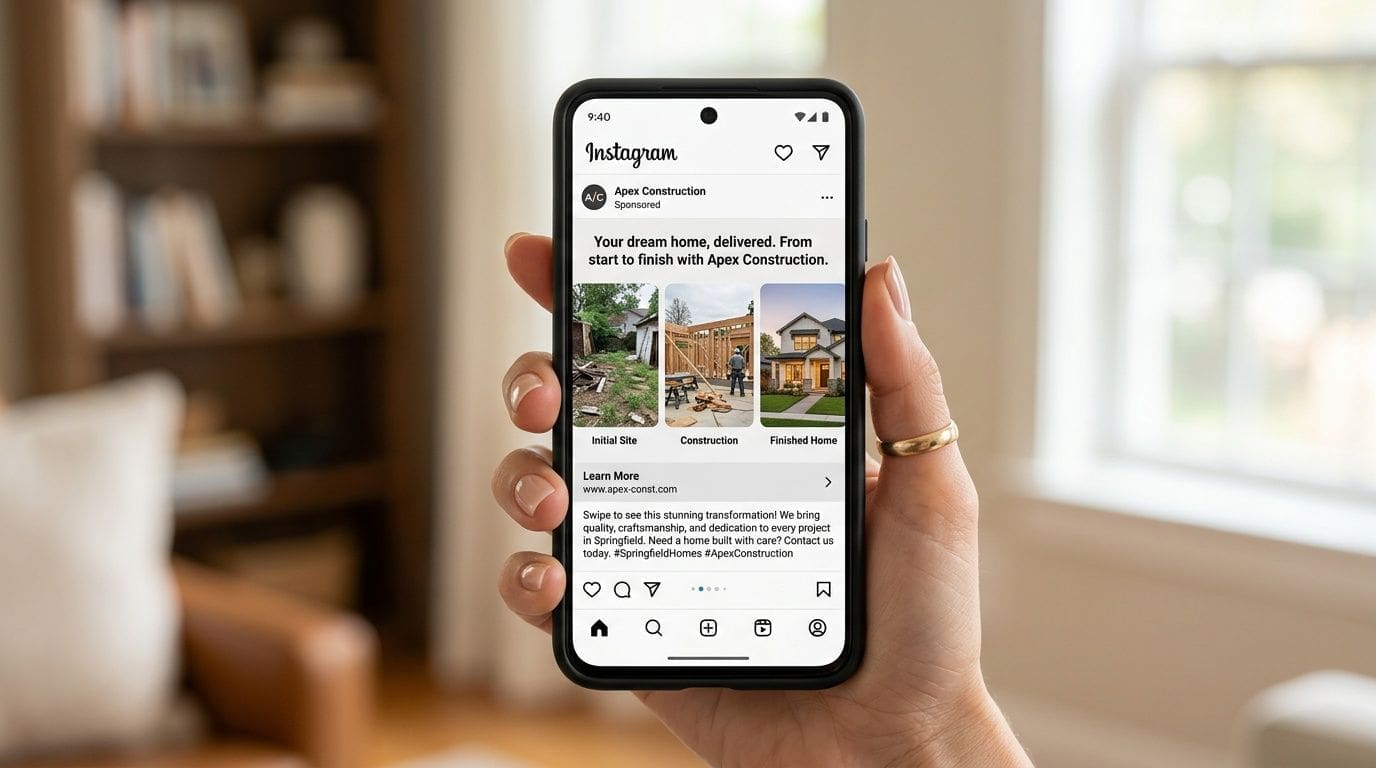
If you want a clear view of how Google Ads for local businesses fit into this system, start there. The ads bring the traffic. Your Lead Machine turns that traffic into calls.
Buy visibility where you’re missing it
The actual problem for many contractors is not effort. It is coverage.
You may be well known in your home town and nearly invisible twenty minutes away. That gap costs you jobs every week. Google Ads closes it fast by putting your business in front of buyers in the towns and zip codes you want most.
Use ads for the searches that show clear intent:
- septic repair near me
- concrete contractor in [city]
- excavation company [town]
- foundation repair [service area]
These are not curiosity clicks. These are buyers with a problem, a budget, and a short list.
Show up first, then send them to the right page
Many contractors waste money on Google Ads because they treat ads like a standalone tactic. They send every click to the homepage. They mix services in one campaign. They target too wide an area. Then they blame Google.
The fix is simple.
Match each ad to one service and one buying situation. Send that click to a page built for that service. Keep the phone number easy to find. Give the buyer proof fast. Then ask for the call.
That is the Lead Machine approach. Ads create demand capture. The site closes the lead.
A local scenario makes the point clear:
- A homeowner in a nearby town needs drainage work.
- They search on their phone during the problem, not weeks later.
- Your ad appears at the top.
- They click a page about drainage, not a generic homepage.
- They see the service, the area, the proof, and the number.
- They call.
This is how local advertising should work. One system. One path. One job won.
If you do not pay for visibility in the towns you want, your competitor will.
Google Ads is the fastest way to get in front of high-intent local buyers. It works best when you use it to feed a Lead Machine, not as a disconnected traffic source.
3. Dominate Every Town You Service with City Pages
Most contractors think they cover a big area because they drive a big area.
Google doesn’t think that way.
Google pays attention to what your business says online. If your site keeps talking about one town, Google has no reason to assume you work in the ten towns around it. This is why so many contractors are visible at home and invisible a few miles out.
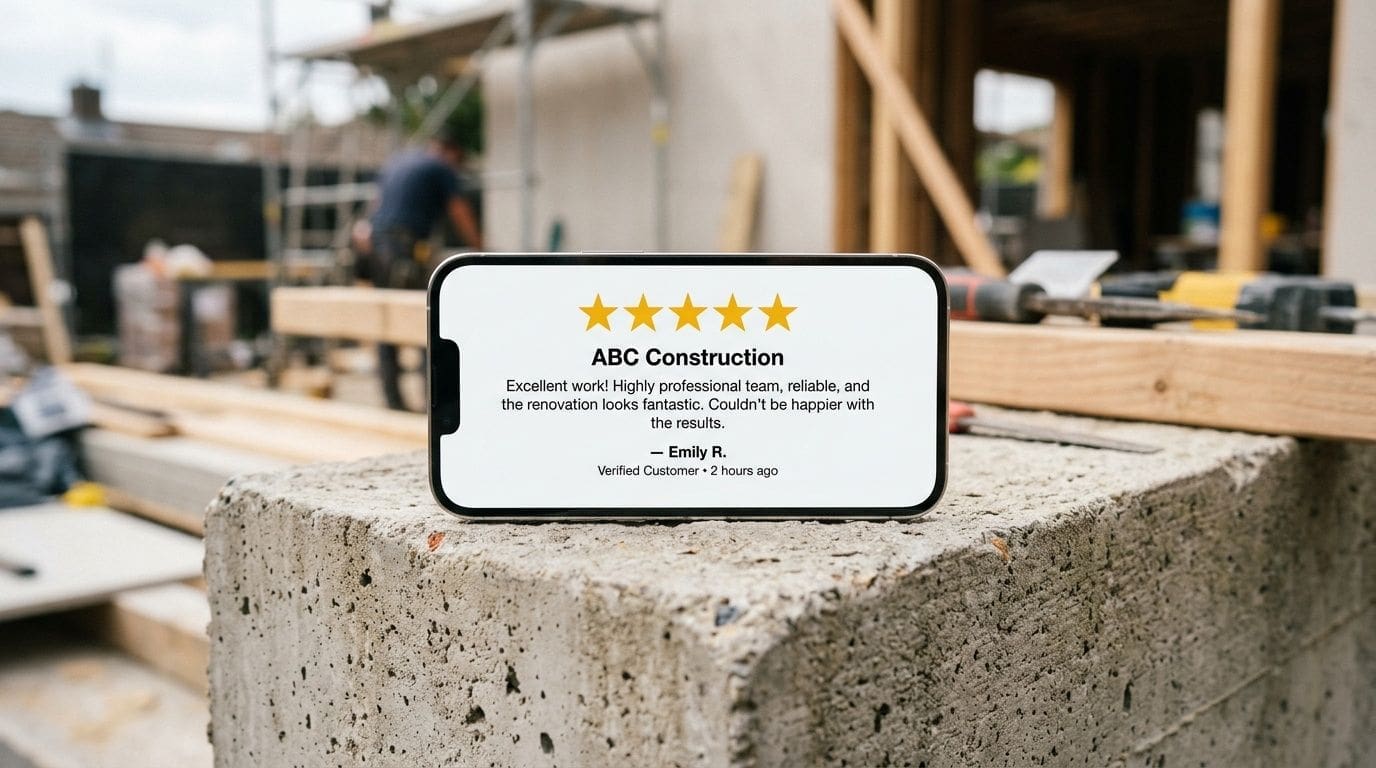
Tell Google where you actually work
If you want work in Westerville, Newark, Heath, Granville, or the next county over, your website should have pages that say exactly that. Each city page should connect your service to that location in plain language.
That is not a trick. It is basic communication.
A buyer in another town is usually searching by service plus location. If your site never mentions that location, you reduce your chance to show up. If your competitor has a page for that town, they have a better shot at the click and the call.
According to a gap analysis cited in Nextdoor’s contractor marketing article, multi-city and regional expansion is badly undercovered in contractor marketing content, even though many service businesses lose visibility in those specific areas.
That is why city pages matter so much for site-prep work, septic work, concrete, grading, and excavation. You do not need buyers only in one ZIP code. You need visibility across the whole territory where your trucks run.
One town page is not enough
A strong local system uses pages that match the way people search:
- Service plus city: “land clearing in Granville”
- Service plus county: “septic installation in Licking County”
- Service plus nearby town: “grading contractor in Heath”
A contractor with one generic service page leaves too much money on the table. A contractor with city pages tells Google and buyers exactly where he works. That makes the business easier to find outside the hometown bubble.
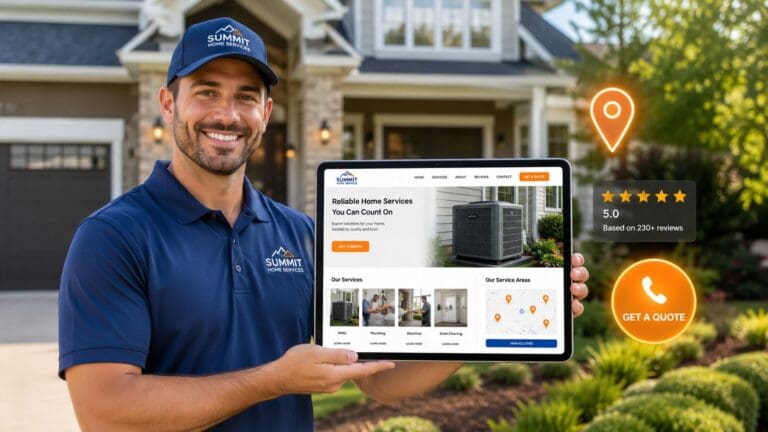
4. Use 5-Star Reviews to Build Instant Trust
A homeowner clicks your ad, checks your Google profile, and sees eight reviews from two years ago. The lead goes cold.
That is what reviews do. They confirm the sale or stall it.
If you run a local construction business, trust has to show up fast. People are hiring you for expensive, disruptive work. Excavation tears up a yard. Concrete is permanent. Drainage problems get worse if the job is done wrong. Buyers look for proof before they call.
Reviews are that proof.
They also make your Lead Machine work better. Paid ads get the click. City pages get you found in more towns. Reviews help the buyer feel safe enough to contact you. Without that trust layer, you pay for traffic that never turns into calls.
Reviews reduce hesitation at the exact moment buyers are judging you
A buyer does not read your marketing like a marketer. They scan for risk.
They look for signs that you are active, reliable, and easy to work with. Recent 5-star reviews do that fast. So do job photos attached to reviews and specific comments about communication, cleanup, timelines, and finished results.
Use reviews where the buyer already checks credibility:
- Google Business Profile: This is often the first trust check.
- Your website: Put reviews near quote forms, service pages, and call buttons.
- Landing pages: Match the review to the service being advertised.
- Sales follow-up: Text or email a short set of relevant reviews after an estimate.
A concrete contractor with 40 recent reviews and project photos looks safer than one with a thin profile. Safer gets the call.
Ask for reviews as part of the job process
Do not wait and hope happy customers remember.
Build a simple review request system into every completed job. Ask when the customer is pleased, the site is clean, and the result is easy to see. Keep the request short. Send the link. Follow up once.
The best reviews mention the actual service and location. That helps future buyers trust you faster because the feedback sounds specific and real. It also supports the bigger goal of local visibility across your service area. A review that mentions a nearby town gives you more credibility with the next homeowner in that same market.
Reviews are not a side task. They are part of local advertising. They make your ads more believable, your website more convincing, and your Google presence harder to ignore.
5. Show Off Your Work with Facebook and Instagram Ads
A homeowner in the next town is not searching yet. They are scrolling. If your company never shows up there, you stay invisible until a competitor gets familiar first.
That is the job of Facebook and Instagram ads. They do not replace Google Ads. They keep your name and your work in front of homeowners across the service area you want to control. That makes your lead machine stronger because more local buyers recognize you before they ever click, call, or fill out a form.
BuildDesMoines points out that visual ads and click-to-call calls to action fit construction well in its marketing advice for construction businesses. That makes sense. People hire contractors they can picture on their property.
Put visual proof in front of the right towns
Run these ads by service area, not by broad radius and hope.
Choose the towns where you want more jobs. Show real project photos and short clips from those same types of jobs. Send the traffic to a page built to convert or use a direct call option if the service is urgent. That is how social fits the system. Paid traffic feeds attention into the lead machine.
Your best ad is usually simple. A strong before-and-after. A clean finished result. Equipment doing visible work. A short caption that says what you did, where you work, and how to contact you.
Use creative that matches the work you want more of:
- Before and after photos: Strong for concrete, drainage, grading, remodeling, and cleanup.
- Equipment in action: Strong for excavation, land clearing, and site prep.
- Finished project shots: Strong for trust and quality.
- Short vertical videos: Strong for stopping the scroll on mobile.
Do not boost random jobsite pictures.
Promote the jobs with clear visual contrast, obvious homeowner value, and strong margins. If you want more patio installs, show finished patios. If you want more drainage work, show the standing water problem and the corrected result. If you want more remodels, show the transformation.
Repeated local visibility matters. A homeowner who sees your work three or four times in their feed is far more likely to recognize your name later, click your ad, or call when the need becomes urgent. That is how you stop treating local advertising like separate tactics. Google captures demand. Facebook and Instagram build demand and familiarity in the towns around you.
6. Turn Your Trucks into Rolling Billboards
Your trucks are already in the neighborhoods you want.
Use them.
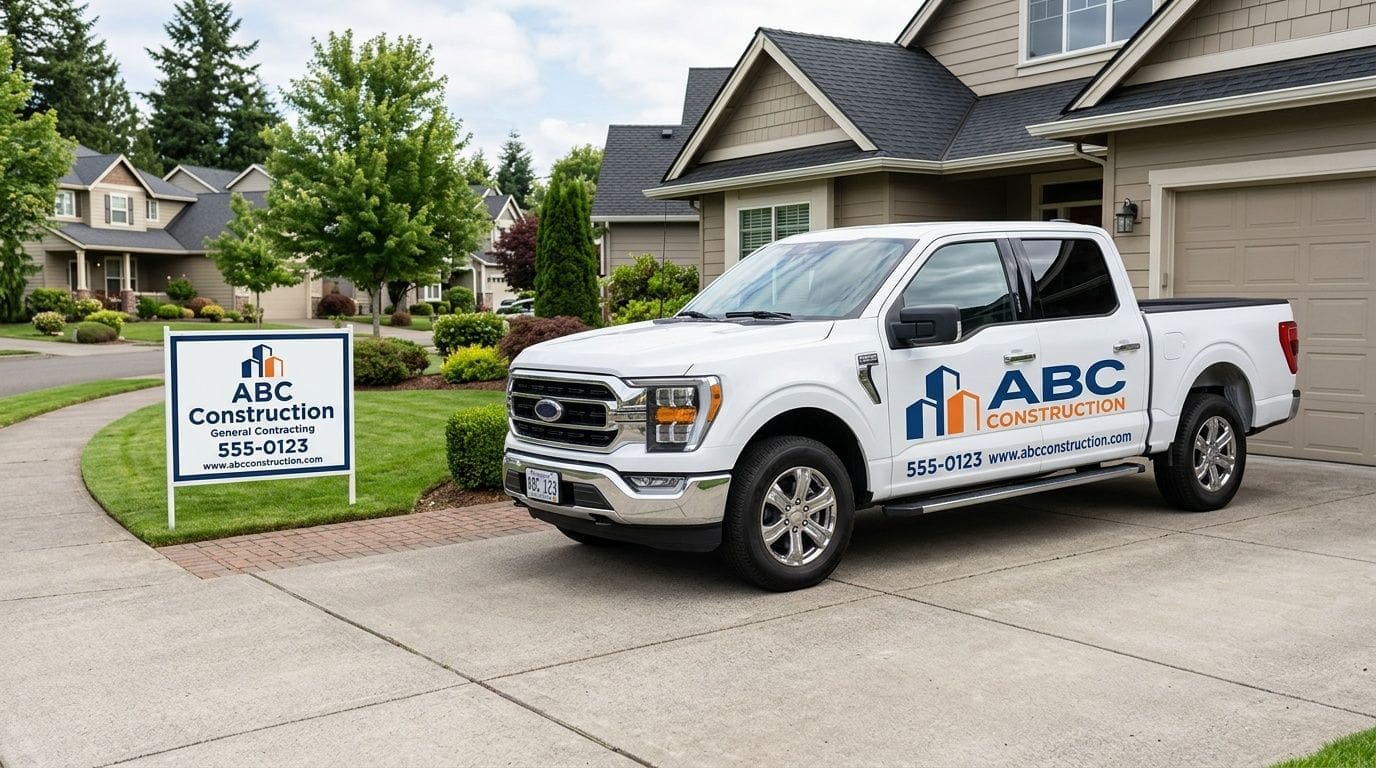
A clean truck with clear branding does more than look professional. It tells people that a real company is working nearby. That matters when neighbors notice a jobsite, ask who did the work, or search your name later.
Make local visibility physical
A wrapped truck or well-lettered truck is simple advertising. It follows your crew. It sits at intersections. It parks in driveways. It moves through the exact towns where you want more work.
The same goes for jobsite signs. If you are doing excavation, concrete, drainage, or remodeling in a neighborhood, put your name in front of the people who live there.
Use plain details people can read fast:
- Business name: Make it easy to remember.
- Phone number: Keep it large.
- Website name: Short and readable.
- Main service: Say what you do.
This works especially well for contractors whose jobs are visible. A grading contractor, concrete contractor, septic installer, or land clearing crew has equipment and trucks on site. That is free attention if you brand it properly.
Your trucks should answer the question every neighbor asks. “Who is doing that job?”
A real example is easy to picture. Your crew is working in a subdivision outside your hometown. Several nearby homeowners drive past your truck all day. A few of them are planning drainage, concrete, or site work. If your vehicle has no clear identity, that attention disappears. If it is branded well, the neighborhood remembers your name.
This is not the whole system. But it strengthens the system. Physical visibility supports digital visibility.
7. Get Pre-Sold Jobs from Local Partnerships
Some of the best local leads come from people who already have trust with the buyer.
Consider the professionals your clients already consult. Realtors, plumbers, electricians, inspectors, yard care experts, and architects are great examples. Property managers and material suppliers also fit this list. These individuals frequently learn about upcoming projects before you do.
Build a referral network on purpose
Too many contractors treat referrals like luck. They should treat them like a channel.
When you build relationships with nearby pros who serve the same homeowners or property owners, you create a steady path to better leads. These leads often arrive warmer because someone the buyer trusts already mentioned your name.
This works well for:
- Realtors: Buyers often need repairs or upgrades after a sale.
- Inspectors: They see problems before owners hire a contractor.
- Plumbers and electricians: Their customers often need trenching, concrete, patching, or site work.
- Landscaping and drainage pros: They uncover grading and water issues.
- Builders and architects: They need reliable specialty contractors.
A good partner does not need a long pitch. They need confidence that if they send you someone, you will do good work and make them look smart.
Stay top of mind locally
Keep it simple. Let partners know what jobs you want. Share photos of recent work. Respond fast when they send someone. Thank them when a referral turns into a real project.
This is one of the best ways to advertise a construction business locally because the lead arrives with trust built in. It is not cold traffic. It is not a random shopper. It is a buyer who already heard your name from someone credible.
A site-prep contractor can get strong referral flow from well drillers, septic designers, excavators in adjacent specialties, and builders. A remodeler can get it from realtors and interior trades. The pattern is the same. Visibility is not only digital. It also comes from being known by the right local people.
8. Be Seen on Google Maps
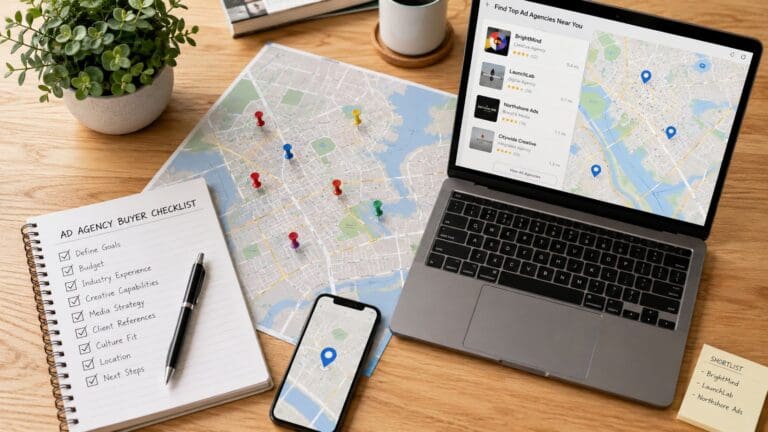
A homeowner in the next town searches “concrete contractor near me.” You do that work every week. You still do not show up. That is the main local advertising problem for many contractors. It is not effort. It is weak visibility outside your home base.
Google Maps fixes that fast when you treat your profile like part of your lead machine, not a side task. Your Google Business Profile helps buyers judge you before they ever reach your site. If the profile looks thin, outdated, or inactive, you lose the call.
If you need the setup details, use this guide on how to optimize your Google Business Profile for local service visibility.
Maps helps you get picked fast
A strong map listing does three jobs at once. It gets you found in nearby service areas. It supports the trust your reviews create. It gives paid and organic traffic one more reason to call now instead of comparing five other contractors.
That matters because local buyers make fast decisions. They scan the map pack, check photos, read a few reviews, and contact the company that looks active and credible.
Your profile should show:
- The exact services you want: Be specific about what you build, repair, install, or replace.
- The towns you serve: Match your real service area so you can show up beyond your office location.
- A working phone number and website: Make the next step obvious.
- Recent job photos: Use real project images, not stock shots.
- Regular updates: Keep the profile active so it does not look abandoned.
A weak profile creates friction. A complete profile supports the whole system. Your Google Ads get more backup. Your city pages get more trust. Your reviews carry more weight.
A grading contractor with a strong website but an empty map profile still leaks leads in surrounding towns. Google sees limited local relevance. Buyers see a business that feels small or inactive. Fix the profile, and your visibility gets wider and your traffic converts better.
8-Point Local Construction Advertising Comparison
| Item | Implementation Complexity 🔄 | Resource Requirements ⚡ | Expected Outcomes 📊 | Ideal Use Cases 💡 | Key Advantages ⭐ |
|---|---|---|---|---|---|
| Turn Clicks Into Calls with a Lead Machine | Medium, requires web design, CRO and local SEO setup | Moderate, developer/designer, content, tracking, hosting | Predictable inbound calls and form leads; higher mobile conversions | Service businesses needing consistent phone leads from web traffic | 4⭐, built to convert traffic into paying jobs; mobile-first |
| Show Up First with Google Ads | Medium‑High, campaign strategy, bidding and optimization | High, ongoing ad budget, keyword management, landing pages | Immediate top-of-search visibility and urgent, high‑intent leads | When you need instant leads or to fill capacity quickly | 4⭐, instant visibility and precise intent targeting |
| Dominate Every Town You Service with City Pages | Medium, create and optimize multiple localized pages | Moderate, content creation and local SEO for many pages | Broader local organic visibility across multiple towns | Multi‑town service areas aiming to rank locally in each city | 3⭐, claims territory online and fixes visibility gaps |
| Use 5-Star Reviews to Build Instant Trust | Low, process and follow-up to collect/manage reviews | Low, review links, CRM prompts, time to respond | Higher trust, better click-through rates and improved local rankings | High‑ticket jobs where reputation strongly influences decisions | 5⭐, powerful social proof; strong ranking and conversion signal |
| Show Off Your Work with Facebook and Instagram Ads | Medium, creative production and audience targeting | Moderate, ad spend, video/photo assets, creative time | Increased brand familiarity and visual proof; longer conversion path | Visual projects (renovations, landscaping) targeting homeowners | 3⭐, visual storytelling and precise local targeting |
| Turn Your Trucks into Rolling Billboards | Low, design and install vehicle wrap/signage | Low to Moderate, one‑time wrap cost, yard sign production | Passive local brand awareness and trust; broad neighborhood reach | Hyperlocal marketing to build recognition in service areas | 3⭐, continuous 24/7 local advertising; credibility signal |
| Get Pre-Sold Jobs from Local Partnerships | Low-Medium, relationship building and referral systems | Low, time investment, referral fees or incentives | High-quality, pre‑qualified leads with strong conversion rates | Areas with many complementary trades (plumbers, agents) | 4⭐, cost-effective, high-conversion referral pipeline |
| Be Seen on Google Maps | Low, claim and optimize profile, ongoing maintenance | Low, time to verify, photos, weekly posts | Baseline local visibility; more calls and direction requests | All local businesses; foundational for online local presence | 5⭐, essential local listing; critical for discovery and trust |
Stop Guessing. Start Controlling Your Leads.
It is Monday morning. The phone is quiet. Your crew still needs work next week, and you are asking the same question again. Should you boost a Facebook post, spend on ads, ask for more referrals, or wait for Google to send someone?
That is not control. That is reacting.
Local advertising works when you build it as one system. You need an asset that turns attention into calls, and you need traffic that feeds that asset every week. That is the main job. Everything else supports it.
Start with the Lead Machine. It is the center of your local marketing. It gives each service a clear page, each target town a clear path, and each visitor a simple next step. Call. Fill out the form. Request an estimate. If your ads send people to a weak site, you waste money. If your site is strong but nobody sees it in nearby towns, you stay stuck in the same radius.
That is why the key problem is not effort. It is visibility across your service area.
You need Google Ads to capture high-intent searches now. You need city pages so you can show up outside your home base. You need reviews so homeowners trust you fast. You need Facebook and Instagram ads to keep your work in front of local prospects. You need branded trucks, signs, and referral partners so your name keeps showing up online and offline.
Run together, those channels stop feeling random. They start working like a lead machine.
That changes how you operate. You stop depending on word of mouth to carry the whole business. You stop guessing which town to push next. You stop taking whatever job happens to come in. You can target better projects, fill slow weeks, and expand into nearby markets on purpose.
The Cherubini Company is one relevant option for contractors who want that kind of setup. It is a family-owned agency based in Newark, Ohio, and it focuses on Lead Machines and visibility-first advertising for local businesses and contractors. That lines up with the core issue here. Good contractors lose work every day because buyers never see them in the towns they serve.
If customers do not find you, they cannot hire you.
Build the system. Feed it traffic. Control the lead flow.