You've probably said some version of this already.
“We've got a website.”
“We tried ads.”
“We get some calls.”
“We mostly live on referrals.”
And yet your schedule still swings too hard. Some weeks the phone won't stop. Other weeks you're staring at the board, wondering where the next solid job is coming from.
That's not a work ethic problem. It's not because you're bad at what you do. It's because most contractors are not visible where buyers are looking.
A website by itself doesn't create traffic. It just sits there. If nobody lands on it, it does nothing. If the wrong people land on it, it still does nothing. And if people in the cities around you never see it, those jobs are gone before you even know they existed.
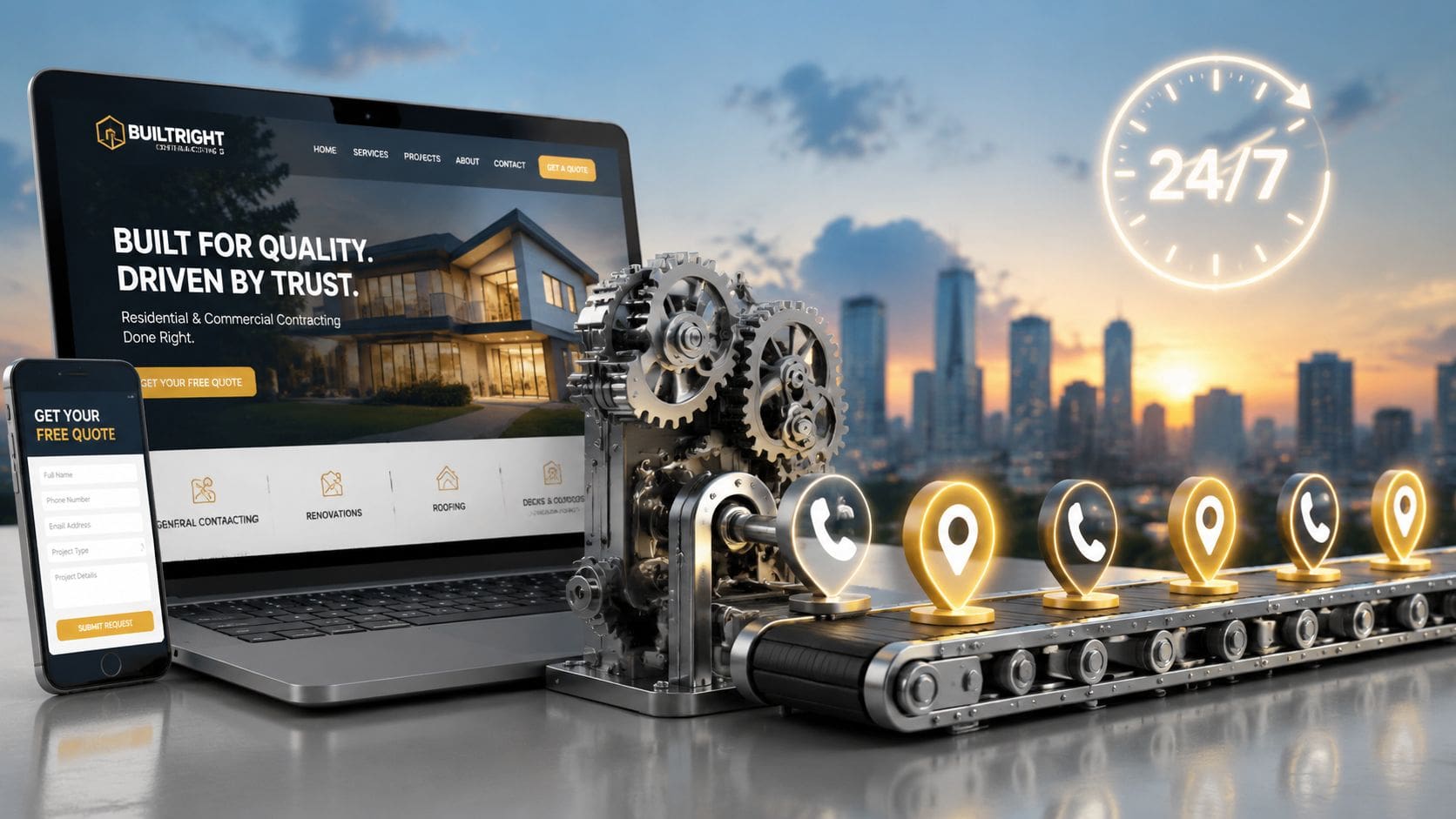
If you want to learn how to turn your website into a 24/7 lead machine, stop buying random marketing pieces. Stop buying “a website” or “some ads” like they're separate fixes. Contractors need a system that creates visibility and turns that visibility into calls.
The Real Reason Your Phone Isn't Ringing
A lot of contractors think they have a lead problem.
Most of the time, they have a visibility problem.
You might be known in your hometown. People there may know your name, your trucks, your family, your work. But go ten miles out, twenty miles out, or into the next county, and you disappear. The jobs are still there. The searches are still happening. Your company just isn't showing up.

That's why feast or famine happens. You rely on referrals. You rely on repeat work. You rely on people who already know you. Then the pipeline thins out and you feel it fast.
What contractors get wrong
Many owners still believe the website is supposed to “generate leads” on its own.
It won't.
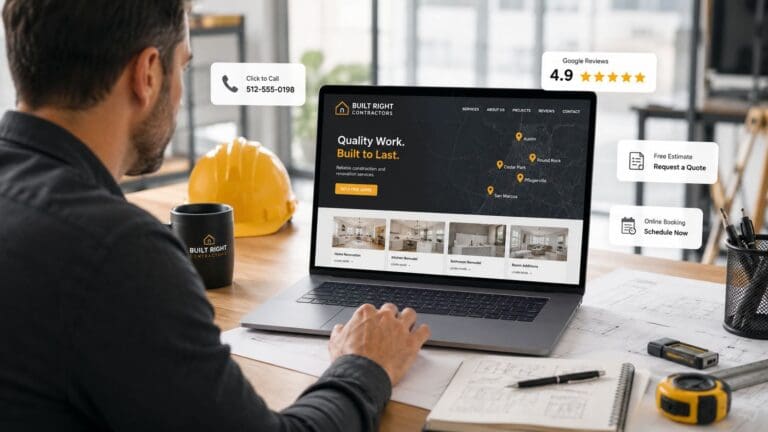
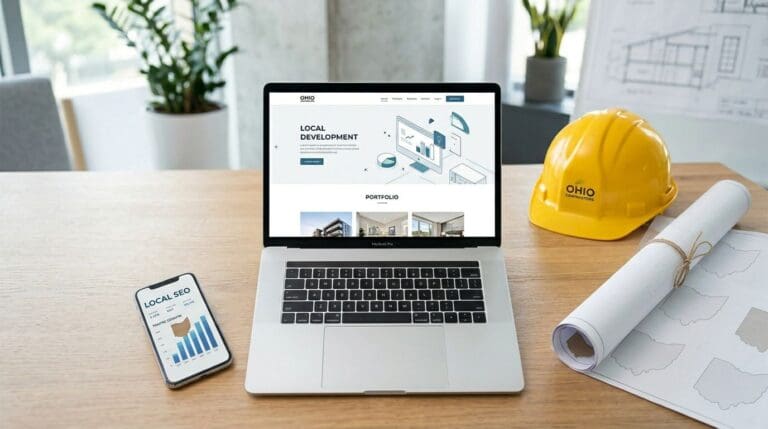
A website is an asset. It can convert traffic. It can turn clicks into calls. It can help close the job. But it does not go out and get attention by itself. If you want that site to matter, it has to be built for leads, not just looks. That's the difference between a brochure site and a real service business website design.
The big truth: if you don't control visibility, you don't control revenue.
What this really costs you
The worst part is not the jobs you lose after giving an estimate.
It's the jobs you never even had a shot at.
People search for the service they need, in the place they need it. If you don't show up, they call someone else. You don't get to explain your quality. You don't get to talk price. You don't get to compete.
That's why the phone isn't ringing the way it should. Not because people can't hire you. Because they don't find you when it counts.
Why Your Website Fails Outside Your Hometown
Here's the mistake most contractor websites make. They tell Google one thing.
They tell Google where the business is located. They do not clearly tell Google all the places the business wants work from.
So when someone searches “excavation contractor near me” or “roof repair near me,” Google reads “near me” as the searcher's current city. If your website keeps talking about your hometown and barely mentions the cities around it, Google has no good reason to show you in those other places.
That's the visibility gap.
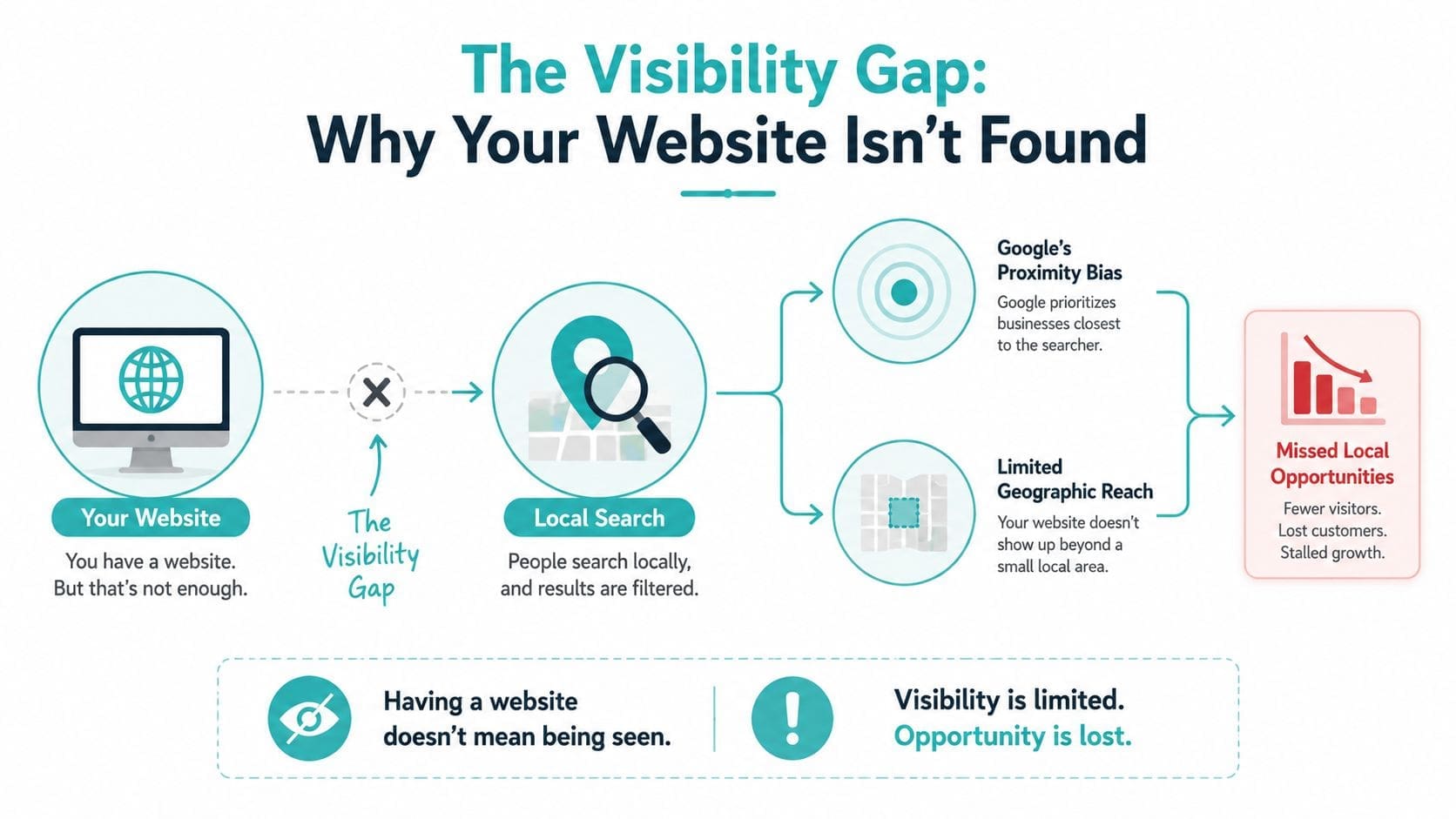
Near me doesn't mean near your office
This part matters.
The customer is not searching based on where your shop sits. The customer is searching based on where they are. That means your visibility has to reach into the cities and towns where you want jobs.
If you do work across several towns but your site only speaks clearly about one, you've built a small fence around your own business.
A simple way to think about it
An old phone number no one has is useless.
Your website works the same way. If people don't know your name already, they aren't searching for your business name. They're searching for what you do and where they need it done. If your site doesn't line up with that, it's like having an unlisted number.
Here's what a weak site usually looks like:
- One generic services page that tries to cover everything
- One contact page that asks people to “reach out”
- One hometown mention repeated over and over
- No clear match between the search, the page, and the city
That setup leaves money sitting on the table every day.
Buyers don't care that you can drive to their city. They care whether Google believes you serve it.
Why this keeps happening
Most web designers build for appearance. Most agencies sell activity. Neither one fixes the core problem if the site doesn't reflect your full service area.
A contractor may work all over the region and still be almost invisible online outside home base. Then they assume demand is weak. It usually isn't. Visibility is weak.
That's why a website can look fine and still fail hard where it matters.
The System Big Companies Use to Dominate Your Area
Big companies don't sit around hoping referrals carry them.
They buy visibility.
That's the difference. Not talent. Not hustle. Not better crews. They put money behind being seen, and they send that traffic into pages built to make people call.
That's the model small contractors need too. Not more random marketing. A two-part system.
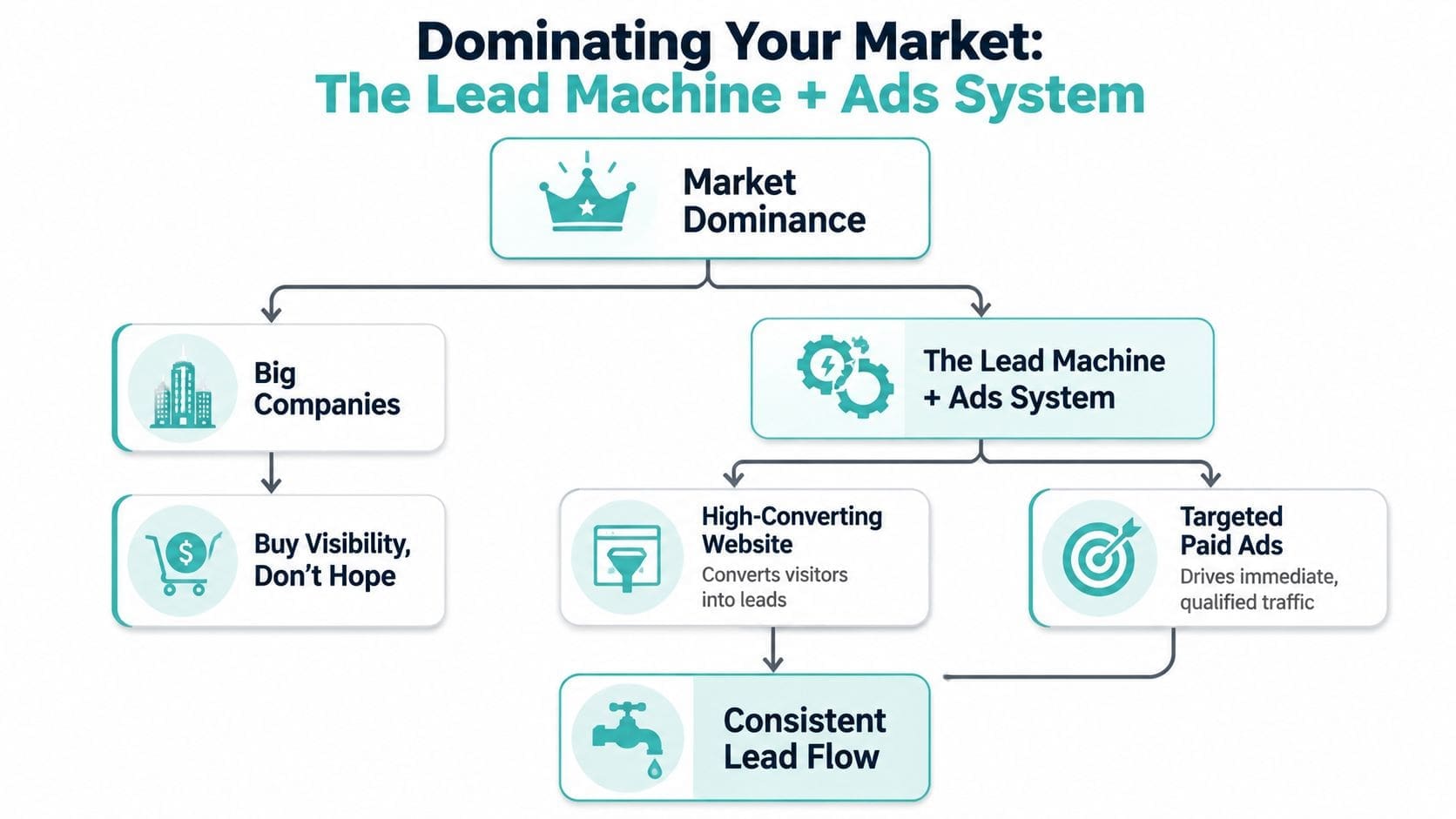
The website is the asset
A Lead Machine is not a pretty site.
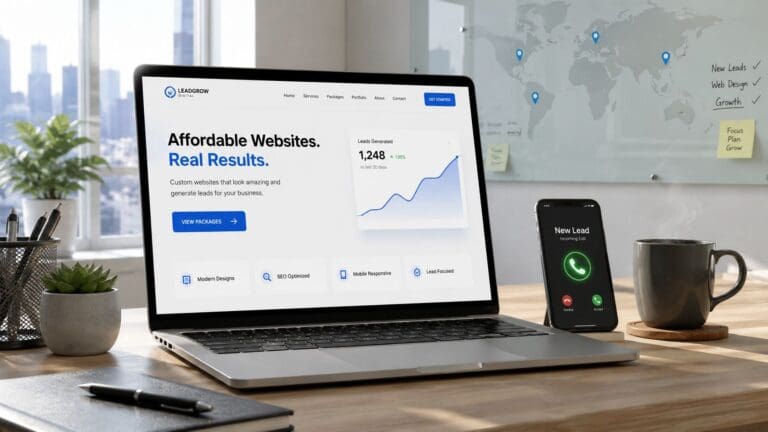
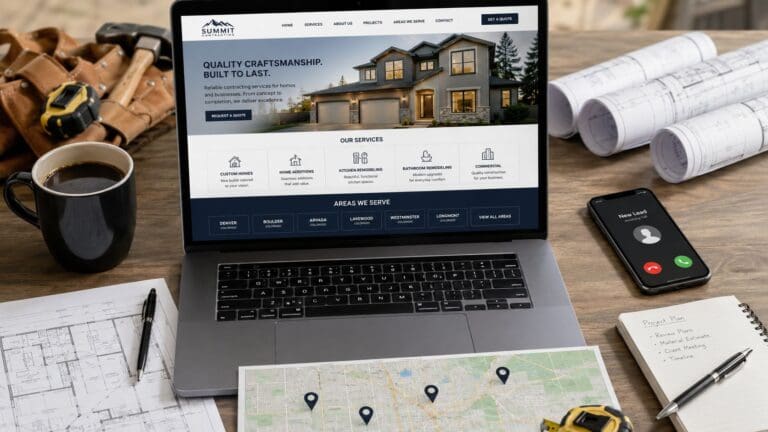
It's a website built for one job. Turn traffic into calls and quote requests. That means it needs the right structure, the right pages, the right message, and clear next steps. It has to match what buyers are searching for and make it easy to contact you.
If the site can't do that, traffic gets wasted.
Ads are the fuel
Ads do one thing. They create visibility now.
They put your business in front of people who are already searching for a contractor. That matters because your website, by itself, is passive. It waits. Ads go out and bring in attention.
Put those two pieces together and the system starts to work.
| Part | Job |
|---|---|
| Lead Machine | Converts visitors into calls and forms |
| Ads | Drive high-intent local traffic to the site |
| Tracking | Shows which pages and locations are producing leads |
Why buying one piece fails
A website without traffic is a brochure.
Ads without a strong site are a leak.
That's why so many contractors say ads didn't work. Many of them sent paid traffic into a weak page with no local match, no trust, no urgency, and no easy way to take action. Of course it underperformed.
Practical rule: Never pay to send a ready-to-buy customer to a page that looks like an online business card.
One option in this category is The Cherubini Company, which builds contractor lead generation websites with service pages, city pages, click-to-call elements, tracking, and ad support. That's the kind of system you need to evaluate. Not isolated marketing pieces.
Building the Machine That Turns Clicks Into Calls
A Lead Machine works because it matches how people search, and it removes the friction that stops them from contacting you.
That means the site has to be built around services, cities, and action.
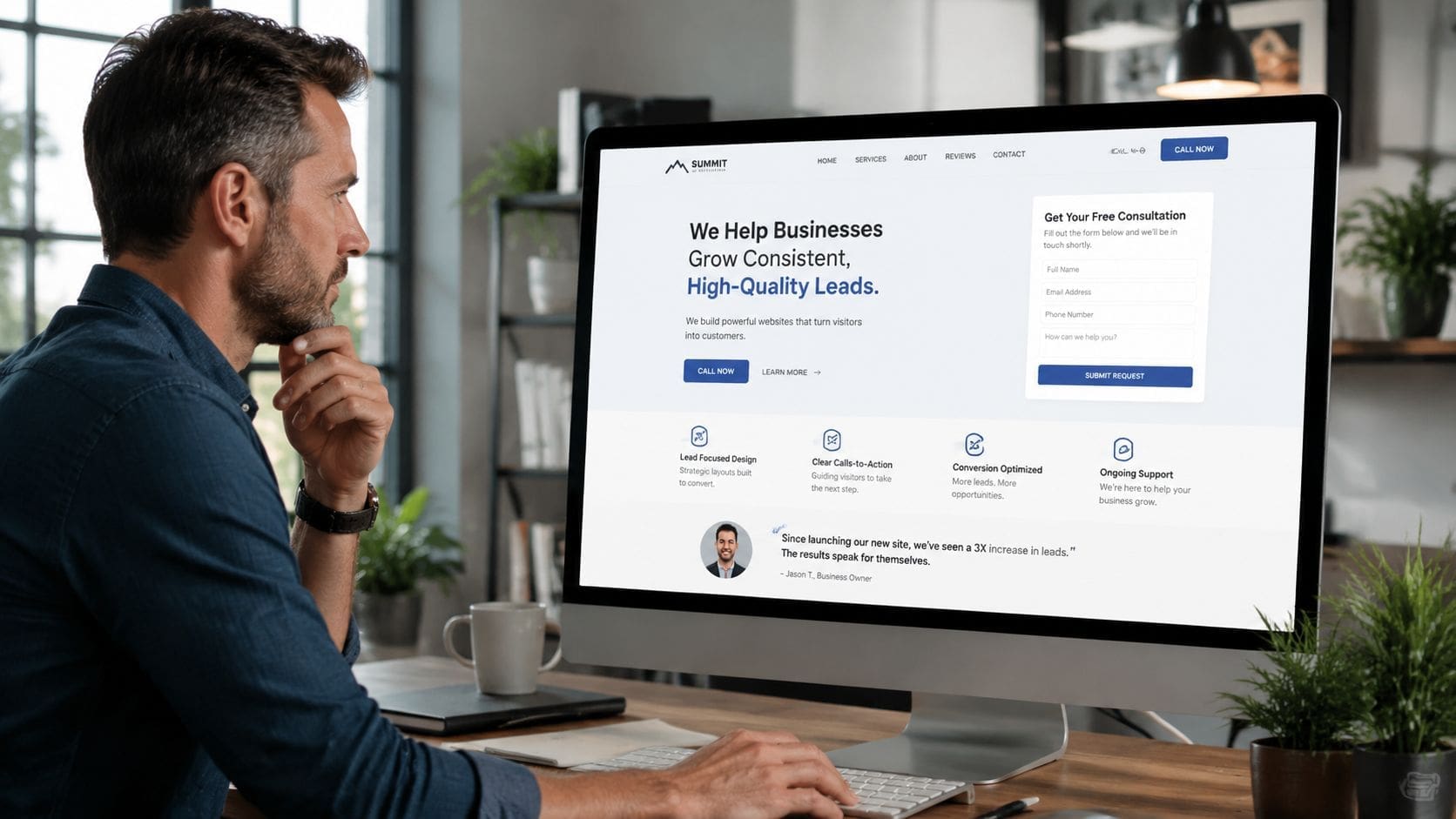
Service pages and city pages are not optional
A person looking for septic installation is not the same as a person looking for land clearing.
A person in one town is not the same as a person in the next town.
That's why dedicated landing pages matter. Websites built with separate pages for each service and city can convert at 2–5x the rate of a generic homepage, because the page matches the visitor's exact need and location, according to this lead generation breakdown.
That is how to turn your website into a 24/7 lead machine. Not by making the homepage prettier. By building pages that line up with real searches and real jobs.
Speed matters because buyers don't wait
If your site drags, you lose people.
For a contractor's website, every extra second of load time can drop conversions by 20–50%, based on this conversion and speed analysis. That same source points to practical conversion elements that matter for contractors, including sticky headers with a main call to action, short mobile-friendly forms, and click-to-call buttons.
If someone has to pinch, zoom, hunt for your number, or fill out a long form on their phone, many won't bother.
What the site must do right away
A lead-focused contractor site should make these things obvious:
- What you do so the visitor knows they're in the right place
- Where you work so the city match is clear
- How to contact you without digging through the page
- Why they should trust you before they call
That trust piece matters more than many owners think.
A page that shows reviews, job photos, clear contact information, and simple proof that you're a real company will usually beat a slick page with generic marketing talk.
The phone should be one tap away on mobile. Not hidden in the menu. Not buried in the footer.
The goal is not more website traffic
The goal is better outcomes from the traffic you do get.
That changes how the site should be built. A Lead Machine is not there to impress your buddies, your spouse, or some designer. It is there to answer the search, reduce doubt, and get the person to call while the need is still fresh.
If it can't do that, it's decoration.
Fueling the Machine for Immediate Visibility
Once the Lead Machine is built, it still needs fuel.
That fuel is ads.
This is where many contractors get twisted up. They hear “ads” and think waste, junk leads, and money gone. The truth is simpler. Ads are how you buy visibility in the places where you want work, instead of waiting and hoping somebody stumbles onto your site.
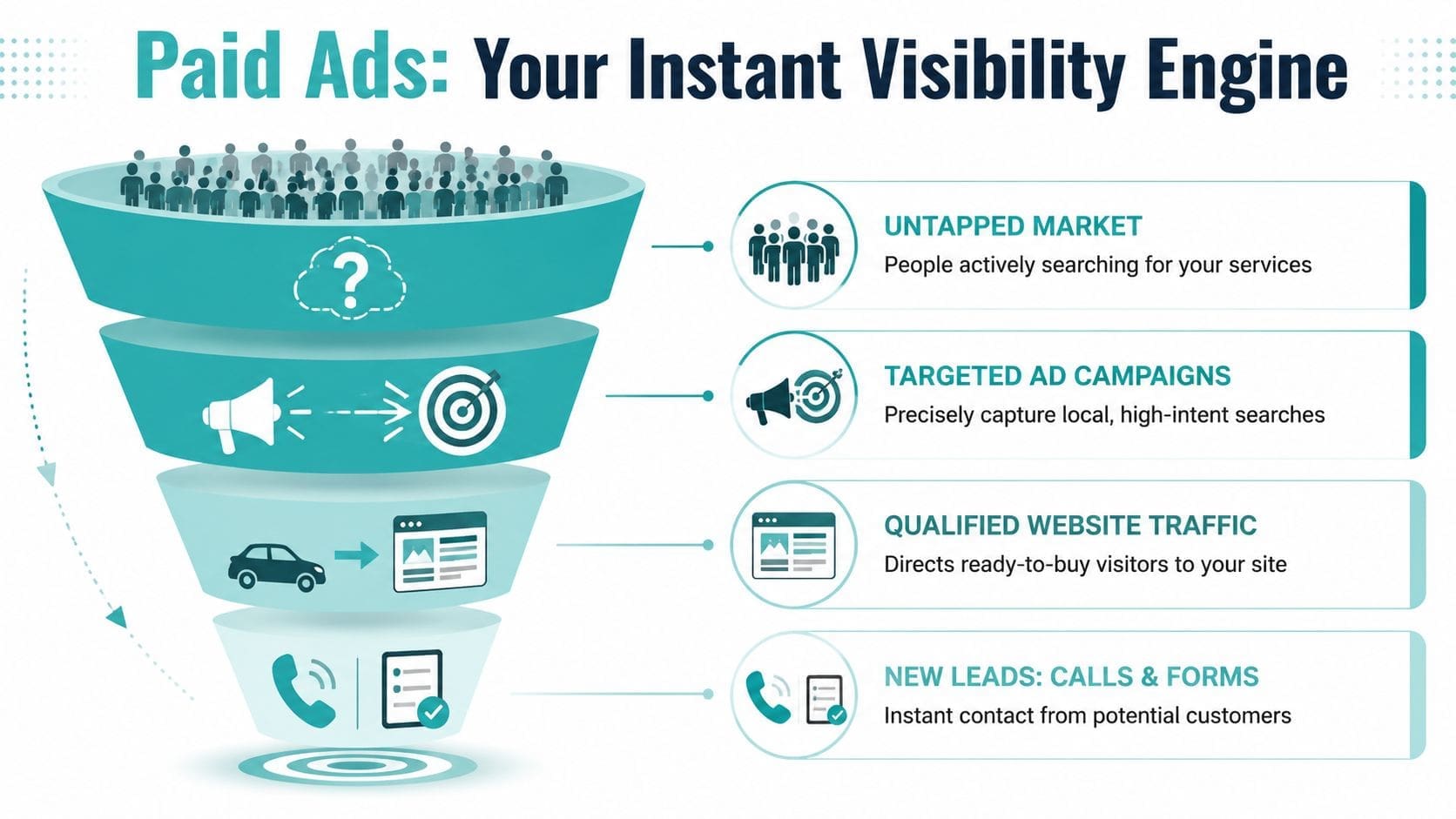
What ads actually do
Ads put you in front of people searching right now.
That's it.
They do not replace the website. They send traffic to it. If you want immediate visibility in multiple cities, ads are the lever. Your site can wait for traffic, but ads can go get it.
Google has reported that mobile searches containing “best” and “to buy” have grown over 100% in the past two years, which signals stronger commercial intent. That same point supports why ads matter. They put your business in front of high-intent searchers at the moment they're looking to hire, as noted in this article about turning a website into a 24/7 sales machine.
Why contractors need both pieces
If your website is the machine, ads are the switch that turns it on.
Without traffic, the machine sits still. Without a strong machine, ad traffic gets wasted. That's why treating them like separate decisions is a mistake.
If you want a simple view of how paid traffic supports this system, look at fueling leads with Google Ads.
Use this test:
- Need visibility now. Ads solve that.
- Need calls from cities beyond your hometown. Ads help put you there.
- Need better use of paid clicks. The Lead Machine does that.
Why "ads didn't work" is usually the wrong lesson
Most of the time, ads didn't fail.
The system failed.
The traffic went to the wrong page. The page was too broad. The message was weak. The city match was poor. The phone number wasn't obvious. The form was annoying. The follow-up was slow.
Blaming ads for that is like blaming gasoline because the truck won't start.
How to Know It's Working Without Complicated Reports
You do not need a pile of dashboards to know whether your marketing is doing its job.
You need to know two things.
How many people called. How many people filled out a form.
That's it.
Track leads, not vanity
A proper Lead Machine tracks form submissions through a thank-you page, phone calls with call tracking, and click-to-call taps on mobile as events, according to this guide on building a lead generation website.
That matters because contractors have been forced to guess for too long. They hear “traffic,” “reach,” and other fluff, while they still don't know if the thing is producing work.
You don't need fancy language. You need proof.
What clear tracking tells you
When every service page and city page is tracked, you can see what's pulling its weight.
The same source says those dedicated pages can convert at 2–5x the rate of a generic homepage, and with tracked calls and forms by page, a contractor can know within 30 days which services and cities are generating the most jobs. After that, you can stop guessing and focus harder on the pages that convert.
If you can't tie marketing to calls and quote requests, you don't have a system. You have a bill.
The reports should answer simple business questions
You should be able to look at results and answer questions like these:
- Which service is producing calls
- Which city is worth more attention
- Which page is dead weight
- Whether the phone is ringing more than it was before
That's useful.
What isn't useful is getting lost in charts while your crews still need work.
The point of tracking is control. Once you know where the calls and forms come from, you can make decisions with confidence. That's how a contractor stops feeling blind.
Your Plan for Predictable Leads and Revenue Control
If you want predictable lead flow, the path is simple.
Fix visibility first. Then turn that visibility into action.
That means building the machine and fueling it. Not dabbling. Not hoping. Not buying disconnected services from different vendors who never own the result.
What the rollout should look like
A contractor does not need another side job managing marketing.
This should be deployed like an operating system for lead flow.
| Phase | Timeline | Key Action |
|---|---|---|
| Lead Machine build | Month 1 | Build and launch a website structured by service and city with clear calls, mobile design, trust elements, and tracking |
| Visibility launch | Month 2 | Turn on ads to drive local buyers in target cities to the right pages |
| Optimization | Ongoing | Keep backing the pages and locations that produce calls and forms |
What this gives you
When this is done right, you get something most contractors never really have.
Control.
You stop leaning on word of mouth as your whole plan. You stop acting surprised by slow seasons. You stop wondering whether the jobs are out there. You start seeing where demand exists and whether your business is showing up for it.
If you cover multiple towns or counties, this gets even more important. A single site aimed mostly at your home base won't carry that load. A broader system built for multiple areas is the right move, especially if growth means expanding market by market. That's where multiple Lead Machines fit.
The rule that matters most
A lot of owners think customers can find them.
Maybe they can, if those customers already know the company name.
That is not the actual test.
The real test is whether people who don't know you yet can find you when they search for the service in the city where they need it. If that answer is no, your business is fragile no matter how good your work is.
Predictable leads give you choices. Better jobs. Better scheduling. Better control over revenue. Less waste. Less panic.
If customers don't find you, nothing else matters.
If you're done guessing and want a straightforward system built around visibility, calls, and real service areas, talk to The Cherubini Company. They build Lead Machines for contractors and pair them with ads so your business can show up in the cities you want work from.