You've probably heard the same bad advice before. Fix the colors. Update the logo. Make the site look more modern. That doesn't address the actual problem.
Your website isn't costing you jobs because it's ugly. It's costing you jobs because it's invisible.
You're already known in your hometown. People there have heard your name. They've seen your trucks. They know someone who knows you. But go 10 miles out, or into the next town over, and that local trust disappears fast. When someone searches for your service in their city, they call the company they can find. If you don't show up, you don't exist to them.
That's why so many contractors feel stuck. They've tried ads that didn't work. They've paid for websites that did nothing. They've been burned by agencies that talked big and delivered fluff. So now they assume marketing is the problem.
It's not.
The problem is that most contractor websites are just brochures. They sit there and wait. They don't create visibility. They don't control where you show up. They don't help Google understand what you do and where you do it. And they don't make it easy for ready-to-buy people to call.
These common contractor website mistakes that cost you jobs are all symptoms of the same issue. You don't control your visibility. Fix that, and the rest starts to make sense.
1. Your Website is Broken on a Phone or Loads Too Slow
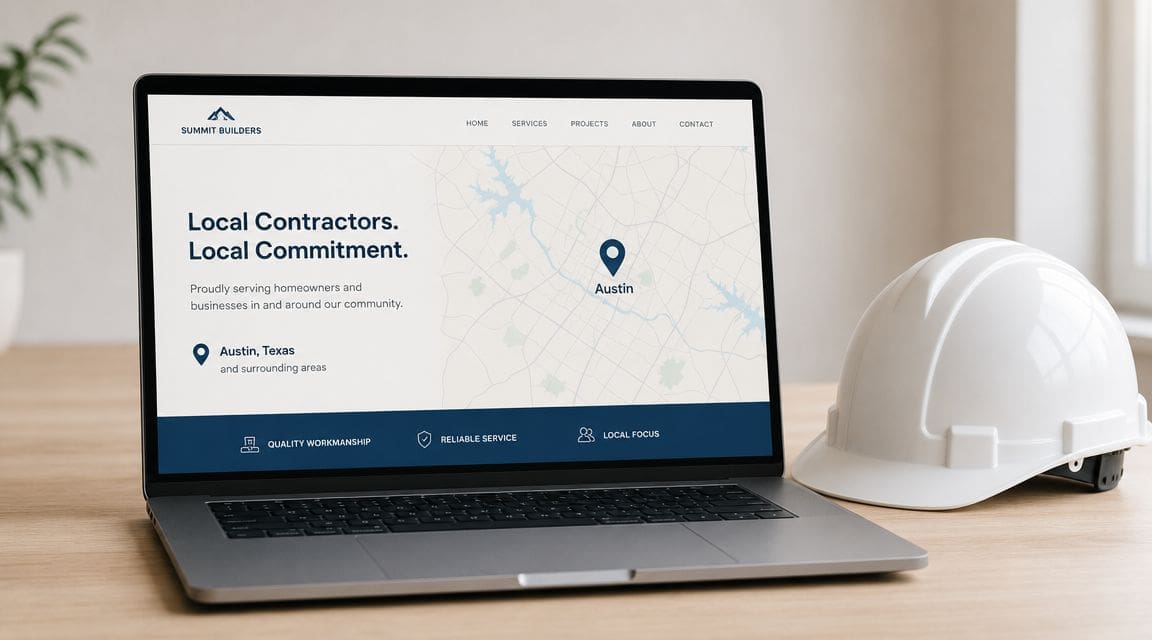
Most contractors check their site on a desktop in the office. That's not how buyers use it.
They're on a phone. They're in a driveway, at work, in the truck, or standing in a kitchen after something broke. If your site is slow, cramped, hard to tap, or makes them pinch and zoom, they leave. They don't complain. They just call the next company.
Google reports that 53% of mobile visits are abandoned if a page takes longer than 3 seconds to load, according to Footbridge Media's contractor website summary. That's not a design issue. That's a lost-call issue.
What this looks like in real life
A homeowner searches for a plumber, roofer, septic installer, or restoration company. They tap your site. The page hangs. The phone number is tiny. The quote form is buried. They back out.
Your competitor didn't beat you with better work. They beat you because their site worked on a phone.
Practical rule: If your site feels slow on your own phone, it's already costing you jobs.
A fast mobile site also affects trust. People judge your business by what they see first. If the site feels old or clunky, they assume the business is the same.
What to fix
- Make mobile the main version: Your site should be built for thumbs first, not desktop first. If you need help, look at websites optimized for mobile.
- Keep the top of the page simple: Your phone number, main service, service area, and call button should show up right away.
- Use real images carefully: Big image files can slow the page. Show real work, but keep the site fast.
- Cut junk: Too many popups, sliders, animations, and heavy scripts slow everything down.
This is one of the most common contractor website mistakes that cost you jobs because it kills the call before the visitor even decides.
2. You're Invisible Outside Your Hometown
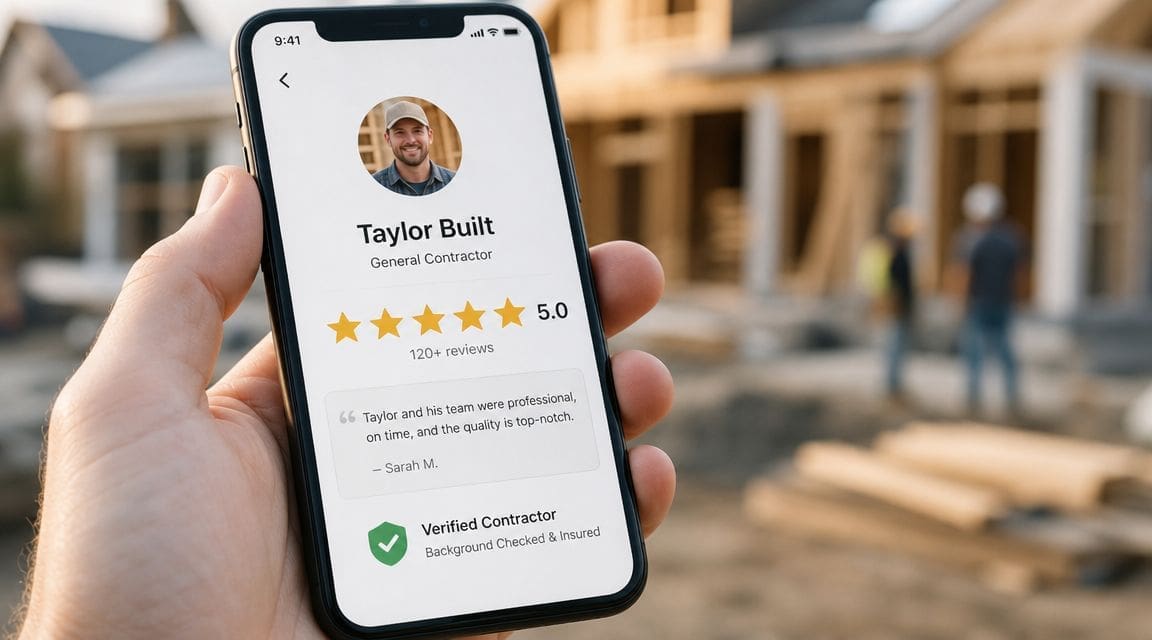
A lot of contractors think they have a website problem. They have a visibility problem.
You work across a region, but your site only gives Google one clear signal: your home base. One town in the footer. One town in the homepage copy. One town in most of your reviews. So the jobs in nearby cities go to companies that look more local there, even if you would happily take the work.
That is how invisibility works. You do not just miss clicks. You miss entire pockets of demand you never knew were there.
Google's local results are shaped by relevance, distance, and prominence, as summarized in Typza's write-up on contractor website mistakes. If your site does not connect your services to the towns you serve, Google has weak evidence to rank you in those searches.
What contractors keep doing wrong
They build one homepage, one service page, and maybe a generic “areas we serve” page. Then they expect to show up in every town they drive to.
That is not a system. That is wishful thinking.
Homeowners do not search your company name first. They search “septic installer in Smithfield,” “roof repair near Franklin,” or “concrete contractor in Bristol.” If your site never ties your work to those places in a clear, organized way, you stay invisible there.
If Google cannot connect your service to a town, your competitor gets the call.
What to do instead
- Create a page for each core service: Keep each page focused on one job type so Google and customers know exactly what you do.
- Create pages for target towns or counties: Give each area its own page with useful, specific copy. Do not clone the same paragraph and swap city names.
- Add proof from those places: Use local project photos, reviews, and job examples from the towns you want more work in.
- Build for expansion on purpose: If you want a repeatable way to get found in surrounding areas, study how to grow a home service business in multiple towns.
This mistake is bigger than a weak page or missing keyword. It means your business is easy to find in one place and invisible everywhere else.
That is why patching pages is not enough. You need a Lead Machine that makes your services visible wherever you want work.
3. No Proof That You're Any Good
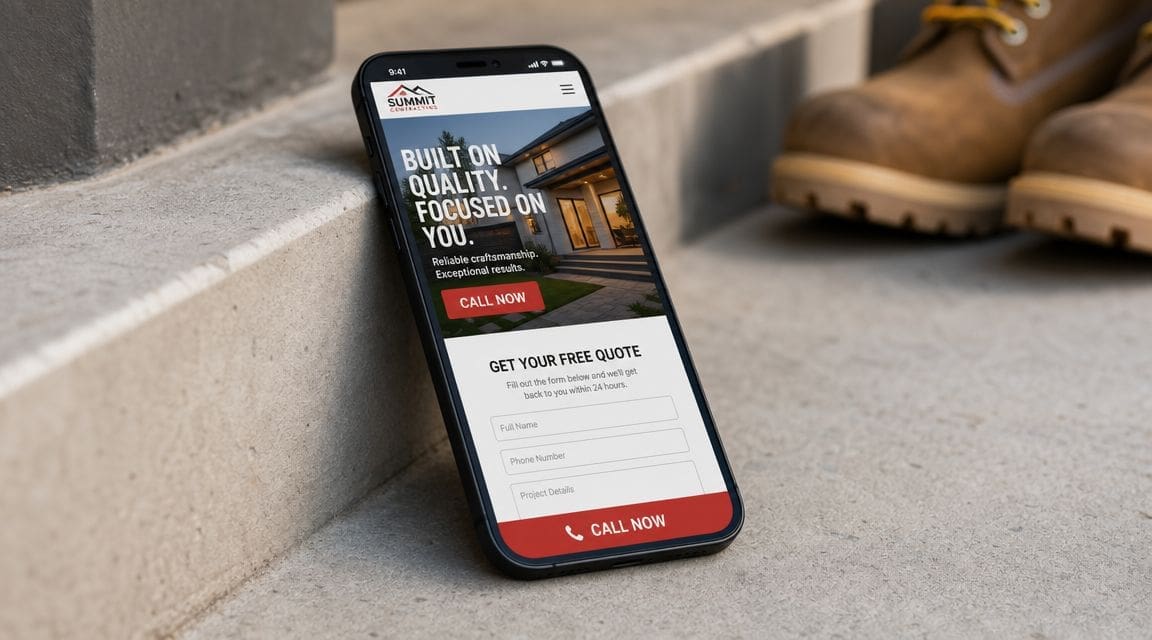
Good work does not sell itself online. Proof does.
Homeowners show up skeptical. They should. Anybody can claim quality on a website. If your site does not show real jobs, real customers, and real evidence, you are asking strangers to trust you blind. Most will not. They leave, keep searching, and hire the contractor who looks established.
That is the fundamental problem here. This is not a missing gallery or a weak testimonial page. It is invisibility at the moment trust should be built. If people cannot verify you fast, your website becomes a brochure, not a Lead Machine.
Stock photos make you look replaceable
Generic images signal generic service.
A staged kitchen photo does nothing for a remodeler. A polished stock image of a worker in a hard hat does nothing for a concrete crew. Homeowners want to see your work, your standards, and the kind of result they can expect on their property.
Show the excavation. Show the forms. Show the tear-off. Show the finished pour. Show the repair before paint covered it up. Show your crew on the job. Honest proof beats polished filler every time.
Put proof on the pages that get visited
Do not hide your best evidence on one gallery page nobody sees. Put it where buying decisions happen.
- Use real project photos on service pages: Match the photo to the job being discussed.
- Add reviews near the call to action: Let people see trust right before they decide.
- Tie proof to the service and area: A drainage project in a nearby town carries more weight than a vague testimonial with no context.
- Build a review system: If your team needs a repeatable way to collect more of them, use this guide on how to get Google reviews.
A contractor with visible proof gets the benefit of the doubt. A contractor without it loses jobs quietly.
That loss is easy to miss. The phone does not ring, the form does not get filled out, and you assume the traffic was bad. Usually, the problem is simpler. People found you, checked for proof, saw nothing solid, and moved on.
4. No Big, Obvious Call Now Button
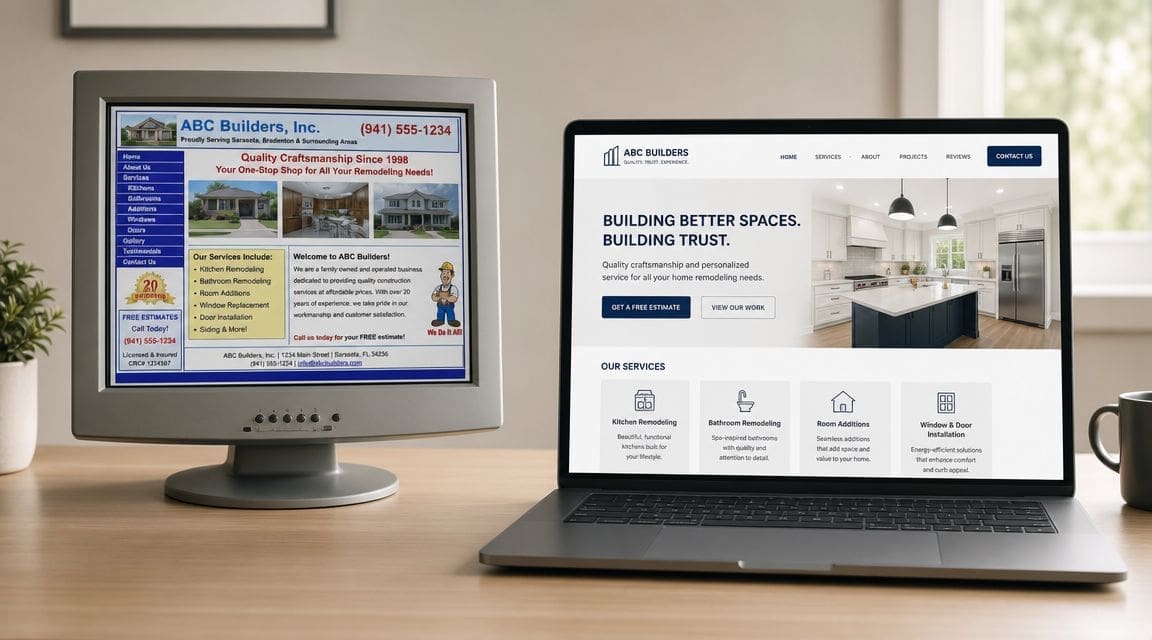
A hidden call to action is an invisibility problem.
People do find your site. Some are ready to hire. Then your website makes the next step harder than it should be. No clear button. No click-to-call option. A form buried halfway down the page. That is how jobs disappear without a trace.
This is not a small usability issue. It is a broken handoff. You paid for the referral, the Google search, or the yard sign to get that visitor there. If the contact path is not obvious in the first few seconds, your site is not acting like a Lead Machine. It is acting like a brochure.
Make the next step impossible to miss
A homeowner with a leak, no heat, standing water, or a cracked driveway is not in research mode. They want a clear action.
Call Now. Request a Quote. Book Service.
Put that action where people see it immediately. On mobile, keep it visible while they scroll. On desktop, show the phone number and button near the top, then repeat them farther down the page after you have given enough proof to justify the call.
Cut friction hard
- Put one primary action above the fold: Tell people what you do, where you work, and how to contact you right away.
- Use direct button text: “Call Now” and “Get a Quote” work because they are clear.
- Make mobile tap-to-call obvious: Do not force people to copy a number or hunt through a menu.
- Keep forms short: Name, contact info, job type, and a short message are enough to start.
- Repeat the call to action: Header, mid-page, and footer. People decide at different points.
Contractor websites often talk too long and ask too late. That costs jobs.
If someone is ready to act, your website should help them do it in one tap or one click. Anything slower reduces visibility at the exact moment it matters most.
5. Your Website Looks Like It Was Made in 2005
An outdated website does more than look bad. It makes you easy to ignore.
Homeowners do not separate your website from your company. They see one thing. If the site feels old, cluttered, or abandoned, they assume the business runs the same way. You lose the job before anyone calls, and you never know it happened.
That is the core problem here. Invisibility.
A dated site lowers trust fast. Old stock photos, cramped layouts, blurry logos, tiny text, broken pages, and a footer that still looks untouched from years ago all create doubt. People start asking themselves basic questions. Are these guys still active? Do they do quality work? Will they even call me back?
You do not need a flashy site. You need one that looks current, clear, and maintained.
Old design sends the wrong signal
Contractors often treat design like decoration. Buyers treat it like evidence.
If your site looks neglected, they assume your follow-up, scheduling, and jobsite standards might be neglected too. That may be unfair. It still happens. A sloppy website weakens your visibility because people bounce before they ever get to your proof, your service area, or your contact form.
A dated website makes your company look harder to trust.
Build for clarity, not creativity
Your website should look like a business that is active, organized, and ready to take work now.
- Use a clean, modern layout: Keep pages open, readable, and easy to scan.
- Show current photos: Real crews, real trucks, real projects. Not outdated filler.
- Simplify navigation: Service pages, service areas, reviews, and contact should be easy to find.
- Fix obvious signs of neglect: Broken links, old copyright dates, low-quality images, and inconsistent branding.
- Keep the look consistent: Fonts, colors, spacing, and page structure should feel intentional.
This is not about impressing people. It is about removing doubt.
A sharp, current website helps your company get seen, trusted, and contacted. An old one does the opposite. If your site still looks like a side project from another era, you do not have a website problem. You have a Lead Machine problem.
6. You're Ignoring Your Google Business Profile
Your Google Business Profile often gets seen before your website. For many contractors, it is the first inspection you fail.
If the profile is thin, outdated, missing photos, or says something different from your website, buyers do not stop to sort it out. They call the contractor who looks active and easy to trust. This is the core issue. You are not dealing with one bad listing. You are dealing with invisibility at the exact moment a local buyer is ready to hire.
Your profile is part of your Lead Machine
A Google Business Profile is not a side task. It is one of the main places Google and local buyers decide whether your business is real, relevant, and worth contacting.
If your website says you serve multiple towns, but your profile barely shows service areas, you look smaller than you are. If your reviews are old, your last photo is from two years ago, and your hours are wrong, you look inactive. If your phone number, categories, or service details do not match your site, you create friction for both Google and the buyer.
That costs jobs you never knew were available.
For a related example in another trade, this article on local digital marketing for roofing companies shows the same pattern. Visibility comes from showing up clearly in local search, not from having a website sit online and hope.
What to tighten up
- Match your core business info: Business name, phone, hours, and services should line up with your website.
- Choose the right categories: Tell Google precisely what you do, not a vague version of it.
- Add current photos: Show recent jobs, your crew, your trucks, and the kind of work you want more of.
- Set your service areas clearly: Do not make Google guess where you work.
- Get fresh reviews consistently: A dead review profile makes an active company look invisible.
- Post updates once in a while: New activity signals that the business is operating now.
A neglected profile does more than look bad. It breaks the system.
Your website, reviews, service pages, and Google Business Profile should all reinforce the same message. Here is what we do. Here is where we do it. Here is proof. Here is how to call. That is how a contractor builds a Lead Machine instead of waiting around to be found.
7. You Think Search Visibility Is Magic or a Scam
A lot of contractors swing between two bad ideas.
They either think search visibility is some secret trick only agencies understand, or they think the whole thing is fake. Both views keep them stuck.
Google needs clear signals about what you do, where you do it, and why you're relevant there. If those signals are weak, missing, or scattered, you won't show up when buyers search.
Search doesn't reward vagueness
A site that says “quality construction services” tells Google almost nothing.
A site built around actual services and actual places gives Google something useful. That's why a generic homepage rarely carries the load. If you want to be found for septic installation, excavation, grading, concrete, or restoration in multiple towns, your website has to reflect that.
This is also why many “pretty websites” fail. They may look polished, but they don't create local relevance.
For a related example in another trade, this article on local digital marketing for roofing companies shows how visibility depends on showing up in the right local searches, not just having a website.
What contractors need to understand
- Your website doesn't create traffic on its own: It waits for traffic.
- Search visibility comes from structure: Services, cities, proof, and consistency.
- Local buyers search by need and place: They usually don't search your business name first.
- If you don't show up, you don't get a chance: Word of mouth can't cover every town.
This isn't magic. It's also not optional. If you want predictable leads, your business needs visibility beyond your hometown.
8. You Hide Your Licenses and Insurance
A lot of contractors make this harder than it needs to be.
If you're licensed and insured, put it where people can see it. If you offer a workmanship warranty, show it. If you've been in business for 15 years, say that on the pages buyers read.
Hiding basic trust signals creates friction at the worst possible moment. A homeowner or property manager lands on your site, likes what they see, then starts looking for one simple reason to feel safe contacting you. If they can't confirm you're legitimate in 10 seconds, many leave and call the next contractor. You never hear about that lost job.
That's the critical issue here. This is not a small website detail. It's another form of invisibility.
Serious buyers check for risk first
Reviews help. Photos help. Credentials close the gap.
For larger jobs, buyers want proof that you're a real business with real accountability. They want to know you carry insurance, hold the right license, stand behind your work, and have a track record. If that information is buried on an old About page or missing entirely, your site feels incomplete, even if your work is solid.
The contractor with weaker skills but clearer proof often gets the call first.
Put trust signals in obvious places
Do not make people hunt for this stuff.
- License and insurance info: Put it on your homepage, footer, and contact page.
- Warranty details: State what you stand behind and for how long.
- Years in business: Make your experience visible near your main headline or proof section.
- Certifications and memberships: Show the ones that matter to your type of work.
- Team and company identity: Real names, real faces, real service area.
These details do more than build trust. They remove doubt fast.
A good contractor website works like a Lead Machine. It makes your business easy to verify, easy to trust, and easy to contact. If your credentials are hidden, you're still invisible to people who were close to hiring you.
8 Costly Contractor Website Mistakes Compared
| Issue | Implementation complexity 🔄 | Resource requirements ⚡ | Expected outcomes 📊 | Ideal use cases 💡 | Key advantages ⭐ |
|---|---|---|---|---|---|
| Your Website is Broken on a Phone or Loads Too Slow | Medium, requires front-end optimization & testing | Medium–High, developer time, image tools, CDN | Faster loads, lower bounce, improved mobile calls (target <2s) | Mobile-first audiences, job-site customers | Better conversions, SEO uplift, professional perception |
| You're Invisible Outside Your Hometown | Medium, content + geo-targeting pages | Medium, multiple landing pages, keyword work | Increased visibility in target towns and more regional leads | Regional service businesses expanding territory | Capture out-of-town leads, improved local rankings |
| No Proof That You're Any Good | Low–Medium, integrate reviews & galleries | Low–Medium, review automation, photo collection | Higher trust and conversion; lower CAC with visible reviews | New or low-review businesses needing credibility | Social proof increases calls and lead quality |
| No Big, Obvious 'Call Now' Button | Low, UX change, add sticky CTAs | Low, minor design/dev effort | Rapid lift in calls/leads (example: +25% calls) | Emergency or immediate-service providers | Removes friction; converts ready-to-buy visitors |
| Your Website Looks Like It Was Made in 2005 | Medium, redesign and restructure | Medium–High, design, images, content refresh | Lower bounce, longer sessions, more quote requests | Brands needing credibility refresh | Modern design builds trust and improves conversions |
| You're Ignoring Your Google Business Profile | Low, profile setup and ongoing management | Low, photos, posts, Q&A and review responses | Better map rankings, more local clicks and calls | Any local business competing in Maps/Local Pack | Dominates local real estate and drives nearby traffic |
| You Think SEO is Magic or a Scam | High, ongoing technical + content strategy | High, tools, content production, link building | Sustainable organic traffic and long-term leads | Businesses aiming for durable, cost-effective growth | Long-term lead generation and reduced ad dependence |
| You Hide Your Licenses and Insurance | Low, add badges, pages, documentation | Low, prepare proofs and place them site-wide | Increased trust, higher close rates, ability to charge more | High-risk or regulated service providers | Differentiates from unlicensed competitors; justifies premium pricing |
Stop Guessing. Start Controlling Your Visibility.
Every mistake on this list points back to the same problem. You're not in control of your visibility.
That is the core issue.
It's not that you don't work hard enough. It's not that your crews aren't good. It's not that people would never hire you. It's that people in the towns around you often never see you when they search. And if they don't see you, you never get the shot.
That's why so many contractors stay stuck in feast or famine. They rely on referrals. They stay busy with small jobs. They get random calls. They slow down, panic, then throw money at ads or a new website and hope something changes. Hope is not a system.
Websites don't create traffic. They sit and wait.
If you want more calls, better jobs, and more control, you need a system that does two things. First, it has to make your business visible in the right places. Second, it has to turn that visibility into calls and quote requests. That's the difference between a brochure site and a Lead Machine.
A Lead Machine is built for one job. Turn traffic into leads. It needs clear service pages, city pages, mobile speed, real proof, strong call buttons, tracking, and alignment with your business profile. It should tell Google exactly what you do and where you do it. It should make the next step obvious for the buyer.
Then you add fuel. Ads create visibility. They put you in front of people searching right now. But ads without a strong website waste money. A website without traffic just sits there. Put them together and you finally have a system that works like a business asset instead of a digital business card.
That's the shift.
Stop patching random website problems one by one. Start seeing them for what they are. Symptoms of invisibility.
If you control your visibility, you have a better shot at controlling your pipeline. If you don't, your competitors will keep taking jobs in towns you already serve.
The Cherubini Company is one option for contractors who want that kind of system. It builds Lead Machines and pairs them with advertising to help contractors show up in the cities they want work from.
You think that customers “can” find you but, if customers “don't” find you, nothing else matters. Lead Machines are built to fix that.
If you're tired of guessing and want a system built to help contractors get seen and get calls, talk to The Cherubini Company. They build Lead Machines for local service businesses and contractors who need better visibility in the towns where they want work.